
lovethailand home >North Travel Attractions >Chiang Mai Travel Attractions >Hot >Hot > Wat Luang Hot
TL;DR: Wat Luang Hot is located at 169 Ban Luang Hot, Moo 2, Hot Subdistrict, Hot District, Chiang Mai Province, Thailand, open Daily, hours 08.00 – 17.00.

Wat Luang Hot
Open Days: Daily
Opening Hours: 08.00 – 17.00
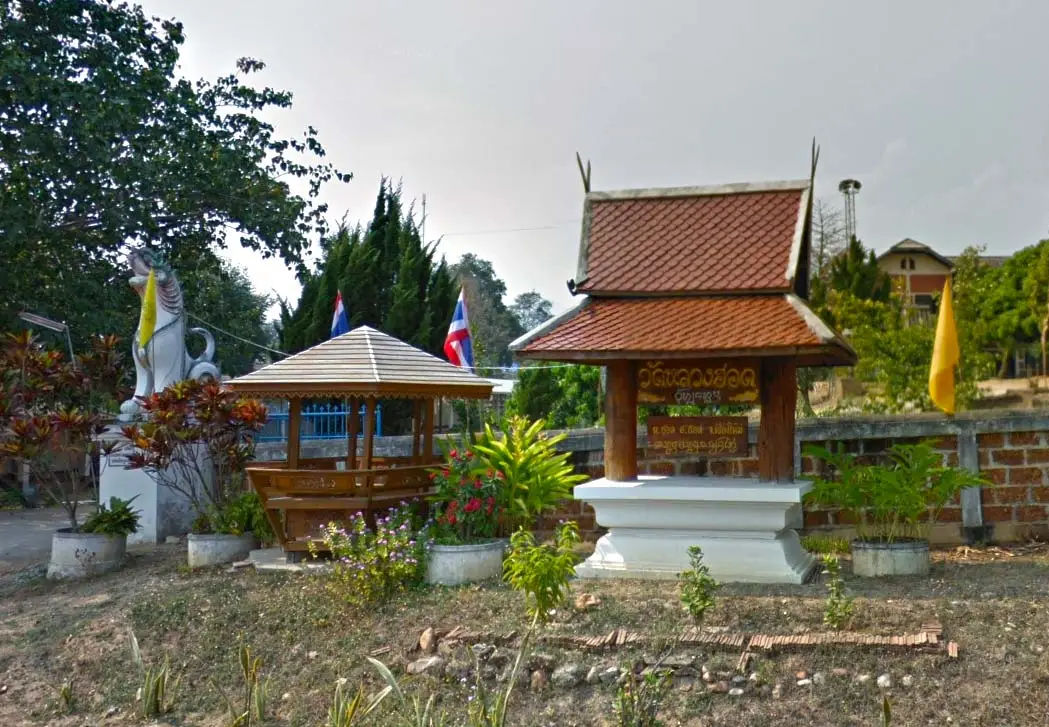
Wat Luang Hot is located at 169 Ban Luang Hot, Moo 2, Hot Subdistrict, Hot District, Chiang Mai Province. It is a local Buddhist temple under the Maha Nikaya order and one of the important community temples connected with the history of old Hot town. The temple was established in 1882, and local memory describes it as an ancient abandoned temple linked with the era of Queen Chama Devi. In 1964, after the construction of Bhumibol Dam caused flooding that affected parts of the old settlement area, the temple was moved and rebuilt at its present location. For this reason, Wat Luang Hot is not only a place of worship but also a living record of local faith, relocation, and cultural continuity.
Wat Luang Hot is best understood through the history of Hot District itself. Hot was once an important community along the upper Ping River, connected with river travel, old Buddhist sites, Lanna cultural memory, and stories of Phitsadan Nakhon, the old name often associated with ancient Hot. The temple therefore carries more meaning than its present-day buildings alone. It represents the movement of a community from an old riverside landscape to a new settlement area, while still preserving the religious identity of Ban Luang Hot.
The temple was built in 1882 according to its recorded history. It belongs to the Maha Nikaya order and later received its royal grant of Wisungkhamasima on 1 October 1984. The consecrated boundary measures 20 meters wide and 40 meters long. This information is significant because a Wisungkhamasima boundary is related to formal Buddhist monastic acts and shows that the temple has a recognized religious role within the Thai Buddhist system.
Before it was moved to the present site, Wat Luang Hot was part of the old Hot cultural landscape. Local stories connect the area with Queen Chama Devi, her legendary journey, and the creation of religious sites in ancient Hot. When viewed together with other nearby historical places such as Wat Phra Chao Tho, the old chedi sites, Wat Doi U Kaeo, and other traces of old Hot, Wat Luang Hot becomes part of a larger historical network rather than an isolated village temple.
The major turning point in the temple’s history came with the construction of Bhumibol Dam in Tak Province. As the area above the dam became a large reservoir, some parts of Hot and nearby districts were affected by rising water levels. Communities had to relocate, and several old religious places could no longer remain in their former locations. Wat Luang Hot was moved to its current site in 1964. This relocation was more than a physical move; it was the transfer of the community’s spiritual center to a new landscape.
Because of this history, Wat Luang Hot holds two layers of meaning. One layer belongs to old Hot, local legend, and the memory of religious sites before the flooding. The other belongs to the modern community of Ban Luang Hot, which rebuilt its life and maintained its Buddhist identity after relocation. Visiting the temple therefore helps travelers understand Hot District as more than a transit town on the route from Chiang Mai to Mae Sariang, Doi Tao, or Ob Luang. It reveals a community shaped by faith, displacement, and recovery.
The name “Wat Luang Hot” is directly tied to Ban Luang Hot, the village where the temple stands today. The name preserves the identity of the community and the memory of the old settlement. For local residents, the temple is a religious and cultural anchor. For travelers, the name itself points to the close relationship between temple, village, and local history.
Inside the temple, the most important confirmed information relates to its role as a community temple and to its consecrated Wisungkhamasima boundary. Publicly confirmed details about specific architectural elements such as the ubosot, viharn, principal Buddha image, chedi, bell tower, or sermon hall are limited. For accuracy, this article does not add unverified architectural descriptions. What can be stated clearly is that Wat Luang Hot remains an active community temple and a place for Buddhist worship, merit-making, and local religious life.
The value of Wat Luang Hot lies in its atmosphere and cultural context. It is not a large commercial tourist attraction, but a quiet temple connected with the daily life of the Hot community. Visitors will find a calm local temple where the meaning of the place comes from its history, its relocation story, and its continuing function as a spiritual center for the village. It is especially suitable for travelers who prefer meaningful cultural stops rather than crowded sightseeing locations.
Wat Luang Hot is also connected with academic and cultural interest in Hot District. Chiang Mai University has used Wat Luang Hot as a base for field activities related to the study of local art, ancient sites, and cultural heritage in the Hot area. This shows that the temple has a role within the broader effort to understand the artistic and historical landscape of old Hot, including old chedi sites, community art, and local heritage.
The wider history of Hot includes archaeological work carried out before areas were affected by the reservoir created by Bhumibol Dam. Archaeological objects from Hot were collected and preserved by national institutions, and some are now associated with museum collections. This background helps explain why a visit to Wat Luang Hot is meaningful for cultural travelers: the temple stands within a district where Buddhist heritage, archaeology, and community memory are closely intertwined.
Travelers can understand Wat Luang Hot through four main time layers. The first is the layer of local legend connected with Queen Chama Devi and old Hot. The second is the establishment of the temple in 1882. The third is the relocation in 1964 after flooding related to Bhumibol Dam. The fourth is the royal grant of Wisungkhamasima in 1984. These layers make the temple historically richer than its modest appearance may suggest.
For the Ban Luang Hot community, the temple continues to serve as a center for Buddhist life. Like many local temples in northern Thailand, it supports merit-making, Buddhist holy days, robe-offering ceremonies, community gatherings, and acts of remembrance. Even though detailed public information on a specific annual temple festival is limited, its function as a local temple clearly places it at the center of religious and community life.
Wat Luang Hot is suitable for elderly travelers, families, cultural travelers, and visitors interested in Lanna history. It is also a useful stop for people driving through Hot District toward Doi Tao, Mae Sariang, Ob Luang National Park, or the southern part of Chiang Mai Province. The visit is best approached slowly and respectfully, with attention to the temple’s role as a living religious space rather than a purely photographic destination.
Getting There is most convenient by private car, rental car, or local hired transport. From Chiang Mai city, take Highway 108 toward Chom Thong and Hot District. After entering Hot, connect to Highway 1012 on the Hot – Ban Wang Lung route. Wat Luang Hot is located in Ban Luang Hot, Moo 2, Hot Subdistrict. The route also connects conveniently with Wat Phra Phutthabat Kaeo Khao, Wat Phra That Chedi Noi, and Wat Phra Chao Tho.
A practical cultural route can begin at Hot town, continue to Wat Luang Hot, then proceed to Wat Phra Phutthabat Kaeo Khao, Wat Phra That Chedi Noi, and Wat Phra Chao Tho. Travelers can then continue to Ob Luang National Park, Bo Kaeo Pine Garden, or Doi Tao. This itinerary allows visitors to combine local temples, old Hot history, village culture, and natural attractions in one journey.
For a short visit, 30 minutes to 1 hour is enough to pay respect, observe the temple atmosphere, and understand its role in the community. Travelers with more time should combine it with nearby historical temples and local attractions to gain a fuller understanding of Hot District. Wat Luang Hot is a small but meaningful stop that adds historical depth to any journey through southern Chiang Mai.
Overall, Wat Luang Hot is valuable because it preserves the memory of old Hot, the relocation caused by Bhumibol Dam, and the continuity of Buddhist faith in Ban Luang Hot. Its importance does not come from grand scale, but from its layered history and its continuing role as a spiritual home for the community. For travelers looking for an authentic Lanna community temple with a strong local story, Wat Luang Hot is a worthwhile stop in Hot District, Chiang Mai.
| Name | Wat Luang Hot |
| Type | Local Buddhist Temple, Maha Nikaya Order |
| Location | 169 Ban Luang Hot, Moo 2, Hot Subdistrict, Hot District, Chiang Mai Province, Thailand |
| Coordinates | 18.11181, 98.60492 |
| Highlights | Historic community temple connected with old Hot, relocation after flooding from Bhumibol Dam, and the cultural memory of the upper Ping River community |
| History | Established in 1882. Local memory connects the old temple site with the era of Queen Chama Devi. In 1964, the temple was moved to its present location after flooding related to Bhumibol Dam affected old settlement areas. |
| Wisungkhamasima | Granted on 1 October 1984. The consecrated boundary measures 20 meters wide and 40 meters long. |
| Name Origin | The name is connected with Ban Luang Hot, the present village where the temple is located. |
| Distinctive Features | Peaceful community temple suitable for worship, learning about old Hot history, and connecting with nearby temples in Hot Subdistrict |
| Community Role | Spiritual center of Ban Luang Hot and a place for Buddhist ceremonies and community merit-making |
| Travel Information | Take Highway 108 from Chiang Mai toward Hot District, then connect to Highway 1012 on the Hot – Ban Wang Lung route. The temple is located in Ban Luang Hot, Moo 2, Hot Subdistrict. |
| Current Status | Open to visitors and remains an active local Buddhist temple in Hot Subdistrict, Hot District, Chiang Mai Province |
| Open Days | Daily |
| Opening Hours | 08.00 – 17.00 |
| Facilities | Temple grounds, open courtyard, and spaces for Buddhist activities |
| Nearby Tourist Attractions | 1. Wat Khamphi Raram, about 0.7 km 2. Wat Phra Phutthabat Kaeo Khao, about 1.3 km 3. Wat Phra That Chedi Noi, about 1.5 km 4. Wat Phra Chao Tho, about 10 km 5. Ob Luang National Park, about 24 km |
| Nearby Restaurants | 1. Wilai Phon Restaurant, about 7 km 2. Good Morning Hod, about 7 km, Tel. 091-853-7308 3. Moo Inter Hod, about 7 km, Tel. 061-271-8118 4. Seven Yod Crab Salad Hod, about 7 km, Tel. 093-237-2456 5. Ngam Sai 2020 Hod, about 8 km, Tel. 092-862-3441 |
| Nearby Accommodations | 1. Hot Resort, about 7 km, Tel. 053-460-170 2. Star Home Hod, about 7 km 3. Rose House Hod, about 8 km, Tel. 065-769-4831 4. PhuAnna Eco House, about 25 km, Tel. 081-716-9109 5. Doi Bo Luang FIO, about 40 km |
Frequently Asked Questions (FAQ)
Q: Where is Wat Luang Hot located?
A: Wat Luang Hot is located at 169 Ban Luang Hot, Moo 2, Hot Subdistrict, Hot District, Chiang Mai Province, Thailand.
Q: When was Wat Luang Hot established?
A: Wat Luang Hot was established in 1882 and is described in local history as an old temple connected with the era of Queen Chama Devi.
Q: Why was Wat Luang Hot moved to its present location?
A: The temple was moved to its current site in 1964 after parts of old Hot were affected by flooding related to the construction of Bhumibol Dam.
Q: When did Wat Luang Hot receive its Wisungkhamasima?
A: The temple received its royal grant of Wisungkhamasima on 1 October 1984, with a consecrated boundary measuring 20 meters wide and 40 meters long.
Q: Who should visit Wat Luang Hot?
A: It is suitable for travelers interested in community temples, old Hot history, Lanna culture, and quiet cultural routes in Hot District.
Q: What nearby places can be visited with Wat Luang Hot?
A: Nearby places include Wat Phra Phutthabat Kaeo Khao, Wat Phra That Chedi Noi, Wat Phra Chao Tho, and Ob Luang National Park.
Q: What are the opening hours of Wat Luang Hot?
A: Wat Luang Hot is open daily from 08.00 to 17.00.
 Category: ●Places of Worship
 Group: ●Temple
Last Update : 5 DayAgo
 Last Update : 5 DayAgo
 Click to Access the Navigation Map GPS
 Muang Chiang Mai(121)Chom Thong(47)Mae Chaem(25)Chiang Dao(33)Doi Saket(68)Mae Taeng(85)Mae Rim(69)Samoeng(29)Fang(71)Mae Ai(59)Phrao(70)San Pa Tong(103)San Kamphaeng(66)San Sai(73)Hang Dong(73)Hot(32)Doi Tao(22)Omkoi(11)Saraphi(74)Wiang Haeng(15)Chai Prakan(28)Mae Wang(32)Mae On(22)Doi Lo(33)Galyani Vadhana(1)


