
lovethailand home >North Travel Attractions >Chiang Mai Travel Attractions >Hot >Hang Dong > Wat Wang Lung
TL;DR: Wat Wang Lung is located at Ban Wang Lung Mai / Ban Wang Lung, Moo 10, Hang Dong Subdistrict, Hot District, Chiang Mai Province, open Daily, hours Daytime Visit Recommended.
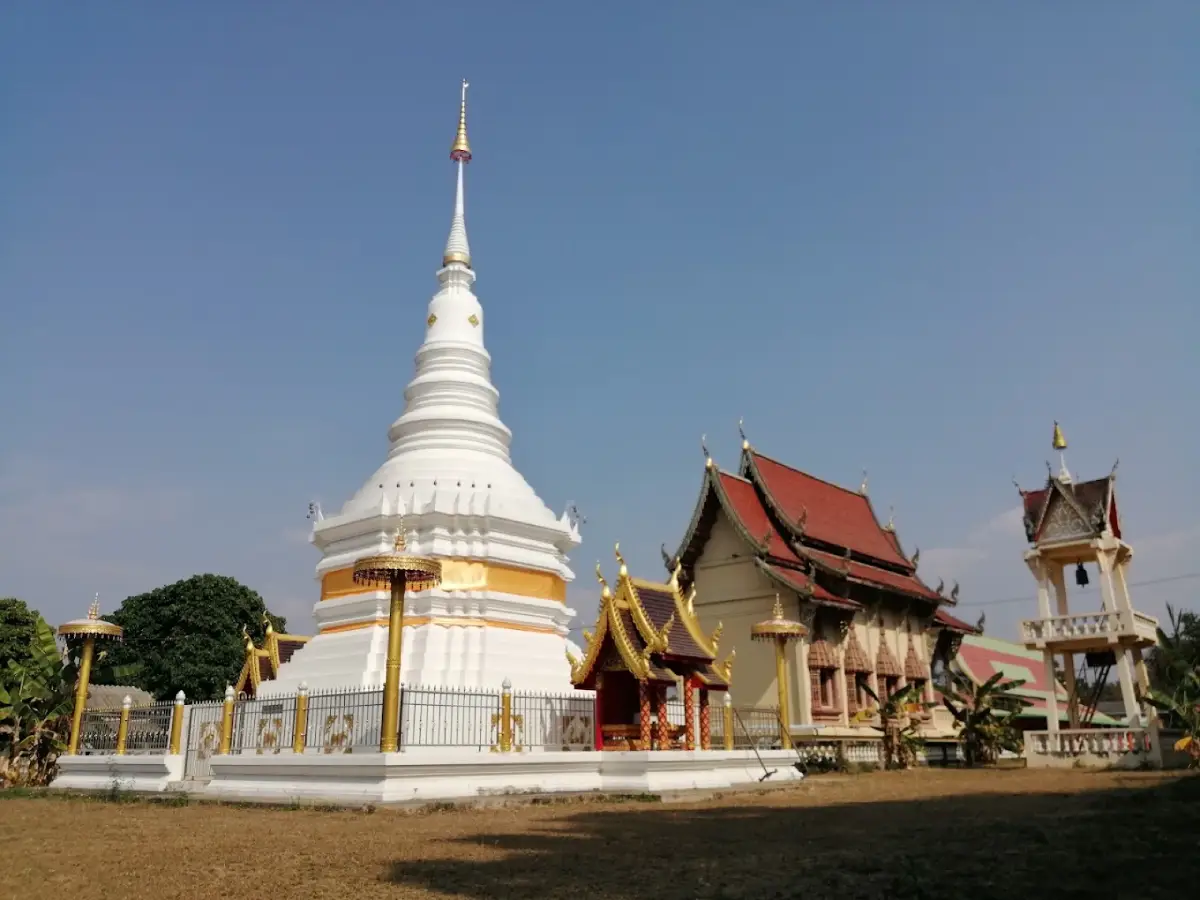
Wat Wang Lung
Open Days: Daily
Opening Hours: Daytime Visit Recommended
Wat Wang Lung is located in Moo 10, Ban Wang Lung Mai, Hang Dong Subdistrict, Hot District, Chiang Mai Province 50240. It is a local Buddhist temple under the Mahanikaya order. The temple was officially established in 1929 and received its Wisungkhamsima on 21 December 1979. Wat Wang Lung is an important community temple of Ban Wang Lung and Ban Wang Lung Mai, with a history closely connected to community relocation after the former temple site was affected by water from Bhumibol Dam.
The temple’s history reaches back to 1929, making it one of the older community temples in Hang Dong Subdistrict, Hot District. Its founding reflects the need of the Wang Lung community for a Buddhist center where villagers could make merit, listen to sermons, offer food to monks, and gather for religious ceremonies. In a rural Lanna village, a temple is not only a religious building; it is also a social, cultural, and emotional center of the community.
Wat Wang Lung was built through the faith of monks and villagers. Its founding history mentions Kong Kham Chanthawiso, Daeng Put, Thongdee Yotsuk, and local supporters who worked together to complete the temple. This pattern is typical of community temples in northern Thailand, where villagers contribute land, labor, materials, and offerings to create a shared Buddhist space for the whole village.
A major turning point came in 1964, when Wat Wang Lung was relocated into an allocated settlement area because the former temple site was affected by water from Bhumibol Dam in Tak Province. This makes the temple historically significant. It is not only a temple that was built and maintained; it is a temple whose sacred role was moved with the community, allowing faith, memory, and village identity to continue in a new place.
Ban Wang Lung Mai therefore carries the memory of the earlier Wang Lung community. The temple became a central anchor for the new settlement, helping villagers rebuild community life after environmental and settlement changes. Wat Wang Lung represents continuity: a place where people could preserve their Buddhist practice while adapting to a new village landscape.
The temple received Wisungkhamsima on 21 December 1979. The consecrated boundary measures 26 meters wide and 40 meters long. This is important because a Wisungkhamsima gives a temple a formal monastic boundary for significant Sangha acts such as ordination and other monastic ceremonies. Wat Wang Lung therefore has a complete function as a registered Mahanikaya community temple.
The temple land covers 8 rai, 2 ngan, and 20 square wah. Its boundaries connect with public roads, village areas, a hospital area, and the Chiang Mai–Hot highway. This location places the temple within a practical village landscape connected with local roads, public services, and community settlement.
Important structures at Wat Wang Lung include the ubosot, viharn, sermon hall, monks’ residences, sala, and kitchen. The ubosot supports monastic ceremonies, the viharn serves as the worship and ritual space, the sermon hall supports Dhamma listening and merit-making events, the monks’ residences support monastic life, and the sala and kitchen support community gatherings and temple festivals.
The line of abbots and monastic leaders reflects the continuity of the temple. The known list includes Phra Kong Kham Chanthawiso, Phra Kaeo Anuthawiso, Phra Chan Chanthawiso, Phra Thong Suwanno, Phra Ta Ariyaso, Phra Sangwon Siwaro, Phra Athikan Bunpan Phothiko, and Phra Athikan Phichai Chittayano, who is also found with the ecclesiastical title Phra Khru Thammarot Wichit. This continuity helped sustain temple life, merit-making, and the relationship between monks and villagers.
Public contact information for Wat Wang Lung gives the telephone number 053-831-431. The temple also appears in local community information as a quiet temple and a place used for village meetings and activities. This supports its current role not only as a religious site but also as a shared space for Ban Wang Lung community life.
Wat Wang Lung has several community roles. Religiously, it supports worship, sermons, offerings to monks, and Buddhist ceremonies. Socially, it provides a meeting and activity space for the village. Historically, it preserves the memory of the community’s relocation after the former temple site was affected by Bhumibol Dam.
Important Buddhist activities connected with Wat Wang Lung include Buddhist holy days, Makha Bucha, Visakha Bucha, Asalha Bucha, Buddhist Lent, the end of Buddhist Lent, Kathin, Pha Pa, and Lanna New Year traditions. These occasions bring villagers together to make merit, listen to Dhamma, keep precepts, support monks, and maintain the temple.
Kathin and Pha Pa are especially important for a village temple. After the rains retreat, villagers and supporters gather to offer robes, requisites, and support for the temple. These events strengthen both Buddhist faith and community cooperation, especially in a temple whose history is tied to relocation and rebuilding.
Songkran, or the Lanna New Year, is another meaningful period for northern Thai village temples. Local people make merit, pay respect to Buddha images, pour water to ask blessings from elders, and reconnect with family and community. Wat Wang Lung therefore supports both Buddhist practice and local social values.
Hang Dong Subdistrict has many community temples, including Wat Tha Kham, Wat Ban Pong, Wat Panyawuttharam, Wat Makkharam, Wat Mae Long, Wat Rattanaworaram, Wat Wang Lung, Wat Silanimit, Wat Hang Dong, and Wat Intharam. Together, these temples form a strong Buddhist landscape across Hot District, with each temple serving its own village while contributing to the wider cultural life of the subdistrict.
The atmosphere of Wat Wang Lung is quiet, simple, and community-based. Visitors should not expect a large commercial sightseeing temple. Its value lies in its founding history, its relocation story, its connection with village life, and its continuing role as the spiritual center of Ban Wang Lung.
Visitors should pay attention to the ubosot, viharn, sermon hall, temple grounds, sala, and the temple’s setting within the village. Those interested in local history should understand Wat Wang Lung through the 1964 relocation story, which gives the temple a distinctive identity among community temples in Hot District.
Wat Wang Lung is suitable for cultural travelers, visitors interested in Lanna village temples, people studying community relocation history, and travelers who want a quiet Buddhist stop near central Hot District. It is best visited respectfully and slowly, with attention to its local meaning rather than only its physical structures.
Nearby places can be combined into several routes. Cultural travelers can visit Wat Rattanaworaram, Wat Silanimit, Wat Hang Dong, Wat Panyawuttharam, and Wat Tha Kham. Nature-focused travelers can continue to Ob Luang National Park or Mae Bua Kham Waterfall, creating a route that combines Buddhist culture and natural scenery in Hot District.
Hang Dong Subdistrict is connected by Highway 108 from Chiang Mai to Hot and Mae Sariang. It is also connected by Provincial Highway 1012, the Hot–Wang Lung route, which links Hang Dong, Hot, and Na Kho Ruea subdistricts. This road connection makes Ban Wang Lung accessible from central Hot and suitable for a cultural stop on a wider local route.
Getting There from Chiang Mai city, take Highway 108 toward Hot and Mae Sariang. Continue into Hot District, then use the local Hot–Wang Lung route to reach Ban Wang Lung Mai, Moo 10, Hang Dong Subdistrict. A private car is the most convenient option because it allows travelers to visit Wat Wang Lung and continue to nearby temples, central Hot, or Ob Luang National Park in the same trip.
Travelers using public transport should first reach central Hot District, then arrange local transport toward Ban Wang Lung. Local songthaew routes connect Hot with Wang Lung and other nearby areas, but schedules should be checked before travel, especially when planning to continue to nature attractions or other villages on the same day.
Visitors should dress modestly, speak quietly, avoid entering monks’ private areas without permission, and keep the temple grounds clean. If visiting during a merit-making event or community meeting, visitors should follow local etiquette and respect monks, elders, and village participants.
In summary, Wat Wang Lung is a local Mahanikaya temple in Ban Wang Lung Mai, Moo 10, Hang Dong Subdistrict, Hot District, Chiang Mai Province. It was officially established in 1929 and received Wisungkhamsima on 21 December 1979. Its key identity comes from its 1964 relocation after the former site was affected by Bhumibol Dam water, its complete set of community temple structures, and its continuing role as a spiritual and social center of Ban Wang Lung.
| Name | Wat Wang Lung |
| Location | Ban Wang Lung Mai / Ban Wang Lung, Moo 10, Hang Dong Subdistrict, Hot District, Chiang Mai Province |
| Address | Moo 10, Hang Dong Subdistrict, Hot District, Chiang Mai 50240, Thailand |
| Temple Type | Local Buddhist temple under the Mahanikaya order |
| Temple Registration Code | 350160108 |
| Temple Area | 8 rai, 2 ngan, and 20 square wah |
| Highlights | Historic community temple of Ban Wang Lung, relocated in 1964 after the former temple site was affected by water from Bhumibol Dam |
| History | Built and officially established in 1929; granted Wisungkhamsima on 21 December 1979 |
| Founding Supporters | Kong Kham Chanthawiso, Daeng Put, Thongdee Yotsuk, and local supporters |
| Wisungkhamsima Boundary | 26 meters wide and 40 meters long |
| Abbot / Related Monk | Phra Khru Thammarot Wichit (Phichai) / Phra Athikan Phichai Chittayano |
| Important Structures | Ubosot, viharn, sermon hall, monks’ residences, sala, kitchen, temple grounds, and community religious activity space |
| Distinctive Features | Quiet Lanna village temple with a relocation history and a continuing role as the spiritual center of Ban Wang Lung |
| Community Role | Religious and community space for Buddhist holy days, Kathin, Pha Pa, local merit-making, and Ban Wang Lung village activities |
| Travel Information | Take Highway 108 from Chiang Mai toward Hot and Mae Sariang, then continue on the local Hot–Wang Lung route |
| Current Status | Open as a community Buddhist temple and religious site of Ban Wang Lung |
| Open Days | Daily |
| Recommended Visiting Time | Daytime |
| Contact | 053-831-431 |
| Local Administrative Contact | Tha Kham Municipality, Tel. 053-461114 |
| Nearby Tourist Attractions | 1. Wat Rattanaworaram, about 3 km 2. Wat Silanimit, Ban Kong Hin, about 5 km 3. Wat Hang Dong, about 6 km 4. Wat Panyawuttharam, about 8 km 5. Ob Luang National Park, about 18 km |
| Nearby Restaurants | 1. Good Morning Hod, about 6 km, Tel. 091-853-7308 2. Denchai Hod Fresh Coffee, about 6 km, Tel. 083-301-2565 3. Moo Inter Hod, about 6 km, Tel. 061-271-8118 4. Wilai Porn Restaurant & Hod Coffee, about 7 km, Tel. 084-222-2421 5. Aunt Pen’s Larb Hot, about 7 km |
| Nearby Accommodations | 1. Huen Hug Hod The Resort, about 6 km, Tel. 085-030-7356 2. Gardum House, about 7 km, Tel. 063-119-4959 3. Kiss Hod Resort, about 8 km, Tel. 080-135-2992 4. Hod Resort, about 8 km, Tel. 053-460-170 5. Rose House Hot, about 9 km |
Frequently Asked Questions (FAQ)
Q: Where is Wat Wang Lung located?
A: Wat Wang Lung is located in Moo 10, Ban Wang Lung Mai, Hang Dong Subdistrict, Hot District, Chiang Mai Province 50240.
Q: When was Wat Wang Lung officially established?
A: Wat Wang Lung was officially established in 1929.
Q: When did Wat Wang Lung receive Wisungkhamsima?
A: Wat Wang Lung received Wisungkhamsima on 21 December 1979.
Q: What is the key history of Wat Wang Lung?
A: Wat Wang Lung was built in 1929 and relocated in 1964 after its former site was affected by water from Bhumibol Dam.
Q: What important structures can be found at Wat Wang Lung?
A: Important structures include the ubosot, viharn, sermon hall, monks’ residences, sala, kitchen, temple grounds, and community religious activity space.
Q: What type of traveler is Wat Wang Lung suitable for?
A: It is suitable for cultural travelers, visitors interested in Lanna village temples, community relocation history, and quiet temple routes near central Hot District.
Q: What nearby attractions can be visited with Wat Wang Lung?
A: Nearby places include Wat Rattanaworaram, Wat Silanimit, Wat Hang Dong, Wat Panyawuttharam, and Ob Luang National Park.
 Category: ●Places of Worship
 Group: ●Temple
Last Update : 6 DayAgo
 Last Update : 6 DayAgo
 Click to Access the Navigation Map GPS
 Muang Chiang Mai(121)Chom Thong(47)Mae Chaem(25)Chiang Dao(33)Doi Saket(68)Mae Taeng(85)Mae Rim(69)Samoeng(29)Fang(71)Mae Ai(59)Phrao(70)San Pa Tong(103)San Kamphaeng(66)San Sai(73)Hang Dong(73)Hot(32)Doi Tao(22)Omkoi(11)Saraphi(74)Wiang Haeng(15)Chai Prakan(28)Mae Wang(32)Mae On(22)Doi Lo(33)Galyani Vadhana(1)


