
lovethailand home >North Travel Attractions >Chiang Mai Travel Attractions >Hot >Hang Dong > Wat Panyawuttharam
TL;DR: Wat Panyawuttharam is located at Moo 2, Hang Dong Subdistrict, Hot District, Chiang Mai Province, open Daily, hours 08.00 – 17.00.
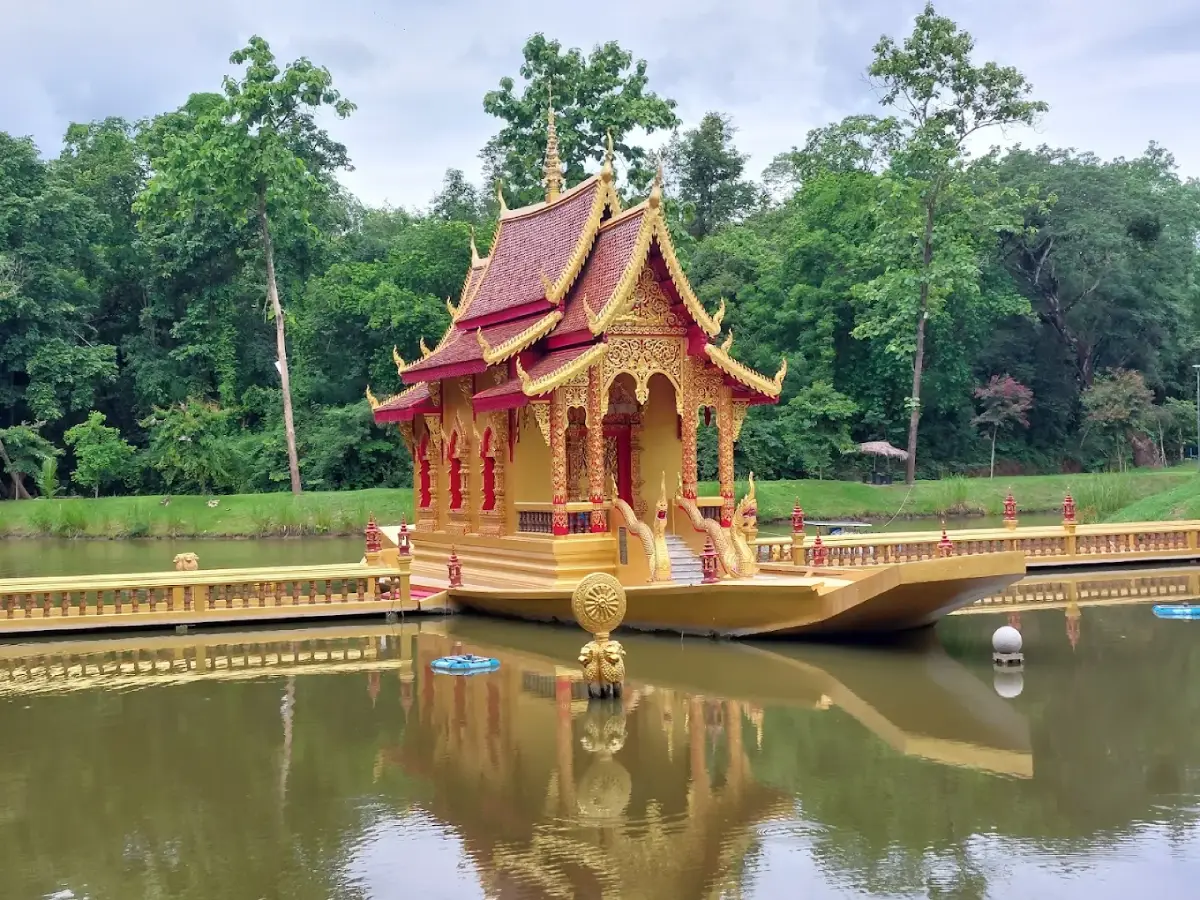
Wat Panyawuttharam
Open Days: Daily
Opening Hours: 08.00 – 17.00
Wat Panyawuttharam, also locally known as Wat San Ku, is located in Moo 2, Hang Dong Subdistrict, Hot District, Chiang Mai Province 50240. It is a local Buddhist temple under the Mahanikaya order. The temple was officially established in 1988 and received its Wisungkhamsima in 1990. Today, Wat Panyawuttharam is important not only as a village temple but also as Chiang Mai Provincial Meditation Practice Center No. 39 under the Mahanikaya order. Its identity combines Buddhist devotion, local memory, meditation practice, and the cultural landscape of Hot District.
The temple is widely known by local people as San Ku. In the Lanna context, the word “ku” is often associated with a chedi, memorial structure, or a place connected with bones or ashes. The local name San Ku therefore gives the temple a deeper cultural meaning. Wat Panyawuttharam is not simply a modern temple established in 1988. It stands on a place remembered by the community as an old sacred site with long-standing local stories.
Local tradition connects the temple area with the time of Queen Chamadevi of Hariphunchai, present-day Lamphun. The story says that after warfare, Queen Chamadevi ordained at this place and built a ku or chedi to keep the bones of soldiers who had died in battle, dedicating merit to the deceased. This tradition gives Wat Panyawuttharam a strong atmosphere of remembrance, merit-making, and reverence for those who passed away.
The old ku was remembered as a ruined chedi with a hollow lower section large enough for a person to enter. Over time, the structure deteriorated. A significant local story tells that in 1954, Khru Ba Kap Chai Langkaro, abbot of Wat Intharam or Wat Mae Thang, saw the old structure and had villagers move some bricks for use at Ban Mae Thang School. After that, the hollow structure collapsed further, leaving only small brick remains that villagers continued to call San Ku.
Another local story says that before bricks were removed from the old ku, villagers from nearby Ban Kong Hin heard the sounds of horses and elephants moving in groups around the area. People interpreted the sound as connected with guardians of the sacred site or the movement of treasures and spiritual objects. Such stories reflect the Lanna cultural view of old sacred places, where history, spirit guardians, memory, and Buddhist merit are closely connected.
Although the visible remains of the old ku are now limited, the place continues to be respected by local residents. Wat Panyawuttharam therefore has meaning as a revived sacred site. It developed from an old abandoned temple area into a living Buddhist temple with monks, lay supporters, merit-making, meditation practice, and community activities.
The revival of the temple became clear in 1978 when Luang Pu Khru Ba Phromma of Wat Phra Phutthabat Tak Pha in Lamphun opened the area as a meditation practice center. This background gives Wat Panyawuttharam a distinct character. Its identity is not limited to annual ceremonies or ordinary village rituals; it is also strongly connected with meditation, inner development, and quiet Buddhist practice.
The temple was officially established in 1988 and received Wisungkhamsima in 1990. Receiving Wisungkhamsima gives a temple a consecrated boundary for important monastic acts such as ordination and Sangha ceremonies. Wat Panyawuttharam therefore developed from an abandoned sacred site and meditation center into a fully recognized local Buddhist temple within the Thai Sangha system.
Recent Sangha information identifies Wat Panyawuttharam as Chiang Mai Provincial Meditation Practice Center No. 39. Phra Khru Pariyat Panyawut Panyawutho, the abbot of Wat Panyawuttharam and ecclesiastical head of Hang Dong Subdistrict Zone 2, serves as the head of the meditation center. This current status reinforces the temple’s role as a place for Buddhist practice, Dhamma learning, and meditation.
Wat Panyawuttharam is located in Hang Dong Subdistrict, Hot District, in southern Chiang Mai. The area is about 91 km from Chiang Mai city and is connected by major travel routes, including Highway 108 from Chiang Mai to Hot and Mae Sariang, and Provincial Highway 1103 from Hot to Li. This location makes the temple convenient for travelers who want to combine a quiet temple visit with cultural and natural routes in Hot District.
Hang Dong Subdistrict includes rural communities, agricultural land, mountain areas, and local roads that connect villages in Hot District. Many residents work in agriculture, including rice cultivation, orchards, field crops, and animal raising, while others work in trade, services, or wage labor. Temple life naturally follows this rural rhythm. On Buddhist holy days and annual merit-making occasions, villagers gather at temples to make merit, listen to sermons, and support monastic life.
Wat Panyawuttharam has several roles. Religiously, it supports worship, offerings to monks, Buddhist holy days, sermons, and annual ceremonies. Spiritually, it supports meditation and Dhamma practice. Culturally, it preserves the local memory of San Ku, the Queen Chamadevi tradition, the old chedi, and the community’s respect for sacred places.
The temple atmosphere is quiet and suitable for visitors seeking calm. It is not a large commercial sightseeing temple. Its value lies in its stillness, its rural setting, and the layered meaning of San Ku. Visitors should take time to pay respect, make merit, walk quietly, observe the temple grounds, and understand how this place combines local history and Buddhist practice.
Important areas to observe include the worship area, the San Ku area associated with local memory, the temple grounds, and the meditation-practice space. The temple is meaningful because it once existed as an old abandoned sacred site and later returned to life as a practicing Buddhist temple with monks, lay supporters, and a recognized role as a provincial meditation center.
Important religious activities at Wat Panyawuttharam include Buddhist holy days, Makha Bucha, Visakha Bucha, Asalha Bucha, Buddhist Lent, the end of Buddhist Lent, Kathin, Pha Pa, and meditation activities. Kathin reflects the presence of monks during the rains retreat and the participation of the community, while meditation activities give the temple a deeper role in personal spiritual development.
Wat Panyawuttharam is suitable for cultural travelers, visitors interested in revived old temple sites, people who want to learn about local Lanna stories, and those looking for a quiet Buddhist place for merit-making or meditation. It is also suitable for travelers interested in the historical imagination of Hot District, especially the stories that connect San Ku with Queen Chamadevi, Hariphunchai, and local sacred memory.
Nearby places can be combined into several routes. Cultural travelers can connect Wat Panyawuttharam with Wat Tha Kham (Chai Chana), Wat Khong Ngam, Wat Ban Pong, and Wat Hang Dong. Nature-focused travelers can continue to Ob Luang National Park or Mae Bua Kham Waterfall. This creates a route that includes Buddhist faith, local history, meditation, and natural scenery in the same area.
Getting There from Chiang Mai city, take Highway 108 toward Hot and Mae Sariang, then continue into Hang Dong Subdistrict and Moo 2. A private car is the most convenient option because it allows travelers to visit Wat Panyawuttharam and continue to nearby temples, Ob Luang National Park, or Mae Bua Kham Waterfall in the same trip.
Travelers using public transport should first reach central Hot District, then arrange local transport to Hang Dong Subdistrict. Local roads connect the villages in the area, but route checks are recommended, especially during the rainy season or when continuing to waterfalls and natural attractions.
Visitors should dress modestly, speak quietly, avoid disturbing monks and meditation practitioners, avoid entering monks’ private areas without permission, and keep the temple grounds clean. The San Ku area and old sacred remains should be approached respectfully because they are part of the community’s long-held spiritual memory.
In summary, Wat Panyawuttharam, or Wat San Ku, is a local Mahanikaya temple in Hang Dong Subdistrict, Hot District, Chiang Mai Province. It was officially established in 1988 and received Wisungkhamsima in 1990. Its key identity lies in its revival from an old abandoned sacred site, its local stories connected with Queen Chamadevi and the old ku, its role as Chiang Mai Provincial Meditation Practice Center No. 39, and its peaceful setting for worship, merit-making, and meditation in Hot District.
| Name | Wat Panyawuttharam |
| Local Name | Wat San Ku / Wat San Koo |
| Location | Moo 2, Hang Dong Subdistrict, Hot District, Chiang Mai Province |
| Address | Moo 2, Hang Dong Subdistrict, Hot District, Chiang Mai 50240, Thailand |
| Temple Type | Local Buddhist temple under the Mahanikaya order |
| Temple Registration Code | 350160104 / 3501601010 in some temple databases |
| Highlights | Revived old sacred site known as San Ku, associated with local stories of Queen Chamadevi, the old ku, and its current role as Chiang Mai Provincial Meditation Practice Center No. 39 |
| History | Officially established as a Buddhist temple in 1988 and granted Wisungkhamsima in 1990 |
| Local Historical Roots | San Ku is remembered as an old sacred place connected with a ruined chedi, burial memory, and local traditions linked with Queen Chamadevi |
| Temple Revival | In 1978, Luang Pu Khru Ba Phromma of Wat Phra Phutthabat Tak Pha in Lamphun opened the area as a meditation practice center before it was later raised to temple status |
| Abbot / Meditation Center Head | Phra Khru Pariyat Panyawut Panyawutho, abbot of Wat Panyawuttharam, ecclesiastical head of Hang Dong Subdistrict Zone 2, and head of Chiang Mai Provincial Meditation Practice Center No. 39 |
| Important Areas | San Ku area, old sacred remains, worship area, temple grounds, and meditation-practice space |
| Distinctive Features | Quiet community temple suitable for worship, merit-making, meditation, and learning about the local sacred memory of Hot District |
| Community Role | Religious and meditation space for Buddhist holy days, Kathin, Pha Pa, annual merit-making, Dhamma practice, and community Buddhist activities |
| Travel Information | Take Highway 108 from Chiang Mai toward Hot and Mae Sariang, then continue to Hang Dong Subdistrict, Moo 2 |
| Current Status | Open as a community Buddhist temple, religious site, and Chiang Mai Provincial Meditation Practice Center No. 39 |
| Open Days | Daily |
| Opening Hours | 08.00 – 17.00 |
| Contact | 094-915-5956 |
| Local Administrative Contact | Hang Dong Subdistrict Administrative Organization, Hot District, Chiang Mai Province, Tel. 053-030-609 |
| Nearby Tourist Attractions | 1. Wat Tha Kham (Chai Chana), about 4 km 2. Wat Hang Dong, about 5 km 3. Wat Khong Ngam, about 8 km 4. Ob Luang National Park, about 14 km 5. Mae Bua Kham Waterfall, about 16 km |
| Nearby Restaurants | 1. Good Morning Hod, about 5 km, Tel. 091-853-7308 2. Denchai Hod Fresh Coffee, about 5 km, Tel. 083-301-2565 3. Moo Inter Hod, about 5 km, Tel. 061-271-8118 4. Wilai Porn Restaurant & Hod Coffee, about 6 km, Tel. 084-222-2421 5. Aunt Pen’s Larb Hot, about 6 km, Tel. 088-782-4554 |
| Nearby Accommodations | 1. Gardum House, about 5 km, Tel. 063-119-4959 2. Huen Hug Hod The Resort, about 6 km, Tel. 085-030-7356 3. Kiss Hod Resort, about 7 km, Tel. 080-135-2992 4. Hod Resort, about 7 km, Tel. 053-460-170 5. Rose House Hot, about 7 km |
Frequently Asked Questions (FAQ)
Q: Where is Wat Panyawuttharam located?
A: Wat Panyawuttharam is located in Moo 2, Hang Dong Subdistrict, Hot District, Chiang Mai Province 50240.
Q: What is another local name for Wat Panyawuttharam?
A: Local people commonly call the temple Wat San Ku or Wat San Koo, a name connected with the old ku and the local memory of the area.
Q: What is the history of Wat Panyawuttharam?
A: Wat Panyawuttharam stands on an old sacred site remembered as San Ku. In 1978, Luang Pu Khru Ba Phromma of Wat Phra Phutthabat Tak Pha in Lamphun opened the area as a meditation practice center. The temple was officially established in 1988.
Q: When did Wat Panyawuttharam receive Wisungkhamsima?
A: Wat Panyawuttharam received Wisungkhamsima in 1990.
Q: Who is the abbot of Wat Panyawuttharam?
A: The abbot is Phra Khru Pariyat Panyawut Panyawutho, who also serves as the ecclesiastical head of Hang Dong Subdistrict Zone 2 and head of Chiang Mai Provincial Meditation Practice Center No. 39.
Q: What type of traveler is Wat Panyawuttharam suitable for?
A: It is suitable for cultural travelers, visitors interested in revived old temples, meditation practice, Lanna local stories, and quiet Buddhist sites in Hot District.
Q: What nearby attractions can be visited with Wat Panyawuttharam?
A: Nearby places include Wat Tha Kham (Chai Chana), Wat Hang Dong, Wat Khong Ngam, Ob Luang National Park, and Mae Bua Kham Waterfall.
 Category: ●Places of Worship
 Group: ●Temple
Last Update : 6 DayAgo
 Last Update : 6 DayAgo
 Click to Access the Navigation Map GPS
Wat Panyawuttharam Map
Recommend

 Muang Chiang Mai(121)Chom Thong(47)Mae Chaem(25)Chiang Dao(33)Doi Saket(68)Mae Taeng(85)Mae Rim(69)Samoeng(29)Fang(71)Mae Ai(59)Phrao(70)San Pa Tong(103)San Kamphaeng(66)San Sai(73)Hang Dong(73)Hot(32)Doi Tao(22)Omkoi(11)Saraphi(74)Wiang Haeng(15)Chai Prakan(28)Mae Wang(32)Mae On(22)Doi Lo(33)Galyani Vadhana(1)


