
lovethailand home >North Travel Attractions >Chiang Mai Travel Attractions >Hot >Hang Dong > Wat Tha Kham (Chai Chana)
TL;DR: Wat Tha Kham (Chai Chana) is located at Ban Tha Kham, Moo 2, Hang Dong Subdistrict, Hot District, Chiang Mai Province, open Daily, hours 08.00 – 17.00.

Wat Tha Kham (Chai Chana)
Open Days: Daily
Opening Hours: 08.00 – 17.00
Wat Tha Kham (Chai Chana) is located at No. 115, Moo 2, Ban Tha Kham, Hang Dong Subdistrict, Hot District, Chiang Mai Province 50240. It is a local Buddhist temple under the Mahanikaya order. The temple covers 6 rai and 3 ngan, was officially permitted to be established in 1912, and received its Wisungkhamsima on 14 March 1967. Wat Tha Kham is one of the important community temples of Hot District, with a history dating back to 1902. It was formerly known as Wat Chai Chana and was founded by Nai Mong Mo Suai, who initiated the temple and donated land for Buddhist use.
Ban Tha Kham is an important community in Hang Dong Subdistrict, Hot District. Its name reflects a settlement associated with crossing routes, water, and movement in the local landscape. The temple is therefore not only a village religious site but also a place that preserves the memory of river travel, local settlement, Buddhist devotion, and the cultural life of Hot District.
The temple was first built in 1902, when Ban Tha Kham had already become a stable enough community to establish its own religious center. Nai Mong Mo Suai played an important role by initiating the temple and donating the land. In a rural Lanna community, donating land for a temple was a major act of faith because the temple would become a shared space for merit-making, sermons, ceremonies, Kathin, Pha Pa, Songkran, Salakphat, and important life-cycle rituals.
The temple was originally called Wat Chai Chana. Today, it is widely known as Wat Tha Kham (Chai Chana), combining the village name with the older temple name. This dual name gives the temple a distinctive identity. It connects the temple to Ban Tha Kham while preserving the older auspicious name Chai Chana.
Wat Tha Kham was officially established as a temple in 1912 and received Wisungkhamsima on 14 March 1967. The consecrated boundary measures 6 meters wide and 9 meters long. Receiving Wisungkhamsima is important because it allows the temple to support formal monastic acts, including ordination and other Sangha procedures. This confirms the temple’s complete religious role within the Thai Sangha system.
The temple land covers 6 rai and 3 ngan. Older temple records identify the site as No. 42, Ban Tha Kham, Moo 2, Hang Dong Subdistrict, Hot District, while current travel information gives the address as No. 115, Moo 2, Ban Tha Kham. The temple grounds provide space for worship, monastic buildings, community ceremonies, and cultural learning activities.
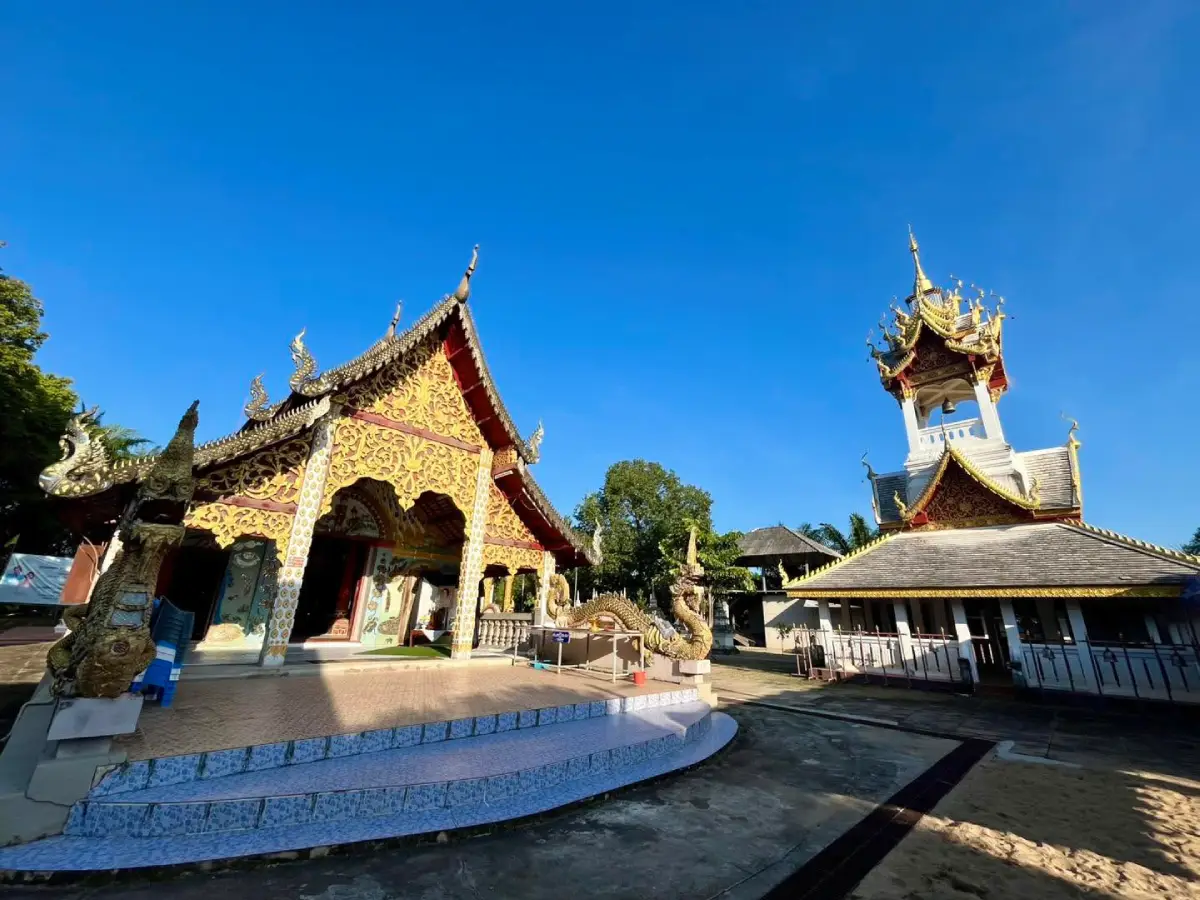
Important structures at Wat Tha Kham include the ubosot, sermon hall, monks’ residences, viharn, Buddha-image bathing hall, bat offering hall, sala, and bell tower. Important sacred and cultural objects include the chedi, Buddha images, old Buddhist manuscripts, and objects associated with the temple’s long community history. These elements make Wat Tha Kham a complete village temple, not merely a small worship site.
One of the temple’s most distinctive features is its glass-mosaic artwork on the walls of its religious buildings. This contemporary community art was created through cooperation between the local community and art researchers. The glass artworks present Buddhist themes, the way of life of Hot District, Lanna traditions, and local cultural memory in a vivid visual form.
The glass artworks are valuable because they are more than decoration. They function as a visual archive of local life. Images related to relic-bathing ceremonies, candlelight circumambulation, Salakphat, Tan Kuai Salak, offering processions, tree-support ceremonies, Yi Peng, Poi Luang, Buddhist Lent, and community life turn the temple walls into a learning space where visitors can understand local culture through art.
Beyond the glass art, the temple is also associated with murals of the Buddha’s life, a Ho Phra Trai, a relic chedi, old Buddha images, and Pali palm-leaf manuscripts. These elements give the temple both religious and educational significance. Wat Tha Kham is therefore suitable for travelers interested in worship, Lanna art, old Buddhist manuscripts, local heritage, and the history of Hot District.
The old Buddha images and Pali palm-leaf manuscripts reflect the temple’s role in preserving Buddhist knowledge. Palm-leaf manuscripts were once essential for recording chants, teachings, and religious knowledge. Within an old temple such as Wat Tha Kham, these manuscripts show that the temple functioned as a space for learning as well as for rituals.
The temple has had a line of monastic leaders and caretakers, including Phra Athikan Kham Sai Panya, Chao Athikan China Chantuppamo, Phra Bunsoei Suchitto, Phra Duangchan Khemacharo, and Phra Khru Phisit Punyaphirak Mahapunyo, who appears in current temple information as the abbot of Wat Tha Kham (Chai Chana). This continuity of monastic leadership helped sustain the temple’s religious life and its relationship with Ban Tha Kham.
Chao Athikan China is also remembered in local cultural accounts. His association with local wisdom and Lanna monastic memory adds another layer to the temple’s significance. This makes Wat Tha Kham meaningful not only as a building complex, but also as a place connected with monks, teachers, faith, and community memory.
Wat Tha Kham has also become an important learning site for community art. Research on community museums and creative art has used Wat Tha Kham as a key case for developing local learning spaces, copying old Phra Bot designs, creating contemporary Phra Bot paintings, designing Lanna line-art patterns, and organizing art education activities for youth, villagers, and the public. This gives the temple a modern educational role alongside its religious role.
The learning activities around Wat Tha Kham help young people and local residents see the value of their own heritage through art. Instead of learning only from documents, they learn from real places, real objects, and visual works inside the temple. This makes the temple a living cultural classroom for the community.
The temple plays several roles in Ban Tha Kham. It is a spiritual center, a place for merit-making, sermons, food offerings, Kathin, Pha Pa, Salakphat, relic-bathing ceremonies, and annual traditions. It also supports cultural transmission, allowing elders to pass local customs to younger generations and helping villagers preserve Lanna identity through shared religious practice.
Important traditions associated with Ban Tha Kham and the temple include the Lanna New Year, tree-support processions, local spirit-related ceremonies, Salakphat, Tan Khao Mai, long sermon traditions, Yi Peng, novice ordination processions, relic bathing, and Poi Luang. These traditions show that Buddhism and local Lanna culture remain closely connected in the life of the community.
Ban Tha Kham also preserves several types of local wisdom, including bamboo weaving, fishing tools, traditional music such as salo, saw, and sueng, procession drums, herbal knowledge, and folk healing traditions. A visit to Wat Tha Kham can therefore be understood as a visit to a broader cultural landscape, where religion, art, craft, music, and local knowledge are interlinked.
The main appeal of Wat Tha Kham is its combination of age, sacred space, glass art, old manuscripts, community memory, and cultural learning. Visitors should take time to observe the details of the glass-mosaic artwork, pay respect at the worship areas, view the chedi, and understand how the temple connects Buddhism with the life of Hot District.
Wat Tha Kham is suitable for cultural travelers, visitors interested in old Lanna temples, people who appreciate contemporary community art, and travelers who want to understand Hot District beyond its natural attractions. The temple is not defined by grand scale, but by layers of history, art, religion, and community identity.
Nearby places can be combined into several routes. Travelers interested in temples and history can continue to Wat Luang Hot, Wat Phra Chao To, and the old Hot chedi area. Travelers interested in nature can continue to Ob Luang National Park, one of the most important geological and natural attractions in Hot District.
Getting There from Chiang Mai city, take Highway 108 toward Hot and Mae Sariang. Continue to Hot District, then enter Hang Dong Subdistrict and Ban Tha Kham, Moo 2. The temple is accessible from central Hot, making it convenient for a cultural stop before continuing to nearby temples or Ob Luang National Park.
Travelers using public transport should first reach Hot District, then arrange local transport to Ban Tha Kham. A private car is the most convenient option because it allows visitors to combine Wat Tha Kham with Wat Luang Hot, Wat Phra Chao To, Wat Khong Ngam, or Ob Luang in the same day. Drivers should allow extra time when continuing toward mountain roads or natural attractions, especially during rain or fog.
Visitors should dress modestly, speak quietly, avoid disturbing monks and local residents, and not touch antiques, manuscripts, or sacred objects without permission. Photography of glass artworks and temple activities should be done respectfully, especially when ceremonies or merit-making activities are taking place.
In summary, Wat Tha Kham (Chai Chana) is a historic community temple of Ban Tha Kham, Hang Dong Subdistrict, Hot District, Chiang Mai Province. Built in 1902, officially established in 1912, and granted Wisungkhamsima in 1967, the temple is known for its former name Wat Chai Chana, its founder Nai Mong Mo Suai, its religious buildings, glass-mosaic art, old Buddhist manuscripts, cultural learning role, and its continuing importance as a spiritual and cultural center of Ban Tha Kham.
| Name | Wat Tha Kham (Chai Chana) |
| Former Name | Wat Chai Chana |
| Location | Ban Tha Kham, Moo 2, Hang Dong Subdistrict, Hot District, Chiang Mai Province |
| Address | No. 115, Moo 2, Ban Tha Kham, Hang Dong Subdistrict, Hot District, Chiang Mai 50240, Thailand |
| Temple Type | Local Buddhist temple under the Mahanikaya order |
| Temple Area | 6 rai and 3 ngan |
| Highlights | Historic temple of Ban Tha Kham with glass-mosaic community art, old Buddhist objects, palm-leaf manuscripts, a relic chedi, and a strong cultural learning role |
| History | Built in 1902, officially established as a temple in 1912, and granted Wisungkhamsima on 14 March 1967 |
| Founder | Nai Mong Mo Suai initiated the temple and donated the land |
| Abbot | Phra Khru Phisit Punyaphirak Mahapunyo |
| Important Structures | Ubosot, sermon hall, monks’ residences, viharn, Buddha-image bathing hall, bat offering hall, sala, bell tower, relic chedi, and community art learning space |
| Sacred And Cultural Objects | Relic chedi, old Buddha images, Buddhist objects, Pali palm-leaf manuscripts, and glass-mosaic artworks depicting Buddhism, traditions, and local life |
| Distinctive Art | Contemporary glass-mosaic art on temple walls presenting Buddhist stories, Lanna traditions, and the cultural life of Hot District |
| Learning Role | Community art and cultural learning site connected with Phra Bot art, Lanna line art, community museum development, and youth art education |
| Important Religious Events | Lanna New Year, tree-support ceremonies, Salakphat, Tan Khao Mai, long sermon traditions, Yi Peng, novice ordination processions, relic bathing, Poi Luang, Kathin, and Pha Pa |
| Distinctive Features | Old community temple that combines Buddhism, Lanna art, old manuscripts, community memory, and the cultural identity of Ban Tha Kham |
| Community Role | Spiritual center of Ban Tha Kham, supporting merit-making, sermons, annual traditions, cultural learning, and local community activities |
| Travel Information | Take Highway 108 from Chiang Mai toward Hot and Mae Sariang, then continue into Ban Tha Kham, Moo 2, Hang Dong Subdistrict |
| Current Status | Open as a community Buddhist temple, religious site, and cultural learning space of Ban Tha Kham |
| Open Days | Daily |
| Opening Hours | 08.00 – 17.00 |
| Local Administrative Contact | Hang Dong Subdistrict Administrative Organization, Tel. 0-5303-0609 |
| Nearby Tourist Attractions | 1. Wat Luang Hot, about 2 km 2. Wat Phra Chao To, about 3 km 3. Old Hot Chedi Area, about 3 km 4. Wat Khong Ngam, about 10 km 5. Ob Luang National Park, about 18 km |
| Nearby Restaurants | 1. Good Morning Hod, about 2 km, Tel. 091-853-7308 2. Denchai Hod Fresh Coffee, about 2 km, Tel. 083-301-2565 3. Moo Inter Hod, about 2 km, Tel. 061-271-8118 4. Wilai Porn Restaurant & Hod Coffee, about 3 km, Tel. 084-222-2421 5. Aunt Pen’s Larb Hot, about 3 km, Tel. 088-782-4554 |
| Nearby Accommodations | 1. Gardum House, about 3 km, Tel. 063-119-4959 2. Huen Hug Hod The Resort, about 4 km, Tel. 085-030-7356 3. Kiss Hod Resort, about 5 km, Tel. 080-135-2992 4. Hod Resort, about 5 km, Tel. 053-460-170 5. Rose House Hot, about 5 km |
Frequently Asked Questions (FAQ)
Q: Where is Wat Tha Kham (Chai Chana) located?
A: Wat Tha Kham (Chai Chana) is located at No. 115, Moo 2, Ban Tha Kham, Hang Dong Subdistrict, Hot District, Chiang Mai Province 50240.
Q: What is the history of Wat Tha Kham (Chai Chana)?
A: The temple was built in 1902 and was formerly called Wat Chai Chana. Nai Mong Mo Suai initiated the temple and donated the land. It was officially established in 1912 and received Wisungkhamsima in 1967.
Q: Who is the abbot of Wat Tha Kham (Chai Chana)?
A: The abbot of Wat Tha Kham (Chai Chana) is Phra Khru Phisit Punyaphirak Mahapunyo.
Q: What are the important things to see at Wat Tha Kham (Chai Chana)?
A: Important features include the ubosot, viharn, sermon hall, bell tower, relic chedi, Ho Phra Trai, old Buddha images, Pali palm-leaf manuscripts, and glass-mosaic artworks presenting Buddhism and local life in Hot District.
Q: What are the opening hours of Wat Tha Kham (Chai Chana)?
A: The temple is open daily from 08.00 to 17.00.
Q: What type of traveler is Wat Tha Kham (Chai Chana) suitable for?
A: It is suitable for cultural travelers, visitors interested in old Lanna temples, glass-mosaic art, Buddhist objects, palm-leaf manuscripts, and the cultural history of Hot District.
Q: What nearby attractions can be visited with Wat Tha Kham (Chai Chana)?
A: Nearby places include Wat Luang Hot, Wat Phra Chao To, the old Hot chedi area, Wat Khong Ngam, and Ob Luang National Park.
 Category: ●Places of Worship
 Group: ●Temple
Last Update : 1 DayAgo
 Last Update : 1 DayAgo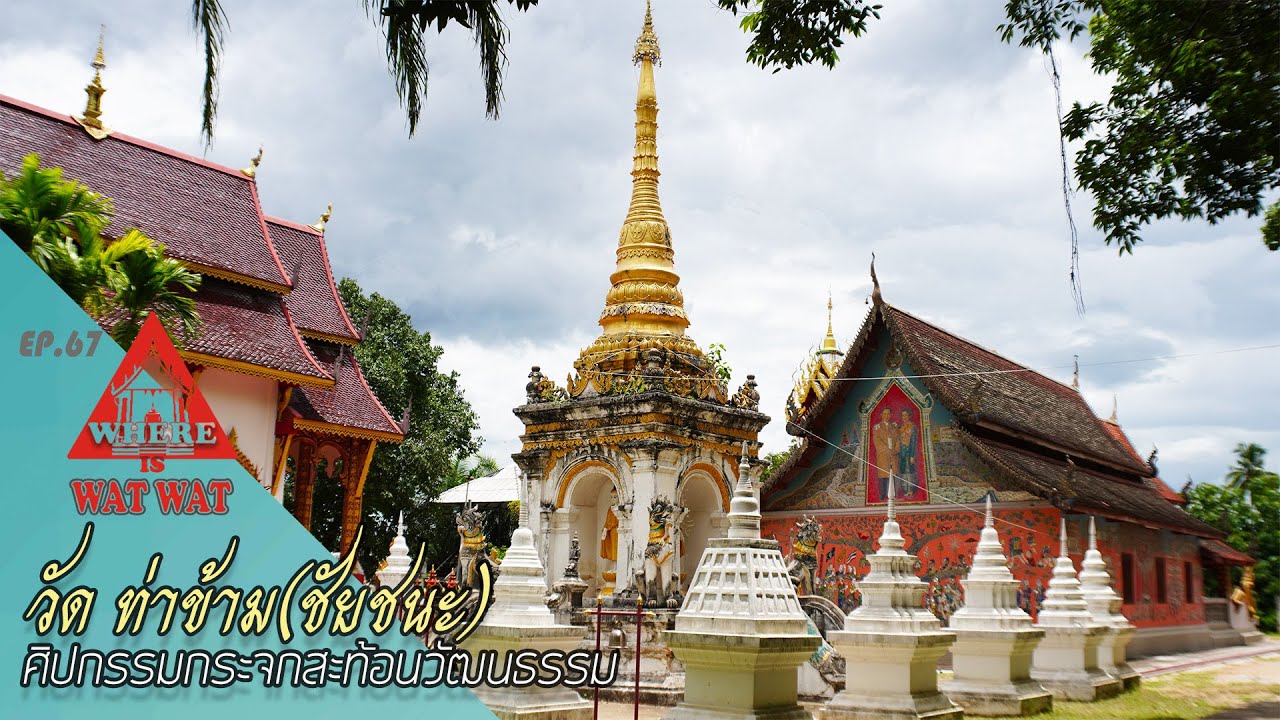
 Click to Access the Navigation Map GPS
Wat Tha Kham (Chai Chana) Map
Recommend

 Muang Chiang Mai(121)Chom Thong(47)Mae Chaem(25)Chiang Dao(33)Doi Saket(68)Mae Taeng(85)Mae Rim(69)Samoeng(29)Fang(71)Mae Ai(59)Phrao(70)San Pa Tong(103)San Kamphaeng(66)San Sai(73)Hang Dong(73)Hot(32)Doi Tao(22)Omkoi(11)Saraphi(74)Wiang Haeng(15)Chai Prakan(28)Mae Wang(32)Mae On(22)Doi Lo(34)Galyani Vadhana(1)


