
lovethailand home >North Travel Attractions >Chiang Mai Travel Attractions >Hot >Ban Tan > Wat Mae Yui
TL;DR: Wat Mae Yui is located at Ban Mae Yui, Moo 7, Ban Tan Subdistrict, Hot District, Chiang Mai Province, open Daily, hours Open 24 Hours.
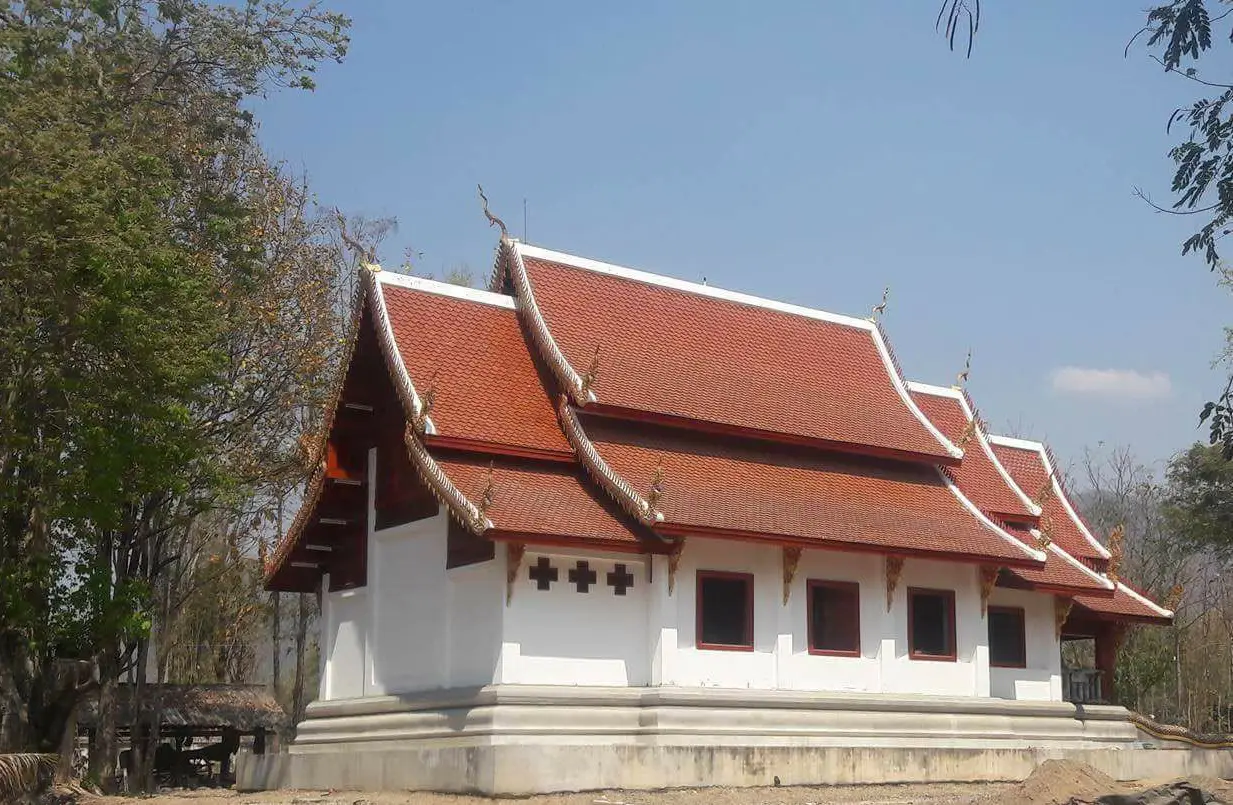
Wat Mae Yui
Open Days: Daily
Opening Hours: Open 24 Hours
Wat Mae Yui is located in Ban Mae Yui, Moo 7, Ban Tan Subdistrict, Hot District, Chiang Mai Province. It is a local Buddhist temple under the Mahanikaya order and was officially permitted to be established in 1993. The temple serves as the community temple of Ban Mae Yui and reflects the connection between Buddhism, Lanna village life, water sources, mountains, and rural culture in Hot District.
Wat Mae Yui is meaningful as a village temple rather than a large commercial tourist attraction. Its value lies in its quiet atmosphere, its role as a place for merit-making and Buddhist activities, and its close connection with the people of Ban Mae Yui. Visitors who come here will experience a working rural temple that remains part of everyday community life.
Ban Mae Yui is Moo 7 of Ban Tan Subdistrict, Hot District, Chiang Mai Province. The village has several local water sources used for agriculture and daily life, including a stream, ponds, a reservoir, weirs, and small water-storage areas. Wat Mae Yui therefore stands in a village environment closely connected with water, farming, and local landscape.
Ban Tan Subdistrict is an old community area of Hot District. Its landscape is shaped by the Ping River, Mae Tan stream, foothills, mountains, agricultural land, and Lanna village traditions. Within this setting, Wat Mae Yui belongs to a cultural landscape where houses, temples, water sources, farmland, and Buddhist belief exist together.
The temple’s official establishment in 1993 gave Wat Mae Yui formal status within the Thai Sangha system. Although it is younger in registration than some other temples in Ban Tan, it plays an essential role as the village temple of Ban Mae Yui. It provides a place for Buddhist holy days, merit-making, sermons, seasonal ceremonies, and community activities.
Temple listings identify Wat Mae Yui as a Mahanikaya temple with registration code 350160305, located in Ban Tan Subdistrict, Hot District, Chiang Mai Province, Moo 7. This confirms that it is a registered local Buddhist temple rather than an informal shrine or temporary religious site.
The main appeal of Wat Mae Yui is its community setting and its location near natural attractions in Ban Tan. Visitors can begin with a respectful visit to the temple and then continue to nearby places such as Pha Nang Noi Pha Nang Luang, Huai Nok Khao Waterfall, and Pha Sing Liao. This makes the temple a useful starting point for a route that combines Buddhism, village culture, and local nature.
Pha Nang Noi Pha Nang Luang is a natural limestone site in Ban Mae Yui, with old limestone formations, erosion marks, unusual rock shapes, and shallow caves with stalactites and stalagmites. Huai Nok Khao Waterfall is a small waterfall with pleasant natural surroundings. Together with Wat Mae Yui, these nearby places make Ban Mae Yui a route with both spiritual and natural appeal.
Wat Mae Yui plays several roles in the local community. It is a place for Buddhist holy days, offerings to monks, sermons, annual merit-making, and village gatherings. In Lanna rural society, a temple is not simply a religious building. It is a space that connects monks, elders, adults, youths, and families through merit-making and community participation.
Important community traditions in Ban Tan include Buddha-image processions, elder water-pouring ceremonies in April, and the Sarath Thai or Salakphat merit-making period around September to October. Villages take turns hosting these events, and temples provide the sacred and social space where villagers gather, give offerings, make merit, and preserve local traditions.
Salakphat is an important northern Thai merit-making tradition involving offerings, remembrance of ancestors, and community participation. For a village temple such as Wat Mae Yui, this tradition reinforces the relationship between Buddhism, family memory, and village unity.
Songkran, or the Lanna New Year, is another important time for community temples. People make merit, pay respect to Buddha images, pour water to ask blessings from elders, and join village activities. Wat Mae Yui therefore supports both Buddhist practice and the preservation of local social values.
Ban Tan Subdistrict has a strong Buddhist landscape. Local temples include Wat Latthiwan, Wat Pa Kham, Wat Phimphisan Rangsan, Wat Thung Pong, Wat Den Saraphi, Wat Mae Yui, and Wat Tha Nong Luang. Together, these temples form a network of religious and cultural centers serving the villages of Ban Tan.
The atmosphere of Wat Mae Yui is quiet and community-based. Visitors should expect an authentic village temple rather than a large sightseeing complex. The best experience is to pay respect, make merit, walk respectfully through the temple grounds, and observe how the temple fits into the surrounding village environment.
The main areas visitors should approach respectfully are the temple grounds, worship area, and community religious activity space. During annual ceremonies, the temple becomes the center of preparation, food offerings, sermons, and village participation. These functions are central to the life of a Lanna community temple.
Visitors should pay attention to the calm atmosphere of the temple, the surrounding Ban Mae Yui community, and the nearby natural landscape. Wat Mae Yui is especially suitable for travelers who want to combine a local Buddhist visit with nearby nature sites in Ban Tan.
Ban Tan Subdistrict covers about 104.8 square kilometers, or approximately 65,500 rai. Much of the area consists of mountains and foothills, with higher elevations in the east ranging from about 500 to 1,200 meters above sea level. The subdistrict also includes foothill plains and lowland areas near the Ping River. This landscape gives Ban Mae Yui and Wat Mae Yui a setting shaped by mountains, water, agriculture, and local communities.
Local livelihoods in Ban Tan are closely connected with agriculture. Residents cultivate rice, tobacco, maize, longan, mango, shallots, and garlic. Temple life is naturally connected with this rural rhythm. When important Buddhist or seasonal events arrive, villagers gather at the temple to make merit, support monks, and maintain community relationships.
Wat Mae Yui is suitable for cultural travelers, visitors interested in Lanna community temples, people exploring Ban Tan Subdistrict, and travelers who want to combine a quiet Buddhist visit with nature sites such as Pha Nang Noi Pha Nang Luang and Huai Nok Khao Waterfall.
Nearby cultural and natural places include Pha Nang Noi Pha Nang Luang, Huai Nok Khao Waterfall, Pha Sing Liao, Wat Phimphisan Rangsan, Wat Thung Pong, Wat Den Saraphi, and Wat Tha Nong Luang. This route gives travelers a combination of Buddhism, local tradition, limestone landscapes, waterfalls, and the rural character of Ban Tan.
Getting There from Chiang Mai city, travel toward Hot District and continue to Ban Tan Subdistrict and Ban Mae Yui, Moo 7. Ban Tan Subdistrict is about 17 km from central Hot District and about 105 km from Chiang Mai city. A private car is the most convenient option because it allows travelers to visit Wat Mae Yui and continue to nearby temples or natural attractions in the same trip.
Local roads connect the villages of Ban Tan. Travelers should check the route before departure, especially when continuing to Pha Nang Noi Pha Nang Luang, Huai Nok Khao Waterfall, or Pha Sing Liao. During the rainy season, extra caution is advised because some roads pass through foothill areas and natural access routes may become slippery. Travelers using public transport should first reach Hot District and then arrange local transport into Ban Tan.
A suitable route is to start from central Hot, enter Ban Tan Subdistrict, pay respect at Wat Mae Yui, and then continue to Pha Nang Noi Pha Nang Luang and Huai Nok Khao Waterfall. Travelers interested in local Buddhist sites can also include Wat Phimphisan Rangsan, Wat Thung Pong, Wat Den Saraphi, and Wat Tha Nong Luang in the same route.
Visitors should dress modestly, speak quietly, avoid entering monks’ private areas without permission, and keep the temple grounds clean. If visiting during a village merit-making event, visitors should follow local etiquette and respect monks, elders, and community participants.
In summary, Wat Mae Yui is the community temple of Ban Mae Yui, Moo 7, Ban Tan Subdistrict, Hot District, Chiang Mai Province. It is a local Buddhist temple under the Mahanikaya order and was officially established in 1993. Its value lies in its role as the spiritual center of Ban Mae Yui, its connection with Lanna village traditions, and its location near natural attractions such as Pha Nang Noi Pha Nang Luang, Huai Nok Khao Waterfall, and Pha Sing Liao.
| Name | Wat Mae Yui |
| Location | Ban Mae Yui, Moo 7, Ban Tan Subdistrict, Hot District, Chiang Mai Province |
| Address | Moo 7, Ban Mae Yui, Ban Tan Subdistrict, Hot District, Chiang Mai 50240, Thailand |
| Coordinates | 18.05516, 98.70598 |
| Temple Type | Local Buddhist temple under the Mahanikaya order |
| Temple Registration Code | 350160305 |
| Highlights | Community temple of Ban Mae Yui, close to natural attractions such as Pha Nang Noi Pha Nang Luang, Huai Nok Khao Waterfall, and Pha Sing Liao |
| History | Officially established as a Buddhist temple in 1993 |
| Name Origin | Named after Ban Mae Yui, Moo 7, the village where the temple is located |
| Main Areas | Temple grounds, worship area, and community religious activity space |
| Distinctive Features | Quiet Lanna village temple in Ban Tan Subdistrict, suitable for worship, merit-making, and nature-linked cultural travel in Ban Mae Yui |
| Community Role | Religious and community space for Buddhist holy days, Kathin, Pha Pa, Salakphat, Songkran, Lanna New Year traditions, and village activities |
| Travel Information | Travel from Chiang Mai toward Hot District, then continue to Ban Tan Subdistrict and Ban Mae Yui, Moo 7 |
| Current Status | Open as a community Buddhist temple and religious site of Ban Mae Yui |
| Open Days | Daily |
| Opening Hours | Open 24 Hours |
| Contact | 093-256-4283 |
| Local Administrative Contact | Ban Tan Municipality, Tel. 053-031131 |
| Nearby Tourist Attractions | 1. Pha Nang Noi Pha Nang Luang, about 3 km 2. Huai Nok Khao Waterfall, about 4 km 3. Pha Sing Liao, about 8 km 4. Wat Phimphisan Rangsan, about 10 km 5. Wat Thung Pong, about 12 km |
| Nearby Restaurants | 1. Good Morning Hod, about 20 km 2. Denchai Hod Fresh Coffee, about 20 km, Tel. 083-301-2565 3. Moo Inter Hod, about 20 km, Tel. 061-271-8118 4. Wilai Porn Restaurant & Hod Coffee, about 21 km 5. Aunt Pen’s Larb Hot, about 21 km, Tel. 088-782-4554 |
| Nearby Accommodations | 1. Huen Hug Hod The Resort, about 20 km, Tel. 085-030-7356 2. Kiss Hod Resort, about 20 km, Tel. 080-135-2992 3. Gardum House, about 21 km, Tel. 063-119-4959 4. Hod Resort, about 21 km, Tel. 053-460-170 5. Rose House Hot, about 21 km |
Frequently Asked Questions (FAQ)
Q: Where is Wat Mae Yui located?
A: Wat Mae Yui is located in Ban Mae Yui, Moo 7, Ban Tan Subdistrict, Hot District, Chiang Mai Province 50240.
Q: What is the history of Wat Mae Yui?
A: Wat Mae Yui is a local Buddhist temple under the Mahanikaya order and was officially established in 1993.
Q: Why is Wat Mae Yui important to the community?
A: The temple serves as the spiritual center of Ban Mae Yui and supports Buddhist holy days, Kathin, Pha Pa, Salakphat, Songkran, Lanna New Year traditions, and community activities.
Q: What are the opening hours of Wat Mae Yui?
A: The temple is open daily for 24 hours, but daytime is the most suitable period for worship and nearby nature travel.
Q: What type of traveler is Wat Mae Yui suitable for?
A: It is suitable for cultural travelers, visitors interested in Lanna community temples, Ban Tan local life, and nature-linked travel around Ban Mae Yui.
Q: How can travelers get to Wat Mae Yui?
A: Travelers can go from Chiang Mai toward Hot District, then continue to Ban Tan Subdistrict and Ban Mae Yui, Moo 7. A private car is the most convenient option.
Q: What nearby attractions can be visited with Wat Mae Yui?
A: Nearby places include Pha Nang Noi Pha Nang Luang, Huai Nok Khao Waterfall, Pha Sing Liao, Wat Phimphisan Rangsan, and Wat Thung Pong.
 Category: ●Places of Worship
 Group: ●Temple
Last Update : 19 HourAgo
 Last Update : 19 HourAgo
 Click to Access the Navigation Map GPS
 Muang Chiang Mai(121)Chom Thong(47)Mae Chaem(25)Chiang Dao(33)Doi Saket(68)Mae Taeng(85)Mae Rim(69)Samoeng(29)Fang(71)Mae Ai(59)Phrao(70)San Pa Tong(103)San Kamphaeng(66)San Sai(73)Hang Dong(73)Hot(32)Doi Tao(22)Omkoi(11)Saraphi(74)Wiang Haeng(15)Chai Prakan(28)Mae Wang(32)Mae On(22)Doi Lo(34)Galyani Vadhana(1)


