
lovethailand home >North Travel Attractions >Chiang Mai Travel Attractions >Hot >Bo Sali > Wat Thung Luang (Bo Sali)
TL;DR: Wat Thung Luang (Bo Sali) is located at Ban Thung Luang, Moo 5, Bo Sali Subdistrict, Hot District, Chiang Mai Province, open Daily, hours 08.00 – 17.00.

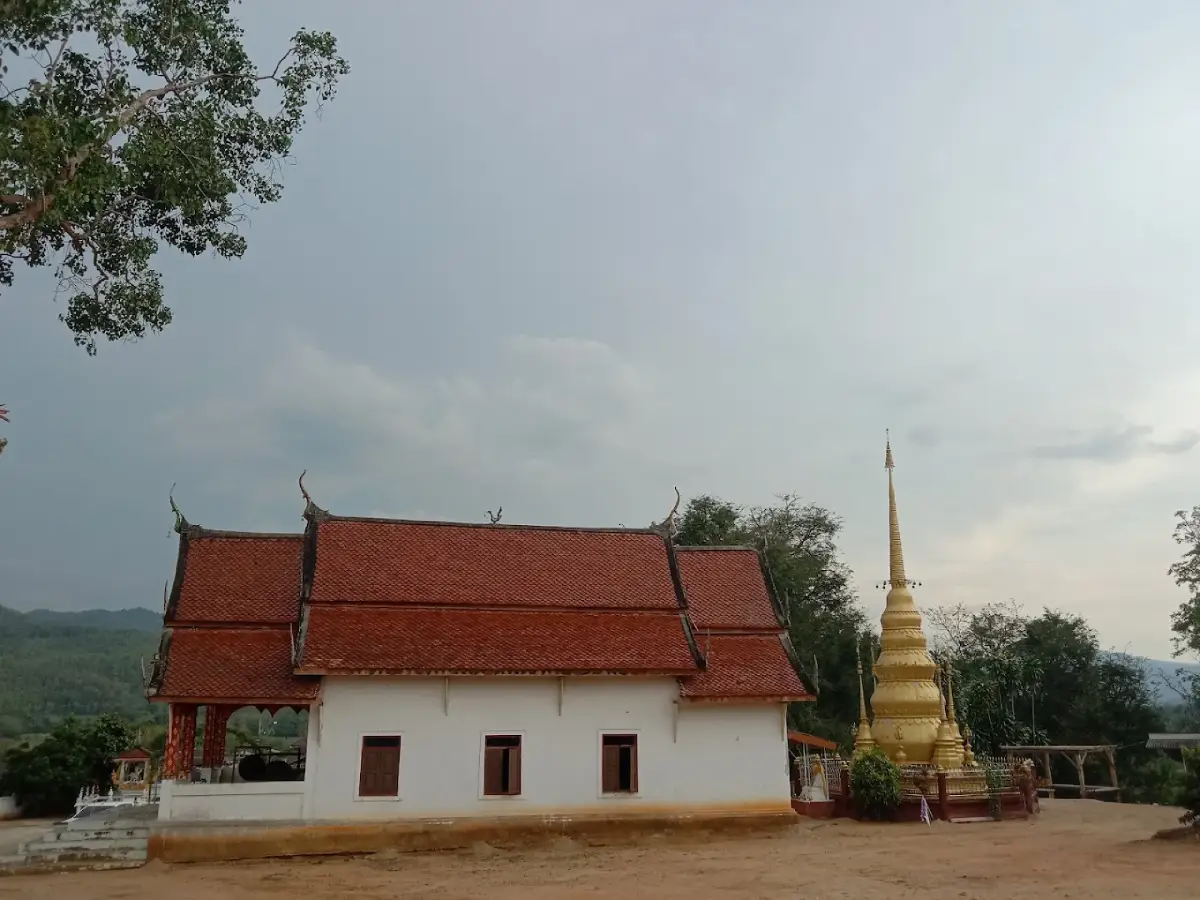
Wat Thung Luang (Bo Sali)
Open Days: Daily
Opening Hours: 08.00 – 17.00
Wat Thung Luang (Bo Sali) is located in Ban Thung Luang, Moo 5, Bo Sali Subdistrict, Hot District, Chiang Mai Province. It is a local Buddhist temple under the Mahanikaya order and was officially established in 1879. The temple is an important spiritual center for Ban Thung Luang and represents the close relationship between Buddhism, Lanna village culture, and rural life in the mountainous southern part of Chiang Mai.
Wat Thung Luang is not a large commercial tourist temple. Its value lies in its age, calm atmosphere, and long-standing role in the local community. The temple stands in Bo Sali Subdistrict, an area of high mountains, valleys, mixed deciduous forest, agricultural land, and scattered villages. Travelers who visit the temple will experience the quieter side of Chiang Mai, where a temple still functions as the spiritual heart of a village.
The temple’s history dates back to 1879, the year it was officially permitted to be established as a Buddhist temple. This makes Wat Thung Luang more than a century old. For Ban Thung Luang, the temple has long served as a place for merit-making, Buddhist ceremonies, community gatherings, and the preservation of local religious traditions. Its long history reflects the importance of Buddhism in sustaining village life in remote highland areas.
The name Thung Luang is connected with the village where the temple is located. Ban Thung Luang is part of Bo Sali Subdistrict in Hot District. The name evokes a rural settlement shaped by fields, local livelihoods, and community life. Wat Thung Luang therefore grew with the village rather than being created as a modern tourist attraction. It is a working community temple rooted in local faith and daily life.
Bo Sali Subdistrict itself has a meaningful local background. The name Bo Sali is associated with a water source under a Bodhi tree, locally called a sali tree, in Ban Bo Sali, Moo 6. This water source was used by villagers in daily life. The story reflects how water, trees, settlement, and community memory are closely connected in this part of Hot District. Wat Thung Luang belongs to this wider cultural landscape of village temples, natural resources, and highland communities.
Bo Sali Subdistrict is located about 55 km from Hot District Office and about 160 km from Chiang Mai city. Reaching the area requires a journey through mountain and rural roads, so Wat Thung Luang is best suited for travelers who intentionally want to explore Hot District beyond the main roadside attractions. Visitors interested in local temples, Lanna culture, and mountain communities will find the temple especially meaningful.
As a local Buddhist temple under the Mahanikaya order, Wat Thung Luang supports the religious life of Ban Thung Luang and nearby communities. Villagers use the temple for merit-making, offering food to monks, listening to sermons, observing Buddhist holy days, and holding annual religious events. In rural northern Thailand, temples of this kind are also important social spaces where community members gather and maintain cultural continuity.
The temple reflects the relationship between Buddhism and agricultural life in northern Thailand. Bo Sali has a landscape of mountains, forest, and farmland, and local life is closely linked with seasonal cycles. Religious events such as Kathin, Pha Pa, Buddhist holy days, and village merit-making activities give people opportunities to gather, support the temple, and reinforce community ties. Wat Thung Luang plays this role as the spiritual anchor of Ban Thung Luang.
The atmosphere of Wat Thung Luang is quiet and modest. Visitors should come with the expectation of seeing an authentic community temple rather than a large sightseeing complex. The temple is suitable for slow travel, respectful worship, and cultural observation. Its appeal comes from the simplicity of the setting, the age of the temple, and the way it remains connected with the people of the village.
Publicly confirmed details about specific buildings inside the temple are limited, so the temple should be presented mainly as a historic community temple of Ban Thung Luang. It is not appropriate to add unverified details about its ubosot, viharn, chedi, principal Buddha image, bell tower, or sermon hall. What can be clearly stated is that Wat Thung Luang is a recognized Buddhist temple that continues to serve the religious needs of its local community.
Visitors should pay attention to the overall atmosphere of the temple and village. Wat Thung Luang offers a direct impression of how local temples function in the highland communities of Hot District. Instead of dramatic architecture, the temple gives travelers a chance to understand the living role of Buddhism in a rural setting. This makes the temple valuable for cultural travelers who prefer real community places over crowded landmarks.
Historically, Wat Thung Luang is an important marker of Ban Thung Luang’s development. Since its official establishment in 1879, the temple has supported many generations of villagers. It has likely served as the setting for Buddhist ceremonies, ordinations, funerals, seasonal merit-making, and local gatherings. In this sense, the temple is part of the village’s memory and identity.
The temple also reflects Lanna Buddhist culture. In northern Thai villages, temples are often cared for by both monks and laypeople. Local residents help prepare merit-making events, clean temple grounds, offer food, support temple repairs, and gather for sermons. Kathin and Pha Pa offerings are especially important because they help maintain the temple while reinforcing shared faith among villagers.
Travelers planning a visit should prepare carefully because Bo Sali is relatively far from Chiang Mai city and from central Hot District. The route includes mountain and rural sections, so drivers should check brakes, tires, fuel, and weather conditions before traveling. Extra time should be allowed, especially during the rainy season or when fog is present. Driving after dark is not recommended for visitors unfamiliar with the route.
Getting There from Chiang Mai city, take Highway 108 toward Hot District, then continue into Bo Sali Subdistrict and Ban Thung Luang, Moo 5. The distance from Chiang Mai city to Bo Sali Subdistrict is about 160 km, while Bo Sali is about 55 km from central Hot District. Traveling by private car is the most convenient option because it allows visitors to manage time, stop along the way, and combine the temple with nearby natural attractions.
Visitors using public transport should first reach Hot District and then arrange local transport into Bo Sali Subdistrict. Since the temple is located within a village rather than on a major tourist road, having a private vehicle or local hired transport makes the trip much easier. This is especially useful for travelers who plan to continue to Doi Mae Tho, Bo Kaeo Pine Garden, Doi Bo Luang Forest Park, or other attractions in Hot District.
A recommended travel route is to combine Wat Thung Luang with natural attractions in Hot District. Travelers can start from central Hot, continue toward Bo Sali, visit Wat Thung Luang for worship and cultural observation, and then continue to Doi Mae Tho for mountain scenery and highland grassland views. Another option is to connect the journey with Bo Kaeo Pine Garden and Doi Bo Luang Forest Park if there is enough time.
Doi Mae Tho is one of the most suitable nearby attractions to combine with Wat Thung Luang. It is known for its highland scenery, open grassland, cool atmosphere, and mountain views. Pairing a village temple with a natural viewpoint allows travelers to experience both the cultural and environmental character of Bo Sali and Hot District.
Travelers interested in nearby temples can also include Wat Bo Sali, Wat Mae Tho, and other temples in Hot District. These local temples show how Buddhist sacred spaces are distributed across villages in the area. Each temple serves its own community, and together they form the religious landscape of Hot District.
Visitors should dress modestly, speak quietly, avoid entering monks’ private areas without permission, and keep the temple grounds clean. Photography should be done respectfully, especially during ceremonies or when local residents are present. Since Wat Thung Luang is a community temple, respectful behavior toward both monks and villagers is essential.
Wat Thung Luang is suitable for cultural travelers, visitors interested in old temples in Chiang Mai, those who want to understand highland village life, and travelers planning a deeper route through Hot District. The temple adds a local Buddhist dimension to an area often associated mainly with forests, mountains, and national parks.
In summary, Wat Thung Luang (Bo Sali) is a historic community temple in Ban Thung Luang, Bo Sali Subdistrict, Hot District, Chiang Mai Province. Established in 1879, the temple remains a spiritual center for the village and an important local Buddhist site. For travelers seeking a quiet, culturally grounded, and community-based experience in southern Chiang Mai, Wat Thung Luang is a meaningful stop on a Hot District travel route.
| Name | Wat Thung Luang (Bo Sali) |
| Location | Ban Thung Luang, Moo 5, Bo Sali Subdistrict, Hot District, Chiang Mai Province |
| Address | Moo 5, Ban Thung Luang, Bo Sali Subdistrict, Hot District, Chiang Mai 50240, Thailand |
| Temple Type | Local Buddhist temple under the Mahanikaya order |
| Highlights | Historic community temple of Ban Thung Luang, located in the mountainous area of Bo Sali Subdistrict |
| History | Officially established as a Buddhist temple in 1879 |
| Name Origin | Named after Ban Thung Luang, Moo 5, the village where the temple is located |
| Distinctive Features | Quiet Lanna community temple suitable for worship, merit-making, and learning about highland village life in Hot District |
| Community Role | Spiritual center of Ban Thung Luang, used for Buddhist ceremonies, holy days, Kathin, Pha Pa, and local community activities |
| Travel Information | Take Highway 108 from Chiang Mai toward Hot District, then continue into Bo Sali Subdistrict and Ban Thung Luang, Moo 5 |
| Current Status | Open as a community Buddhist temple and religious site of Ban Thung Luang |
| Open Days | Daily |
| Opening Hours | 08.00 – 17.00 |
| Local Administrative Contact | Bo Sali Subdistrict Administrative Organization, Tel. 053-106065 |
| Nearby Tourist Attractions | 1. Doi Mae Tho, about 18 km 2. Wat Bo Sali, about 12 km 3. Wat Mae Tho, about 20 km 4. Bo Kaeo Pine Garden, about 45 km 5. Doi Bo Luang Forest Park, about 50 km |
| Nearby Restaurants | 1. Rabeang Son Cafe, about 45 km, Tel. 062-079-9411 2. Suanson Coffee&rest, about 45 km, Tel. 098-748-8372 3. Na Samoeng Bo Kaeo Coffee, about 46 km, Tel. 097-165-7479 4. Good Morning Hod, about 55 km, Tel. 091-853-7308 5. Denchai Hod Fresh Coffee, about 55 km, Tel. 083-301-2565 |
| Nearby Accommodations | 1. Doi Bo Luang Forest Park by the Forest Industry Organization, about 50 km, Tel. 092-586-9215 2. Tiw Son Resort Hot, about 50 km, Tel. 080-845-1167 3. Huen Hug Hod The Resort, about 55 km, Tel. 085-030-7356 4. Kiss Hod Resort, about 55 km, Tel. 080-135-2992 5. Gardum House, about 57 km, Tel. 063-119-4959 |
Frequently Asked Questions (FAQ)
Q: Where is Wat Thung Luang (Bo Sali) located?
A: Wat Thung Luang (Bo Sali) is located in Ban Thung Luang, Moo 5, Bo Sali Subdistrict, Hot District, Chiang Mai Province 50240.
Q: What is the history of Wat Thung Luang?
A: Wat Thung Luang is a local Buddhist temple under the Mahanikaya order and was officially established in 1879.
Q: What are the opening hours of Wat Thung Luang?
A: The temple is open daily from 08.00 to 17.00.
Q: What type of traveler is Wat Thung Luang suitable for?
A: It is suitable for cultural travelers, visitors interested in old Chiang Mai temples, Lanna village life, and quiet community-based travel in Hot District.
Q: How can travelers get to Wat Thung Luang?
A: Travelers can take Highway 108 from Chiang Mai toward Hot District, then continue into Bo Sali Subdistrict and Ban Thung Luang, Moo 5. A private car is the most convenient option.
Q: What nearby attractions can be visited with Wat Thung Luang?
A: Nearby places include Doi Mae Tho, Wat Bo Sali, Wat Mae Tho, Bo Kaeo Pine Garden, and Doi Bo Luang Forest Park.
Q: What should visitors prepare before visiting Wat Thung Luang?
A: Visitors should dress modestly, bring drinking water, check their vehicle before traveling, and allow extra time because Bo Sali is a highland area located far from central Hot District.
 Category: ●Places of Worship
 Group: ●Temple
Last Update : 1 DayAgo
 Last Update : 1 DayAgo
 Click to Access the Navigation Map GPS
Wat Thung Luang (Bo Sali) Map
Recommend

 Muang Chiang Mai(121)Chom Thong(47)Mae Chaem(25)Chiang Dao(33)Doi Saket(68)Mae Taeng(85)Mae Rim(69)Samoeng(29)Fang(71)Mae Ai(59)Phrao(70)San Pa Tong(103)San Kamphaeng(66)San Sai(73)Hang Dong(73)Hot(32)Doi Tao(22)Omkoi(11)Saraphi(74)Wiang Haeng(15)Chai Prakan(28)Mae Wang(32)Mae On(22)Doi Lo(34)Galyani Vadhana(1)


