
lovethailand home >North Travel Attractions >Chiang Mai Travel Attractions >Omkoi >Mae Tuen > Wat Chom Chaeng (Mae Tuen)
TL;DR: Wat Chom Chaeng (Mae Tuen) is located at No. 2, Moo 2, Mae Tuen Subdistrict, Omkoi District, Chiang Mai Province 50310, open Daily, hours 08.00 – 17.00.

Wat Chom Chaeng (Mae Tuen)
Open Days: Daily
Opening Hours: 08.00 – 17.00
Wat Chom Chaeng (Mae Tuen) is located at No. 2, Moo 2, Mae Tuen Subdistrict, Omkoi District, Chiang Mai Province 50310. It is a local Buddhist temple under the Mahanikaya sect. The temple was officially permitted to be established in 1303 BE, and Phra Athikan Thanongdet Cittasaṃvaro is the abbot. Wat Chom Chaeng serves as an important community temple in Mae Tuen, a mountainous area in the southern part of Chiang Mai Province, where temples remain closely connected with village life, Buddhist ceremonies, merit-making, and local identity.
Wat Chom Chaeng is best understood as a living community temple rather than a commercial tourist attraction. Its importance lies in its role as a place of worship and a spiritual center for Mae Tuen residents. For travelers, the temple offers a deeper view of Omkoi beyond natural attractions, waterfalls, and mountain routes. It reveals how Buddhism continues to support daily life in highland villages far from Chiang Mai city.
Mae Tuen Subdistrict is part of Omkoi District and uses the postal code 50310. The subdistrict includes several villages such as Ban Luang, Ban Mai, Ban Pa Kha, Ban San Ton Pin, Ban Huai Lo Duk, Ban Khun Mae Tuen Noi, Ban Mae Toei, Ban Huai Yab, Ban Mae Ra A Nai, Ban Mae Ra A Nok, Ban Thung Ton Ngio, and other highland communities. Ban Mai is Moo 2 of Mae Tuen and is directly connected with Wat Chom Chaeng. This setting makes the temple part of the everyday social and religious landscape of the community.
The key historical point of Wat Chom Chaeng is its official establishment in 1303 BE. This gives the temple strong historical importance within the Mae Tuen area. Although detailed public records about its founder, restorations, and architectural phases are limited, the presence of the temple shows the long continuity of Buddhist faith in this highland community. A village temple in Mae Tuen is not only a religious site, but also a place where local memory, merit-making, and community relationships are preserved.
The name “Chom Chaeng” suggests an elevated place and a sense of brightness. “Chom” can refer to a crest, summit, or high point, while “Chaeng” suggests brightness, openness, and clear light. Together, the name evokes the atmosphere of a highland temple in a mountain community. This meaning matches the character of Mae Tuen, where village life, hills, morning light, and Buddhist faith remain closely linked.
Wat Chom Chaeng is a local temple, not a large-scale sightseeing site. Its value is found in simplicity, continuity, and its relationship with the local community. Visitors who appreciate quiet temples, local Buddhist culture, and rural Chiang Mai will find the temple meaningful. It is a place for merit-making, respectful worship, and understanding how a community temple continues to serve people in a remote district.
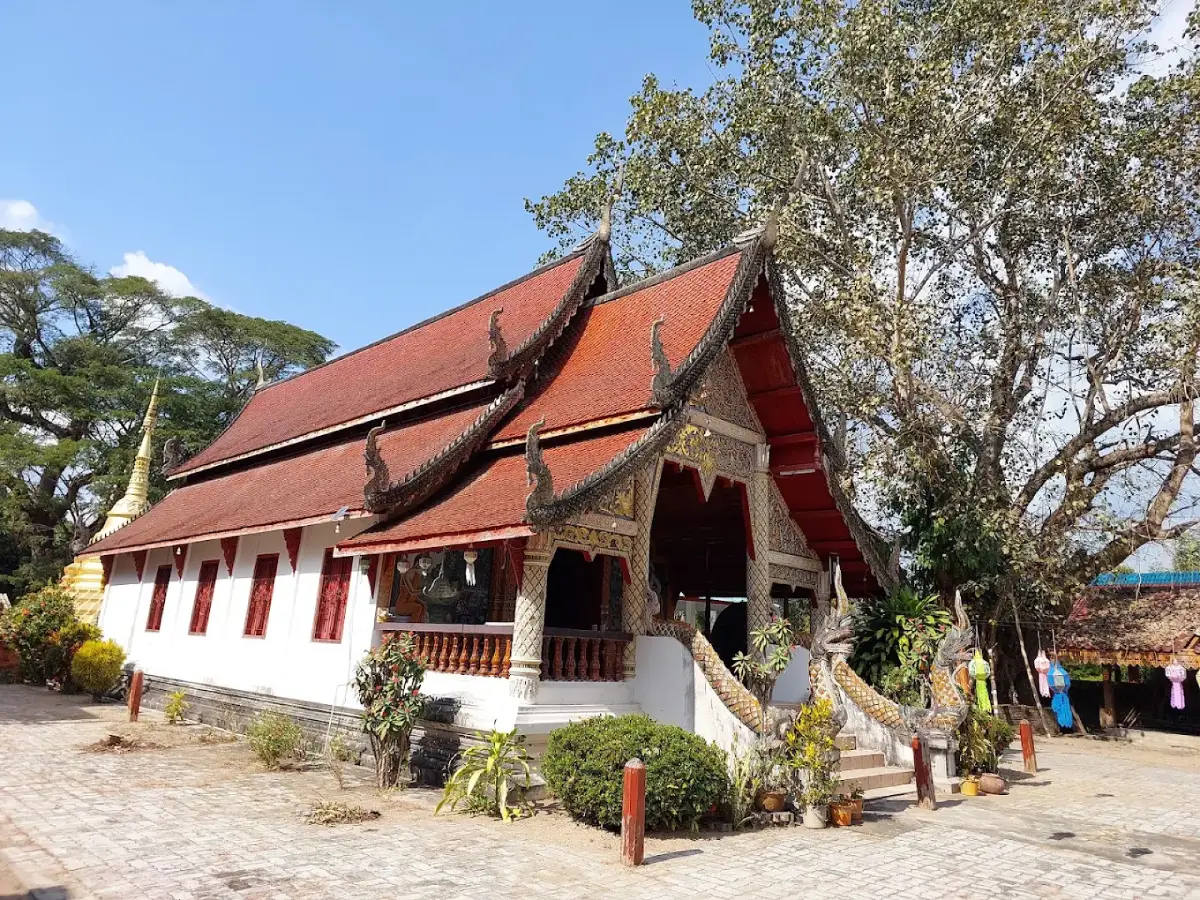
Publicly confirmed details about specific temple structures such as a viharn, ubosot, stupa, principal Buddha image, bell tower, or sermon hall are limited. For this reason, Wat Chom Chaeng is best presented as a community temple with religious activity areas, a temple yard, and spaces used by monks and villagers. Visitors who need detailed architectural information should ask monks or local residents directly during the visit.
Phra Athikan Thanongdet Cittasaṃvaro is the abbot of Wat Chom Chaeng. In a highland community temple, the abbot’s role is important not only for monastic life but also for guiding ceremonies, teaching Dhamma, receiving religious invitations, and maintaining the temple as a peaceful space for the village. Visitors should behave respectfully and remember that the temple is an active place of worship.
Wat Chom Chaeng functions as a spiritual center for the Mae Tuen community. On Buddhist holy days and during merit-making occasions, villagers can gather at the temple to make offerings, listen to Dhamma teachings, and join religious activities. These gatherings help connect elders, families, young people, and local leaders. In this way, the temple is both a religious place and a social anchor for the village.
Buddhist activities connected with Wat Chom Chaeng follow the general rhythm of community temple life in northern Thailand. These include Buddhist holy day observances, Buddhist Lent, the end of Buddhist Lent, Kathin, robe-offering ceremonies, candle offerings, and community support for temple maintenance. Local records also show Wat Chom Chaeng as one of the temples involved in candle-offering activities during the Buddhist Lent season in Mae Tuen.
The atmosphere of Wat Chom Chaeng is quiet and local. Visitors should dress modestly, speak politely, avoid disturbing monks or villagers, ask permission before photographing people, and keep the temple clean. This is an active religious space for the community, not a staged attraction. A respectful visit allows travelers to appreciate the temple’s meaning without disrupting local life.
Getting There requires travelling from Omkoi District toward Mae Tuen Subdistrict and Ban Mai. The route passes through mountainous terrain, so visitors should use a well-maintained vehicle and check road and weather conditions before departure. During or after heavy rain, highland roads can become more difficult. Daytime travel is recommended, and night driving should be avoided by visitors unfamiliar with the area.
Travelers coming from Chiang Mai city should allow plenty of time. Omkoi is far from the provincial city, and the onward journey into Mae Tuen adds more travel time. A same-day trip from Chiang Mai city is not ideal for visitors who want a safe and meaningful experience. A better plan is to stay overnight in Omkoi or Mae Tuen, then continue the visit during daylight.
Wat Chom Chaeng can be combined with nearby temples and community places in Mae Tuen, such as Wat Doi Chai Mongkhon, Wat Pa Kha, Wat Mae Tuen Noi, Mae Tuen Noi Waterfall, Mae Ra A National Park, and nature routes along the Mae Tuen River. This creates a balanced itinerary that includes community faith, village life, and the natural landscape of Omkoi.
Mae Tuen Noi Waterfall adds an important nature-based dimension to the route. It is located in Mae Tuen Subdistrict and is connected with Omkoi’s mountain geography. A trip can begin with a respectful visit to Wat Chom Chaeng, then continue to local natural attractions. This approach helps visitors understand Mae Tuen as a place where temples, villages, streams, waterfalls, and highland landscapes are connected.
Restaurants and accommodations near Wat Chom Chaeng are more limited than in Chiang Mai city or central tourist areas. Visitors should carry drinking water, snacks, and essential supplies. Local cafés, small restaurants, and accommodations are available in Mae Tuen and Omkoi, but advance contact is recommended, especially on weekends or during local travel seasons. Some accommodations are small community-style resorts, so availability should be checked before arrival.
The main appeal of Wat Chom Chaeng is its authenticity as a local temple in Mae Tuen. It shows that Chiang Mai’s religious landscape is not limited to famous city temples or major pilgrimage sites. It also includes highland community temples that quietly support Buddhist life every day. For travelers interested in culture, Omkoi, and Mae Tuen, Wat Chom Chaeng is a meaningful stop.
Wat Chom Chaeng is suitable for travelers interested in local temples, community history, highland life, and routes that combine Buddhist culture with nature. A visit should be slow, respectful, and well planned. With proper preparation, the temple can become part of a thoughtful journey through Omkoi’s mountain communities, where faith and landscape remain closely connected.
In summary, Wat Chom Chaeng (Mae Tuen) is a Mahanikaya community temple at No. 2, Moo 2, Mae Tuen Subdistrict, Omkoi District, Chiang Mai Province. It is open daily from 08.00 to 17.00. With Phra Athikan Thanongdet Cittasaṃvaro as abbot, the temple remains an important spiritual place for the Mae Tuen community and a worthwhile stop for travelers who want to understand the cultural depth of Omkoi.
| Name | Wat Chom Chaeng (Mae Tuen) |
| Type | Local Buddhist temple under the Mahanikaya sect |
| Location | No. 2, Moo 2, Mae Tuen Subdistrict, Omkoi District, Chiang Mai Province 50310 |
| Address | No. 2, Moo 2, Ban Mai / Ban Doi Area, Mae Tuen Subdistrict, Omkoi District, Chiang Mai 50310, Thailand |
| Highlights | Old community temple in Mae Tuen and a spiritual center for Omkoi’s highland Buddhist community |
| History | Officially permitted to be established as a temple in 1303 BE |
| Name Origin | The name suggests an elevated place associated with brightness and openness in a mountain setting |
| Distinctive Features | A local mountain village temple suitable for merit-making, quiet worship, and learning about Buddhist community life in Omkoi |
| Travel Information | Travel from Omkoi District into Mae Tuen Subdistrict and Ban Mai. Use a well-maintained vehicle, check local road conditions, and avoid heavy rain or night driving. |
| Current Status | Still listed as a temple in Mae Tuen Subdistrict, Omkoi District, Chiang Mai Province |
| Open Days | Daily |
| Opening Hours | 08.00 – 17.00 |
| Facilities | As a highland community temple, visitors should bring drinking water, snacks, and basic personal supplies |
| Main Areas / Zones | Religious activity area, temple yard, and community-use temple grounds in Mae Tuen |
| Abbot / Caretaker | Phra Athikan Thanongdet Cittasaṃvaro |
| Local Contact | Mae Tuen Subdistrict Municipality, Tel. 052-001590 |
| Nearby Tourist Attractions | 1. Wat Doi Chai Mongkhon, about 1 km 2. Wat Pa Kha, about 3 km 3. Mae Tuen Hospital and Mae Tuen Community Area, about 1–2 km 4. Mae Tuen Noi Waterfall, about 15–20 km 5. Mae Ra A National Park, about 35–45 km 6. Mae Tuen River and Mae Tuen Nature Route, about 10–30 km 7. Doi Mon Chong, about 80–90 km, Tel. 092-559-7201, 093-731-0626 |
| Nearby Restaurants / Mae Tuen and Omkoi Route | 1. Mae Tuen Cafe, about 2–5 km 2. PizzaDoi, about 20 km, Tel. 092-404-0094 3. Good Morning Omkoi, about 45–60 km, Tel. 098-950-4091 4. Dong Coffee De Omkoi, about 45–60 km, Tel. 086-191-2119 5. Ae Na Na Omkoi, about 45–60 km, Tel. 082-648-5778 6. Muan Kha Nat at Omkoi, about 45–60 km, Tel. 089-850-7182, 084-378-1567 |
| Nearby / Mae Tuen and Omkoi Accommodations | 1. Mae Tuen Resort House, about 2–5 km, Tel. 093-276-6287 2. Ban Saeng Chan Resort, about 2–5 km, Tel. 064-994-4977, 093-212-4123 3. Natpanee Resort, about 2–5 km, Tel. 061-424-1662 4. Phing Thara Omkoi, about 45–60 km, Tel. 062-308-6178 5. Chalermphan Resort, about 45–60 km, Tel. 082-888-1919 |
Frequently Asked Questions (FAQ)
Q: Where is Wat Chom Chaeng (Mae Tuen) located?
A: Wat Chom Chaeng is located at No. 2, Moo 2, Mae Tuen Subdistrict, Omkoi District, Chiang Mai Province 50310.
Q: What type of temple is Wat Chom Chaeng?
A: It is a local Buddhist temple under the Mahanikaya sect and serves the Mae Tuen community.
Q: When was Wat Chom Chaeng established?
A: Wat Chom Chaeng was officially permitted to be established as a temple in 1303 BE.
Q: Who is the abbot of Wat Chom Chaeng?
A: The abbot is Phra Athikan Thanongdet Cittasaṃvaro.
Q: What are Wat Chom Chaeng’s opening days and hours?
A: It is open daily from 08.00 to 17.00.
Q: Who should visit Wat Chom Chaeng?
A: It is suitable for travelers interested in local temples, highland communities, Omkoi culture, and routes that combine Buddhist heritage with Mae Tuen’s natural attractions.
Q: How should visitors prepare for the trip?
A: Visitors should use a well-maintained vehicle, bring water and essential supplies, check the weather, and confirm local road conditions before travelling into Mae Tuen.
Q: What nearby places can be combined with this visit?
A: Nearby route options include Wat Doi Chai Mongkhon, Wat Pa Kha, Mae Tuen Noi Waterfall, Mae Ra A National Park, the Mae Tuen River route, and Doi Mon Chong.
 Category: ●Places of Worship
 Group: ●Temple
Last Update : 3 DayAgo
 Last Update : 3 DayAgo
 Click to Access the Navigation Map GPS
Wat Chom Chaeng (Mae Tuen) Map
Recommend

 Muang Chiang Mai(121)Chom Thong(47)Mae Chaem(25)Chiang Dao(33)Doi Saket(68)Mae Taeng(85)Mae Rim(69)Samoeng(29)Fang(71)Mae Ai(59)Phrao(70)San Pa Tong(103)San Kamphaeng(66)San Sai(73)Hang Dong(73)Hot(32)Doi Tao(22)Omkoi(11)Saraphi(74)Wiang Haeng(15)Chai Prakan(28)Mae Wang(32)Mae On(22)Doi Lo(34)Galyani Vadhana(1)


