
lovethailand home >North Travel Attractions >Chiang Mai Travel Attractions >Hang Dong >Hang Dong > Wat Prasattham
TL;DR: Wat Prasattham is located at Ban Mae Khak, Moo 5, Hang Dong Subdistrict, Hang Dong District, Chiang Mai, open Daily, hours 08:00 – 17:00.
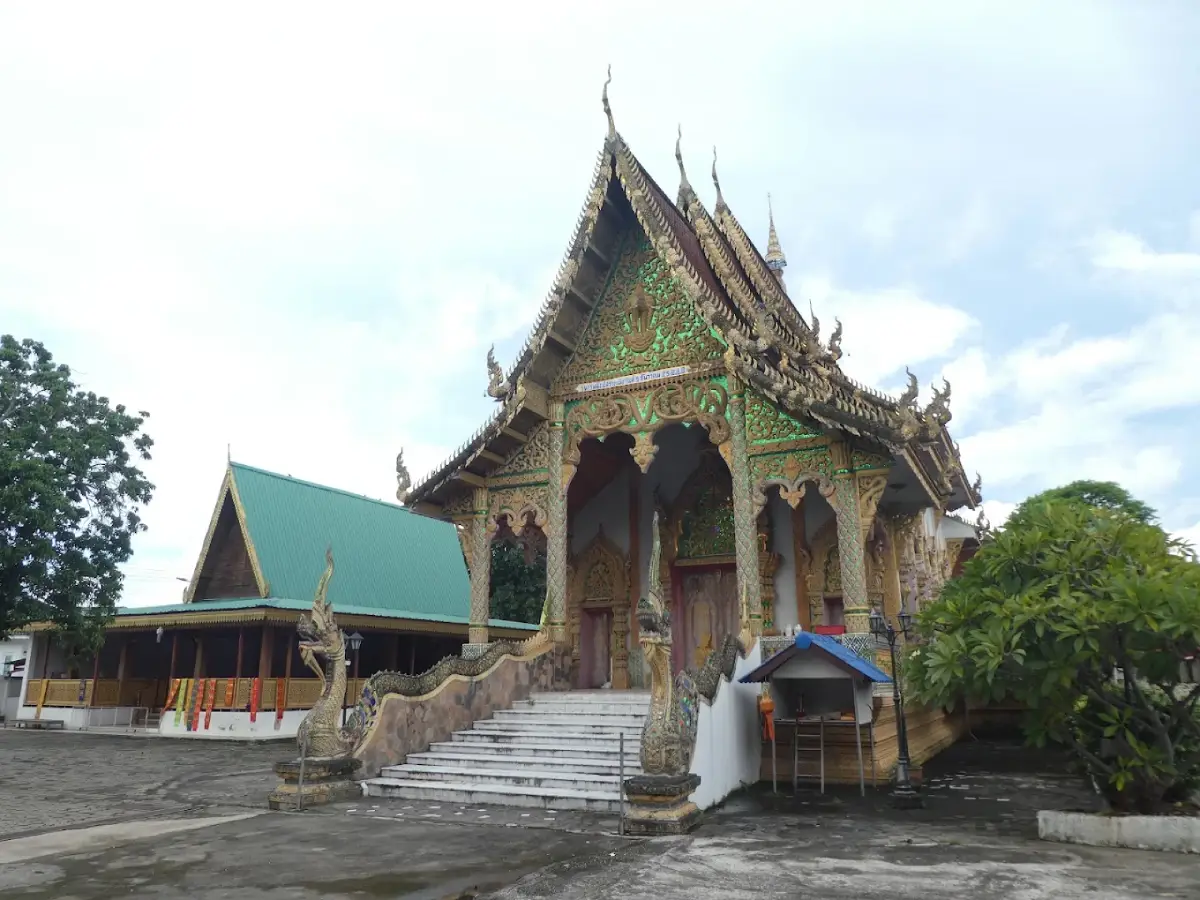
Wat Prasattham
Open Days: Daily
Opening Hours: 08:00 – 17:00
Wat Prasattham (Mae Khak) is located at 93 Moo 5, Ban Mae Khak, Hang Dong Subdistrict, Hang Dong District, Chiang Mai 50230. It is a local Buddhist temple under the Maha Nikaya order and covers 6 rai and 3 ngan of temple land. The temple was permitted for construction in 1766 and received its consecrated boundary in 2005. The current abbot is Phra Khru Manunchaisit Chayadhammo. Wat Prasattham is an old community temple of Ban Mae Khak, strongly connected with old waterways, the name Mae Khwak, temple relocation, and the community memory preserved in the name Mae Khak.
The temple was originally known as Wat Sri Don Tong, pronounced locally as Sa Ri Don Tong. It stood on the bank of Mueang Chom Tong, a small stream located south of the present Wat Prasattham site. This early location shows the close relationship between Lanna settlements, temples, waterways, irrigation channels, and agricultural life. In the past, a village temple was often placed near water sources because water shaped daily life, farming, movement, and community formation.
A major flood later changed the course of several waterways and caused serious erosion. The Mae Tha Chang water system, connected with the old Mueang Chom Tong stream, gradually cut into the banks and reached the temple area. The western-southern and southern walls of Wat Sri Don Tong, together with the southern pavilion, were damaged and large parts of the old temple area collapsed. This event forced the monks and villagers to relocate the temple to safer ground.
After the old temple was damaged, local devotees and the abbot moved the temple northward and temporarily established an aram in the middle of the village near a large Bodhi tree. The new place was called Aram Mae Khwak, named after the Mae Khwak waterway, and the village also became known as Ban Mae Khwak. Over time, Mae Khwak shifted in pronunciation and spelling to Mae Khak. This makes Wat Prasattham a temple where the history of water, language, landscape, and community identity is preserved in the temple name itself.
Because Aram Mae Khwak was too small for further development, the community built an ordination structure in a grove near a pond about 1 kilometer southwest of the former temple site. That area was known as Bot Rong Ueng. Later, when a new road was planned through the area, villagers moved the temple slightly farther north to a wider abandoned plot of land. After clearing the land, they established the temple there and called it Wat Mae Khwak.
At the new Wat Mae Khwak site, 5 Bodhi trees were planted as symbols: 3 in front of the temple and 2 behind it. In Buddhist tradition, the Bodhi tree is closely connected with the Buddha’s enlightenment. In Lanna community temples, Bodhi trees also provide shade, devotional meaning, and a visible symbol of continuity. For Wat Prasattham, the Bodhi trees represent the community’s effort to create a stable sacred place after repeated movement caused by water and changing landscape.
Another important sign of the temple’s age is the story of many small teakwood Buddha images that once existed in the temple. Their bases reportedly carried inscriptions dated Chulasakarat 1128, corresponding to 1766 CE in the Buddhist calendar used in the temple history. These small Buddha images reflected the early faith of local devotees. Although they were later destroyed by termites, their story remains part of the temple’s historical memory.
In 1942, the Department of Religious Affairs renamed many temples, and Wat Mae Khak was officially renamed Wat Prasattham. However, the villagers did not want the name Mae Khak to disappear, so the temple continued to be known as Wat Prasattham (Mae Khak). This paired name is important. Wat Prasattham is the official Buddhist and administrative name, while Mae Khak preserves the older village identity and the memory of Mae Khwak.
Ban Mae Khak, Moo 5, is part of the Hang Dong area and is associated with both Mae Tha Chang Municipality and parts of Hang Dong Municipality. The village lies within Hang Dong District, south of Chiang Mai city, near important cultural and travel routes such as Chiang Mai–Hang Dong Road, Kad Farang Village, Baan Tawai Handicraft Center, and several old temples. Wat Prasattham is therefore well placed for a cultural route around local Hang Dong communities.
The temple’s role in Ban Mae Khak can be understood through religion, society, and local memory. Religiously, it is a place for worship, merit-making, sermons, and Buddhist ceremonies. Socially, it brings villagers together during Kathin, forest robe offerings, funeral merit-making, and community events. Culturally, it preserves the story of Wat Sri Don Tong, Mae Khwak, Aram Mae Khwak, Bot Rong Ueng, and the transformation into Wat Prasattham (Mae Khak).
Important things to see at Wat Prasattham include the worship area, temple grounds, the Bodhi-tree area connected with the relocation history, and the calm atmosphere of Ban Mae Khak’s community temple. The temple is not a large commercial tourist site. Its value lies in the story of how the community adapted to flood, erosion, waterway change, road construction, and new settlement conditions while preserving Buddhist faith.
Visitors should begin with paying respect in the worship area, then walk quietly around the temple grounds. A respectful visit includes modest clothing, quiet speech, awareness of monks’ private areas, and asking permission before photographing sensitive spaces or active ceremonies. Wat Prasattham is an active local temple and should be approached as a living sacred place rather than a sightseeing stop only.
Wat Prasattham is suitable for travelers interested in old temples in Hang Dong, Lanna community history, village-name origins, waterway history, local Buddhist practice, and the quieter cultural side of Chiang Mai. Its appeal comes from deep local memory rather than grand scale. The temple tells a distinctive story of a sacred site that moved with changing water and landscape yet kept its Buddhist role alive.
Temple activities are connected with the Buddhist calendar and Lanna community traditions. These include Buddhist holy days, Buddhist Lent, the end of Buddhist Lent, Kathin, forest robe offerings, sermons, and community merit-making. These activities allow villagers to gather, support the temple, maintain local faith, and pass Buddhist values to younger generations.
A connected cultural route from Wat Prasattham can include Wat Hang Dong, Wat Sai Mun, Wat Kamphaeng Ngam, Wat Thao Kham Wang, Wat Thao Bun Rueang, Kad Farang Village, and Baan Tawai Handicraft Center. This route is suitable for visitors who want to combine old community temples, Lanna history, local food, cafés, and handicraft shopping in a half-day or full-day itinerary.
Getting There is easiest by private car, rental car, or ride-hailing service. From Chiang Mai city, travel south on the Chiang Mai–Hang Dong Road or Highway 108 toward Hang Dong District, then continue into Ban Mae Khak, Moo 5. Visitors can set the destination as Wat Prasattham or Wat Mae Khak, Hang Dong Subdistrict, Hang Dong District, Chiang Mai.
The drive from Chiang Mai city to Hang Dong usually takes about 25–40 minutes depending on traffic. Visitors should allow about 30–45 minutes to pay respect, walk around the temple, and understand the story of Wat Sri Don Tong, Mae Khwak, Mae Khak, and Wat Prasattham. The temple can be combined easily with Baan Tawai, Kad Farang, and nearby old temples.
Overall, Wat Prasattham (Mae Khak) is an old local temple of Ban Mae Khak with historical, religious, and community value. It began as Wat Sri Don Tong near Mueang Chom Tong, was affected by flood and erosion, moved several times, became Aram Mae Khwak and Wat Mae Khak, and later received the official name Wat Prasattham. Established in 1766 and granted a consecrated boundary in 2005, the temple is a meaningful stop for travelers seeking the deeper local history of Hang Dong and Chiang Mai.
| Name | Wat Prasattham (Mae Khak) |
| Former / Local Names | Wat Sri Don Tong, Aram Mae Khwak, Wat Mae Khak |
| Location | Ban Mae Khak, Moo 5, Hang Dong Subdistrict, Hang Dong District, Chiang Mai |
| Address | 93 Moo 5, Ban Mae Khak, Hang Dong Subdistrict, Hang Dong District, Chiang Mai 50230, Thailand |
| Coordinates | 18.68051, 98.91728 |
| Temple Type | Local Buddhist temple under the Maha Nikaya order |
| Temple Land Area | 6 rai, 3 ngan |
| Open Days | Daily |
| Opening Hours | 08:00 – 17:00 |
| Established | 1766 |
| Consecrated Boundary | Granted in 2005 |
| History | Originally Wat Sri Don Tong on the bank of Mueang Chom Tong. Flooding and erosion forced the temple to relocate several times, leading to the names Aram Mae Khwak, Wat Mae Khak, and finally Wat Prasattham in 1942. |
| Name Origin | Mae Khak developed from Mae Khwak, a name connected with the old waterway and village memory. Wat Prasattham is the official name adopted after the 1942 renaming. |
| Highlights | Temple relocation history, Mae Khwak waterway memory, Bodhi-tree symbolism, old teak Buddha image story, and Ban Mae Khak community identity |
| Distinctive Features | An old community temple whose name and identity are connected with water, flood, relocation, landscape change, and local memory |
| Main Areas / Key Points | Worship areas, temple grounds, Bodhi-tree area, and historical points connected with Wat Sri Don Tong, Aram Mae Khwak, and Wat Mae Khak |
| What To See | Ban Mae Khak community-temple atmosphere, Bodhi-tree area, temple grounds, and the story of relocation from Mueang Chom Tong to the present site |
| What To Worship | Buddha images and worship areas inside the temple |
| Abbot / Caretaker | Phra Khru Manunchaisit Chayadhammo |
| Contact Number | 089-266-570 |
| Community Role | A place for worship, merit-making, sermons, ceremonies, and preserving the community memory of Ban Mae Khak |
| Current Status | An active community temple in Hang Dong Subdistrict, listed in public temple and location databases |
| Travel Information | From Chiang Mai city, take the Chiang Mai–Hang Dong Road or Highway 108 toward Hang Dong District, then continue to Ban Mae Khak, Moo 5. Private car, rental car, or ride-hailing service is recommended. |
| Nearby Tourist Attractions | 1. Wat Hang Dong, about 2 km 2. Wat Sai Mun, about 3 km 3. Wat Kamphaeng Ngam, about 4 km 4. Kad Farang Village, about 5 km 5. Baan Tawai Handicraft Center, about 6 km |
| Nearby Restaurants | 1. Kafae Sot Luk Thung Ban Mae Khak, about 1 km, Tel. 080-667-7189 2. Luk Thung Fusion Ban Mae Khak, about 1 km, Tel. 084-151-5787 3. Krua Loet Rot Ban Mae Khak, about 2 km, Tel. 084-221-4156, 095-841-5492 4. Lung Aek Fried Chicken, Mae Khak 7-Eleven Branch, about 2 km, Tel. 093-479-5445 5. Ahh kard d HANGDONG, about 5 km, Tel. 094-636-5939 |
| Nearby Accommodations | 1. Monmuang Resort, about 3 km, Tel. 082-574-7999 2. North Hill City Resort, about 5 km, Tel. 053-333-111, 093-131-0277 3. Soft Resort Kadfarang, about 5 km, Tel. 081-681-1739 4. Content Villa Chiang Mai, about 8 km, Tel. 062-439-9799 5. Laan Mai Fai Chang Resort, about 8 km, Tel. 082-994-7888 |
Frequently Asked Questions (FAQ)
Q: Where is Wat Prasattham (Mae Khak) located?
A: Wat Prasattham is located at 93 Moo 5, Ban Mae Khak, Hang Dong Subdistrict, Hang Dong District, Chiang Mai 50230, Thailand.
Q: What was the former name of Wat Prasattham?
A: The temple was formerly known as Wat Sri Don Tong, later associated with the names Aram Mae Khwak and Wat Mae Khak before becoming Wat Prasattham.
Q: When was Wat Prasattham established?
A: Wat Prasattham was permitted for construction in 1766 and received its consecrated boundary in 2005.
Q: Why does the temple name include Mae Khak?
A: Mae Khak developed from Mae Khwak, a name connected with the old waterway and village identity. Local people preserved the name Mae Khak alongside the official name Wat Prasattham.
Q: What is special about Wat Prasattham’s history?
A: Its history is shaped by flood, erosion, waterway change, and several relocations from Wat Sri Don Tong near Mueang Chom Tong to the present community temple of Ban Mae Khak.
Q: What should visitors see at Wat Prasattham?
A: Visitors should see the community-temple atmosphere, Bodhi-tree area, temple grounds, worship spaces, and the story of how the temple moved with the changing waterways of Mae Khak.
Q: What nearby places can be visited with Wat Prasattham?
A: Nearby places include Wat Hang Dong, Wat Sai Mun, Wat Kamphaeng Ngam, Kad Farang Village, and Baan Tawai Handicraft Center.
 Category: ●Places of Worship
 Group: ●Temple
Last Update : 6 DayAgo
 Last Update : 6 DayAgo
 Click to Access the Navigation Map GPS
 Muang Chiang Mai(121)Chom Thong(47)Mae Chaem(25)Chiang Dao(33)Doi Saket(68)Mae Taeng(85)Mae Rim(69)Samoeng(29)Fang(71)Mae Ai(59)Phrao(70)San Pa Tong(103)San Kamphaeng(66)San Sai(73)Hang Dong(73)Hot(32)Doi Tao(22)Omkoi(11)Saraphi(74)Wiang Haeng(15)Chai Prakan(28)Mae Wang(32)Mae On(22)Doi Lo(33)Galyani Vadhana(1)


