
lovethailand home >North Travel Attractions >Chiang Mai Travel Attractions >Hang Dong >Hang Dong > Wat Thao Kham Wang
TL;DR: Wat Thao Kham Wang is located at Ban Thao Kham Wang, Moo 1, Hang Dong Subdistrict, Hang Dong District, Chiang Mai, open Daily, hours Please check with the temple before visiting.
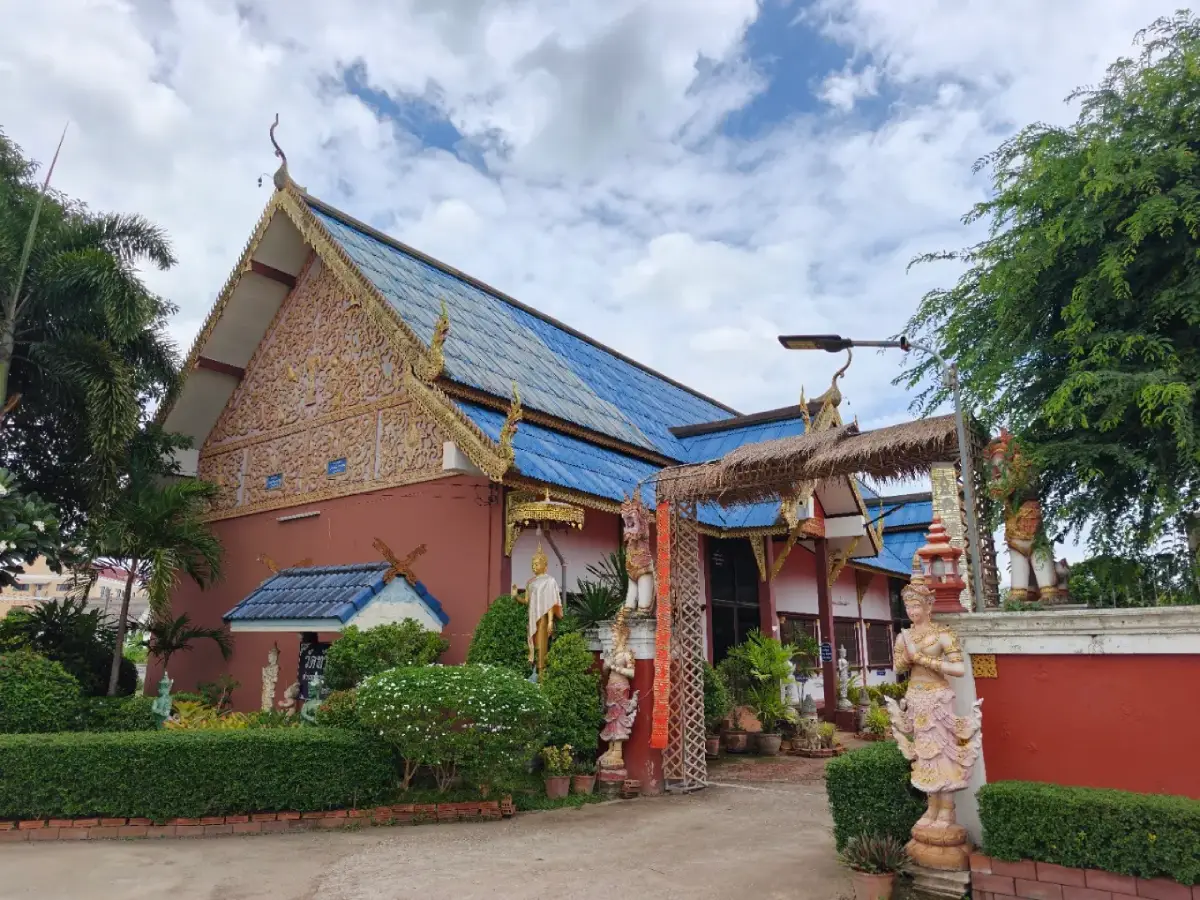
Wat Thao Kham Wang
Open Days: Daily
Opening Hours: Please check with the temple before visiting
Wat Thao Kham Wang is located at 71 Moo 1, Ban Thao Kham Wang, Hang Dong Subdistrict, Hang Dong District, Chiang Mai 50230. It is a local Buddhist temple under the Maha Nikaya order and covers 3 rai and 87 square wah of temple land. The temple was officially established in 1487 and received its consecrated boundary in 1990. The current abbot is Phra Khru Sukit Saraniwit Thitasaro. Wat Thao Kham Wang is an old community temple of Ban Thao Kham Wang, valued for its more than 500 years of history, Lanna-style viharn, Lanna-Burmese-influenced chedi, and modern ordination hall built for the 2,600th anniversary of the Buddha’s enlightenment.
The history of Wat Thao Kham Wang is layered. According to temple history, it was built in 1487 and was once an abandoned temple site. Later, Chao Athikan Kham Mun Aphichayo restored the site and re-established it as a functioning temple. This revival from an abandoned sacred site gives Wat Thao Kham Wang a strong community meaning. It represents the continuity of Buddhist faith and the willingness of monks and villagers to preserve a sacred place for future generations.
The temple name is closely connected with local legend. It is believed that 3 leaders, Thao Kham Wang, Thao Bun Rueang, and Thao Phayu, came to settle in this rural area and named their villages after themselves. Wat Thao Kham Wang is therefore remembered as a temple created to serve as the spiritual center of Ban Thao Kham Wang. The name is not only an official temple name; it preserves a local story about settlement, leadership, and village identity.
Ban Thao Kham Wang, Moo 1, is one of the important villages in the Hang Dong area and lies within the Mae Tha Chang municipal area. The temple stands close to the Chiang Mai–Hang Dong travel corridor and the expanding communities of Hang Dong District. Visitors can therefore see an old Lanna temple within a living semi-urban community, where village memory, Buddhist practice, and present-day local life still meet.
The temple’s age gives it notable historical value. Its founding year of 1487 places it within the long cultural landscape of Lanna, well after the establishment of Chiang Mai as the regional center. Temples of this type usually developed alongside villages, agricultural land, and local communities. Wat Thao Kham Wang reflects this relationship between village settlement, Buddhist faith, and community identity in northern Thailand.
The temple grounds are relatively compact and open, with some trees providing shade. Wat Thao Kham Wang does not rely on grand scale. Its charm comes from quietness, old religious architecture, and details of Lanna craftsmanship. It is best appreciated slowly, with attention to the viharn, chedi, ordination hall, and the way these sacred structures sit within the village setting.
The old Lanna-style viharn is the temple’s key highlight. Its architecture appears ancient and graceful, with a 3-tiered roof. The chofa finials and naga-style roof ornaments are made of wood and decorated with glass. The front of the viharn has simple steps guarded by 2 lion figures. These elements create a respectful transition from the temple courtyard into the main sacred space.
The viharn’s front gable is decorated with stucco patterns of foliage and lotus motifs, with blue glass decoration. The column capitals use green-blue glass pieces arranged like lotus petals. These details reflect Lanna craftsmanship, which often combines natural motifs, Buddhist symbolism, woodwork, stucco, and colored glass. The lotus patterns symbolize purity, while the plant motifs suggest growth and vitality within Buddhist space.
The ventilation panel at the front of the viharn features wood carving of a makara disgorging naga forms. The main entrance is a simple wooden door, and on the northern side there is a small porch serving as another entrance. Overall, the viharn resembles the old viharn of Wat Hang Dong, though it is smaller and different in detail. This comparison helps visitors understand the temple within the broader Lanna architectural character of Hang Dong.
Inside the viharn, the principal Buddha image is in the Mara-vijaya posture. This posture represents the Buddha’s victory over Mara and the forces of defilement before enlightenment. The viharn is therefore the spiritual heart of the temple, where devotees come to worship, listen to sermons, and participate in Buddhist ceremonies.
The chedi stands behind the viharn. It is a castle-shaped chedi with Lanna and Burmese artistic influences. The lowest base is square, followed by 3 indented base tiers supporting a raised platform. Each side contains standing Buddha images in niches. Above this rises the main chedi body decorated with colored glass, and the top is crowned by a 7-tiered golden umbrella. This chedi is one of the most important visual elements of the temple and shows the artistic blending found in Lanna religious architecture.
The chedi also gives the temple layout a fuller sacred structure. The viharn functions as the main worship and sermon space, while the chedi represents Buddhist devotion and stability. Visitors should take time to observe the indented base, niches, standing Buddha images, colored glass, and golden umbrella, because these details reveal the temple’s artistic and devotional character.
The ordination hall is a newer structure built for the auspicious occasion of the 2,600th anniversary of the Buddha’s enlightenment. It follows Lanna architectural forms. The chofa and naga roof ornaments are carved from wood in the form of a makara disgorging nagas, and the roof is arranged in 3 tiers. The gable contains wood carving of the royal monogram of Somdet Phra Nyanasamvara, the Supreme Patriarch, together with vine-scroll motifs. This makes the ordination hall a modern structure that still respects the Lanna temple vocabulary.
The ordination hall doors are decorated with gilded lacquer designs of celestial beings. Inside, the main Buddha image is a bronze Mara-vijaya Buddha named Phra Phuttha Chayanti Sri Lanna by the Supreme Patriarch. The image has a lap width of 38 inches. The walls of the ordination hall contain niches holding hundreds of small Buddha images in the Mara-vijaya posture. These elements give the ordination hall strong ceremonial, artistic, and devotional significance.
Wat Thao Kham Wang therefore has 3 major features that should be seen together: the old Lanna viharn, the Lanna-Burmese-style chedi, and the 2,600th-anniversary ordination hall. The viharn preserves the older village-temple atmosphere. The chedi shows artistic blending and religious symbolism. The ordination hall shows how Lanna forms continue into newer Buddhist architecture.
Temple activities are connected with the Buddhist calendar and local Lanna traditions. These include Buddhist holy days, Buddhist Lent, the end of Buddhist Lent, Kathin, forest robe offerings, sermons, and community merit-making. In a small community temple, such events are not only religious ceremonies; they are also opportunities for villagers to gather, prepare food, welcome relatives, and support the maintenance of the temple.
The temple’s role in Ban Thao Kham Wang can be understood through religion, society, and culture. Religiously, it is a place for worship, sermons, and monastic ceremonies. Socially, it brings local people together during merit-making events. Culturally, it preserves the legend of Thao Kham Wang, Thao Bun Rueang, and Thao Phayu, as well as the temple’s old viharn, chedi, and Lanna-style ordination hall.
Visitors should pay respect to the principal Buddha image in the viharn, Phra Phuttha Chayanti Sri Lanna in the ordination hall, the small Buddha images in the hall’s wall niches, and the Buddha images in the chedi niches. Proper conduct is important: dress modestly, speak quietly, avoid touching woodwork, stucco, colored glass, or old doors unnecessarily, and ask permission before photographing sensitive areas or active ceremonies.
A connected route can begin at Wat Thao Kham Wang for the Lanna viharn, chedi, and ordination hall, then continue to Wat Thao Bun Rueang, Wat Hang Dong, Wat Sai Mun, Wat Kamphaeng Ngam, Kad Farang Village, and Baan Tawai Handicraft Center. This route is suitable for travelers interested in old temples, village legends, Lanna art, local food, crafts, and accommodation in Hang Dong.
Wat Thao Kham Wang is suitable for travelers interested in old temples in Hang Dong, Lanna village temples, old wooden viharn architecture, Lanna-Burmese-style chedis, and community legends. It is not a large commercial tourist attraction. Its value lies in its quiet atmosphere, compact sacred space, and rich architectural details.
Getting There is easiest by private car, rental car, or ride-hailing service. From Chiang Mai city, travel south along the Chiang Mai–Hang Dong Road or Highway 108 toward Hang Dong District, then continue to Ban Thao Kham Wang, Moo 1. Visitors can set the destination as Wat Thao Kham Wang, Hang Dong Subdistrict, Hang Dong District, Chiang Mai.
The drive from Chiang Mai city to Hang Dong usually takes around 25–40 minutes depending on traffic. Visitors should allow at least 45 minutes to 1 hour to pay respect and see the viharn, chedi, and ordination hall. The temple can be combined with Baan Tawai, Kad Farang, and nearby old temples for a half-day cultural route.
Overall, Wat Thao Kham Wang is an old local Buddhist temple of Ban Thao Kham Wang with historical, religious, and Lanna artistic value. Founded in 1487 and revived from an abandoned temple site by Chao Athikan Kham Mun Aphichayo, it preserves an old Lanna viharn, a Lanna-Burmese-style chedi, and a meaningful ordination hall built for the 2,600th anniversary of the Buddha’s enlightenment. For travelers seeking the quieter local side of Chiang Mai, Wat Thao Kham Wang is a valuable stop on the Hang Dong cultural route.
| Name | Wat Thao Kham Wang |
| Location | Ban Thao Kham Wang, Moo 1, Hang Dong Subdistrict, Hang Dong District, Chiang Mai |
| Address | 71 Moo 1, Ban Thao Kham Wang, Hang Dong Subdistrict, Hang Dong District, Chiang Mai 50230, Thailand |
| Temple Type | Local Buddhist temple under the Maha Nikaya order |
| Temple Land Area | 3 rai, 87 square wah |
| Open Days | Daily |
| Opening Hours | Please check with the temple before visiting |
| Established | 1487 |
| Consecrated Boundary | Granted in 1990 |
| History | An old temple of more than 500 years. It was once an abandoned temple site and was later restored by Chao Athikan Kham Mun Aphichayo. Local legend connects the temple name with Thao Kham Wang, one of the early leaders associated with the village. |
| Name Origin | Linked with the legend of Thao Kham Wang, Thao Bun Rueang, and Thao Phayu, who settled in this area and named villages after themselves |
| Highlights | Old Lanna-style viharn, Lanna-Burmese-style castle chedi, and ordination hall built for the 2,600th anniversary of the Buddha’s enlightenment |
| Distinctive Features | A compact, quiet temple with an old 3-tiered-roof viharn, wooden chofa and naga ornaments, stucco floral gable, and colored glass decoration |
| Main Areas / Structures | Lanna-style viharn, chedi behind the viharn, ordination hall, temple grounds, worship areas, and community activity areas |
| Sacred Objects / Key Features | Mara-vijaya principal Buddha image in the viharn, Phra Phuttha Chayanti Sri Lanna in the ordination hall, small Buddha images in wall niches, and standing Buddha images in the chedi niches |
| What To See | Old Lanna viharn, guardian lions, stucco gable, makara disgorging naga carving, castle-shaped chedi, 2,600th-anniversary ordination hall, and Lanna wood carving |
| What To Worship | The principal Mara-vijaya Buddha image in the viharn, Phra Phuttha Chayanti Sri Lanna, small Buddha images in the ordination hall, and Buddha images in the chedi niches |
| Abbot / Caretaker | Phra Khru Sukit Saraniwit Thitasaro |
| Important Monks In History | Chao Athikan Kham Mun Aphichayo, who restored the abandoned temple site, and Phra Khru Anan Atthakamo, listed among known abbots |
| Community Role | A place for worship, merit-making, sermons, community ceremonies, preservation of the Thao Kham Wang village legend, and local Lanna art |
| Current Status | An active community temple in Hang Dong Subdistrict, listed in public temple and local area records |
| Travel Information | From Chiang Mai city, take the Chiang Mai–Hang Dong Road or Highway 108 toward Hang Dong District, then continue to Ban Thao Kham Wang, Moo 1. Private car, rental car, or ride-hailing service is recommended. |
| Nearby Tourist Attractions | 1. Wat Thao Bun Rueang, about 2 km 2. Wat Hang Dong, about 3 km 3. Wat Sai Mun, about 4 km 4. Kad Farang Village, about 5 km 5. Baan Tawai Handicraft Center, about 6 km |
| Nearby Restaurants | 1. Dan Khao Man Gai by Max Hang Dong, about 3 km, Tel. 083-945-6282 2. Lueklub Hang Dong, about 4 km, Tel. 093-592-8932 3. Ahh kard d HANGDONG, about 5 km, Tel. 094-636-5939 4. Khao Soi Mae Kham Paeng, about 8 km, Tel. 095-495-6695 5. Khao Soi Fa Ham Hang Dong, about 10 km, Tel. 082-390-2819 |
| Nearby Accommodations | 1. Monmuang Resort, about 3 km, Tel. 082-574-7999 2. North Hill City Resort, about 5 km, Tel. 053-333-111, 093-131-0277 3. Soft Resort Kadfarang, about 5 km, Tel. 081-681-1739 4. Content Villa Chiang Mai, about 8 km, Tel. 062-439-9799 5. Laan Mai Fai Chang Resort, about 8 km, Tel. 082-994-7888 |
Frequently Asked Questions (FAQ)
Q: Where is Wat Thao Kham Wang located?
A: Wat Thao Kham Wang is located at 71 Moo 1, Ban Thao Kham Wang, Hang Dong Subdistrict, Hang Dong District, Chiang Mai 50230, Thailand.
Q: When was Wat Thao Kham Wang founded?
A: Wat Thao Kham Wang was founded in 1487 and received its consecrated boundary in 1990.
Q: What is special about the history of Wat Thao Kham Wang?
A: The temple was once an abandoned temple site and was later restored by Chao Athikan Kham Mun Aphichayo. Local legend connects the temple with Thao Kham Wang, one of the early figures associated with the village.
Q: What should visitors see at Wat Thao Kham Wang?
A: Visitors should see the old Lanna-style viharn, the Lanna-Burmese-style chedi, the 2,600th-anniversary ordination hall, wooden carvings, stucco gable decorations, and Buddha images inside the temple.
Q: What is the main Buddha image in the old viharn?
A: The principal Buddha image in the old viharn is in the Mara-vijaya posture.
Q: Why is the ordination hall important?
A: The ordination hall was built for the 2,600th anniversary of the Buddha’s enlightenment. It enshrines Phra Phuttha Chayanti Sri Lanna, a bronze Mara-vijaya Buddha image with a 38-inch lap width.
Q: What nearby places can be visited with Wat Thao Kham Wang?
A: Nearby places include Wat Thao Bun Rueang, Wat Hang Dong, Wat Sai Mun, Kad Farang Village, and Baan Tawai Handicraft Center.
 Category: ●Places of Worship
 Group: ●Temple
Last Update : 2 WeekAgo
 Last Update : 2 WeekAgo
 Click to Access the Navigation Map GPS
 Muang Chiang Mai(121)Chom Thong(47)Mae Chaem(25)Chiang Dao(33)Doi Saket(68)Mae Taeng(85)Mae Rim(69)Samoeng(29)Fang(71)Mae Ai(59)Phrao(70)San Pa Tong(103)San Kamphaeng(66)San Sai(73)Hang Dong(73)Hot(32)Doi Tao(22)Omkoi(11)Saraphi(74)Wiang Haeng(15)Chai Prakan(28)Mae Wang(32)Mae On(22)Doi Lo(33)Galyani Vadhana(1)


