
lovethailand home >North Travel Attractions >Chiang Mai Travel Attractions >Hang Dong >Hang Dong > Wat Sai Mun (Hang Dong)
TL;DR: Wat Sai Mun (Hang Dong) is located at Ban Sai Mun, Moo 4, Hang Dong Subdistrict, Hang Dong District, Chiang Mai, open Daily, hours Please check with the temple before visiting.

Wat Sai Mun (Hang Dong)
Open Days: Daily
Opening Hours: Please check with the temple before visiting
Wat Sai Mun (Hang Dong) is located at 53 Moo 4, Ban Sai Mun, on the Chiang Mai–Hot Road in Hang Dong Subdistrict, Hang Dong District, Chiang Mai 50230. It is a local Buddhist temple under the Maha Nikaya order and covers 3 rai and 2 ngan of temple land. The temple was officially established and permitted for construction in 1907 and received its consecrated boundary for monastic ceremonies on 29 September 1913. Wat Sai Mun is an old community temple of Ban Sai Mun, remembered for its landscape of sand pits, stones, and gravel, which became part of the story behind the temple’s name.
The history of Wat Sai Mun has several layers. Temple records state that it was officially established in 1907, but local history says the temple had existed for at least 100 years before that. The original builder and exact founding period are not known. In earlier times, the temple area contained stones, gravel, and many sand pits, and it was known as Wat Mongkhon Lum Don Chai. This old name reflects the physical character of the site before it became widely known as Wat Sai Mun.
A key moment in the temple’s history occurred in 1784, when Phra Thananchai served as abbot. He built a large Buddha image in the viharn with support from Saen Mai, Thao Lue Lok, and local devotees. The monks at that time then designated the temple name as Wat Sai Mun, and the name has been used ever since. The name therefore carries both geographical meaning and community memory, linking the sandy landscape with Buddhist devotion.
Ban Sai Mun is an old community in Hang Dong Subdistrict, Hang Dong District, Chiang Mai. The village is located along the Chiang Mai–Hot route, an important road connecting Chiang Mai city with the southern part of the province. Wat Sai Mun is therefore connected with both the local village and an important travel corridor. For local residents, the temple functions as a place for worship, merit-making, sermons, funerals, community gatherings, and Buddhist ceremonies.
The temple grounds cover 3 rai and 2 ngan, with 2 additional monastic land plots totaling 8 rai, 1 ngan, and 62 square wah. The temple boundaries are relatively balanced on all sides, with the north and south sides measuring about 74.1 wah and the east and west sides about 74 wah. This gives the temple a compact and organized layout suitable for worship spaces, monastic areas, and community activity areas.
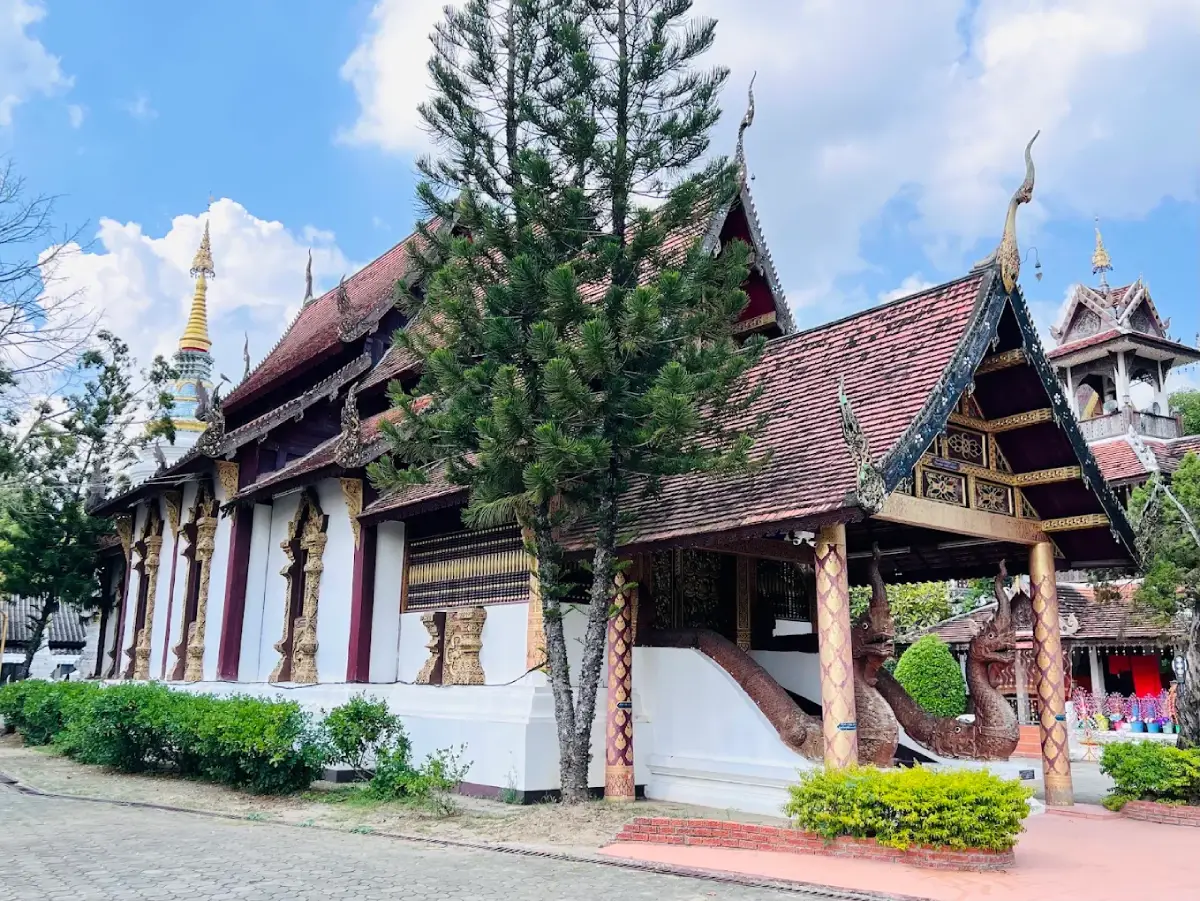
Important structures at Wat Sai Mun include the ordination hall, sermon hall, multipurpose pavilion, funeral merit-making pavilion, storage pavilion, kitchen, temple grounds, and worship areas. Sacred objects include Buddha images, a pulpit, and a chedi. These features show that Wat Sai Mun is a practical community temple supporting monastic ceremonies, sermons, merit-making, funerals, temple events, and daily village faith.
The ordination hall is especially important because the temple received its consecrated boundary in 1913. A consecrated boundary allows formal Sangha ceremonies to be performed according to Buddhist monastic discipline. Visitors should treat this area with respect by dressing modestly, speaking quietly, and avoiding disturbance to monks or devotees.
The large Buddha image built in the time of Phra Thananchai is central to the temple’s historical memory. It connects the temple name with the faith of monks, local patrons, and villagers in 1784. For visitors, this story gives Wat Sai Mun more depth than a simple village temple. It shows how a local sacred site gained its identity through collective faith and a shared decision to preserve the name Wat Sai Mun.
Sacred objects at the temple include Buddha images, a pulpit, and a chedi. Buddha images provide a focus for worship, the pulpit is used for Dhamma sermons, and the chedi adds symbolic meaning to the temple layout. These elements should be seen together as part of the temple’s religious function and its role in preserving local Buddhist practice.
The line of abbots preserved in temple history reflects continuity across generations. Known abbots include Phra Thananchai, Phra Panya, Phra Taocha, Phra Tebin, Phra Pori, Phra Khru Suriyayanarangsi, Phra Aphichai, Phra Khru In Kham Thirapañño, Phra Buntha Intharawiro, and Phra Bai Dika Det Piyadhammo. More recent Kathin activity information identifies Phra Khru Bai Dika Bunnak Chanthasaro as abbot, with 5 resident monks in 2024.
Phra Athikan Bunnak Chanthasaro, also referred to in recent activity records as Phra Khru Bai Dika Bunnak Chanthasaro, plays an important role as the current monastic leader associated with the temple. In a community temple, the abbot leads ceremonies, maintains the temple, preserves Buddhist practice, and supports the spiritual life of local devotees. This continuing monastic presence keeps Wat Sai Mun active as a living temple.
Wat Sai Mun has also been mentioned as an educational temple, which strengthens its role as a place of learning and cultural transmission. A community temple often teaches more than formal doctrine. It teaches temple etiquette, merit-making, respect for monks, Buddhist values, and local traditions. In this way, Wat Sai Mun remains a space where religion and community education meet.
The temple’s main distinction is its close connection with the local landscape. Its name and earlier identity are linked with sand pits, stones, and gravel in the temple area. Together with the story of the large Buddha image built in 1784, this gives Wat Sai Mun a specific local character. It is not a large commercial tourist temple. Its value lies in its village history, Buddhist continuity, and strong relationship with Ban Sai Mun.
Important things to see inside the temple include the ordination hall, sermon hall, multipurpose pavilion, funeral merit-making pavilion, Buddha images, pulpit, chedi, and the atmosphere of Ban Sai Mun’s community temple. Visitors who want to understand the temple more deeply should pay attention to the way its structures support real community life, from sermons and ceremonies to funerals and merit-making events.
Visitors should pay respect to the Buddha images, the important Buddha image connected with the temple’s naming history, and the chedi. A respectful visit should begin with a calm mind, modest clothing, and quiet conduct. Visitors should avoid entering monks’ private areas without permission and should ask before photographing sensitive areas or active ceremonies.
Temple activities follow the Buddhist calendar and Lanna community traditions. These include Buddhist holy days, Buddhist Lent, the end of Buddhist Lent, Kathin, forest robe offerings, funeral merit-making, sermons, and village activities. In 2024, Wat Sai Mun was listed in Kathin activity information, showing that it remains active in contemporary Buddhist practice.
The role of Wat Sai Mun in Ban Sai Mun can be understood through religion, society, and culture. Religiously, it is a place for worship, sermons, merit-making, and Sangha ceremonies. Socially, it brings villagers together for temple events and funerals. Culturally, it preserves the old name Wat Mongkhon Lum Don Chai, the story of Phra Thananchai, the large Buddha image, and the identity of Ban Sai Mun.
A connected route from Wat Sai Mun can include Wat Kamphaeng Ngam, Wat Hang Dong, Wat Suwan Pradit or Wat Chang Kham Noi, Kad Farang Village, and Baan Tawai Handicraft Center. This route is suitable for visitors who want to combine old temples, Lanna culture, local communities, craft villages, restaurants, cafés, and accommodation in Hang Dong.
Wat Sai Mun is suitable for travelers interested in Lanna community temples, old temples in Hang Dong, local temple-name stories, Buddha images, chedis, and the quieter cultural side of Chiang Mai. It is not a large tourist attraction, but it offers a meaningful view of how a village temple preserves history, faith, and community life.
Getting There is easiest by private car, rental car, or ride-hailing service. From Chiang Mai city, travel south on the Chiang Mai–Hang Dong Road or Highway 108 toward Hang Dong District, then continue to Ban Sai Mun, Moo 4. Visitors can set the destination as Wat Sai Mun, Hang Dong Subdistrict, Hang Dong District, Chiang Mai.
The drive from Chiang Mai city to Hang Dong usually takes about 25–40 minutes depending on traffic. Visitors should allow about 30–45 minutes to pay respect and see the ordination hall, sermon hall, chedi, Buddha images, and temple grounds. The temple can be combined with Wat Kamphaeng Ngam, Baan Tawai, Kad Farang, restaurants, and nearby accommodation for a half-day cultural route.
Overall, Wat Sai Mun (Hang Dong) is an old local temple of Ban Sai Mun with historical, religious, and community value. It grew from a site once known as Wat Mongkhon Lum Don Chai, gained the name Wat Sai Mun in 1784, was officially established in 1907, and received its consecrated boundary in 1913. For travelers seeking the quieter local side of Chiang Mai, Wat Sai Mun is a meaningful stop on the Hang Dong cultural route.
| Name | Wat Sai Mun (Hang Dong) |
| Former Name | Wat Mongkhon Lum Don Chai |
| Location | Ban Sai Mun, Moo 4, Hang Dong Subdistrict, Hang Dong District, Chiang Mai |
| Address | 53 Moo 4, Ban Sai Mun, Chiang Mai–Hot Road, Hang Dong Subdistrict, Hang Dong District, Chiang Mai 50230, Thailand |
| Temple Type | Local Buddhist temple under the Maha Nikaya order |
| Temple Land Area | 3 rai, 2 ngan |
| Monastic Land | 2 plots totaling 8 rai, 1 ngan, 62 square wah |
| Open Days | Daily |
| Opening Hours | Please check with the temple before visiting |
| Established | 1907 |
| Consecrated Boundary | Granted on 29 September 1913 |
| History | The temple existed for at least 100 years before its official establishment. The area once contained sand pits, stones, and gravel and was known as Wat Mongkhon Lum Don Chai. In 1784, Phra Thananchai built a large Buddha image in the viharn, and the temple came to be called Wat Sai Mun. |
| Highlights | An old Ban Sai Mun community temple with a name linked to sandy terrain, a large Buddha image, a consecrated boundary, and continuing Kathin activity |
| Distinctive Features | A Lanna community temple whose name connects landscape, Phra Thananchai’s history, and village faith in Hang Dong |
| Main Areas / Structures | Ordination hall, sermon hall, multipurpose pavilion, funeral merit-making pavilion, storage pavilion, kitchen, temple grounds, and worship areas |
| Sacred Objects | Buddha images, a large Buddha image, pulpit, and chedi |
| What To See | Ordination hall, sermon hall, Buddha images, pulpit, chedi, and the atmosphere of Ban Sai Mun’s community temple |
| What To Worship | Buddha images in the worship areas, the important Buddha image connected with the temple’s naming history, and the temple chedi |
| Abbot / Caretaker | Phra Khru Bai Dika Bunnak Chanthasaro |
| Resident Monks | 5 monks according to 2024 Kathin activity information |
| Contact Number | 053-441-504 |
| Community Role | A place for worship, sermons, Sangha ceremonies, Kathin, funeral merit-making, and community faith in Ban Sai Mun |
| Current Status | An active community temple in Hang Dong Subdistrict, listed in public temple databases and recent Kathin activity information |
| Travel Information | From Chiang Mai city, take the Chiang Mai–Hang Dong Road or Highway 108 toward Hang Dong District, then continue to Ban Sai Mun, Moo 4. Private car, rental car, or ride-hailing service is recommended. |
| Nearby Tourist Attractions | 1. Wat Kamphaeng Ngam, about 2 km 2. Wat Hang Dong, about 2 km 3. Wat Suwan Pradit / Wat Chang Kham Noi, about 3 km 4. Kad Farang Village, about 5 km 5. Baan Tawai Handicraft Center, about 6 km |
| Nearby Restaurants | 1. Dan Khao Man Gai by Max Hang Dong, about 2 km, Tel. 083-945-6282 2. Lueklub Hang Dong, about 3 km, Tel. 093-592-8932 3. Ahh kard d HANGDONG, about 4 km, Tel. 094-636-5939 4. Khao Soi Mae Kham Paeng, about 8 km, Tel. 095-495-6695 5. Khao Soi Fa Ham Hang Dong, about 10 km, Tel. 082-390-2819 |
| Nearby Accommodations | 1. Monmuang Resort, about 2 km, Tel. 082-574-7999 2. North Hill City Resort, about 5 km, Tel. 053-333-111, 093-131-0277 3. Soft Resort Kadfarang, about 5 km, Tel. 081-681-1739 4. Content Villa Chiang Mai, about 8 km, Tel. 062-439-9799 5. Laan Mai Fai Chang Resort, about 8 km, Tel. 082-994-7888 |
Frequently Asked Questions (FAQ)
Q: Where is Wat Sai Mun (Hang Dong) located?
A: Wat Sai Mun is located at 53 Moo 4, Ban Sai Mun, Chiang Mai–Hot Road, Hang Dong Subdistrict, Hang Dong District, Chiang Mai 50230, Thailand.
Q: What was the former name of Wat Sai Mun?
A: Wat Sai Mun was formerly known as Wat Mongkhon Lum Don Chai because the temple area once contained sand pits, stones, and gravel.
Q: When was Wat Sai Mun officially established?
A: Wat Sai Mun was officially established and permitted for construction in 1907 and received its consecrated boundary on 29 September 1913.
Q: Why is the temple called Wat Sai Mun?
A: The name is connected with the sandy landscape of the temple area. In 1784, Phra Thananchai built a large Buddha image in the viharn, and the monks designated the temple name as Wat Sai Mun.
Q: What important structures are found at Wat Sai Mun?
A: Important structures include the ordination hall, sermon hall, multipurpose pavilion, funeral merit-making pavilion, storage pavilion, kitchen, Buddha images, pulpit, and chedi.
Q: Who should visit Wat Sai Mun?
A: It is suitable for travelers interested in Lanna community temples, old temples in Hang Dong, local temple-name stories, Buddha images, chedis, and cultural routes near Chiang Mai city.
Q: What nearby places can be visited with Wat Sai Mun?
A: Nearby places include Wat Kamphaeng Ngam, Wat Hang Dong, Wat Suwan Pradit, Kad Farang Village, and Baan Tawai Handicraft Center.
 Category: ●Places of Worship
 Group: ●Temple
Last Update : 6 DayAgo
 Last Update : 6 DayAgo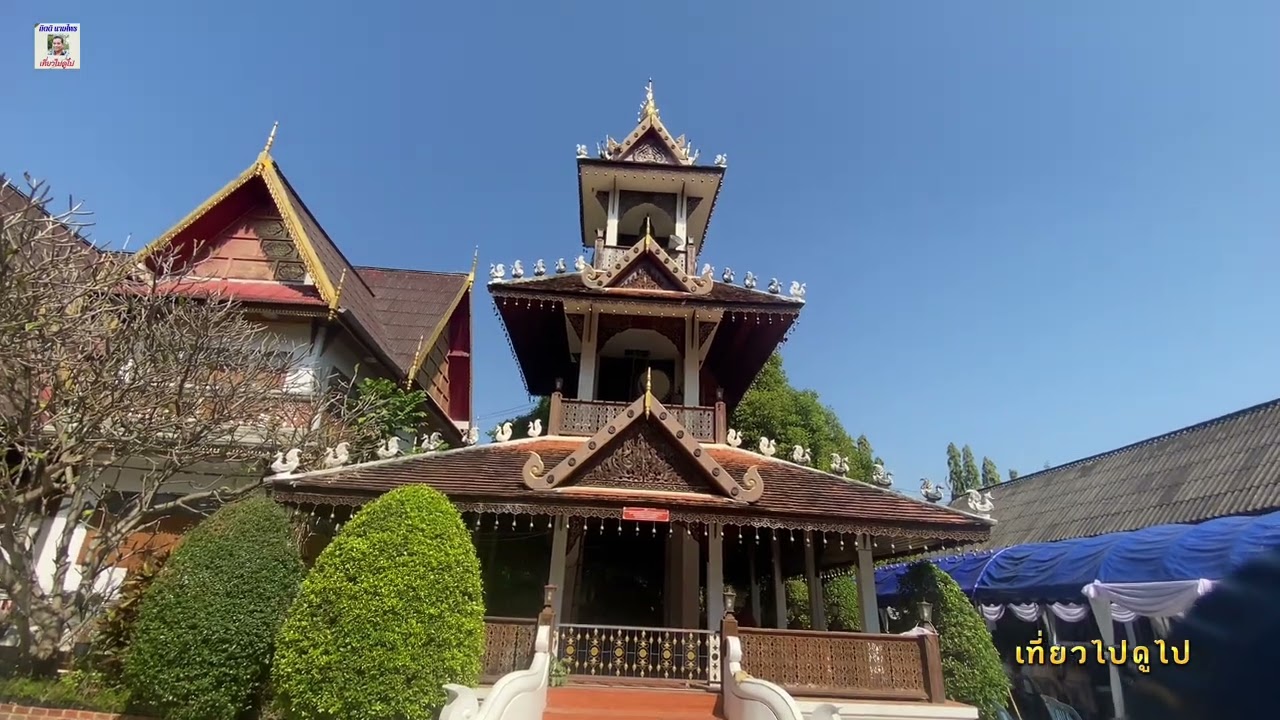
 Click to Access the Navigation Map GPS
Wat Sai Mun (Hang Dong) Map
Recommend

 Muang Chiang Mai(121)Chom Thong(47)Mae Chaem(25)Chiang Dao(33)Doi Saket(68)Mae Taeng(85)Mae Rim(69)Samoeng(29)Fang(71)Mae Ai(59)Phrao(70)San Pa Tong(103)San Kamphaeng(66)San Sai(73)Hang Dong(73)Hot(32)Doi Tao(22)Omkoi(11)Saraphi(74)Wiang Haeng(15)Chai Prakan(28)Mae Wang(32)Mae On(22)Doi Lo(33)Galyani Vadhana(1)


