
lovethailand home >North Travel Attractions >Chiang Mai Travel Attractions >Hang Dong >Nong Tong > Wat Walukaram (Nong Tong)
TL;DR: Wat Walukaram (Nong Tong) is located at Ban Ko, Moo 5, Nong Tong Subdistrict, Hang Dong District, Chiang Mai, open Daily, hours Please check with the temple before visiting.

Wat Walukaram (Nong Tong)
Open Days: Daily
Opening Hours: Please check with the temple before visiting
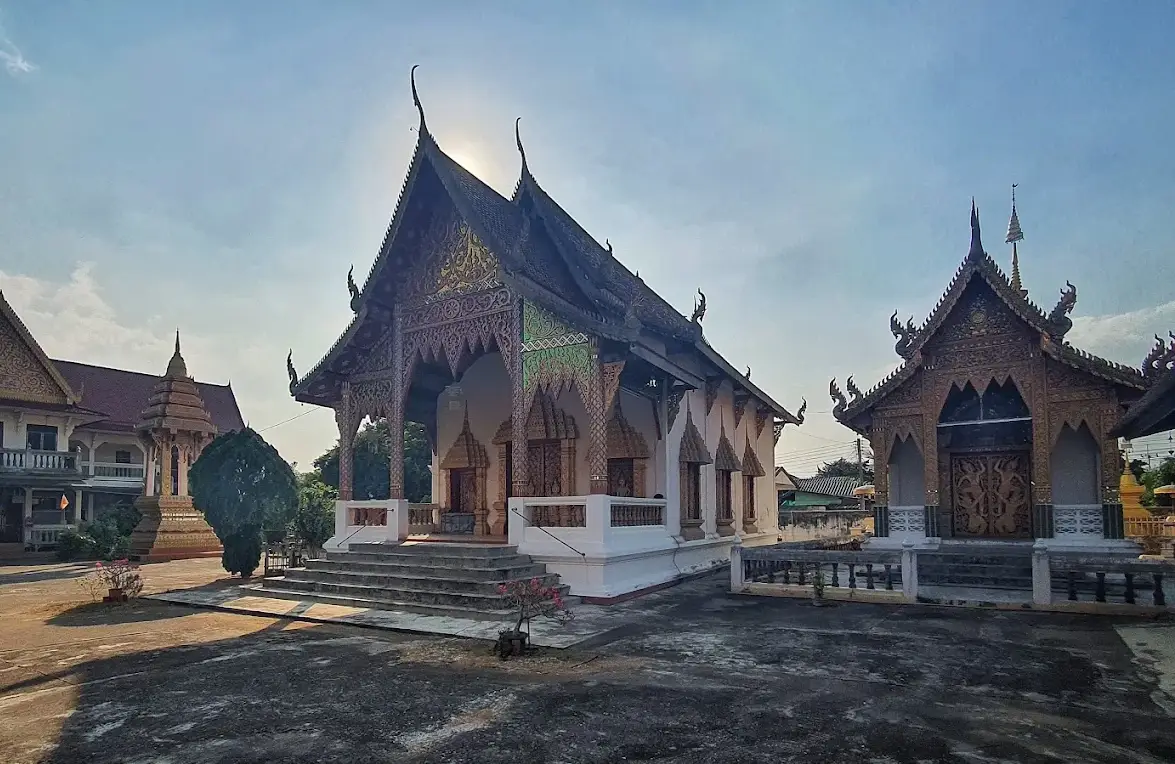
Wat Walukaram (Nong Tong) is located at 150 Moo 5, Ban Ko, on the San Pa Tong–Lamphun Road in Nong Tong Subdistrict, Hang Dong District, Chiang Mai 50340. It is a local Buddhist temple under the Maha Nikaya order and covers 1 rai and 1 ngan of temple land. The temple was officially established in 1902 and received its consecrated boundary for monastic ceremonies in 1937. The current abbot is Phra Khru Worakhun Sathit Khunwaro. Wat Walukaram is an important community temple of Ban Ko and continues to serve as a place for merit-making, Buddhist ceremonies, sermons, and local faith.
The temple’s history is closely tied to relocation and local adaptation. Wat Walukaram was originally known as Wat Rong Khrok and was located about 500 meters northwest of the present site. During the rainy season and Buddhist Lent period, the old temple area was regularly flooded. Monks and villagers therefore agreed to move the temple to a more suitable location. This decision reflects the practical relationship between temple life, community needs, and the natural environment.
The current temple site is on higher ground and is surrounded by local rice fields, creating a landscape that resembles an island. For this reason, villagers came to call it Wat Ban Ko, or the temple of Ban Ko. This local name preserves the memory of the landscape and the community’s reason for moving the temple. Wat Walukaram is therefore not only a religious site, but also a record of how villagers adapted a sacred space to fit the local terrain.
Monks have resided at the temple continuously since around 1902. This makes Wat Walukaram a living community temple with more than a century of Buddhist presence. The temple has served generations of local residents through Buddhist holy days, Buddhist Lent, the end of Buddhist Lent, Kathin, forest robe offerings, ordinations, funerals, merit-making for ancestors, and community religious activities. Its value lies in this long, steady role within Ban Ko.
Ban Ko, Moo 5, is part of Nong Tong Subdistrict in Hang Dong District, Chiang Mai. Nong Tong is connected by Highway 1015, the San Pa Tong–Lamphun route, which links Chiang Mai, Lamphun, and nearby communities. The surrounding area is strongly agricultural, with rice fields, longan orchards, gardens, and rural settlements. Wat Walukaram stands within this Lanna agricultural landscape where temples, village life, farming, and seasonal rhythms remain closely connected.
Nong Tong has many community temples, including Wat Nong Tong, Wat Phra Chao Lueam, Wat Tha Nak, Wat Nak Nimit, Wat Pa Lan, Wat Thep Kunchon, Wat Phrueksaram, and Wat Walukaram. Each temple serves its own village while also forming part of a wider Buddhist network across the subdistrict. Wat Walukaram therefore belongs to a living cultural landscape shaped by village temples, agriculture, local traditions, and community faith.
The temple’s consecrated boundary, granted in 1937, is an important milestone. A consecrated boundary allows formal Sangha ceremonies to be performed properly according to Buddhist monastic discipline. Together with its official establishment in 1902, this shows the development of Wat Walukaram from a village sacred place into a formally recognized Buddhist temple with a stable religious role.
The temple has both an official name and a local name. Wat Walukaram is the formal name, while Wat Ban Ko is the name local people use in daily life. Preserving both names is important. The official name helps identify the temple in temple registers and maps, while the local name reveals the relationship between the temple and the surrounding village landscape.
Phra Khru Worakhun Sathit Khunwaro is associated with Wat Walukaram as abbot and has held an important monastic role in Nong Tong. In a community temple, the abbot’s role is central. He leads ceremonies, maintains the temple, guides local devotees, and keeps Buddhist practice active in the village. Wat Walukaram remains a living temple because of the continuing relationship between monks and villagers.
The temple covers 1 rai and 1 ngan, giving it the character of a compact village temple. Its appeal does not come from grand scale but from its relocation history, its island-like setting surrounded by agricultural land, and its close connection with Ban Ko. Visitors should see Wat Walukaram as a local temple that reflects the everyday Buddhist life of a Lanna village.
Important things to see include the worship areas, Buddha images, temple grounds, and the peaceful atmosphere of Ban Ko’s community temple. Visitors should also pay attention to the temple’s location on higher ground and its relationship with the surrounding fields, because this landscape is central to the temple’s history. The site tells a story of flood, movement, community decision-making, and continuing faith.
Visitors should pay respect to the Buddha images and worship areas inside the temple. A respectful visit begins with a calm mind, modest clothing, quiet speech, and awareness that the temple is an active sacred place. Visitors should avoid entering monks’ private areas without permission and should ask before photographing sensitive spaces or ongoing ceremonies.
Temple activities are connected with the Buddhist calendar and Lanna village traditions. These include Buddhist holy days, Buddhist Lent, the end of Buddhist Lent, Kathin, forest robe offerings, Salak Phat, and village merit-making activities. These events support the bond between villagers and the temple and help sustain Wat Walukaram as a shared spiritual center.
The role of Wat Walukaram in Ban Ko can be seen through religion, society, and culture. Religiously, it is a place for worship, sermons, and Buddhist ceremonies. Socially, it brings villagers together during merit-making and community activities. Culturally, it preserves the memory of the old Wat Rong Khrok, the move away from a flood-prone site, and the identity of Wat Ban Ko in local life.
Nong Tong also contains Wiang Mano Ancient Settlement, an important historical site linked with the Hariphunchai period. This makes Wat Walukaram part of a broader cultural route that includes community temples, ancient settlement history, agricultural villages, and local Buddhist practice. A visit to Wat Walukaram becomes more meaningful when seen together with nearby temples and historical sites in the same subdistrict.
A connected route can begin at Wat Walukaram for a quiet merit-making visit and an understanding of the Ban Ko temple story. Travelers can then continue to Wat Nong Tong, Wiang Mano Ancient Settlement, Wat Phra Chao Lueam, Wat Sa Trai Nurak or Wat Na Wiang, Wat Tha Nak, and Wat Nak Nimit. This route is suitable for a half-day or full-day cultural trip around Nong Tong.
Wat Walukaram is suitable for travelers interested in Lanna community temples, local Buddhist history, agricultural landscapes, and cultural routes in Hang Dong. It is not a large tourist temple, but it has a distinctive story: a temple moved because of seasonal flooding, re-established on higher ground, remembered locally as Wat Ban Ko, and still used by the community today.
Getting There is easiest by private car, rental car, or ride-hailing service. From Chiang Mai city, travel toward Hang Dong District, then continue to Nong Tong Subdistrict via the San Pa Tong–Lamphun route or Highway 1015. The temple is located in Ban Ko, Moo 5. Visitors can set the destination as Wat Walukaram, Ban Ko, Nong Tong Subdistrict, Hang Dong District, Chiang Mai.
The distance from Chiang Mai city to Nong Tong Phatthana Municipality is about 28 kilometers and usually takes around 35 minutes in normal traffic. Morning or early afternoon is suitable for a quiet visit. Travelers can combine the temple with nearby cultural sites, restaurants, cafés, and accommodations in Nong Tong, Hang Dong, and Baan Tawai.
Overall, Wat Walukaram (Nong Tong), also known as Wat Ban Ko, is an old community temple with religious, social, and landscape value. Its story began as Wat Rong Khrok, continued through relocation from a flood-prone area, and developed into a stable temple on higher ground surrounded by fields. Established in 1902 and granted a consecrated boundary in 1937, it remains a meaningful stop for travelers seeking the quieter local side of Chiang Mai’s Lanna Buddhist culture.
| Name | Wat Walukaram (Nong Tong) |
| Former / Local Name | Wat Rong Khrok / Wat Ban Ko |
| Location | Ban Ko, Moo 5, Nong Tong Subdistrict, Hang Dong District, Chiang Mai |
| Address | 150 Moo 5, Ban Ko, San Pa Tong–Lamphun Road, Nong Tong Subdistrict, Hang Dong District, Chiang Mai 50340, Thailand |
| Temple Type | Local Buddhist temple under the Maha Nikaya order |
| Temple Land Area | 1 rai, 1 ngan |
| Open Days | Daily |
| Opening Hours | Please check with the temple before visiting |
| History | Originally known as Wat Rong Khrok and located about 500 meters northwest of the present site. Due to regular flooding during the Buddhist Lent season, monks and villagers moved the temple to higher ground surrounded by fields. The temple was officially established in 1902. |
| Consecrated Boundary | Granted in 1937 |
| Highlights | A Ban Ko community temple with a relocation history from a flood-prone site to higher ground surrounded by agricultural fields |
| Distinctive Features | A compact Lanna village temple reflecting the relationship between temple, village, fields, seasonal flooding, and local adaptation |
| What To See | Worship areas, Buddha images, temple grounds, Ban Ko community atmosphere, and the agricultural landscape surrounding the temple |
| What To Worship | Buddha images and worship areas inside the temple |
| Abbot / Caretaker | Phra Khru Worakhun Sathit Khunwaro |
| Community Role | A place for worship, merit-making, sermons, Buddhist ceremonies, and community faith in Ban Ko |
| Current Status | An active community temple in Nong Tong Subdistrict, listed in public temple and Sangha records |
| Travel Information | From Chiang Mai city, travel toward Hang Dong District, then continue to Nong Tong Subdistrict via the San Pa Tong–Lamphun route or Highway 1015. Private car, rental car, or ride-hailing service is recommended. |
| Nearby Tourist Attractions | 1. Wat Nong Tong, about 3 km 2. Wiang Mano Ancient Settlement, about 4 km 3. Wat Phra Chao Lueam, about 5 km 4. Wat Sa Trai Nurak / Wat Na Wiang, about 6 km 5. Wat Tha Nak, about 7 km |
| Nearby Restaurants | 1. Krua Malawin Nong Tong, about 4 km, Tel. 093-239-3442 2. The Dream Cafe Chiang Mai, about 5 km, Tel. 095-612-0683 3. GOOD LUCK CAFE Nong Tong, about 5 km, Tel. 064-494-1494, 083-535-9963 4. Ping Pang Khun Kru, about 6 km, Tel. 096-901-8566 5. Khao Soi Hang Dong Mae Ui Noo Branch 1, about 15 km, Tel. 053-443-069, 098-750-6214, 080-629-2528 |
| Nearby Accommodations | 1. Baan Tawai Lanna Resort, about 15 km 2. Soft Resort Kadfarang, about 17 km 3. Laan Mai Fai Chang Resort, about 18 km 4. Baan Suan Hill Lodge, about 19 km 5. Veranda High Resort Chiang Mai, about 24 km, Tel. 053-365-007, 062-398-6899, 098-913-7699 |
Frequently Asked Questions (FAQ)
Q: Where is Wat Walukaram (Nong Tong) located?
A: Wat Walukaram is located at 150 Moo 5, Ban Ko, San Pa Tong–Lamphun Road, Nong Tong Subdistrict, Hang Dong District, Chiang Mai 50340, Thailand.
Q: What was the former name of Wat Walukaram?
A: The temple was formerly known as Wat Rong Khrok. After it was moved to the present higher-ground location, local people also called it Wat Ban Ko.
Q: When was Wat Walukaram established?
A: Wat Walukaram was officially established as a temple in 1902 and received its consecrated boundary in 1937.
Q: Why was Wat Walukaram moved from its original site?
A: The original site was regularly flooded during the Buddhist Lent season, so monks and villagers agreed to move the temple to higher ground that was more suitable for monastic residence and Buddhist activities.
Q: Why is Wat Walukaram important?
A: It is a community temple of Ban Ko and serves as a place for worship, merit-making, sermons, Buddhist ceremonies, and local faith in Nong Tong Subdistrict.
Q: Who should visit Wat Walukaram?
A: It is suitable for travelers interested in Lanna community temples, village Buddhist history, agricultural landscapes, and cultural routes in Nong Tong and Hang Dong.
Q: What nearby places can be visited with Wat Walukaram?
A: Nearby places include Wat Nong Tong, Wiang Mano Ancient Settlement, Wat Phra Chao Lueam, Wat Sa Trai Nurak, and Wat Tha Nak.
 Category: ●Places of Worship
 Group: ●Temple
Last Update : 6 DayAgo
 Last Update : 6 DayAgo
 Click to Access the Navigation Map GPS
Wat Walukaram (Nong Tong) Map
Recommend

 Muang Chiang Mai(121)Chom Thong(47)Mae Chaem(25)Chiang Dao(33)Doi Saket(68)Mae Taeng(85)Mae Rim(69)Samoeng(29)Fang(71)Mae Ai(59)Phrao(70)San Pa Tong(103)San Kamphaeng(66)San Sai(73)Hang Dong(73)Hot(32)Doi Tao(22)Omkoi(11)Saraphi(74)Wiang Haeng(15)Chai Prakan(28)Mae Wang(32)Mae On(22)Doi Lo(33)Galyani Vadhana(1)


