
lovethailand home >North Travel Attractions >Chiang Mai Travel Attractions >Hang Dong >Nong Tong > Wat Thep Kunchon
TL;DR: Wat Thep Kunchon is located at Ban Nong Chang, Moo 7, Nong Tong Subdistrict, Hang Dong District, Chiang Mai, open Daily, hours 08:00 – 17:00.

Wat Thep Kunchon
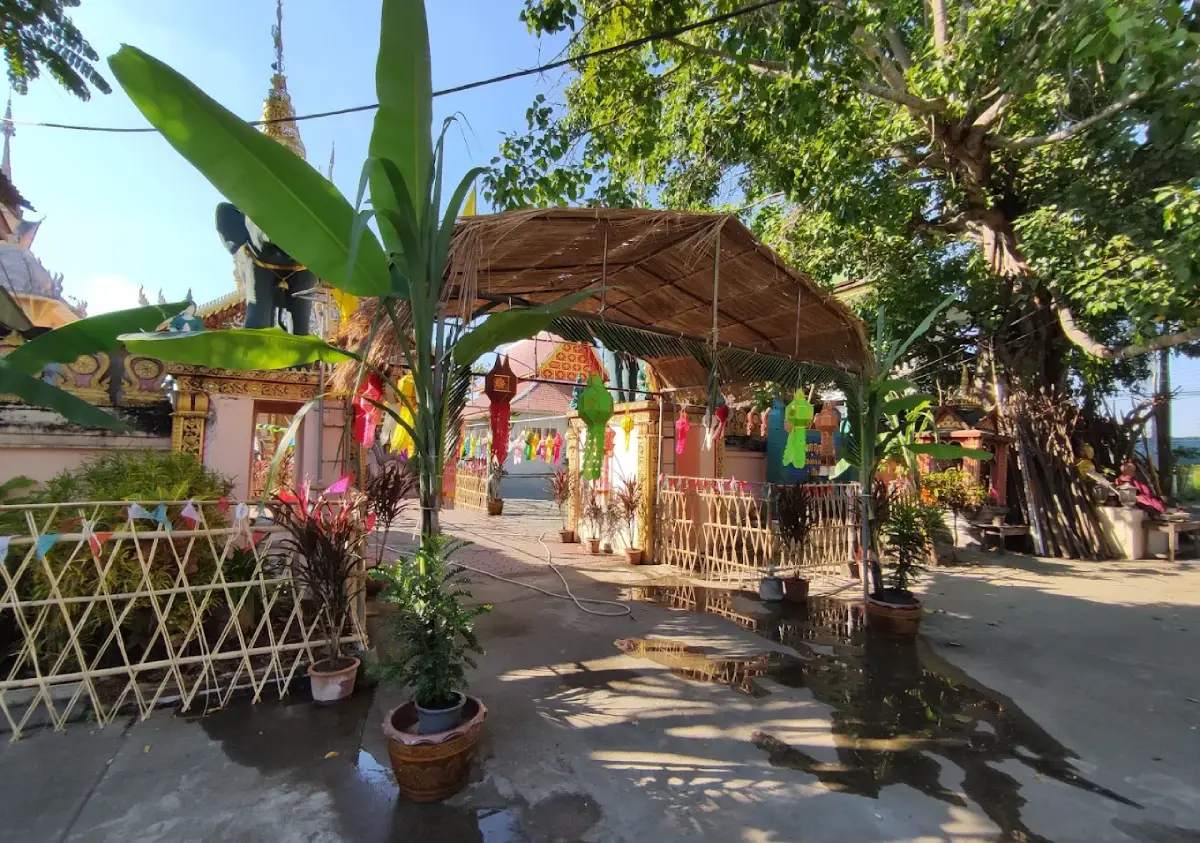
Open Days: Daily
Opening Hours: 08:00 – 17:00
Wat Thep Kunchon, locally known as Wat Nong Chang, is located at 130 Moo 7, Ban Nong Chang, Nong Tong Subdistrict, Hang Dong District, Chiang Mai 50340. It is a local Buddhist temple under the Maha Nikaya order and serves as an important spiritual center for Ban Nong Chang. The temple covers 2 rai, 1 ngan, and 37 square wah. It was officially established as a temple in 1822 and received its consecrated boundary for monastic ceremonies in 1988, making it one of the long-established community temples of Nong Tong Subdistrict.
The local name Wat Nong Chang shows how closely the temple is tied to its village. In Lanna community life, a temple is not separated from the people around it. It is a shared space for merit-making, sermons, Buddhist ceremonies, seasonal festivals, and community gatherings. Wat Thep Kunchon therefore should be understood not only as a religious building, but also as the spiritual heart of Ban Nong Chang.
Since Wat Thep Kunchon was officially established in 1822, the temple has a history of more than 200 years. This long history places it within the broader cultural landscape of Nong Tong, a subdistrict with deep historical roots in southern Chiang Mai. Nong Tong has long been connected with agriculture, transport routes, local trade, and Buddhist village life. Wat Thep Kunchon is part of this long development, serving local people through changing generations.
Nong Tong Subdistrict is located south of Hang Dong District and Chiang Mai city. Highway 1015, the San Pa Tong–Lamphun route, is an important transportation route linking Chiang Mai, Lamphun, and nearby communities. The area is also strongly agricultural, with local livelihoods connected to fresh and processed longan, rice farming, chili, soybean, garlic, and other crops. Wat Thep Kunchon stands within this agricultural Lanna setting, where temples, seasonal work, merit-making, and village relationships remain closely connected.
The wider Nong Tong area contains several Buddhist temples, and most local residents follow Buddhism. On Buddhist holy days and important religious occasions, people make merit, offer alms, and take part in local traditions. Important traditions in the area include Loy Krathong, Songkran, Rod Nam Dam Hua, Salak Phat offerings, and Poi Luang ceremonies celebrating new temple structures. Wat Thep Kunchon is part of this living Buddhist cultural system.
The temple’s consecrated boundary, granted in 1988, is an important milestone. A consecrated boundary allows formal Sangha ceremonies to be performed properly according to Buddhist monastic discipline. This confirms the temple’s religious readiness and strengthens its role as a functioning Buddhist site for both monks and laypeople. For a village temple, this status is important because it supports complete monastic and community religious activities.
The abbot of Wat Thep Kunchon is Phra Athikan Duang Kham Khunsamvaro. The abbot’s role is central to the life of a community temple. He leads Buddhist ceremonies, maintains the temple, supports the local faith community, and gives moral guidance to devotees. Through this continuing monastic care, Wat Thep Kunchon remains an active local temple rather than only a historic site.
Public information about detailed structures inside Wat Thep Kunchon is limited, but the temple’s status as a local Buddhist temple and its consecrated boundary show that it functions as a real community religious site. Visitors should focus on the worship areas, Buddha images, temple grounds, and calm village atmosphere. The value of the temple lies in its simplicity, continuity, and local use rather than in large-scale tourist architecture.
Wat Thep Kunchon is suitable for travelers who want to understand Lanna village temples in a real local context. A temple of this kind shows the connection between village life and Buddhism: residents come to make merit, listen to sermons, join funerals, ordinations, Kathin, forest robe offerings, and annual temple activities. This makes the temple meaningful for travelers interested in living culture rather than only sightseeing.
Ban Nong Chang lies within Nong Tong Subdistrict, an area with important historical surroundings. One of the most significant nearby places is Wiang Mano, an ancient settlement in Moo 3 of Nong Tong. Wiang Mano dates to the Hariphunchai period and has traces of moats, earthen walls, and archaeological objects such as Buddha image fragments, miniature stupas, and pottery. Because Wat Thep Kunchon stands in the same subdistrict, it can be understood as part of a broader cultural route connecting Buddhist temples, ancient settlement history, and rural Lanna life.
A trip to Wat Thep Kunchon can be combined with several nearby places. These include Wat Nong Tong, Wiang Mano Ancient Settlement, Wat Phra Chao Lueam, Wat Sa Trai Nurak or Wat Na Wiang, and Wat Tha Nak. This route is suitable for visitors interested in Hariphunchai history, Lanna art, village temples, and the agricultural communities of southern Hang Dong.
Wat Sa Trai Nurak, also known as Wat Na Wiang, is known for its historic scripture hall in the middle of a pond and its connection with Buddhist manuscript preservation. Wat Phra Chao Lueam is interesting for Lanna Buddhist art and important sacred objects. Wiang Mano helps explain the deeper historical background of Nong Tong. These nearby sites make Wat Thep Kunchon a useful stop within a wider cultural travel route rather than a standalone visit.
The main appeal of Wat Thep Kunchon is its identity as an old temple of Ban Nong Chang. Its local name, Wat Nong Chang, gives it a warm community character. Visitors should experience the temple slowly: pay respect, observe the worship area, walk around the temple grounds, and appreciate the quiet atmosphere of a village temple that continues to serve local people.
Visitors should pay respect to the Buddha images and worship areas inside the temple. A respectful visit begins with a calm mind and proper conduct. Modest clothing, quiet speech, respect for monks and local devotees, and asking permission before photographing sensitive areas are appropriate. Since Wat Thep Kunchon is an active community temple, visitors should treat it as a living sacred place rather than merely a sightseeing stop.
Temple activities at Wat Thep Kunchon are connected with the Buddhist calendar and Lanna village traditions. These include Buddhist holy days, Buddhist Lent, the end of Buddhist Lent, Kathin, forest robe offerings, Salak Phat, and Poi Luang when temple structures are celebrated. Such ceremonies bring villagers together, strengthen community identity, and support temple maintenance.
The role of Wat Thep Kunchon can be seen in several ways. Religiously, it is a place for worship, merit-making, and Buddhist ceremonies. Socially, it brings villagers together during important events. Culturally, it helps preserve Lanna Buddhist traditions and local language use. Spiritually, it provides a peaceful place where local people can return to Buddhist values in daily life.
For travelers, Wat Thep Kunchon offers a quieter and more local perspective on Chiang Mai. It is not defined by crowds or large tourist facilities. Its value lies in its long history, its connection with Ban Nong Chang, and its place within Nong Tong’s cultural landscape. Visitors interested in old temples, village Buddhism, and local history in southern Hang Dong will find the temple meaningful.
Getting There is easiest by private car, rental car, or ride-hailing service. From Chiang Mai city, travel toward Hang Dong District, then continue to Nong Tong Subdistrict via the San Pa Tong–Lamphun route or Highway 1015. The temple is located in Ban Nong Chang, Moo 7. Visitors can set the destination as Wat Thep Kunchon or Wat Nong Chang, Nong Tong Subdistrict, Hang Dong District, Chiang Mai.
The distance from Chiang Mai city to Nong Tong Phatthana Municipality is about 28 kilometers and usually takes around 35 minutes in normal traffic. This route is suitable for a half-day or full-day cultural trip. From Wat Thep Kunchon, visitors can continue to Wat Nong Tong, Wiang Mano, Wat Phra Chao Lueam, Wat Sa Trai Nurak, and Wat Tha Nak without excessive backtracking.
Visitors should allow about 30 minutes to 1 hour for a calm visit to Wat Thep Kunchon. This is enough time to pay respect, make merit, and observe the quiet atmosphere of a village temple. The visit becomes more meaningful when combined with nearby temples and historical sites, because the broader route helps explain the temple’s place within the Buddhist and agricultural culture of Nong Tong.
Overall, Wat Thep Kunchon is a valuable community temple in Hang Dong District. It was established in 1822, received its consecrated boundary in 1988, is locally known as Wat Nong Chang, and continues to serve as a spiritual center of Ban Nong Chang. Though modest in scale, the temple has strong value as a living Buddhist site connected with local faith, village culture, and the wider historical landscape of Nong Tong Subdistrict.
| Name | Wat Thep Kunchon |
| Local Name | Wat Nong Chang |
| Location | Ban Nong Chang, Moo 7, Nong Tong Subdistrict, Hang Dong District, Chiang Mai |
| Address | 130 Moo 7, Ban Nong Chang, Nong Tong Subdistrict, Hang Dong District, Chiang Mai 50340, Thailand |
| Temple Type | Local Buddhist temple under the Maha Nikaya order |
| Temple Land Area | 2 rai, 1 ngan, 37 square wah |
| Open Days | Daily |
| Opening Hours | 08:00 – 17:00 |
| History | Officially established as a temple in 1822 and granted a consecrated boundary in 1988. It is an old community temple of Ban Nong Chang in Nong Tong Subdistrict. |
| Highlights | An old community temple of Ban Nong Chang, locally known as Wat Nong Chang, and a useful stop on the cultural temple route of Nong Tong Subdistrict |
| Distinctive Features | A Lanna village temple reflecting the relationship between Buddhism, local agriculture, village life, and traditional festivals in Nong Tong |
| What To See | Worship areas, Buddha images, temple grounds, and the quiet atmosphere of Ban Nong Chang’s community temple |
| What To Worship | Buddha images and worship areas inside the temple |
| Abbot / Caretaker | Phra Athikan Duang Kham Khunsamvaro |
| Community Role | A place for worship, merit-making, sermons, Buddhist ceremonies, and community faith in Ban Nong Chang |
| Current Status | An active community temple in Nong Tong Subdistrict, listed in public travel and business directories |
| Contact Number | 053-464-430 |
| Travel Information | From Chiang Mai city, travel toward Hang Dong District, then continue to Nong Tong Subdistrict via the San Pa Tong–Lamphun route or Highway 1015. Private car, rental car, or ride-hailing service is recommended. |
| Nearby Tourist Attractions | 1. Wat Nong Tong, about 3 km 2. Wiang Mano Ancient Settlement, about 4 km 3. Wat Phra Chao Lueam, about 5 km 4. Wat Sa Trai Nurak / Wat Na Wiang, about 6 km 5. Wat Tha Nak, about 7 km |
| Nearby Restaurants | 1. Krua Malawin Nong Tong, about 5 km, Tel. 093-239-3442 2. The Dream Cafe Chiang Mai, about 5 km, Tel. 095-612-0683 3. GOOD LUCK CAFE Nong Tong, about 6 km, Tel. 064-494-1494, 083-535-9963 4. Ping Pang Khun Kru, about 7 km, Tel. 096-901-8566 5. Khao Soi Hang Dong Mae Ui Noo Branch 1, about 15 km, Tel. 053-443-069, 098-750-6214, 080-629-2528 |
| Nearby Accommodations | 1. Baan Tawai Lanna Resort, about 15 km, Tel. 063-654-7997 2. Soft Resort Kadfarang, about 17 km, Tel. 081-681-1739 3. Laan Mai Fai Chang Resort, about 18 km, Tel. 082-994-7888 4. Baan Suan Hill Lodge, about 19 km, Tel. 089-834-2329 5. Veranda High Resort Chiang Mai, about 24 km |
Frequently Asked Questions (FAQ)
Q: Where is Wat Thep Kunchon located?
A: Wat Thep Kunchon is located at 130 Moo 7, Ban Nong Chang, Nong Tong Subdistrict, Hang Dong District, Chiang Mai 50340, Thailand.
Q: What is the local name of Wat Thep Kunchon?
A: Local residents call Wat Thep Kunchon Wat Nong Chang, after Ban Nong Chang where the temple is located.
Q: When was Wat Thep Kunchon established?
A: Wat Thep Kunchon was officially established as a temple in 1822 and received its consecrated boundary in 1988.
Q: Why is Wat Thep Kunchon important?
A: It is an old community temple of Ban Nong Chang and serves as a spiritual center for merit-making, Buddhist ceremonies, and local faith in Nong Tong Subdistrict.
Q: Who should visit Wat Thep Kunchon?
A: It is suitable for travelers interested in Lanna village temples, old temples in Hang Dong, Nong Tong’s agricultural communities, and cultural routes connected with Wiang Mano.
Q: What nearby places can be visited with Wat Thep Kunchon?
A: Nearby places include Wat Nong Tong, Wiang Mano Ancient Settlement, Wat Phra Chao Lueam, Wat Sa Trai Nurak, and Wat Tha Nak.
Q: How can travelers get to Wat Thep Kunchon?
A: From Chiang Mai city, travel toward Hang Dong District, then continue to Nong Tong Subdistrict via the San Pa Tong–Lamphun route or Highway 1015. Private car, rental car, or ride-hailing service is recommended.
 Category: ●Places of Worship
 Group: ●Temple
Last Update : 7 DayAgo
 Last Update : 7 DayAgo
 Click to Access the Navigation Map GPS
 Muang Chiang Mai(121)Chom Thong(47)Mae Chaem(25)Chiang Dao(33)Doi Saket(68)Mae Taeng(85)Mae Rim(69)Samoeng(29)Fang(71)Mae Ai(59)Phrao(70)San Pa Tong(103)San Kamphaeng(66)San Sai(73)Hang Dong(73)Hot(32)Doi Tao(22)Omkoi(11)Saraphi(74)Wiang Haeng(15)Chai Prakan(28)Mae Wang(32)Mae On(22)Doi Lo(33)Galyani Vadhana(1)


