
lovethailand home >North Travel Attractions >Chiang Mai Travel Attractions >Hang Dong >Han Kaeo > Wat Thung Or
TL;DR: Wat Thung Or is located at Ban Thung Or, Moo 3, Han Kaeo Subdistrict, Hang Dong District, Chiang Mai, open Please contact the temple before visiting, hours Please contact the temple before visiting.
Wat Thung Or
Open Days: Please contact the temple before visiting
Opening Hours: Please contact the temple before visiting
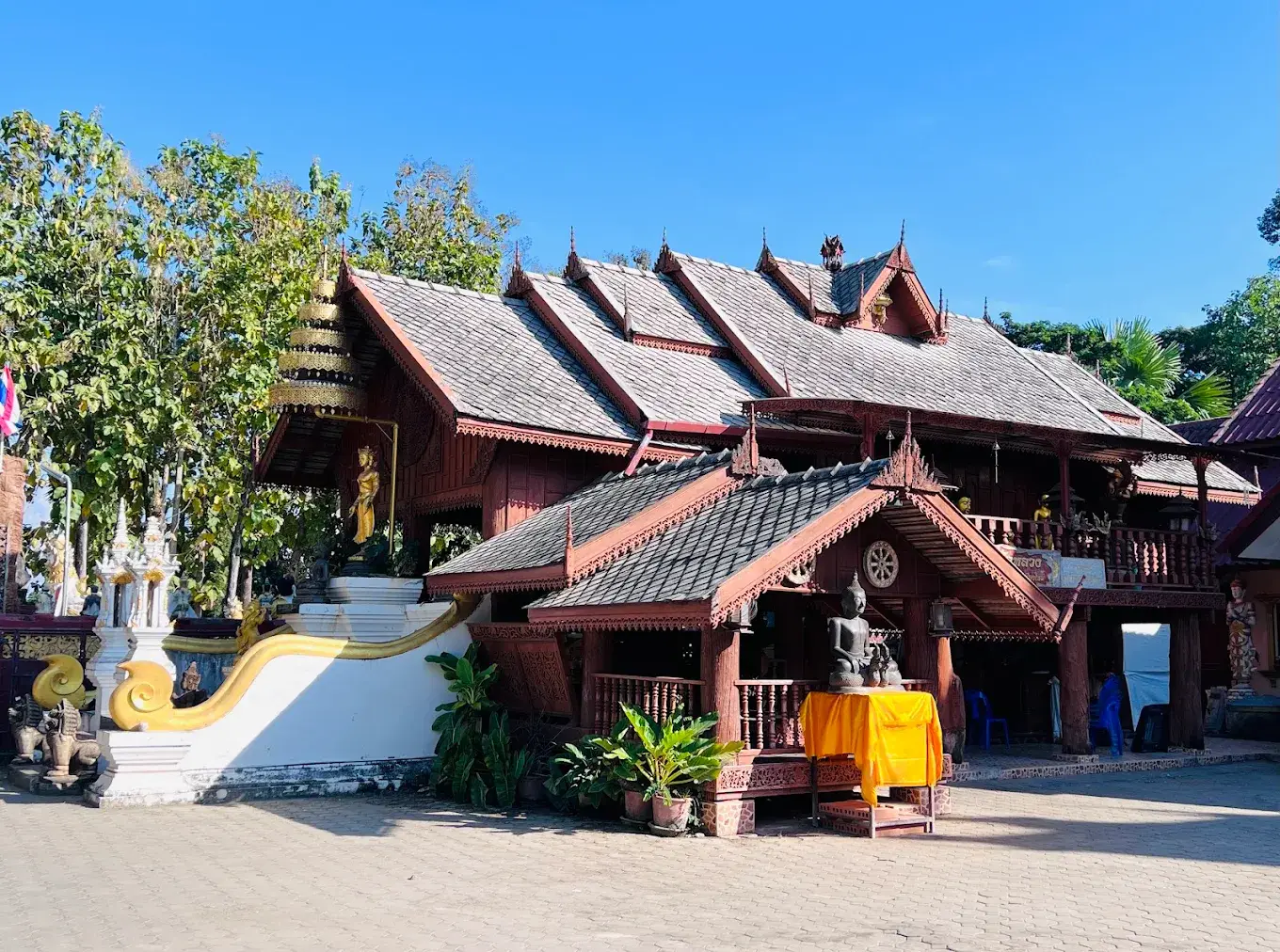
Wat Thung Or, locally known as Wat Thung Or Luang, is a historic Buddhist temple in Ban Thung Or Luang, Moo 3, Han Kaeo Subdistrict, Hang Dong District, Chiang Mai. The temple belongs to the Maha Nikaya order and is one of the most culturally significant local temples in Han Kaeo. Its most important feature is an ancient teak viharn, or assembly hall, believed to be several hundred years old. The viharn preserves rare Lanna craftsmanship, including a wooden structure assembled without nails, decorative elements linked to early northern Thai art, and a principal Buddha image that blends Burmese and Lanna artistic influences.
Wat Thung Or Luang is a small temple, but its historical and artistic value is exceptional. The temple land covers 1 rai, 2 ngan, and 50 square wah. It stands within Ban Thung Or Luang, a quiet village community in Han Kaeo Subdistrict. The temple is not known for grand scale or monumental size; instead, it is valued for its ancient viharn, its village setting, and its role as a long-standing spiritual center for the local Buddhist community.
The exact founding date of Wat Thung Or is not firmly documented. However, records show that monastic administration at the temple began in 1807. Based on the structure and artistic features of the viharn, the temple is often estimated to be about 600–700 years old. Local historical information also describes the old viharn as one of the important ancient monuments of Chiang Mai Province, with stylistic evidence suggesting a connection to the early period of Chiang Mai and nearby ancient settlements.
The temple’s historical context becomes clearer when placed within Han Kaeo Subdistrict. Han Kaeo lies south of Hang Dong town and consists of 9 villages, including Ban San Pa Sak, Ban Han Kaeo, Ban Thung Or, Ban Pa Ngae, Ban Rai, Ban Kuan, Ban Wua Lai, Ban Ton Kae, and Ban Pa Hiang. This area has long been associated with local settlement, agriculture, craft traditions, and Buddhist community life. Wat Thung Or Luang is therefore part of a broader cultural landscape where temples, villages, craftsmanship, and local memory remain closely connected.
The ancient viharn is the heart of Wat Thung Or Luang. It is smaller than many temple assembly halls and can hold about 50–60 people, but its compact scale makes the craftsmanship easier to observe. The structure was built largely from teak, combined with brick and mortar, and its wooden elements were assembled without using nails. This type of traditional construction reflects the knowledge of old Lanna craftsmen and is now rarely seen in ordinary temple buildings.
At the front of the viharn is an architectural feature known locally as hang wan or tua ngao. This element is associated with ancient Lanna artistic forms found in historical contexts such as Wiang Kum Kam, Wiang Tha Kan, and Wiang Mano. Its presence at Wat Thung Or helps distinguish the viharn from many other old temple halls and serves as an important clue to the temple’s age and cultural background.
The artistic character of the viharn reflects continuity from early Lanna forms, while the principal Buddha image inside the hall shows a blend of Burmese and Lanna styles. This mixture corresponds with the broader historical context of northern Thailand, where Lanna and Burmese influences overlapped during periods of conflict, political movement, and cultural exchange. At Wat Thung Or, these influences are visible not as abstract history, but as physical details in the sacred architecture and Buddha image.
The main Buddha image inside the viharn is known as Phra Chao Saen Ngam, or Luang Pho Khao 700 Years. It is the principal sacred image of the temple and an important focus of devotion for local worshippers. Visitors should first pay respect to this Buddha image before slowly observing the viharn’s structure, wooden details, and surrounding sacred spaces. For cultural travelers, this image helps connect the artistic heritage of the viharn with the living faith of the community.
Architecturally, the viharn of Wat Thung Or is an excellent example of a small but highly meaningful village religious building. It was not designed for large crowds, but for real community use: ceremonies, sermons, merit-making, and village gatherings. In traditional Lanna society, the viharn often served both religious and social functions. Wat Thung Or still reflects that older role, where temple space is shared by monks and laypeople and remains central to village life.
In 1996, the Fine Arts Department restored the viharn because the building had aged and deteriorated after centuries of use. The restoration was initiated after the temple leadership recognized the need to preserve the historic structure. Fine Arts Office 4 approved a budget of 1,500,000 baht for the restoration. This work helped protect the viharn and encouraged greater local awareness of the importance of conserving historic religious architecture.
The 1996 restoration also created an important conservation lesson. Before the restoration, many villagers did not fully recognize the artistic and historical value of the old viharn. After the Fine Arts Department became involved, local awareness increased. At the same time, some community members felt that certain new repair materials and changes altered the older atmosphere of the building. This tension is common in heritage conservation: a historic structure must be made stable, but its original character must also be respected.
Although parts of the viharn were restored and some damaged elements were replaced, the main structure remains an important historic asset. The temple continues to preserve valuable original elements, and the viharn still allows later generations to study old Lanna timber construction, small-scale temple architecture, and the conservation challenges faced by historic Buddhist sites. Wat Thung Or therefore functions both as a place of worship and as an open cultural lesson in architectural preservation.
Today, Phra Khru Palat Thanathon Kantaviro serves as the abbot of Wat Thung Or Luang. He has played an important role in maintaining the ancient viharn and preserving the temple’s religious and cultural significance. His work emphasizes the long-term protection of Buddhist heritage, sacred objects, local architecture, and community awareness, so that future generations can continue to worship, learn, and recognize the value of this historic temple.
The temple’s monastic lineage shows continuous religious life from 1807 onward. Recorded abbots include Khru Ba Inchai, Khru Ba Phrom, Khru Ba Chum Pu, Khru Ba Techa, Khru Ba Kham Tan, Phra Athikan Som, Phra Athikan Sao, Phra Athikan Kham Saen, Phra Athikan Duang Kaeo, Phra Athikan Bun Chuen, Phra Athikan Suraphon, Phra Athikan Thong Suk, and Phra Thanathon Kantaviro. This succession reflects Wat Thung Or’s role as a living temple rather than a silent ruin.
Another meaningful layer of the temple is its association with Khru Ba Chao Siwichai, the revered Lanna monk often called the saint of northern Thailand. According to local elders, Khru Ba Chao Siwichai once visited Wat Thung Or during his religious journeys and rested at the sacred well in front of the temple. Today, a monument to Khru Ba Chao Siwichai stands beside the ancient viharn, allowing visitors to pay respect and connect the temple with a broader Lanna devotional tradition.
The monument to Khru Ba Chao Siwichai and the sacred well add spiritual depth to the visit. Travelers come not only to see ancient architecture but also to encounter local memory, oral tradition, and community faith. Although the story is preserved through local accounts, it remains important because it shows how the community understands its temple as part of a larger Buddhist landscape in northern Thailand.
The main areas of Wat Thung Or Luang include the ancient viharn, the front area of the viharn, the monument to Khru Ba Chao Siwichai, the sacred well, and other temple spaces used for Buddhist activities. Information from recent merit-making activities also refers to the construction of a Lanna-style ordination hall, showing that the temple continues to develop its religious facilities while preserving its historic core.
The most important things to see at Wat Thung Or Luang are the ancient viharn, the teak structure assembled without nails, the hang wan or tua ngao feature at the front of the hall, the compact scale of the building, and Luang Pho Khao 700 Years inside the viharn. Visitors should also stop at the Khru Ba Chao Siwichai monument and observe the sacred well in front of the temple. Together, these elements create a visit that combines architecture, devotion, and local memory.
Wat Thung Or Luang is suitable for travelers interested in old temples, Lanna architecture, Chiang Mai history, village culture, and quiet cultural routes around Hang Dong. It is not a commercial tourist attraction, and that is part of its value. The temple is best experienced slowly, with attention to materials, form, craftsmanship, and context. Visitors should dress modestly, speak quietly, avoid touching old architectural elements unnecessarily, and respect active religious spaces.
The temple remains connected to regular Buddhist merit-making and community activities such as Wan Phra observances, Kathin, forest robe offerings, renovation-related merit-making, and temple development projects. Public information from past merit-making activities mentions the construction of religious structures and Buddha images, reflecting how devotees continue to support the temple. Wat Thung Or Luang therefore remains a living spiritual center, not just a historic monument.
The role of Wat Thung Or Luang in the community goes beyond religious ritual. It helps preserve the identity of Ban Thung Or, teaches younger generations about local heritage, and reminds the community of the importance of protecting old religious architecture. The 1996 restoration played a major role in raising conservation awareness among local people. This community awareness is essential because heritage buildings survive best when local residents see them as part of their own identity.
Wat Thung Or Luang can be included in several cultural routes around Han Kaeo and Hang Dong. A cultural route may begin at Wat Thung Or Luang, then continue to Wat Si Sawang, Wat Si Lom, Wat Khan Kaeo, and Ban Roi An Phan Yang. Travelers interested in handicrafts can continue to Baan Tawai Handicraft Center, while those planning a broader Hang Dong trip can combine the temple with cafés or attractions such as Grand Canyon Chiang Mai.
Getting There is easiest by private car, rental car, or ride-hailing service. From Chiang Mai city, take the Chiang Mai–Hang Dong Road toward Hang Dong District, then continue into Han Kaeo Subdistrict and Ban Thung Or, Moo 3. The temple is located within a village area rather than directly on a major road, so using a navigation app is recommended. Set the destination as Wat Thung Or Luang, Ban Thung Or, Han Kaeo Subdistrict, Hang Dong District, Chiang Mai. The temple coordinates are 18°38'37.7"N 98°55'13.1"E.
Visitors who want to appreciate the ancient viharn should allow at least 45 minutes to 1 hour. This gives enough time to pay respect to the principal Buddha image, observe the viharn details, visit the Khru Ba Chao Siwichai monument, and see the sacred well. Photography should be done respectfully and without disturbing monks or worshippers. The value of this temple lies in small details, craftsmanship, and layered history, so it rewards slow observation rather than a quick stop.
Overall, Wat Thung Or Luang is one of the most meaningful historic temples in the Hang Dong cultural landscape. It connects early Lanna artistic traditions, old teak construction, Burmese-Lanna Buddhist imagery, local oral history, conservation work by the Fine Arts Department, and active village faith. For travelers who want to understand Chiang Mai beyond major tourist temples, Wat Thung Or Luang offers a quieter but deeply valuable perspective on northern Thai religious heritage.
| Name | Wat Thung Or / Wat Thung Or Luang |
| Location | Ban Thung Or, Moo 3, Han Kaeo Subdistrict, Hang Dong District, Chiang Mai |
| Address | 30 Ban Thung Or Luang, Moo 3, Han Kaeo Subdistrict, Hang Dong District, Chiang Mai 50230, Thailand |
| Coordinates | 18°38'37.7"N 98°55'13.1"E |
| Temple Type | Local Buddhist temple under the Maha Nikaya order |
| Temple Land Area | 1 rai, 2 ngan, 50 square wah |
| History | The exact founding date is not documented. Monastic administration is recorded from 1807, and the viharn is estimated from its structure to be about 600–700 years old, with artistic links to Wiang Kum Kam, Wiang Tha Kan, and Wiang Mano. |
| Highlights | Ancient teak viharn assembled without nails, hang wan or tua ngao feature at the front of the hall, and Luang Pho Khao 700 Years as the principal Buddha image |
| Distinctive Features | A compact historic Lanna viharn built with teak, brick, and mortar, reflecting artistic continuity from early Lanna traditions |
| Sacred Objects / Key Features | Luang Pho Khao 700 Years, a Burmese-Lanna style principal Buddha image, Khru Ba Chao Siwichai monument, and the sacred well in front of the temple |
| Main Areas / Zones | Ancient viharn, front viharn area, Khru Ba Chao Siwichai monument, sacred well, and temple spaces for Buddhist activities |
| Major Restoration | In 1996, Fine Arts Office 4 restored the viharn with a budget of 1,500,000 baht to preserve the historic building and Chiang Mai cultural heritage. |
| Abbot / Caretaker | Phra Khru Palat Thanathon Kantaviro |
| Current Status | An active community temple and cultural attraction listed by Han Kaeo Municipality |
| Travel Information | From Chiang Mai city, take the Chiang Mai–Hang Dong Road toward Hang Dong District, then continue into Han Kaeo Subdistrict and Ban Thung Or, Moo 3. Private car, rental car, or ride-hailing service is recommended. |
| Publicly Listed Contact Number | 053-023260 |
| Nearby Tourist Attractions | 1. Wat Si Sawang, about 1 km 2. Wat Khan Kaeo, about 2 km 3. Wat Si Lom, about 3 km 4. Ban Roi An Phan Yang, about 3 km 5. Baan Tawai Handicraft Center, about 7 km |
| Nearby Restaurants | 1. Lab Lang Wat - Wat Khan Kaeo, about 2 km, Tel. 093-292-3567, 089-757-9666, 095-191-8237 2. Bamee Kang Wat, about 2 km, Tel. 097-094-6111, 096-698-0094 3. Genesis Cafe Hang Dong, about 3 km, Tel. 081-355-2270, 098-263-4707, 063-481-0366 4. Khao Soi Hang Dong Mae Ui Noo Branch 1, about 7 km, Tel. 053-443-069, 098-750-6214, 080-629-2528 5. Little Glass House Cafe, about 8 km, Tel. 093-576-0267 |
| Nearby Accommodations | 1. Baan Suan Hill Lodge, about 4 km, Tel. 089-834-2329 2. Sunshine Garden Mansion, about 6 km, Tel. 062-951-4724 3. Hernlhin Natural Resort, about 7 km, Tel. 090-891-3056 4. Laan Mai Fai Chang Resort, about 9 km, Tel. 082-994-7888 5. Rommai Reunngam Resort, about 10 km, Tel. 093-464-2302 |
Frequently Asked Questions (FAQ)
Q: Where is Wat Thung Or located?
A: Wat Thung Or, also known as Wat Thung Or Luang, is located at 30 Ban Thung Or Luang, Moo 3, Han Kaeo Subdistrict, Hang Dong District, Chiang Mai 50230, Thailand.
Q: Why is Wat Thung Or important?
A: Wat Thung Or is important because it preserves an ancient teak viharn linked to early Lanna artistic traditions and the cultural history of Han Kaeo Subdistrict.
Q: What makes the viharn at Wat Thung Or special?
A: The viharn is built largely from teak, assembled without nails, and features a rare front decorative element known as hang wan or tua ngao.
Q: What should visitors pay respect to at Wat Thung Or?
A: Visitors should pay respect to Luang Pho Khao 700 Years, the principal Buddha image inside the ancient viharn, and the monument to Khru Ba Chao Siwichai near the viharn.
Q: How is Wat Thung Or connected to Khru Ba Chao Siwichai?
A: Local accounts say Khru Ba Chao Siwichai once visited the temple during his religious journeys and rested at the sacred well in front of the temple. A monument to him now stands beside the ancient viharn.
Q: Who is Wat Thung Or suitable for?
A: It is suitable for travelers interested in old temples, Lanna architecture, Chiang Mai history, village culture, and quiet cultural routes around Hang Dong.
Q: How can travelers get to Wat Thung Or?
A: From Chiang Mai city, take the Chiang Mai–Hang Dong Road toward Hang Dong District, then continue into Han Kaeo Subdistrict and Ban Thung Or, Moo 3. Private car, rental car, or ride-hailing service is recommended.
 Category: ●Places of Worship
 Group: ●Temple
Last Update : 1 DayAgo
 Last Update : 1 DayAgo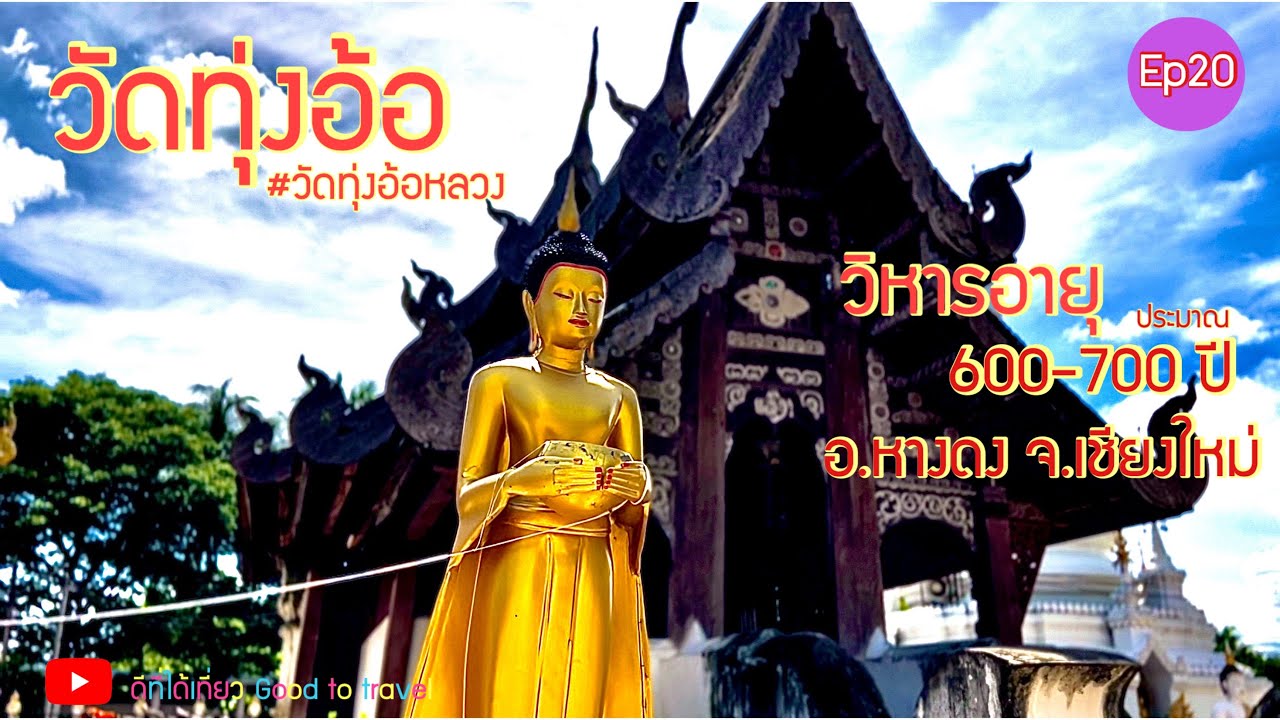
 Click to Access the Navigation Map GPS
Wat Thung Or Map
Recommend

 Muang Chiang Mai(121)Chom Thong(47)Mae Chaem(25)Chiang Dao(33)Doi Saket(68)Mae Taeng(85)Mae Rim(69)Samoeng(29)Fang(71)Mae Ai(59)Phrao(70)San Pa Tong(103)San Kamphaeng(66)San Sai(73)Hang Dong(73)Hot(32)Doi Tao(22)Omkoi(11)Saraphi(74)Wiang Haeng(15)Chai Prakan(28)Mae Wang(32)Mae On(22)Doi Lo(34)Galyani Vadhana(1)


