
lovethailand home >North Travel Attractions >Chiang Mai Travel Attractions >Hang Dong >Ban Waen > Wat Sri Pho Thong
TL;DR: Wat Sri Pho Thong is located at 103 Ban Rai, Moo 1, Ban Waen Subdistrict, Hang Dong District, Chiang Mai Province, open Daily, hours 08.00 – 17.00.

Wat Sri Pho Thong
Open Days: Daily
Opening Hours: 08.00 – 17.00
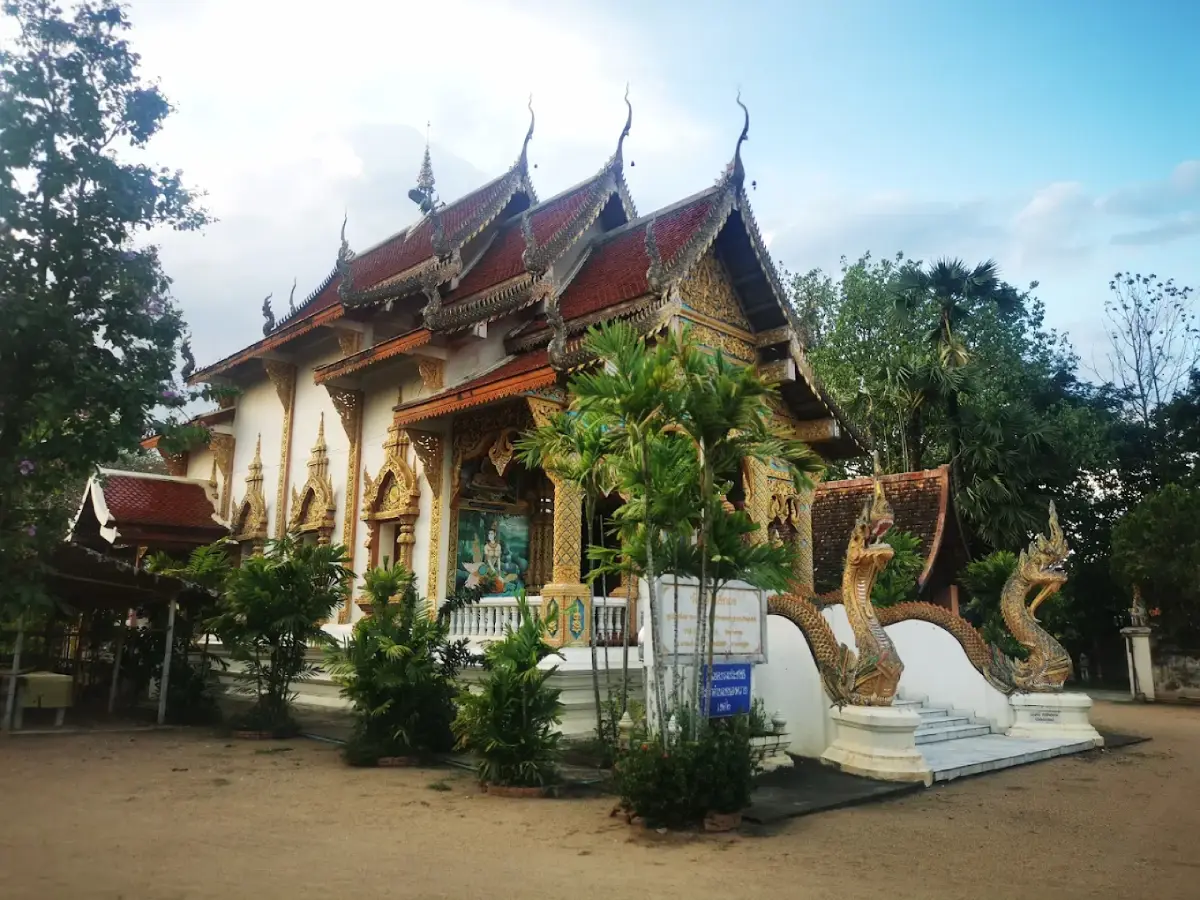
Wat Sri Pho Thong is located at 103 Ban Rai, Moo 1, Ban Waen Subdistrict, Hang Dong District, Chiang Mai Province. It is a private Buddhist temple under the Mahanikaya order and one of the community temples that help define the religious landscape of Ban Waen. The temple has a deep local history involving an earlier temple site, a relocation due to concerns about flooding, a palm-leaf manuscript tradition, Buddha images, and a Burmese-style chedi. For travelers who want to understand Chiang Mai beyond the old city, Wat Sri Pho Thong offers a meaningful view of Lanna village faith and community life in Hang Dong.
Ban Waen Subdistrict is an important part of Hang Dong District, located not far from Chiang Mai city. The area is known for old villages, community temples, handicraft routes, local restaurants, and cultural attractions. Wat Sri Pho Thong belongs to this wider network of local temples. It is not only a place of worship but also a community anchor where people make merit, listen to sermons, join Buddhist ceremonies, and maintain local traditions.
The history of Wat Sri Pho Thong is especially interesting because it contains both a registered founding year and an older temple tradition. The temple was built in 1880, while the temple history records that it may have originated around 1744. The original temple was located north of the present site and was known as Wat San Kap Tong. It stood near a major irrigation watercourse locally known as Mueang Mu Nao. This connection with water and the village landscape shows how closely Lanna temples were tied to settlement patterns, agriculture, and community life.
A major turning point in the temple’s history was its relocation to the present site. In the year Chula Sakarat 1108, during the time of Khru Ba Kham Saen as abbot, the temple was moved because of concerns that the former site could be affected by flooding. This relocation reflects the practical relationship between sacred space and the local environment. In traditional Lanna communities, a temple needed to remain close to the village while also standing on land stable enough to support monastic and community activities.
The temple legend was originally written on palm-leaf manuscripts, an important medium for preserving knowledge in Lanna culture. Over time, the palm leaves deteriorated. The temple therefore asked Nai Bunban Chandee, a person educated in the Lanna language, to copy the remaining readable parts in order to preserve the temple story. This detail is valuable because it shows that Wat Sri Pho Thong has not only physical religious structures, but also a written memory connected with local literacy and manuscript culture.
Local people have also called the temple Wat Pa Chi-Rai Nuea. This local name connects the temple with its surrounding community and landscape. In northern Thai villages, temples often have both official names and local names used by residents. These local names preserve community memory and show how deeply a temple is embedded in everyday village life.
The name Wat Sri Pho Thong carries an auspicious Buddhist meaning. “Sri” suggests blessing, beauty, and prosperity. “Pho” refers to the Bodhi tree, the sacred symbol associated with the Buddha’s enlightenment. “Thong” means gold and evokes brightness, value, and sacred dignity. Together, the name presents the temple as a place of blessing, enlightenment, and community faith.
The temple land covers 3 rai, 3 ngan, and 44 square wah, with land documents Nor Sor 3 Kor numbers 1407 and 1412. Its boundaries are recorded as public roads to the north, east, and west, and a public irrigation canal to the south. These boundary details show the temple’s location within an active village landscape, where roads and irrigation channels form part of daily life. The public canal also reflects the agricultural setting that shaped many communities in Hang Dong.
The recorded monastic structures of Wat Sri Pho Thong include monks’ residences and a hall. The monks’ residences support monastic life and religious duties, while the hall provides space for merit-making, community gatherings, and Buddhist activities. Although the historical record does not describe each building in architectural detail, these structures confirm the temple’s function as an active community religious site.
The important sacred objects of Wat Sri Pho Thong are Buddha images and a Burmese-style chedi. The Buddha images serve as the devotional center of the temple. The Burmese-style chedi adds an important artistic layer because Lanna history has long been connected with Burmese artistic influence. This chedi makes the temple meaningful not only as a place of worship but also as a small cultural site where visitors can observe regional artistic connections in northern Thailand.
Visitors should begin by paying respect to the Buddha images, then take time to observe the Burmese-style chedi and the quiet atmosphere of the temple compound. The temple’s value lies not in large-scale tourism, but in its layered history: an earlier temple site, relocation due to environmental concerns, a palm-leaf manuscript tradition, a local village name, and sacred objects connected with Lanna and Burmese artistic heritage.
The recorded abbots of Wat Sri Pho Thong begin with Khru Ba Kham Saen, who served from 1744 to 1763. Later abbots include Khru Ba Suriya, Khru Ba Uppala, Khru Ba Chaowanna, Khru Ba Chino, Khru Ba Mongkhon or To, Khru Ba Binta, Khru Ba Pan or Aphiwong, Phra Athikan Bunbeng Suphattho from 1952 to 1957, Phra Athikan Mongkhon Kittisaro from 1961 to 1966, and Phra Athikan Somphet Phatthayanō from 1966 onward. This recorded succession shows the temple’s continuity as a Buddhist institution across many generations.
Wat Sri Pho Thong plays an important role for Ban Rai and Ban Waen as a spiritual center. It provides space for merit-making, sermons, religious ceremonies, memorial rites, and community gatherings. In Lanna society, a temple connects monks, villagers, elders, children, and families through religious activities throughout the year. Wat Sri Pho Thong therefore has both religious and social value.
As a community temple, Wat Sri Pho Thong supports the wider Buddhist cycle of village life, including Buddhist holy day merit-making, kathin, pha pa, sermons, Visakha Bucha, Asalha Bucha, Buddhist Lent, the end of Buddhist Lent, and memorial merit-making. These activities allow villagers to gather, make merit, listen to teachings, and maintain the bonds of the local community.
Wat Sri Pho Thong is also suitable for travelers who want to understand the temple network of Ban Waen. Nearby temples include Wat Thao Bun Rueang, Wat Thep Prasit, Wat Worawet Wisit, Wat Ton Kwen, Wat Chom Thong, Wat Khong Khao, and Wat Chang Kham. Visiting several temples in the area helps travelers see how Buddhism shapes village identity in Hang Dong and how each temple serves its own local community.
A practical cultural route can begin at Wat Sri Pho Thong for worship and a quiet look at the Burmese-style chedi. Visitors can then continue to Kad Farang Village for food or coffee, Baan Tawai Handicraft Village for woodwork and crafts, and Wat Ton Kwen for traditional Lanna architecture. With more time, Royal Park Rajapruek or Grand Canyon Water Park Chiang Mai can also be added to the route.
The main appeal of Wat Sri Pho Thong is its layered local history. It preserves the memory of Wat San Kap Tong, the relocation of the temple because of flooding concerns, the palm-leaf manuscript tradition, the local name Wat Pa Chi-Rai Nuea, and a Burmese-style chedi. These elements make the temple more than a simple stop for worship. It is a place where landscape, faith, manuscript culture, art, and community memory come together.
Getting There is convenient from Chiang Mai city by private car, rental car, or hired transport. Take Chiang Mai–Hang Dong Road or Route 108 toward Hang Dong District, then continue into Ban Waen Subdistrict and the Ban Rai area. The drive from central Chiang Mai generally takes around 25 to 40 minutes depending on traffic. Nearby reference points include Kad Farang Village, Baan Tawai, and the Ban Waen community area. Travelers using local transport can take a Chiang Mai–Hang Dong route vehicle and continue by hired transport or ride-hailing service.
The best time to visit is in the morning or late afternoon when the weather is more comfortable. Visitors should dress modestly, keep noise low, respect monks’ areas, and avoid disturbing people who are praying or joining ceremonies. Photography should be done with care, especially during merit-making activities. Because Wat Sri Pho Thong is still a community temple, a quiet and respectful visit is the most appropriate way to experience it.
Wat Sri Pho Thong is recommended for cultural travelers, visitors interested in old temples, people who want to make merit in a peaceful local setting, and travelers planning a Hang Dong cultural route. Its importance lies in its long history, its connection with the Ban Rai community, its preserved temple legend, and its role in the continuing Buddhist life of Ban Waen.
| Name | Wat Sri Pho Thong |
| Type | Private Buddhist Temple Under The Mahanikaya Order |
| Location | 103 Ban Rai, Moo 1, Ban Waen Subdistrict, Hang Dong District, Chiang Mai Province |
| Address | 103 Ban Rai, Moo 1, Ban Waen Subdistrict, Hang Dong District, Chiang Mai 50230, Thailand |
| Highlights | Historic community temple in Ban Waen with a palm-leaf manuscript tradition, Buddha images, and a Burmese-style chedi |
| History | Built in 1880; temple history records an older origin around 1744. The former temple was known as Wat San Kap Tong and was later moved to the present site during the time of Khru Ba Kham Saen. |
| Local Name | Wat Pa Chi-Rai Nuea |
| Name Origin | The name refers to auspiciousness, the Bodhi tree in Buddhist tradition, and the symbolic brightness of gold. |
| Temple Land Area | 3 rai, 3 ngan, 44 square wah, with Nor Sor 3 Kor documents no. 1407 and 1412 |
| Boundaries | North: public road; South: public irrigation canal; East: public road; West: public road |
| Main Areas / Zones | Buddha image worship area, chedi area, monks’ residences, hall, and temple courtyard |
| Important Structures | Monks’ residences, hall, and Burmese-style chedi |
| Sacred Objects | Buddha images and a Burmese-style chedi |
| Recorded Abbots | 1. Khru Ba Kham Saen, 1744–1763 2. Khru Ba Suriya 3. Khru Ba Uppala 4. Khru Ba Chaowanna 5. Khru Ba Chino 6. Khru Ba Mongkhon (To) 7. Khru Ba Binta 8. Khru Ba Pan (Aphiwong) 9. Phra Athikan Bunbeng Suphattho, 1952–1957 10. Phra Athikan Mongkhon Kittisaro, 1961–1966 11. Phra Athikan Somphet Phatthayanō, from 1966 onward |
| Traditions / Merit-Making Events | Buddhist holy day merit-making, kathin, pha pa, sermons, and Buddhist annual ceremonies |
| Community Role | Spiritual center of Ban Rai and Ban Waen, supporting merit-making, sermons, ceremonies, and Lanna Buddhist traditions |
| Current Status | Active community temple in Ban Waen Subdistrict, Hang Dong District, Chiang Mai Province |
| Open Days | Daily |
| Opening Hours | 08.00 – 17.00 |
| Travel Information | From Chiang Mai city, take Chiang Mai–Hang Dong Road or Route 108 toward Hang Dong District, then continue into Ban Waen Subdistrict and the Ban Rai area. Private car, rental car, and hired transport are the most convenient options. |
| Nearby Tourist Attractions | 1. Kad Farang Village, about 3 km 2. Wat Ton Kwen / Wat Intharawat, about 4 km 3. Baan Tawai Handicraft Village, about 4 km 4. Wat Thao Bun Rueang, about 3 km 5. Royal Park Rajapruek, about 7 km 6. Grand Canyon Water Park Chiang Mai, about 9 km |
| Nearby Restaurants | 1. North Hill’s Mix Restaurant & Bar, about 3 km, Tel. 053-908-999 2. Pongsathorn Salapao Savoy Hang Dong Branch, about 3 km, Tel. 097-951-7889 3. Krua Mae Ann Ban Waen Hang Dong, about 3 km, Tel. 080-131-1738 4. Khaomao-Khaofang Chiang Mai, about 4 km, Tel. 063-665-5838 5. Sathani Khao Kaeng Lae Khanom Chin Baan Tawai, about 4 km, Tel. 092-527-8191 6. Uncle’s Kitchen Hang Dong, about 4 km, Tel. 095-235-5564 |
| Nearby Accommodations | 1. North Hill City Resort, about 3 km, Tel. 053-333-111, 093-131-0277 2. Baan Tawai Lanna Resort, about 4 km, Tel. 063-654-7997 3. Content Villa Chiang Mai, about 6 km, Tel. 062-439-9799 4. The Lilly Hotel Chiang Mai, about 8 km, Tel. 053-275557, 095-6872657 5. Veranda High Resort Chiang Mai, about 12 km, Tel. 053-365-007, 062-398-6899 |
Frequently Asked Questions (FAQ)
Q: Where is Wat Sri Pho Thong located?
A: Wat Sri Pho Thong is located at 103 Ban Rai, Moo 1, Ban Waen Subdistrict, Hang Dong District, Chiang Mai 50230, Thailand.
Q: When was Wat Sri Pho Thong built?
A: Wat Sri Pho Thong was built in 1880, while the temple history records an older origin around 1744. The former temple was known as Wat San Kap Tong.
Q: What is the local name of Wat Sri Pho Thong?
A: Local people have called the temple Wat Pa Chi-Rai Nuea, while the former temple site was known as Wat San Kap Tong.
Q: What can visitors see at Wat Sri Pho Thong?
A: Visitors can see Buddha images, a Burmese-style chedi, monks’ residences, a hall, the temple courtyard, and the quiet atmosphere of a historic community temple.
Q: Why is Wat Sri Pho Thong important to the community?
A: The temple serves as a spiritual center for Ban Rai and Ban Waen, supporting merit-making, sermons, community ceremonies, and the continuation of Lanna Buddhist traditions.
Q: How can travelers get to Wat Sri Pho Thong from Chiang Mai city?
A: Take Chiang Mai–Hang Dong Road or Route 108 toward Hang Dong District, then continue into Ban Waen Subdistrict and the Ban Rai area. Private car, rental car, or hired transport is the most convenient option.
Q: What nearby attractions can be combined with Wat Sri Pho Thong?
A: Nearby places include Kad Farang Village, Wat Ton Kwen, Baan Tawai Handicraft Village, Wat Thao Bun Rueang, Royal Park Rajapruek, and Grand Canyon Water Park Chiang Mai.
 Category: ●Places of Worship
 Group: ●Temple
Last Update : 1 WeekAgo
 Last Update : 1 WeekAgo
 Click to Access the Navigation Map GPS
 Muang Chiang Mai(121)Chom Thong(47)Mae Chaem(25)Chiang Dao(33)Doi Saket(68)Mae Taeng(85)Mae Rim(69)Samoeng(29)Fang(71)Mae Ai(59)Phrao(70)San Pa Tong(103)San Kamphaeng(66)San Sai(73)Hang Dong(73)Hot(32)Doi Tao(22)Omkoi(11)Saraphi(74)Wiang Haeng(15)Chai Prakan(28)Mae Wang(32)Mae On(22)Doi Lo(33)Galyani Vadhana(1)


