
lovethailand home >North Travel Attractions >Chiang Mai Travel Attractions >Hang Dong >Ban Waen > Wat Thep Prasit
TL;DR: Wat Thep Prasit is located at Ban Ton Hueat, Moo 8, Ban Waen Subdistrict, Hang Dong District, Chiang Mai Province, open Daily, hours 08.00 – 17.00.
Wat Thep Prasit
Open Days: Daily
Opening Hours: 08.00 – 17.00
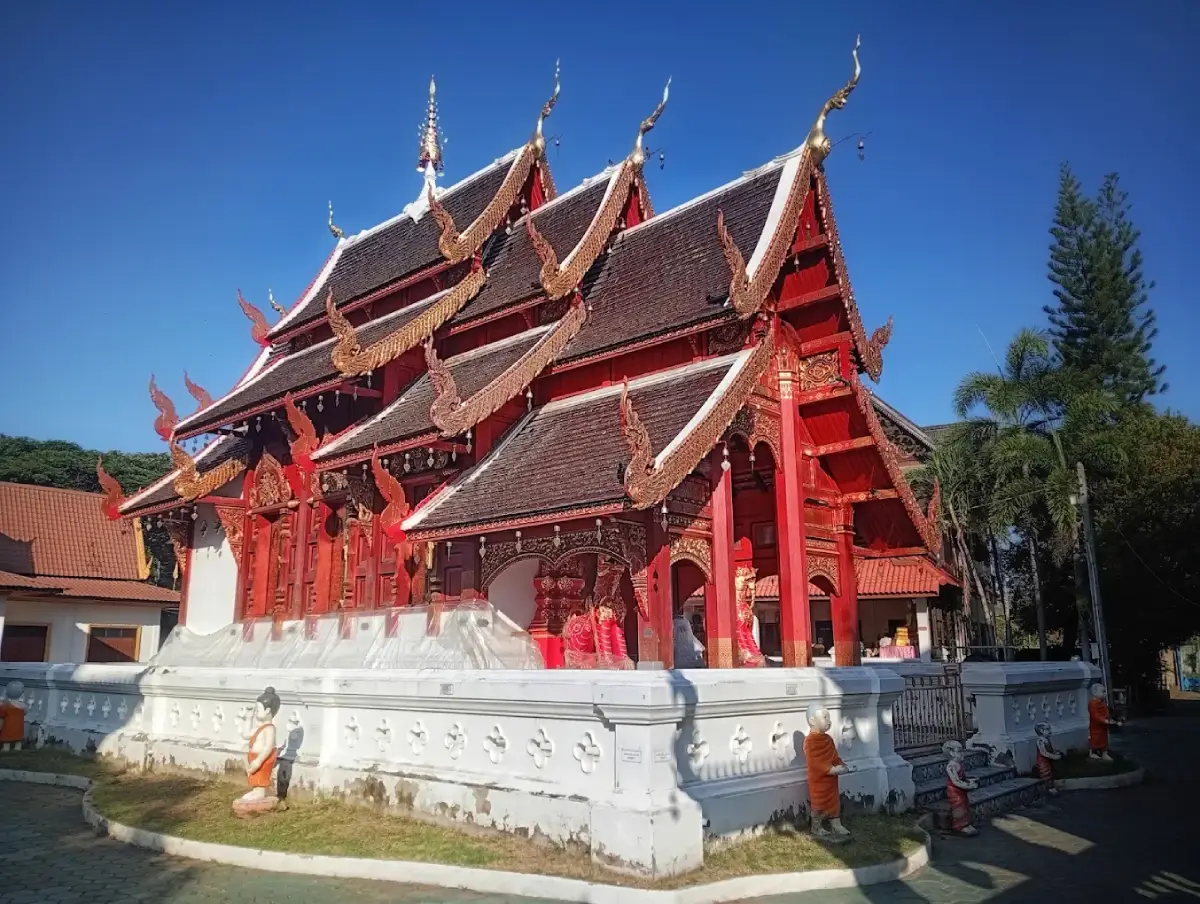
Wat Thep Prasit, also known locally as Wat Ton Hueat, is located in Ban Ton Hueat, Moo 8, Ban Waen Subdistrict, Hang Dong District, Chiang Mai Province. It is a private Buddhist temple under the Mahanikaya order and has long served as a spiritual center for the local community. The temple is important for merit-making, Buddhist ceremonies, community gatherings, and the continuation of Lanna village culture. For travelers exploring the southern side of Chiang Mai, Wat Thep Prasit offers a quiet and accessible stop near Kad Farang Village, Baan Tawai Handicraft Village, Wat Ton Kwen, and other attractions in Hang Dong.
Wat Thep Prasit is closely connected with Ban Ton Hueat, one of the villages in Ban Waen Subdistrict. Ban Waen is an area where local livelihoods include trade, hired work, handicraft production, and some agriculture. In this context, the temple is not only a place of worship but also a social and cultural gathering point for the village. It represents the way a Lanna community temple supports religious life, local identity, and relationships among residents.
The temple history records that Wat Thep Prasit was built in 1807, while the national temple registry lists the temple establishment year as 1796 and records the royal granting of wisungkhamsima on January 1, 1913. Together, these records show that the temple has been part of the Hang Dong area for more than 200 years. Its long history reflects the settlement of Ban Ton Hueat, the growth of local communities in Ban Waen, and the continuing role of Buddhism in the southern part of Chiang Mai.
The name Wat Thep Prasit has an auspicious meaning. “Thep” refers to divine or sacred beings, while “Prasit” suggests success, fulfillment, or effective blessing. The local name Wat Ton Hueat links the temple directly with Ban Ton Hueat, giving it both a formal religious name and a village-based identity. This dual identity is common in northern Thai communities, where temples are remembered through both official names and local place names.
The temple land covers 2 rai, 3 ngan, and 20 square wah. Important monastic structures include the viharn, sermon hall, and monks’ residences. The temple compound is modest in size but clean, shaded, and peaceful. Its appeal lies in its character as a genuine community temple rather than a heavily commercial tourist site. Visitors can walk through the temple slowly, observe the religious buildings, and experience the calm atmosphere of a Lanna village temple.
The viharn is the main religious building of Wat Thep Prasit. It is used for worship, Buddhist ceremonies, sermons, and community merit-making. In a Lanna village temple, the viharn is the symbolic heart of the compound, connecting local faith with Buddhist practice. Visitors should begin their visit by paying respect inside the viharn before walking around the temple grounds. The exterior and interior spaces reflect the practical, devotional, and communal functions of a northern Thai temple.
The sermon hall is another important area of the temple. It supports religious activities, village meetings related to temple events, merit-making ceremonies, and preparation for Buddhist festivals. The monks’ residences show that Wat Thep Prasit remains an active temple rather than a purely historical site. These structures together show how the temple continues to support daily religious life in Ban Ton Hueat.
One of the most appealing features of Wat Thep Prasit is its quiet community atmosphere. The temple is not large or crowded, but it is clean, orderly, and shaded. This makes it suitable for travelers who prefer peaceful cultural sites, elderly visitors, families, and people who want to see Chiang Mai beyond the old city and major tourist temples. The temple gives visitors a clearer view of local religious life in Hang Dong.
Wat Thep Prasit is also connected with community traditions, especially the annual bathing ceremony for the temple relic or sacred chedi. This type of ceremony is important in Lanna Buddhist culture because it brings villagers together to make merit, offer flowers, candles, incense, and ceremonial items, and honor the sacred objects of the temple. Such traditions strengthen the relationship between monks, laypeople, and the village community.
During important Buddhist days, Wat Thep Prasit functions as a place for merit-making, sermons, communal rituals, and memorial ceremonies. Activities such as kathin, pha pa, Visakha Bucha, Buddhist Lent, the end of Buddhist Lent, and community merit-making help preserve the religious rhythm of village life. The temple’s importance therefore comes not only from its buildings, but also from its continuing role in community practice.
Ban Ton Hueat and Ban Waen Subdistrict are part of Hang Dong District, an area that connects Chiang Mai city with historic villages, handicraft communities, and cultural routes. Ban Waen is well known for local life, handicraft production, and its connection to Baan Tawai and other community attractions. Wat Thep Prasit fits naturally into this setting as a temple that preserves the religious and cultural identity of the village.
Travelers interested in temples around Ban Waen can connect Wat Thep Prasit with other nearby temples such as Wat Ton Kwen, Wat Thao Bun Rueang, Wat Chom Thong, Wat Worawet Visit, and Wat Si Pho Thong. Visiting these temples together gives a broader picture of how Buddhism shaped community life in Hang Dong. It also helps travelers understand that Chiang Mai’s cultural heritage extends beyond the old city walls.
The main points to see at Wat Thep Prasit are the viharn, sermon hall, monks’ residences, temple courtyard, and the calm shaded atmosphere of the compound. A visit does not need to be rushed. The best way to experience the temple is to walk slowly, pay respect, and observe how the temple space is used by the community. This makes the temple suitable for worship, quiet reflection, and cultural learning.
Wat Thep Prasit can easily be included in a half-day or full-day route around Hang Dong. Visitors can start with Wat Thep Prasit, continue to Wat Ton Kwen for traditional Lanna architecture, stop at Kad Farang Village for food or coffee, and then visit Baan Tawai Handicraft Village. With more time, Royal Park Rajapruek and Grand Canyon Water Park Chiang Mai can also be added to the route. This combination offers temples, local crafts, restaurants, and leisure attractions in one itinerary.
Getting There is easiest by private car, rental car, or hired transport from Chiang Mai city. Take the Chiang Mai–Hang Dong Road or Route 108 toward Hang Dong District, then continue into Ban Waen Subdistrict and Ban Ton Hueat, Moo 8. The drive from central Chiang Mai usually takes around 25 to 40 minutes depending on traffic. Nearby landmarks include Kad Farang Village, Baan Tawai, and Ban Waen community areas. Travelers using public transport can take a Chiang Mai–Hang Dong route vehicle and continue by local transport or ride-hailing service.
The best time to visit is in the morning or late afternoon when the weather is more comfortable. Visitors should dress modestly, keep noise low, and respect the temple’s religious spaces. If a ceremony is taking place, visitors should give priority to local residents and participants. Wat Thep Prasit is a living temple, so a respectful and quiet visit is the best way to appreciate its cultural value.
Wat Thep Prasit is recommended for travelers who want to see a deeper side of Chiang Mai beyond the old city. It is not a large tourist temple, but its history, community role, clean environment, and peaceful setting make it a meaningful stop in Hang Dong. It is especially suitable for those visiting Kad Farang, Baan Tawai, Wat Ton Kwen, or other cultural attractions in Ban Waen Subdistrict.
| Name | Wat Thep Prasit / Wat Ton Hueat |
| Type | Private Buddhist temple under the Mahanikaya order |
| Location | Ban Ton Hueat, Moo 8, Ban Waen Subdistrict, Hang Dong District, Chiang Mai Province |
| Address | Moo 8, Ban Ton Hueat, Ban Waen Subdistrict, Hang Dong District, Chiang Mai 50230, Thailand |
| Highlights | Historic community temple of Ban Ton Hueat with a clean, peaceful, shaded atmosphere, viharn, sermon hall, and monks’ residences |
| History | Built in 1807; the temple registry lists the establishment year as 1796 and records the royal granting of wisungkhamsima on January 1, 1913 |
| Name Origin | The formal name Wat Thep Prasit has an auspicious meaning, while the local name Wat Ton Hueat connects the temple with Ban Ton Hueat village |
| Distinctive Features | A quiet Lanna community temple suitable for worship, merit-making, and learning about local life in Ban Waen |
| Temple Land Area | 2 rai, 3 ngan, 20 square wah |
| Main Areas / Zones | Viharn, sermon hall, monks’ residences, temple courtyard, and community religious areas |
| Important Structures | Viharn, sermon hall, and monks’ residences |
| Traditions / Merit-Making Events | Temple relic bathing ceremony, kathin, pha pa, and Buddhist merit-making events |
| Current Status | Active community temple and Buddhist religious site for Ban Ton Hueat |
| Open Days | Daily |
| Opening Hours | 08.00 – 17.00 |
| Travel Information | From Chiang Mai city, take Chiang Mai–Hang Dong Road or Route 108 toward Hang Dong District, then continue into Ban Waen Subdistrict and Ban Ton Hueat, Moo 8. Private car, rental car, and hired transport are the most convenient options. |
| Main Contact Number | 053-433-592 |
| Official Website / Official Page | Information published by Ban Waen Subdistrict Municipality |
| Nearby Tourist Attractions | 1. Kad Farang Village, about 2 km 2. Wat Ton Kwen / Wat Intharawat, about 3 km 3. Baan Tawai Handicraft Village, about 4 km 4. Khaomao-Khaofang Imaginary Jungle Restaurant, about 4 km 5. Royal Park Rajapruek, about 7 km 6. Grand Canyon Water Park Chiang Mai, about 9 km |
| Nearby Restaurants | 1. North Hill’s Mix Restaurant & Bar, about 3 km, Tel. 053-908-999 2. Khaomao-Khaofang Chiang Mai, about 4 km, Tel. 063-665-5838 3. Pongsathorn Salapao Savoy Hang Dong Branch, about 2 km, Tel. 097-951-7889 4. Sathani Khao Kaeng Lae Khanom Chin Baan Tawai, about 4 km, Tel. 092-527-8191 5. Krua Mae Ann Ban Waen Hang Dong, about 3 km, Tel. 080-131-1738 6. Uncle’s Kitchen Hang Dong, about 4 km, Tel. 095-235-5564 |
| Nearby Accommodations | 1. North Hill City Resort, about 3 km, Tel. 053-333-111, 093-131-0277 2. Baan Tawai Lanna Resort, about 4 km, Tel. 063-654-7997 3. Content Villa Chiang Mai, about 6 km, Tel. 062-439-9799 4. The Lilly Hotel Chiang Mai, about 8 km, Tel. 053-275557, 095-6872657 5. Veranda High Resort Chiang Mai, about 12 km, Tel. 053-365-007, 062-398-6899 |
Frequently Asked Questions (FAQ)
Q: Where is Wat Thep Prasit located?
A: Wat Thep Prasit is located in Ban Ton Hueat, Moo 8, Ban Waen Subdistrict, Hang Dong District, Chiang Mai 50230, Thailand.
Q: Why is Wat Thep Prasit important?
A: It is an old community temple of Ban Ton Hueat and remains a spiritual center for local Buddhist ceremonies, merit-making, and community traditions in Ban Waen.
Q: When was Wat Thep Prasit built?
A: The temple history records that it was built in 1807, while the temple registry lists the establishment year as 1796 and records the royal granting of wisungkhamsima on January 1, 1913.
Q: What can visitors see inside Wat Thep Prasit?
A: Visitors can see the viharn, sermon hall, monks’ residences, temple courtyard, and the peaceful atmosphere of a Lanna community temple.
Q: What are the opening hours of Wat Thep Prasit?
A: Wat Thep Prasit is open daily from 08.00 to 17.00.
Q: How can travelers get to Wat Thep Prasit from Chiang Mai city?
A: Take Chiang Mai–Hang Dong Road or Route 108 toward Hang Dong District, then continue into Ban Waen Subdistrict and Ban Ton Hueat. Private car, rental car, or hired transport is the most convenient option.
Q: What nearby attractions can be combined with Wat Thep Prasit?
A: Nearby attractions include Kad Farang Village, Wat Ton Kwen, Baan Tawai Handicraft Village, Royal Park Rajapruek, and Grand Canyon Water Park Chiang Mai.
 Category: ●Places of Worship
 Group: ●Temple
Last Update : 4 DayAgo
 Last Update : 4 DayAgo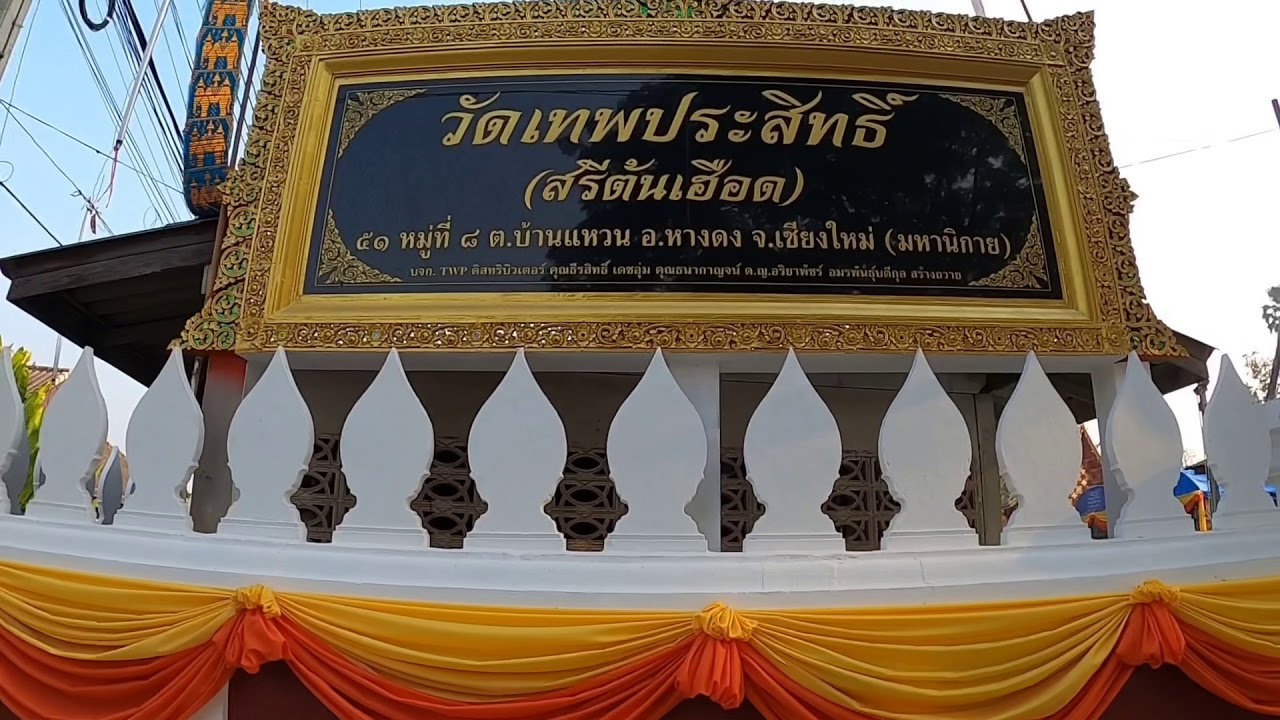
 Click to Access the Navigation Map GPS
Wat Thep Prasit Map
Recommend

 Muang Chiang Mai(121)Chom Thong(47)Mae Chaem(25)Chiang Dao(33)Doi Saket(68)Mae Taeng(85)Mae Rim(69)Samoeng(29)Fang(71)Mae Ai(59)Phrao(70)San Pa Tong(103)San Kamphaeng(66)San Sai(73)Hang Dong(73)Hot(32)Doi Tao(22)Omkoi(11)Saraphi(74)Wiang Haeng(15)Chai Prakan(28)Mae Wang(32)Mae On(22)Doi Lo(34)Galyani Vadhana(1)


