
lovethailand home >North Travel Attractions >Chiang Mai Travel Attractions >Hang Dong >Ban Waen > Wat Chang Kham
TL;DR: Wat Chang Kham is located at Ban Chang Kham Luang, Moo 5, Ban Waen Subdistrict, Hang Dong District, Chiang Mai Province, open Daily, hours Please contact the temple before traveling if you wish to join a specific.

Wat Chang Kham
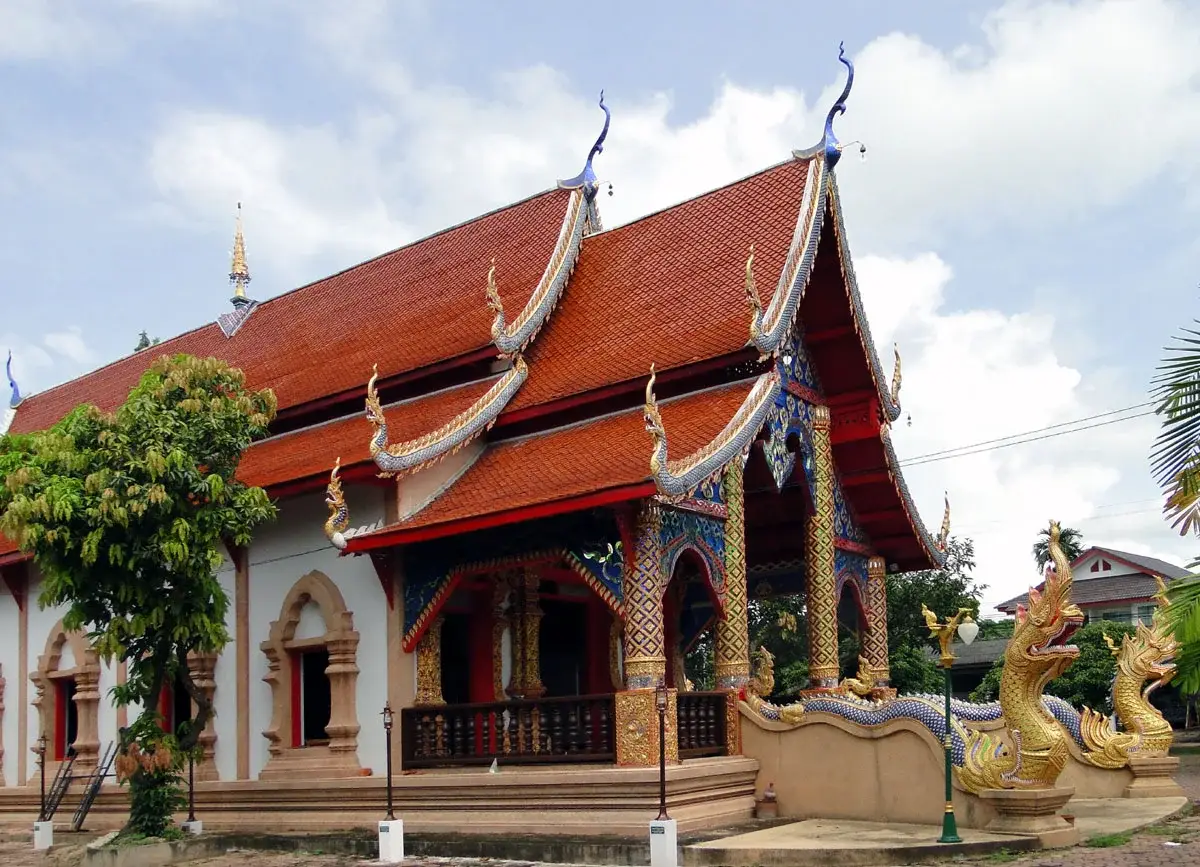
Open Days: Daily
Opening Hours: Please contact the temple before traveling if you wish to join a specific activity or visit the inner viharn area.
Wat Chang Kham, also locally known as Wat Chang Kham Luang, is located at No. 121, Moo 5, Ban Chang Kham, Ban Waen Subdistrict, Hang Dong District, Chiang Mai Province. It is a local Buddhist temple under the Mahanikaya order, covering an area of 1 rai, 1 ngan, and 81 square wa. The temple was officially established in 1771 and received its Wisungkham Sima in 1994. It remains an important spiritual center for Ban Chang Kham Luang and is associated with local faith, education, village ceremonies, and the long memory of the Ban Waen community.
Ban Chang Kham is an old community within Ban Waen Subdistrict, Hang Dong District. It is easily accessible from Chiang Mai city via the canal road, the outer ring road, and the Chiang Mai–Hang Dong route. The area is close to Kad Farang Village, Baan Tawai handicraft village, Wat Khong Khao, Wat Chai Wut, and Wat Intharawat or Wat Ton Kwen. This makes Wat Chang Kham a suitable stop for travelers who want to explore local temples and cultural routes in Hang Dong.
The name Wat Chang Kham is closely connected with the village name. In the Lanna context, the word “chang” can suggest craftsmanship, while “kham” is associated with gold. The name therefore carries a sense of skill, refinement, and local value. The local name Wat Chang Kham Luang helps distinguish this original Chang Kham temple from Wat Chang Kham Noi, also known as Wat Suwan Pradit, another temple in a nearby area connected with the same broader community identity.
Local tradition says that Wat Chang Kham Luang has existed for several hundred years. Palm-leaf manuscripts and old scriptures are remembered as referring to the temple by the name Wat Chang Kham. Temple records identify its establishment in 1771, when Phra Panya led local devotees to build monastic structures on open village land. They first built monks’ quarters and a viharn, then added a wall and alms pavilion until the temple was complete. This origin shows that the temple grew from both monastic leadership and collective village devotion.
Another local account says that in the earliest period, two monks resided at the temple: Phra Panya Kaew and Phra Panya Noi. Each monk created one Buddha image, giving the temple sacred objects for worship from its early stage. Later abbots restored the viharn, rebuilt the sermon hall, and created additional Buddha images. This shows that Wat Chang Kham developed gradually through several generations of monks and supporters rather than through a single construction phase.
The importance of Wat Chang Kham lies in its role as a village temple. In Lanna society, a temple is not only a place for formal Buddhist ceremonies. It is also a center for moral learning, merit-making, Dhamma listening, seasonal festivals, and community gathering. Wat Chang Kham has served Ban Chang Kham Luang as a place of faith, memory, and social continuity.
The temple grounds cover 1 rai, 1 ngan, and 81 square wa. Its boundary measures about 60 meters to the north, 69.50 meters to the south, 56.60 meters to the east, and 57 meters to the west. The temple also has one plot of monastic land measuring 2 rai, 1 ngan, and 3 square wa. Although it is not a large tourist temple, its size is well suited to a working village temple that supports worship, ceremonies, and local activities.
Important monastic structures include the viharn, sermon hall, and monks’ quarters. The viharn is the main worship space for Buddha images and religious ceremonies. The sermon hall supports Dhamma talks, community meetings, merit-making, and Buddhist holy day activities. The monks’ quarters support the daily life of the resident Sangha. Together, these structures allow Wat Chang Kham to function as a complete community temple.
The temple’s sacred objects include Buddha images. In a village temple, Buddha images are more than artistic objects. They are devotional centers for prayer, offerings, family merit-making, and important life-cycle ceremonies. At Wat Chang Kham, the Buddha images connect the present community with the temple’s earliest stories of Phra Panya Kaew and Phra Panya Noi.
Wat Chang Kham has a long list of abbots preserved in temple history. Known historical abbots include Phra Athikan Sop from 1907 to 1925, Phra No from 1925 to 1930, Phra Tip from 1930 to 1932, Phra Athikan Tui Suwanno from 1932 to 1938, Phra Athikan Peng Tapasilo from 1938 to 1947, Phra Duang Dhammavaro from 1947 to 1950, Phra Athikan Bua Tissawangso from 1950 to 1956, Phra Charun Charudhammo from 1956 to 1957, Phra Tip Techatharo from 1957 to 1958, and Phra Athikan Mueangchai Sirichanto from 1958 onward. These names show the continuity of religious leadership at the temple.
The current temple information used for this article identifies Phra Samu Thanusak Sirimangkalo as the abbot of Wat Chang Kham. In a local temple, the abbot’s responsibilities include caring for monks, maintaining buildings and sacred objects, guiding religious activities, coordinating with villagers, and keeping the temple orderly and ready for community use.
Wat Chang Kham also has an educational role. Temple history records that a Dhamma section of a Buddhist scripture school opened in 1983. The temple also donated one plot of land measuring 300 square wa for the construction of Wat Chang Kham School. This shows that the temple has long supported both religious learning and community education, a common and important pattern in Lanna village society.
This educational connection makes Wat Chang Kham part of the social structure of Ban Chang Kham Luang. Children and young people encounter the temple through school, family merit-making, Buddhist festivals, and community events. Adults use the temple for worship, family ceremonies, Dhamma listening, and shared village activities. The temple therefore links monks, teachers, elders, students, and households across generations.
The atmosphere of Wat Chang Kham Luang is calm and local. It is not a large commercial tourist attraction, but its value lies in its long history, village character, viharn, sermon hall, monks’ quarters, Buddha images, and the living role it continues to play in the community. It is well suited to travelers who want to understand Chiang Mai through smaller old temples rather than only famous urban landmarks.
Key things to see include the viharn, worship area, sermon hall, monks’ quarters, Buddha images, and the overall atmosphere of a Lanna community temple. Visitors interested in local history should note the name Wat Chang Kham Luang, the older memory of Wat Chang Kham, the connection with Wat Chang Kham Noi, and the stories of Phra Panya, Phra Panya Kaew, and Phra Panya Noi.
Wat Chang Kham supports the ordinary cycle of Lanna Buddhist life: Buddhist holy days, Buddhist Lent, the end of Buddhist Lent, Kathin, robe-offering ceremonies, Lanna Songkran, and seasonal village merit-making. These activities bring people back to the temple, strengthen the relationship between villagers and monks, and keep local religious customs active.
For travelers, Wat Chang Kham can be part of a meaningful Ban Waen and Hang Dong cultural route. It can be combined with Wat Khong Khao, Wat Chai Wut, Wat Ton Kwen, Baan Tawai, Kad Farang Village, Grand Canyon Chiang Mai, and Royal Park Rajapruek. This route offers a balance of temple worship, Lanna architecture, craft villages, food, shopping, and family-friendly attractions.
A good half-day route can begin with a quiet visit to Wat Chang Kham Luang, followed by Wat Khong Khao for its golden viharn and shaded Bodhi courtyard. Travelers can then continue to Baan Tawai for woodcarving and handicrafts or Kad Farang Village for food and rest. Those with more time can extend the route to Wat Ton Kwen or Royal Park Rajapruek.
Getting There is most convenient by private car or rental car. From Chiang Mai city, take the canal road, outer ring road, or Chiang Mai–Hang Dong road toward Hang Dong District, then continue into Ban Waen Subdistrict and Ban Chang Kham Luang. Public transport users should travel first to Hang Dong or Kad Farang, then continue by local transport or hired vehicle to the temple.
Visitors should dress modestly, speak quietly, and respect sacred areas, especially the viharn, sermon hall, and Buddha image areas. If a ceremony or community activity is taking place, priority should be given to monks and local residents. Photography should be done respectfully and without disturbing worshippers or those listening to Dhamma.
Wat Chang Kham Luang is suitable for travelers interested in old Lanna community temples, village history, Buddhist learning, and quieter cultural routes in Hang Dong. Its value comes from its long history, its founding by Phra Panya and local devotees, its Buddha images, its role in education, and its continued place as the spiritual center of Ban Chang Kham Luang.
| Name | Wat Chang Kham / Wat Chang Kham Luang |
| Location | Ban Chang Kham Luang, Moo 5, Ban Waen Subdistrict, Hang Dong District, Chiang Mai Province |
| Address | No. 121, Moo 5, Ban Chang Kham, Ban Waen Subdistrict, Hang Dong District, Chiang Mai 50230, Thailand |
| Type | Local Buddhist temple under the Mahanikaya order |
| Temple Area | 1 rai, 1 ngan, 81 square wa |
| Monastic Land | 1 plot measuring 2 rai, 1 ngan, 3 square wa |
| Boundary | North about 60 m, south about 69.50 m, east about 56.60 m, and west about 57 m |
| History | Officially established in 1771 by Phra Panya and local devotees, who first built monks’ quarters and a viharn before adding a wall and alms pavilion |
| Wisungkham Sima | Granted in 1994 |
| Local Name | Wat Chang Kham Luang, with local memory linking an older name to Wat Chang Kham |
| Name Origin | The name is linked with Ban Chang Kham and the community identity of the area, while Chang Kham Luang distinguishes it from nearby Wat Chang Kham Noi |
| Highlights | Old community temple of Ban Chang Kham Luang with a history connected to Phra Panya, Phra Panya Kaew, Phra Panya Noi, Buddha images, viharn, sermon hall, and local education |
| Main Structures | Viharn, sermon hall, monks’ quarters, temple wall, alms pavilion, and community religious activity areas |
| Sacred Objects / Worship Points | Buddha images inside the temple, including images connected with the local history of Phra Panya Kaew and Phra Panya Noi |
| Abbot / Caretaker | Phra Samu Thanusak Sirimangkalo |
| Historical Abbots | Phra Athikan Sop, Phra No, Phra Tip, Phra Athikan Tui Suwanno, Phra Athikan Peng Tapasilo, Phra Duang Dhammavaro, Phra Athikan Bua Tissawangso, Phra Charun Charudhammo, Phra Tip Techatharo, and Phra Athikan Mueangchai Sirichanto |
| Community Role | Spiritual center of Ban Chang Kham Luang, supporting merit-making, Dhamma listening, ceremonies, seasonal Buddhist events, and education connected with Wat Chang Kham School |
| Educational Role | A Dhamma section of a Buddhist scripture school opened in 1983, and the temple donated 300 square wa of land for Wat Chang Kham School |
| Traditions / Merit-Making | Buddhist holy days, Buddhist Lent, the end of Buddhist Lent, Lanna Songkran, Kathin, robe-offering ceremonies, and local Lanna community merit-making |
| Travel Information | From Chiang Mai city, take the canal road, outer ring road, or Chiang Mai–Hang Dong road toward Hang Dong, then continue into Ban Waen and Ban Chang Kham Luang. Private car or rental car is recommended. |
| Current Status | An active community temple of Ban Chang Kham Luang, used for Buddhist ceremonies and local community activities in Ban Waen Subdistrict |
| Open Days | Daily |
| Opening Hours | Please contact the temple before traveling if you wish to join a specific activity or visit the inner viharn area. |
| Main Contact Number | 053-433-267 |
| Local Authority | Ban Waen Subdistrict Municipality, Tel. 053-441-961 |
| Nearby Tourist Attractions | 1. Wat Khong Khao, about 3 km 2. Kad Farang Village, about 4 km 3. Baan Tawai Handicraft Village, about 5 km 4. Wat Intharawat or Wat Ton Kwen, about 7 km 5. Grand Canyon Chiang Mai, about 10 km |
| Nearby Restaurants | 1. 50’S Homemade, about 1 km 2. Mum Aroi Ban Waen, about 4 km, Tel. 095-685-1820, 095-838-8522 3. Krua Mae Ann Ban Waen Hang Dong, about 4 km, Tel. 080-131-1738 4. Koi Hug Cafe, about 5 km, Tel. 097-359-7648 5. Baan Wong Thong Luea, about 5 km, Tel. 081-783-3433 |
| Nearby Accommodations | 1. Kammaal Villa, about 3 km, Tel. 097-924-6916 2. Laan Mai Fai Chang Resort, about 4 km, Tel. 082-994-7888 3. At Leaf Villa, about 4 km, Tel. 083-763-3222 4. Beaver Club Homestay, about 4 km, Tel. 097-961-1449 5. Baan Bua Homestay & Pool Villa Chiang Mai, about 5 km, Tel. 086-903-6585 |
Frequently Asked Questions (FAQ)
Q: Where is Wat Chang Kham located?
A: Wat Chang Kham is located at No. 121, Moo 5, Ban Chang Kham, Ban Waen Subdistrict, Hang Dong District, Chiang Mai 50230, Thailand.
Q: When was Wat Chang Kham established?
A: Wat Chang Kham was officially established in 1771 by Phra Panya and local devotees, who built the first monks’ quarters, viharn, wall, and alms pavilion.
Q: Why is the temple called Wat Chang Kham Luang?
A: The local name Wat Chang Kham Luang refers to the original Chang Kham temple and helps distinguish it from nearby Wat Chang Kham Noi or Wat Suwan Pradit.
Q: What important structures are found at Wat Chang Kham?
A: Important structures include the viharn, sermon hall, monks’ quarters, temple wall, alms pavilion, and community religious activity areas.
Q: What should visitors pay respect to at Wat Chang Kham?
A: Visitors should pay respect to the Buddha images inside the temple, including images connected with the local history of Phra Panya Kaew and Phra Panya Noi.
Q: What role does Wat Chang Kham play in the community?
A: It serves as the spiritual center of Ban Chang Kham Luang, supporting merit-making, Dhamma listening, Buddhist ceremonies, seasonal festivals, and local education connected with Wat Chang Kham School.
Q: What nearby places can be visited with Wat Chang Kham?
A: Nearby places include Wat Khong Khao, Kad Farang Village, Baan Tawai Handicraft Village, Wat Ton Kwen, and Grand Canyon Chiang Mai.
 Category: ●Places of Worship
 Group: ●Temple
Last Update : 1 WeekAgo
 Last Update : 1 WeekAgo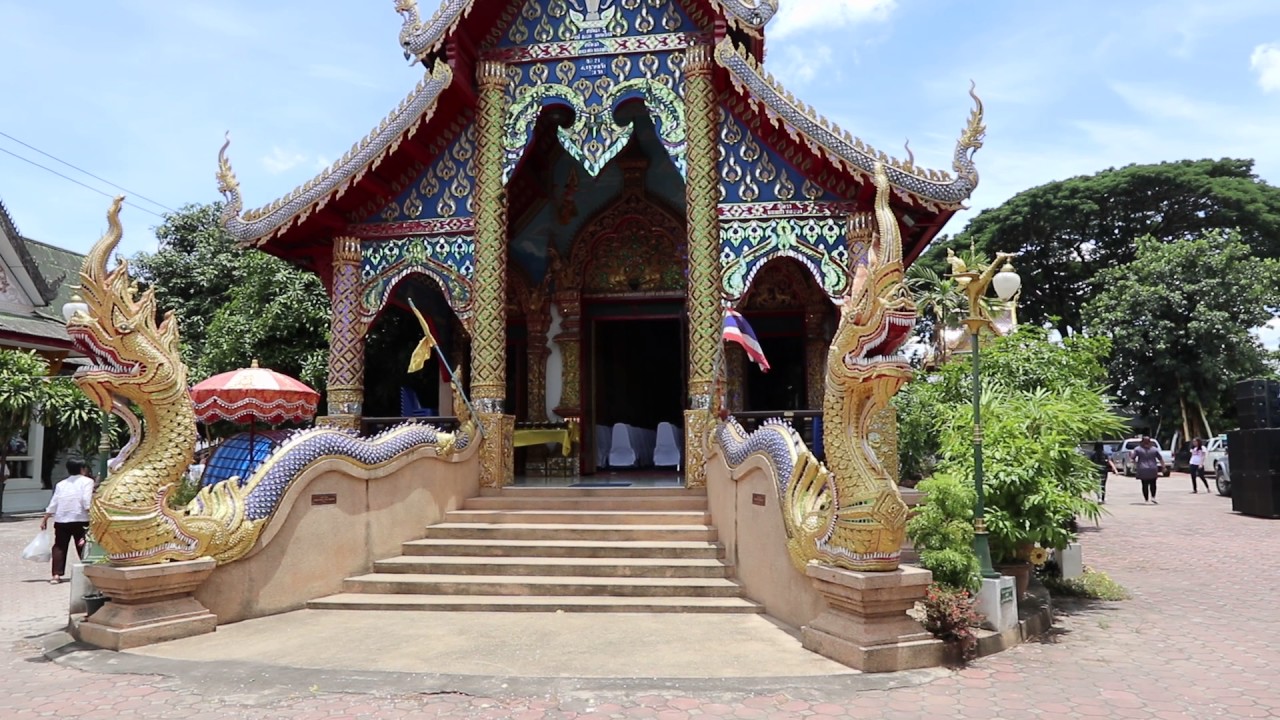
 Click to Access the Navigation Map GPS
Wat Chang Kham Map
Recommend

 Muang Chiang Mai(121)Chom Thong(47)Mae Chaem(25)Chiang Dao(33)Doi Saket(68)Mae Taeng(85)Mae Rim(69)Samoeng(29)Fang(71)Mae Ai(59)Phrao(70)San Pa Tong(103)San Kamphaeng(66)San Sai(73)Hang Dong(73)Hot(32)Doi Tao(22)Omkoi(11)Saraphi(74)Wiang Haeng(15)Chai Prakan(28)Mae Wang(32)Mae On(22)Doi Lo(33)Galyani Vadhana(1)


