
lovethailand home >North Travel Attractions >Chiang Mai Travel Attractions >Hang Dong >Ban Pong > Wat Chai Wut
TL;DR: Wat Chai Wut is located at Ban Rai Tai, Moo 1, Ban Waen Subdistrict, Hang Dong District, Chiang Mai Province, open Daily, hours Please contact the temple before traveling if you wish to join a specific.
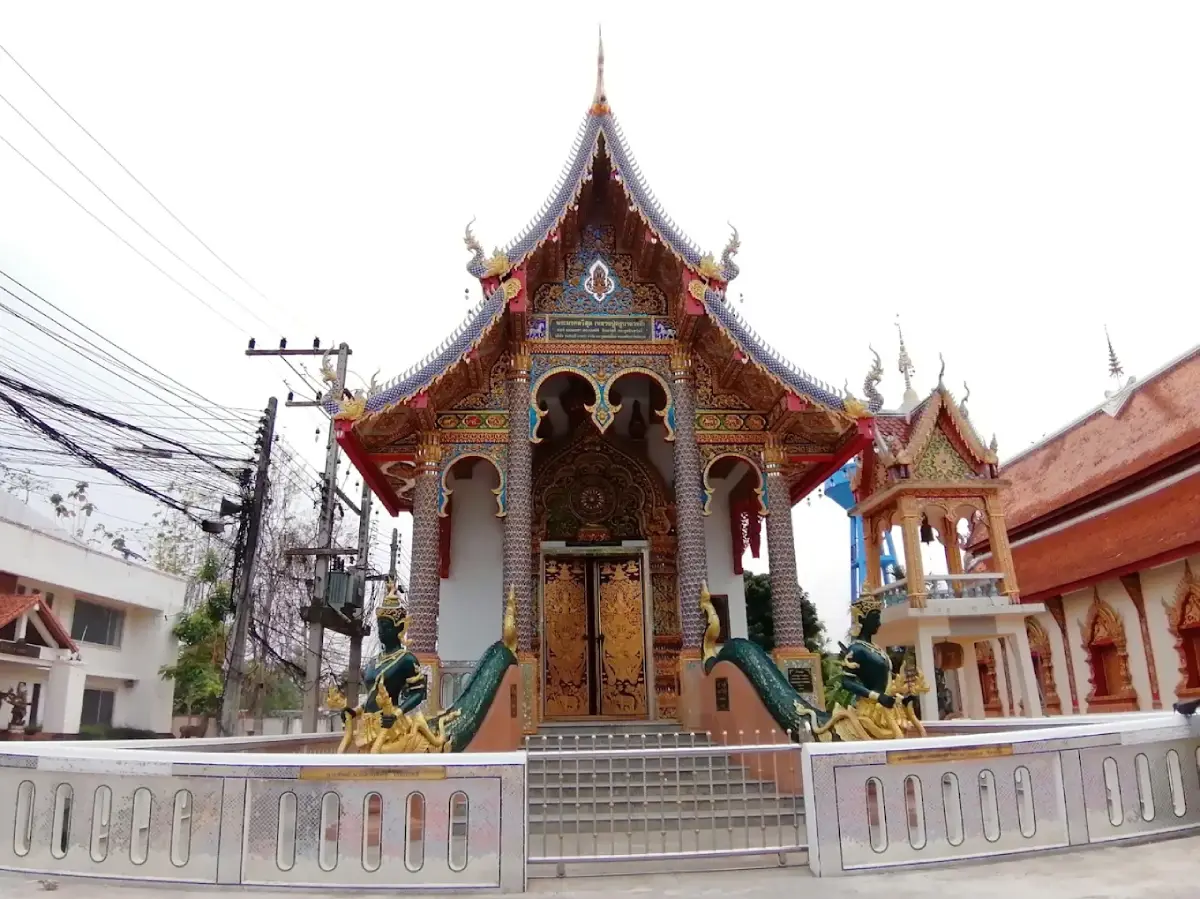
Wat Chai Wut
Open Days: Daily
Opening Hours: Please contact the temple before traveling if you wish to join a specific activity or enter the ordination hall and viharn.
Wat Chai Wut is located at No. 102, Moo 1, Ban Rai Tai, Ban Waen Subdistrict, Hang Dong District, Chiang Mai Province. It is a local Buddhist temple under the Mahanikaya order and an old community temple of Ban Rai Tai. The temple was built in 1662 and received its Wisungkham Sima on 2 June 1989. Locally, it is known as Wat Rai Tai, reflecting its close connection with the village. Its current abbot is Phra Khru Chai Thammawut, who also serves as an assistant secretary to the ecclesiastical district chief of Hang Dong.
Ban Rai Tai is Moo 1 of Ban Waen Subdistrict, an area in Hang Dong that is easily reached from Chiang Mai city via the canal road, the outer ring road, and the Chiang Mai–Hang Dong route. Ban Waen is now a semi-urban and semi-rural area with old communities, agricultural land, restaurants, accommodation, craft routes, and several nearby attractions. Wat Chai Wut remains a local religious anchor within this changing landscape.
The name Wat Chai Wut carries an auspicious meaning. “Chai” suggests victory, success, and blessing, while “Wut” implies growth, maturity, and development. Together, the name conveys the sense of a temple associated with spiritual growth and auspicious success. The local name Wat Rai Tai also shows how deeply the temple belongs to the village where it stands.
The temple history reaches back to 1662, making it one of the old community temples of Ban Waen. Local temple history records that Luang Pho Poen was the monk who came to establish the temple and inspired villagers to support Buddhist practice. From the beginning, the temple served as a place for worship, merit-making, and religious ceremonies for the people of Ban Rai Tai.
In Lanna society, a village temple is more than a ceremonial space. It is a center of moral learning, social gathering, local identity, and seasonal tradition. Wat Chai Wut has continued to serve this role through Buddhist holy days, Buddhist Lent, the end of Buddhist Lent, Kathin, robe-offering ceremonies, Lanna Songkran, and other community merit-making activities.
The temple grounds cover 2 rai, 3 ngan, and 83 square wa. Its boundaries show how closely it sits within the community: the northern and southern sides border public walkways, the eastern side borders a school, and the western side borders a public walkway. This location makes the temple part of daily village life, not an isolated religious compound.
Important monastic buildings include monks’ residences and a merit-making hall. Sacred objects include various Buddha images. These structures support the daily life of monks, merit-making by laypeople, Dhamma listening, food offerings, and seasonal religious events. Even though the temple is not large, it has the essential elements of a functioning Lanna community temple.
The temple’s most notable architectural feature is its closed Lanna-style viharn. The viharn has walls on all four sides, with windows and light openings around the building. The interior walls include mural painting or gilded stencil work behind the main Buddha image. The rectangular building plan includes recessed elements and divides the interior into three main functional areas: the monks’ area, the laypeople’s area, and the raised altar or base for the principal Buddha image.
The structure of the viharn combines masonry and timber. The upper roof structure is made of wood in a post-and-beam system. The roof is a gabled form with three front tiers and two rear tiers, arranged in relation to the recessed plan. Roofing materials include clay tiles or traditional wooden shingles. These features reflect local Lanna craftsmanship as it appears in a real village temple.
The viharn is valuable not because of grand scale, but because of its architectural clarity. Its closed walls, layered roof, timber structure, windows, light openings, and interior organization show how Lanna temple space is arranged for both monastic and lay participation. Travelers interested in vernacular temple architecture will find Wat Chai Wut especially meaningful.
The ordination hall is another important sacred space. After receiving Wisungkham Sima, the temple gained a consecrated boundary for important monastic acts. The consecrated area measures 20 meters by 40 meters and supports formal Sangha ceremonies, including ordination. This confirms the temple’s formal religious status within the Thai Buddhist monastic system.
Inside the ordination hall is a Buddha image in the Naga-protected posture. This image shows the Buddha seated in meditation with the Naga spreading its hood over him. The image is connected with the Buddhist story of the Naga king Mucalinda protecting the Buddha from storm and rain after enlightenment. It symbolizes protection, meditation, and spiritual calm.
Wat Chai Wut has a quiet and local atmosphere. Visitors can observe the viharn, ordination hall, monks’ residences, merit-making hall, Buddha images, and the way the temple relates to the nearby school, public walkways, and village houses. This makes the temple a good place to understand how Buddhist temples continue to function as part of everyday Lanna community life.
The succession of abbots also reflects the temple’s continuity. Names preserved in the temple history include Khruba Chai, Khruba Wut, Luang Pho Fan, Phra Athikan Boonchu, Phra Athikan Wong, Phra Athikan Inpan, Phra Athikan Duang, Phra Athikan Pan, Phra Athikan Somboon, and Phra Pan Kaew Kitchasaro. The current abbot is Phra Khru Chai Thammawut.
Phra Khru Chai Thammawut plays an important role in caring for the temple and connecting the local temple with wider ecclesiastical administration in Hang Dong. In a community temple, the abbot’s work includes caring for monks, maintaining the temple, guiding religious activities, coordinating with villagers, and preserving the order and dignity of the temple grounds.
Wat Chai Wut serves Ban Rai Tai as a spiritual and social center. Villagers come for Buddhist holy days, food offerings, Dhamma listening, merit-making, Kathin, robe-offering ceremonies, and local seasonal events. These activities keep the relationship between the temple, monks, families, and the wider community alive.
The temple is also a space of informal cultural learning. Because it is located near a school and public walkways, children and residents regularly encounter the temple in everyday life. Through family merit-making, village ceremonies, and Buddhist festivals, younger generations learn manners, respect, and local religious customs outside the classroom.
For travelers, Wat Chai Wut is suitable for those who want to see an old community temple in Hang Dong away from crowded tourist routes. Its main points of interest are the closed Lanna-style viharn, mixed masonry-and-timber structure, layered gabled roof, ordination hall, Naga-protected Buddha image, and its identity as Wat Rai Tai.
A connected travel route can include Wat Khong Khao, Wat Chang Kham Luang, Wat Worawet Wisit, Wat Intharawat or Wat Ton Kwen, Baan Tawai handicraft village, Kad Farang Village, Grand Canyon Chiang Mai, and Royal Park Rajapruek. These places are all part of the wider Hang Dong travel area and can be combined into a half-day or full-day itinerary.
A practical route can begin with a quiet morning visit to Wat Chai Wut, followed by Wat Khong Khao for its golden viharn and Bodhi courtyard, then Baan Tawai for woodcarving and handicrafts or Kad Farang Village for food and rest. Travelers with more time can continue to Wat Ton Kwen or Royal Park Rajapruek in the afternoon.
Getting There is convenient by private car or rental car. From Chiang Mai city, take the canal road, outer ring road, or Chiang Mai–Hang Dong road toward Hang Dong District, then continue into Ban Waen Subdistrict and Ban Rai Tai. Public transport users should travel first to Hang Dong or Kad Farang, then continue by local transport or hired vehicle.
Visitors should dress modestly, speak quietly, and respect the viharn, ordination hall, and Buddha images. If a ceremony or community activity is taking place, priority should be given to monks and local residents. Photography should be done respectfully and without disturbing worshippers or those practicing Dhamma.
Wat Chai Wut is ideal for travelers who want to understand Hang Dong through a historic community temple close to Chiang Mai city. Its long history from 1662, its relationship with Ban Rai Tai, its Lanna viharn, its Naga-protected Buddha image, and the role of Phra Khru Chai Thammawut make it a meaningful stop for worship, local history, and cultural travel in Ban Waen.
| Name | Wat Chai Wut / Wat Rai Tai |
| Location | Ban Rai Tai, Moo 1, Ban Waen Subdistrict, Hang Dong District, Chiang Mai Province |
| Address | No. 102, Moo 1, Ban Rai Tai, Ban Waen Subdistrict, Hang Dong District, Chiang Mai 50230, Thailand |
| Type | Local Buddhist temple under the Mahanikaya order |
| Temple Area | 2 rai, 3 ngan, 83 square wa |
| History | Built in 1662; locally known as Wat Rai Tai; Luang Pho Poen is remembered as the monk who founded the temple and inspired local faith |
| Wisungkham Sima | Granted on 2 June 1989; consecrated boundary 20 meters wide and 40 meters long |
| Local Name | Wat Rai Tai |
| Boundary | North: public walkway; South: public walkway; East: school; West: public walkway |
| Highlights | Old Ban Rai Tai community temple with a closed Lanna-style viharn, ordination hall, Naga-protected Buddha image, and quiet Ban Waen village atmosphere |
| Main Areas / Structures | Viharn, ordination hall, monks’ residences, merit-making hall, Buddha image area, and temple courtyard for community activities |
| Viharn Features | Closed viharn with walls on all four sides, windows and light openings, monks’ area, laypeople’s area, raised altar, mixed masonry-and-timber structure, and a layered gabled roof with three front tiers and two rear tiers |
| Sacred Objects / Worship Points | Various Buddha images, principal Buddha image in the viharn, and Naga-protected Buddha image inside the ordination hall |
| Abbot / Caretaker | Phra Khru Chai Thammawut |
| Historical Abbots | Khruba Chai, Khruba Wut, Luang Pho Fan, Phra Athikan Boonchu, Phra Athikan Wong, Phra Athikan Inpan, Phra Athikan Duang, Phra Athikan Pan, Phra Athikan Somboon, and Phra Pan Kaew Kitchasaro |
| Community Role | Spiritual center of Ban Rai Tai, supporting merit-making, Dhamma listening, ceremonies, seasonal Buddhist events, and community activities in Ban Waen |
| Traditions / Merit-Making | Buddhist holy days, Buddhist Lent, the end of Buddhist Lent, Lanna Songkran, Kathin, robe-offering ceremonies, and local Lanna community merit-making |
| Travel Information | From Chiang Mai city, take the canal road, outer ring road, or Chiang Mai–Hang Dong road toward Hang Dong, then continue into Ban Waen and Ban Rai Tai. Private car or rental car is recommended. |
| Current Status | An old active community temple of Ban Rai Tai, used for Buddhist ceremonies and local community activities in Ban Waen Subdistrict |
| Open Days | Daily |
| Opening Hours | Please contact the temple before traveling if you wish to join a specific activity or enter the ordination hall and viharn. |
| Main Contact Number | 053-430608 |
| Local Authority | Ban Waen Subdistrict Municipality |
| Nearby Tourist Attractions | 1. Wat Khong Khao, about 3 km 2. Kad Farang Village, about 4 km 3. Baan Tawai Handicraft Village, about 5 km 4. Wat Intharawat or Wat Ton Kwen, about 7 km 5. Grand Canyon Chiang Mai, about 10 km |
| Nearby Restaurants | 1. Mum Aroi Ban Waen, about 4 km, Tel. 095-685-1820, 095-838-8522 2. Suki Sawatdee Hang Dong, about 4 km, Tel. 088-884-5599 3. Baan Wong Thong Luea, about 5 km, Tel. 081-783-3433 4. Krua Mae Ann Ban Waen Hang Dong, about 5 km, Tel. 080-131-1738 5. Koi Hug Cafe, about 6 km, Tel. 097-359-7648 |
| Nearby Accommodations | 1. Kammaal Villa, about 3 km, Tel. 097-924-6916 2. Laan Mai Fai Chang Resort, about 4 km, Tel. 082-994-7888 3. At Leaf Villa, about 4 km, Tel. 083-763-3222 4. Beaver Club Homestay, about 4 km, Tel. 097-961-1449 5. North Hill City Resort, about 6 km, Tel. 053-333-111 |
Frequently Asked Questions (FAQ
Q: Where is Wat Chai Wut located?
A: Wat Chai Wut is located at No. 102, Moo 1, Ban Rai Tai, Ban Waen Subdistrict, Hang Dong District, Chiang Mai 50230, Thailand.
Q: When was Wat Chai Wut built?
A: Wat Chai Wut was built in 1662 and received Wisungkham Sima on 2 June 1989.
Q: Why is Wat Chai Wut also called Wat Rai Tai?
A: The temple is located in Ban Rai Tai and serves as the local village temple, so residents commonly call it Wat Rai Tai.
Q: What are the main highlights of Wat Chai Wut?
A: Highlights include the closed Lanna-style viharn, mixed masonry-and-timber structure, layered gabled roof, ordination hall, and Naga-protected Buddha image.
Q: Who is the current abbot of Wat Chai Wut?
A: The current abbot is Phra Khru Chai Thammawut, who also serves as an assistant secretary to the ecclesiastical district chief of Hang Dong.
Q: What type of traveler is Wat Chai Wut suitable for?
A: It is suitable for travelers interested in old community temples, Lanna architecture, viharns, ordination halls, Naga-protected Buddha images, and local Ban Waen travel routes.
Q: What nearby places can be visited with Wat Chai Wut?
A: Nearby places include Wat Khong Khao, Kad Farang Village, Baan Tawai Handicraft Village, Wat Ton Kwen, and Grand Canyon Chiang Mai.
 Category: ●Places of Worship
 Group: ●Temple
Last Update : 2 WeekAgo
 Last Update : 2 WeekAgo
 Click to Access the Navigation Map GPS
 Muang Chiang Mai(121)Chom Thong(47)Mae Chaem(25)Chiang Dao(33)Doi Saket(68)Mae Taeng(85)Mae Rim(69)Samoeng(29)Fang(71)Mae Ai(59)Phrao(70)San Pa Tong(103)San Kamphaeng(66)San Sai(73)Hang Dong(73)Hot(32)Doi Tao(22)Omkoi(11)Saraphi(74)Wiang Haeng(15)Chai Prakan(28)Mae Wang(32)Mae On(22)Doi Lo(33)Galyani Vadhana(1)


