
lovethailand home >North Travel Attractions >Chiang Mai Travel Attractions >Hang Dong >Nam Phrae > Wat Champa Lao
TL;DR: Wat Champa Lao is located at Ban Champa Lao, Nam Phrae Subdistrict, Hang Dong District, Chiang Mai. Highlights include A restored community temple with a history of old brick and plaster remains, earthen mounds, and collective village restoration.

Wat Champa Lao
Operating day: Daily
Operating time: 08.00 - 17.00
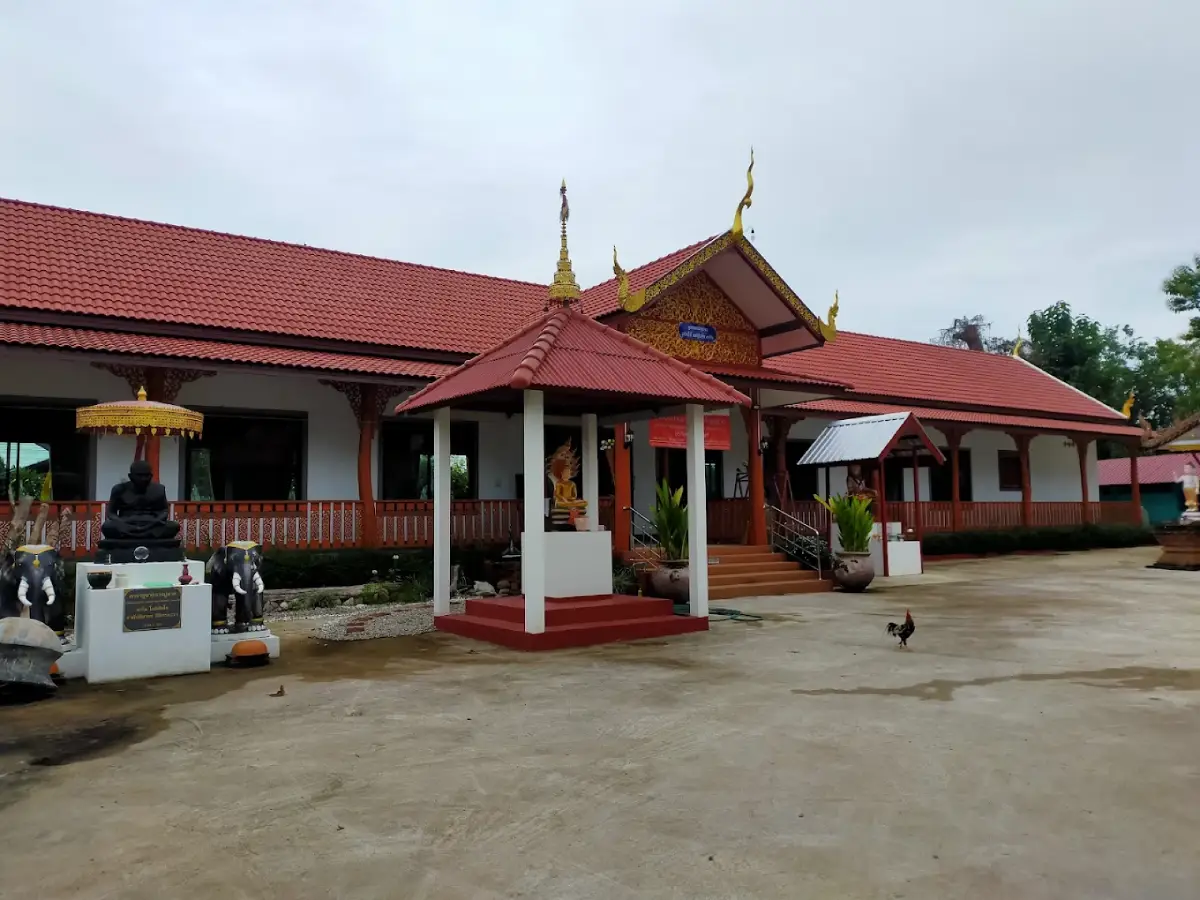
Wat Champa Lao is located at 186 Moo 10, Ban Champa Lao, Nam Phrae Subdistrict, Hang Dong District, Chiang Mai. It is a local Maha Nikaya Buddhist temple covering 7 rai and was officially established as a temple in 1891. Its story is especially meaningful because the temple was revived from an abandoned sacred site where villagers found earthen mounds, old brick remains, and traces of lime plaster before restoring the area into a community temple for Ban Champa Lao.
Wat Champa Lao is located at 186 Moo 10, Ban Champa Lao, Nam Phrae Subdistrict, Hang Dong District, Chiang Mai 50230. It is a local Buddhist temple under the Maha Nikaya order, with a temple area of 7 rai. The abbot is Phra Khru Wirat Panyakhon Panyathalo. The temple serves the Ban Champa Lao community in Nam Phrae, an area of Hang Dong that connects local temples, natural attractions, rural landscapes, and cultural routes leading toward Ob Khan National Park, Wat Phra That Doi Tham, Wat Wiang Dong, and Grand Canyon Chiang Mai.
Wat Champa Lao is important as a community temple shaped by local faith. The site was once an abandoned temple area surrounded by dry woodland and hilly terrain. As more people moved into the area, villagers faced a practical and spiritual problem: they had no nearby Buddhist temple for merit-making and religious observances on Buddhist holy days. Traveling to distant temples was inconvenient, so the community began to explore the old site and eventually restored it as a living temple for the village.
The revival of Wat Champa Lao became more clearly remembered around 1902, when settlement in the area increased. Villagers searching for a suitable religious site found a woodland area with frangipani trees and several earthen mounds. When they worked together to investigate the ground, they discovered old brick and plaster remains. These traces led the villagers to believe that the place had once been a temple. That discovery became the foundation for restoring Wat Champa Lao as a religious center for the community.
The presence of old bricks, lime plaster, and earthen mounds gives Wat Champa Lao a deeper identity than a newly built village temple. The temple carries a layered story of an abandoned sacred space, community discovery, and collective restoration. Its revival was not simply an act of construction. It was a way for the community to reconnect with the religious memory of the land and create a temple that could serve the spiritual needs of new generations living in Ban Champa Lao.
The name Wat Champa Lao is closely connected with Ban Champa Lao, the village where the temple is located. The word “champa” evokes associations with fragrant flowering trees often found around temples and sacred places in local memory. The story of villagers finding frangipani trees in the old abandoned area adds a strong visual layer to the temple’s history. Although the full documentary explanation of the name is not widely preserved, the name of the temple and the village now forms a clear part of the community identity in Nam Phrae.
Wat Champa Lao was officially established as a temple in 1891. Together with the story of restoration from an abandoned site, this long history shows the continuity of Buddhist faith in Nam Phrae. The temple is more than a place for ceremonies. It is evidence of a community that needed a spiritual center of its own and was willing to work together to bring an old sacred site back into use.
The broader setting of Nam Phrae helps explain the value of Wat Champa Lao. Nam Phrae is part of Hang Dong District and includes agricultural communities, old temples, natural sites, and local travel routes. Local municipal tourism information lists Wat Champa Lao among the attractions of Moo 10. Other important places in Nam Phrae include Wat Sala, Wat Erantawan, Wat Khet Khitchawat, Wat Ubosot, Wat Nilprapha, Wat Phra That Doi Tham, Wat Wiang Dong, and Ob Khan National Park. This places Wat Champa Lao within a wider network of local temples and community attractions.
The main highlight of Wat Champa Lao is its story of renewal. It shows how a village community restored an abandoned sacred site because the people needed a nearby place for Buddhist practice. In Lanna culture, the temple is not only a religious building. It is the heart of village life, a place for merit-making, teaching, gatherings, and shared memory. Wat Champa Lao reflects this relationship clearly.
Wat Champa Lao is not a large mainstream tourist temple, but it is meaningful for travelers who want to understand local Buddhist life in Hang Dong. Its charm lies in its quiet atmosphere, community roots, and history of restoration. Visitors who come here can see another side of Chiang Mai beyond famous urban temples and crowded attractions. This is a temple connected closely to the everyday religious life of local people.
Phra Khru Wirat Panyakhon Panyathalo, the abbot of Wat Champa Lao, oversees the temple and its religious role in the Ban Champa Lao community. Because the temple remains an active religious place, visitors should behave respectfully. Modest dress, quiet speech, and awareness of monks and local devotees are important. The temple should be approached as a living place of worship, not merely as a stop for photography.
Visitors should pay attention to the temple’s overall setting as a restored community temple. The story of old brick remains, plaster traces, earthen mounds, and collective restoration is the most important historical layer of the site. For those interested in local history, Wat Champa Lao offers a compact but meaningful example of how communities in northern Thailand have preserved and revived sacred spaces through shared faith.
Specific public information about individual buildings inside Wat Champa Lao is limited. However, as a local Maha Nikaya temple, it functions as a place for worship, merit-making, and village religious activities. Visitors should treat worship areas and temple grounds with respect, avoid touching religious objects unnecessarily, and avoid entering areas not intended for general visitors.
As a Lanna community temple, Wat Champa Lao supports the annual rhythm of Buddhist merit-making. Activities such as Buddhist holy day observances, offerings to monks, sermons, Kathin, Pha Pa, and local religious gatherings are part of the social and spiritual role of temples in northern Thai villages. These activities bring people together and help maintain the bond between the temple and the community.
The role of Wat Champa Lao in Ban Champa Lao is therefore both religious and social. The temple emerged from a time when villagers had to travel far to make merit. Its restoration gave the community a nearby place for worship and shared ceremonies. This makes the temple a strong example of how local faith, settlement, and community effort can shape the religious landscape of a village.
Wat Champa Lao works well as part of a cultural route through Nam Phrae and Hang Dong. Nearby places include Wat Phra That Doi Tham, a hill temple with local legends; Wat Wiang Dong and the monument of Pho Khun Muen Dong Nakhon; Ob Khan National Park, a natural attraction in the area; and Grand Canyon Water Park, a popular leisure destination. Combining these places gives travelers a route that includes temples, local history, nature, and recreation.
Getting There from Chiang Mai city is convenient by private car, rental car, or local hired transport. Take the Chiang Mai–Hang Dong road, also known as Highway 108, toward Hang Dong District. Then continue into Nam Phrae Subdistrict and Ban Champa Lao. Travelers unfamiliar with the area should search for Wat Champa Lao together with Nam Phrae and Hang Dong, or use the coordinates to avoid confusion with nearby places.
The best time to visit is in the morning or late afternoon, when the weather is more comfortable. A half-day route can include Wat Champa Lao, Wat Phra That Doi Tham, and Grand Canyon Chiang Mai. A fuller route can continue to Ob Khan National Park, Wat Wiang Dong, and other local attractions in Nam Phrae. This makes the temple useful for travelers who want a quieter, more local side of Hang Dong.
Wat Champa Lao is valuable for visitors who want to understand Hang Dong through its community temples and local history. Its significance comes from the story of an abandoned temple site, frangipani trees, old brick and plaster remains, community restoration, and its continuing role as a spiritual center for Ban Champa Lao. The temple’s appeal is not based on size or fame, but on the connection between place, faith, and community.
| Name | Wat Champa Lao |
| Location | Ban Champa Lao, Nam Phrae Subdistrict, Hang Dong District, Chiang Mai |
| Address | 186 Moo 10, Ban Champa Lao, Nam Phrae Subdistrict, Hang Dong District, Chiang Mai 50230 |
| Coordinates | 18.67254, 98.90537 |
| Temple Type | Local Buddhist temple under the Maha Nikaya order |
| Temple Area | 7 rai |
| Highlights | A restored community temple with a history of old brick and plaster remains, earthen mounds, and collective village restoration |
| History | Officially established as a temple in 1891, with a remembered restoration story around 1902 after villagers found traces of an older abandoned temple site |
| Name Origin | The temple name is connected with Ban Champa Lao, the village where it is located, and forms part of the local identity of Nam Phrae |
| Distinctive Features | A peaceful village temple suitable for merit-making, quiet worship, and learning about the revival of an abandoned sacred site |
| Community Context | Located in Nam Phrae Subdistrict, an area of Hang Dong with local temples, agricultural communities, natural attractions, and cultural travel routes |
| Abbot / Caretaker | Phra Khru Wirat Panyakhon Panyathalo |
| Travel Information | From Chiang Mai city, take the Chiang Mai–Hang Dong road or Highway 108 toward Hang Dong District, then continue into Nam Phrae Subdistrict and Ban Champa Lao |
| Current Status | A local Maha Nikaya temple in Nam Phrae Subdistrict and a place of faith for the Ban Champa Lao community |
| Nearby Tourist Attractions | 1. Wat Phra That Doi Tham, about 4 km 2. Wat Wiang Dong and Pho Khun Muen Dong Nakhon Monument, about 6 km 3. Grand Canyon Water Park Chiang Mai, about 7 km, Tel. 052-010-565 4. Baan Pan Hun in Nam Phrae, about 8 km 5. Ob Khan National Park, about 14 km, Tel. 086-181-1068 |
| Nearby Restaurants | 1. Bunga Café And Resort Nam Phrae Hang Dong, about 5 km, Tel. 098-789-9423, 081-906-6099 2. Grand Canyon Water Park Cafe, about 7 km, Tel. 063-672-4007 3. The Canyon Beach Park, about 7 km, Tel. 097-194-6544 4. Tuang Tong Canyon View, about 7 km, Tel. 081-960-4087, 053-106-086 5. Windows Café and Restaurant, about 10 km, Tel. 053-111-832 |
| Nearby Accommodations | 1. Rice Barn and Rooms, about 5 km, Tel. 081-960-3997 2. Bamboo Garden Resort and Restaurant, about 6 km, Tel. 062-037-3620 3. Hideaway, about 7 km, Tel. 081-952-5687 4. Lanna Deer Resort Chiang Mai, about 8 km, Tel. 052-000-330 5. Sela, about 10 km, Tel. 053-111-831 |
Frequently Asked Questions (FAQ)
Q: Where is Wat Champa Lao located?
A: Wat Champa Lao is located at 186 Moo 10, Ban Champa Lao, Nam Phrae Subdistrict, Hang Dong District, Chiang Mai 50230.
Q: What type of temple is Wat Champa Lao?
A: Wat Champa Lao is a local Buddhist temple under the Maha Nikaya order.
Q: What is the historical significance of Wat Champa Lao?
A: The temple was officially established in 1891 and is remembered for its revival from an abandoned temple site where villagers found old brick remains, plaster traces, and earthen mounds.
Q: Who is the abbot of Wat Champa Lao?
A: The abbot of Wat Champa Lao is Phra Khru Wirat Panyakhon Panyathalo.
Q: What is Wat Champa Lao known for?
A: It is known for its restoration story, its community roots, and its role as a spiritual center for Ban Champa Lao.
Q: Who should visit Wat Champa Lao?
A: It is suitable for travelers interested in local Lanna temples, quiet community sites, Hang Dong history, and cultural routes in Nam Phrae.
Q: How can travelers get to Wat Champa Lao from Chiang Mai city?
A: Take the Chiang Mai–Hang Dong road or Highway 108 toward Hang Dong District, then continue into Nam Phrae Subdistrict and Ban Champa Lao.
Q: What nearby places can be visited with Wat Champa Lao?
A: Nearby places include Wat Phra That Doi Tham, Wat Wiang Dong, Grand Canyon Water Park Chiang Mai, Baan Pan Hun, and Ob Khan National Park.
 Category: ●Places of Worship
 Group: ●Temple
Last Update : 4 DayAgo
 Last Update : 4 DayAgo
 Click to Access the Navigation Map GPS
Wat Champa Lao Map
Recommend

 Muang Chiang Mai(121)Chom Thong(47)Mae Chaem(25)Chiang Dao(33)Doi Saket(68)Mae Taeng(85)Mae Rim(69)Samoeng(29)Fang(71)Mae Ai(59)Phrao(70)San Pa Tong(103)San Kamphaeng(66)San Sai(73)Hang Dong(73)Hot(32)Doi Tao(22)Omkoi(11)Saraphi(74)Wiang Haeng(15)Chai Prakan(28)Mae Wang(32)Mae On(22)Doi Lo(34)Galyani Vadhana(1)


