
lovethailand home >North Travel Attractions >Chiang Mai Travel Attractions >Hang Dong >Khun Khong > Wat Tawai
TL;DR: Wat Tawai is located at Baan Tawai, Khun Khong Subdistrict, Hang Dong District, Chiang Mai, open Daily, hours 08.00 – 17.00.

Wat Tawai
Open Days: Daily
Opening Hours: 08.00 – 17.00
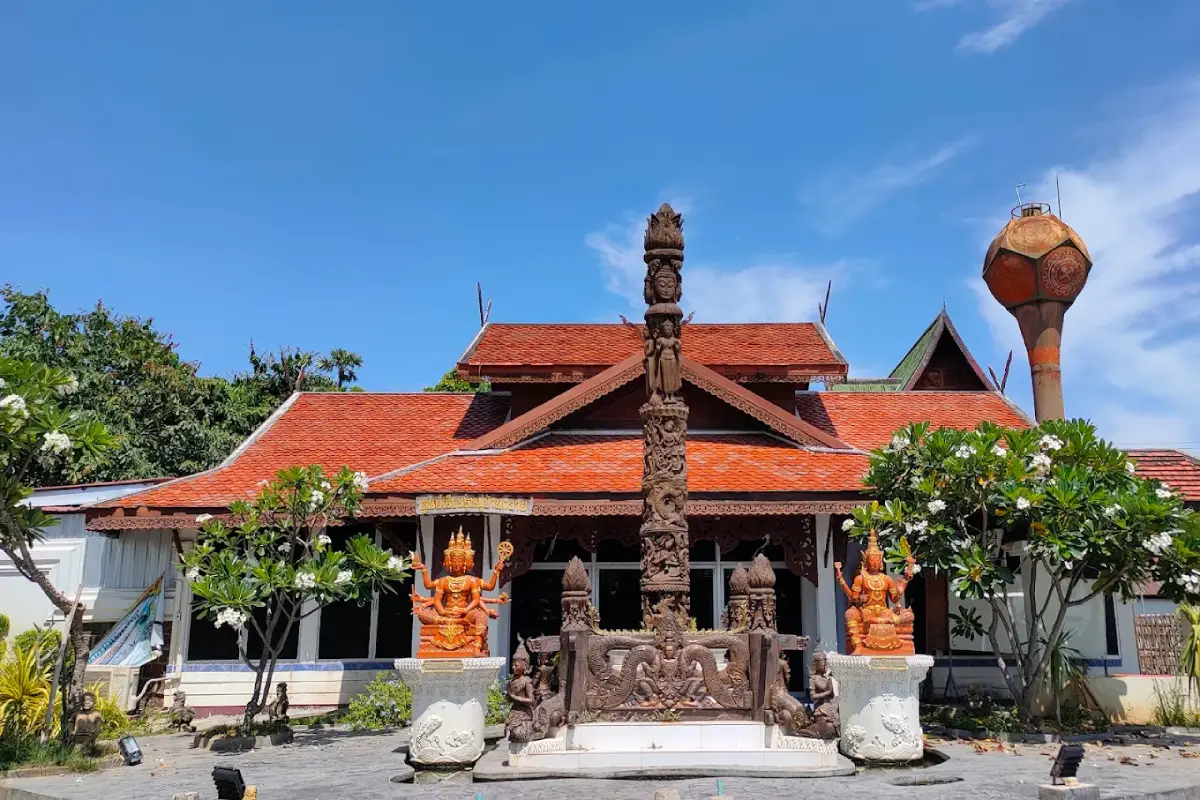
Wat Tawai in Baan Tawai, Khun Khong Subdistrict, Hang Dong District, Chiang Mai, is a local Maha Nikaya Buddhist temple with a documented establishment history dating back to 1742. The temple is best known for its Lanna-style woodcarving, gilded teak ordination hall, carved viharn doors, nine-room teak pavilion, and its close relationship with Baan Tawai, one of Chiang Mai’s best-known woodcarving communities.
Wat Tawai is located at 80 Moo 2, Baan Tawai, Khun Khong Subdistrict, Hang Dong District, Chiang Mai 50230. It is a local Buddhist temple under the Maha Nikaya order, with a temple area of 7 rai, 2 ngan, and 12 square wah. The temple stands at the heart of Baan Tawai, a community widely known for woodcarving and Lanna handicrafts. For this reason, Wat Tawai is both a religious site and a cultural landmark that reflects the artistic identity of its village.
Wat Tawai was permitted to be built in 1742 and was officially established as a temple in 1955. Its history is closely connected with Baan Tawai, an old community in Khun Khong Subdistrict. The village developed from an agricultural settlement into a major woodcarving community, and the temple preserves this connection through the craftsmanship visible in its religious buildings. Visitors who come here can understand how Buddhist faith and local woodcraft have supported each other over generations.
The most distinctive feature of Wat Tawai is its carved woodwork. Local artisans and villagers contributed their skills to the temple as a form of Buddhist offering. These carvings appear on the viharn doors, the ordination hall, and other architectural details within the temple compound. The result is a temple where local craftsmanship is not displayed as commercial decoration, but as devotional Buddhist art rooted in community faith.
The gilded teak ordination hall is one of the key structures to see at Wat Tawai. Its woodwork combines religious devotion with the refined skills of Baan Tawai artisans. The carved and gilded surfaces create a strong visual impression while preserving the quiet dignity of a village temple. The beauty of the building comes not only from its materials, but also from the fact that it was shaped by the hands and faith of local people.
The viharn is another important area of the temple. Its carved wooden doors show the delicacy and confidence of Lanna-style craftsmanship. The lines are graceful, the patterns are detailed, and the overall character reflects the artistic language of northern Thailand. For travelers interested in temple art, the viharn doors are among the most meaningful details because they show how local craft traditions are integrated into Buddhist architecture.
The nine-room teak pavilion is also significant. In a Lanna community temple, a pavilion is not only an architectural feature. It serves as a gathering place for villagers, a venue for Buddhist ceremonies, and a shared space for merit-making activities. At Wat Tawai, the pavilion represents the social role of the temple as a place where the community meets, supports religious life, and maintains village relationships.
Baan Tawai itself is an important part of the story. The community is known for woodcarving, carved wooden products, furniture, decorative items, and Lanna-style handicrafts. Historically, many residents worked in agriculture before woodcarving became a major occupation. Wat Tawai shows another dimension of that craft tradition: woodcarving used not for trade, but for religious merit and artistic devotion.
The name Baan Tawai is linked to several local explanations. One tradition connects the name with offerings made to Queen Chamadevi when she passed through the area. Another explanation relates the name to an area once rich in rattan, while another connects it with older written forms of the village or temple name that later became “Tawai.” These stories add cultural depth to the temple because the name of the temple and the village carries local memory, oral history, and identity.
The wider Baan Tawai area also contains historical layers. Community records refer to old temple ruins in the area of Wat Tawai and Wat Ton Kaew in Khun Khong Subdistrict. This makes the village more than a modern handicraft destination. It is also an old settlement with religious traces and community memory. Wat Tawai is one of the sites that helps visitors understand that continuity from the past to the present.
Wat Tawai is associated with the Ayutthaya period and the broader historical context of Chiang Mai during the era of King Tilokaraj. Because the temple is very old, some details are no longer clear, but its age and place within the community remain important. Today, what visitors can see most clearly is the living relationship between the temple and the village: local people continue to use the temple, care for it, and express faith through woodcraft and Buddhist ceremonies.
The abbot of Wat Tawai is Phra Athikan Soraphong Sudhammo. As an active temple with resident monastic leadership, Wat Tawai remains a living Buddhist site, not merely a heritage attraction. Visitors should therefore approach the temple respectfully, recognizing that it is still used by local residents for merit-making, ceremonies, and spiritual practice.
Key features to see inside the temple include the gilded teak ordination hall, the carved wooden viharn doors, the nine-room teak pavilion, and the fine decorative woodwork throughout the temple compound. These features are meaningful because they show craftsmanship in a religious context. The carvings were created not simply to impress visitors, but to honor Buddhism and strengthen the identity of the community.
Wat Tawai is especially suitable for travelers interested in Lanna art, woodcarving, local temples, and the cultural history of Hang Dong. Visitors who come to Baan Tawai Handicraft Village can include Wat Tawai in the same trip to understand the spiritual side of the community. The temple completes the picture of Baan Tawai by showing how craftsmanship, faith, and village life come together in one place.
The atmosphere of Wat Tawai is calm and local. It is not a large, crowded tourist temple in central Chiang Mai. Its appeal lies in the details: carved wood, gilded surfaces, teak structures, village life, and the feeling of a temple still closely tied to the people who maintain it. Travelers who prefer slower cultural routes will find the temple rewarding.
As a community temple, Wat Tawai also supports the annual cycle of Buddhist merit-making. Activities such as Buddhist holy day observances, offerings to monks, Kathin, Pha Pa, and other seasonal merit-making events connect the temple with village life. These activities help keep the bond between temple and community strong, and they allow younger generations to continue learning the rhythms of Lanna Buddhist culture.
The temple also shows the relationship between Buddhism and Lanna craftsmanship. The woodcarvings are not only decorative art. They represent the offering of skill, labor, and faith to the Buddhist religion. In this sense, the carved details at Wat Tawai can be understood as acts of merit made visible through wood, gold, and architectural form.
Visitors should dress modestly, speak quietly, and avoid touching delicate wooden carvings or religious structures unnecessarily. Some details are intricate and belong to active religious buildings. Respectful behavior helps preserve the temple’s value for both the local community and future travelers.
Getting There from Chiang Mai city is straightforward by private car, rental car, or local hired transport. Take the Chiang Mai–Hang Dong road, also known as Highway 108, toward Hang Dong District. Turn into the Baan Tawai area and follow the local road into the village to reach Wat Tawai. The temple is easy to combine with Baan Tawai Handicraft Village, Wat Ton Kaew, Wat Khun Khong, Wat Ton Kwen, and Royal Park Rajapruek.
A practical cultural route begins at Baan Tawai Handicraft Village, where visitors can see woodcarving shops and local craft products. From there, continue to Wat Tawai to see how the same craft tradition appears in Buddhist architecture. The route can then be extended to Wat Ton Kaew, Wat Khun Khong, Wat Ton Kwen, or Royal Park Rajapruek for a fuller Hang Dong cultural itinerary.
Wat Tawai deserves a place in any visit to Baan Tawai and Hang Dong because it adds depth to the journey. The temple allows visitors to see not only commercial woodcraft, but also the spiritual roots of the craft community. Its beauty comes from the meeting of Buddhist faith, local artistry, and Lanna village life.
| Name | Wat Tawai |
| Location | Baan Tawai, Khun Khong Subdistrict, Hang Dong District, Chiang Mai |
| Address | 80 Moo 2, Baan Tawai, Khun Khong Subdistrict, Hang Dong District, Chiang Mai 50230 |
| Coordinates | 18.684717, 98.952467 |
| Temple Type | Local Buddhist temple under the Maha Nikaya order |
| Temple Area | 7 rai, 2 ngan, 12 square wah |
| Highlights | Gilded teak ordination hall, carved wooden viharn doors, nine-room teak pavilion, and woodcarving by local Baan Tawai artisans |
| History | Permitted to be built in 1742 and officially established as a temple in 1955; closely connected with the old Baan Tawai community in Khun Khong Subdistrict |
| Name Origin | The name Baan Tawai is linked to local stories about offerings to Queen Chamadevi, an area once rich in rattan, and older written forms of the village or temple name that later became “Tawai” |
| Distinctive Features | A community temple that expresses Lanna Buddhist art through detailed woodcarving and the craft identity of Baan Tawai |
| Main Areas / Zones | 1. Gilded teak ordination hall 2. Viharn and carved wooden viharn doors 3. Nine-room teak pavilion 4. Merit-making and worship areas 5. Woodcarving details around the temple compound |
| Abbot / Caretaker | Phra Athikan Soraphong Sudhammo |
| Travel Information | From Chiang Mai city, take the Chiang Mai–Hang Dong road or Highway 108 toward Hang Dong District, then turn into the Baan Tawai area and continue along the local road to Wat Tawai |
| Current Status | Active community temple open to visitors for worship and Lanna art appreciation |
| Open Days | Daily |
| Opening Hours | 08.00 – 17.00 |
| Fees | No admission fee |
| Main Contact Number | 053-433-177 |
| Nearby Tourist Attractions | 1. Baan Tawai Handicraft Village, about 1 km 2. Wat Ton Kaew (Khun Khong), about 3 km 3. Wat Khun Khong, about 4 km 4. Wat Ton Kwen or Wat Intharawat, about 8 km 5. Royal Park Rajapruek, about 10 km |
| Nearby Restaurants | 1. Sathani Khao Kaeng Lae Khanom Chin Baan Tawai, about 1 km, Tel. 092-527-8191 2. Baan Nong Kan Kan Baan Tawai, about 1 km, Tel. 083-908-2686 3. Moo Kata Pon Tawai Hang Dong, about 2 km, Tel. 081-885-6874 4. Jungle De Cafe Hang Dong Baan Tawai By Tongna Cottage, about 4 km, Tel. 089-262-3939 5. Khao Soi Hang Dong Mae Ui Noo Branch 1, about 5 km, Tel. 053-443-069, 098-750-6214, 080-629-2528 |
| Nearby Accommodations | 1. Baan Tonglong Homestay 2, about 3 km, Tel. 086-185-8796 2. Baan Tawai Lanna Resort, about 3 km, Tel. 063-654-7997 3. Tongna Cottage Natural Resort, about 4 km, Tel. 065-005-5352 4. North Hill City Resort, about 9 km, Tel. 053-333-111 5. Homerent ChiangMai, about 5 km |
Frequently Asked Questions (FAQ)
Q: Where is Wat Tawai located?
A: Wat Tawai is located at 80 Moo 2, Baan Tawai, Khun Khong Subdistrict, Hang Dong District, Chiang Mai 50230.
Q: What are the opening days and hours of Wat Tawai?
A: Wat Tawai is open daily from 08.00 to 17.00.
Q: Is there an admission fee for Wat Tawai?
A: No. There is no admission fee for visitors.
Q: What is Wat Tawai best known for?
A: Wat Tawai is best known for its gilded teak ordination hall, carved wooden viharn doors, nine-room teak pavilion, and Lanna woodcarving by local Baan Tawai artisans.
Q: How is Wat Tawai connected with Baan Tawai?
A: The temple is located inside Baan Tawai, a famous woodcarving community in Chiang Mai. The woodcarving inside the temple reflects the village’s craft identity and Buddhist faith.
Q: Who is the abbot of Wat Tawai?
A: The abbot of Wat Tawai is Phra Athikan Soraphong Sudhammo.
Q: What nearby places can visitors combine with Wat Tawai?
A: Visitors can combine the trip with Baan Tawai Handicraft Village, Wat Ton Kaew, Wat Khun Khong, Wat Ton Kwen, and Royal Park Rajapruek.
Q: How can visitors get to Wat Tawai from Chiang Mai city?
A: Take the Chiang Mai–Hang Dong road or Highway 108 toward Hang Dong District, then turn into the Baan Tawai area and follow the local road to Wat Tawai.
 Category: ●Places of Worship
 Group: ●Temple
Last Update : 2 DayAgo
 Last Update : 2 DayAgo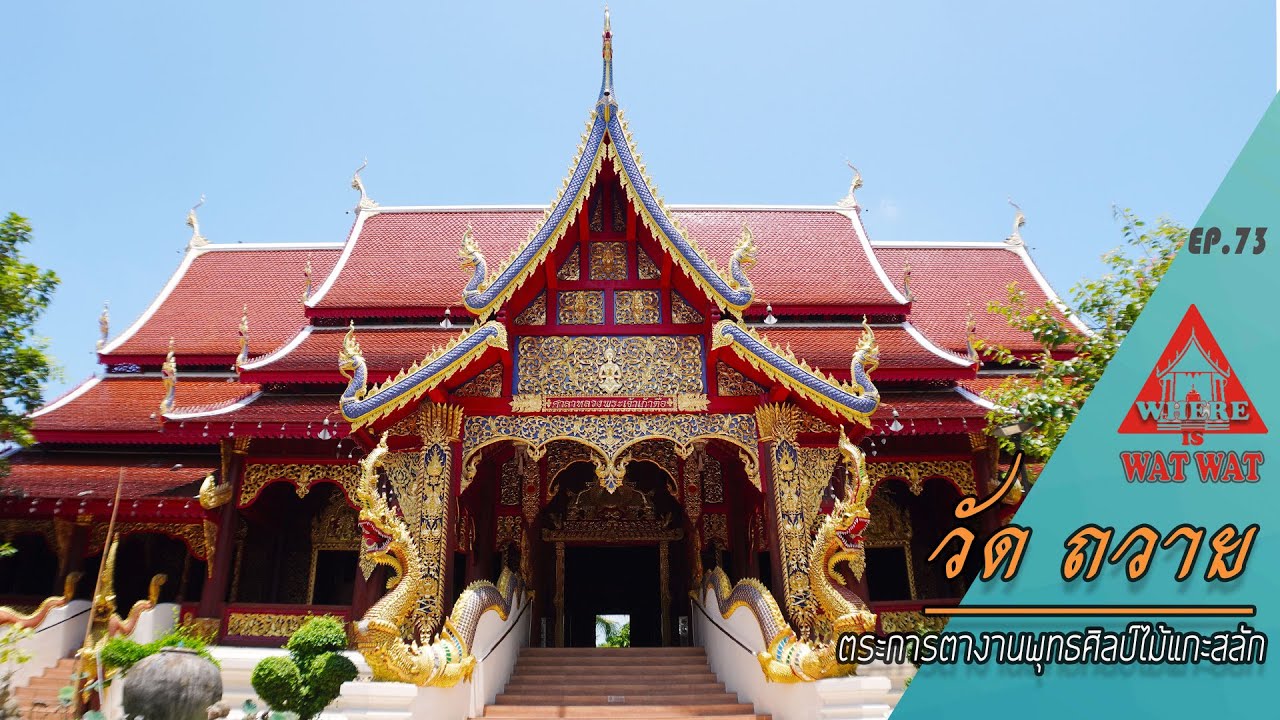
 Click to Access the Navigation Map GPS
 Muang Chiang Mai(121)Chom Thong(47)Mae Chaem(25)Chiang Dao(33)Doi Saket(68)Mae Taeng(85)Mae Rim(69)Samoeng(29)Fang(71)Mae Ai(59)Phrao(70)San Pa Tong(103)San Kamphaeng(66)San Sai(73)Hang Dong(73)Hot(32)Doi Tao(22)Omkoi(11)Saraphi(74)Wiang Haeng(15)Chai Prakan(28)Mae Wang(32)Mae On(22)Doi Lo(34)Galyani Vadhana(1)


