
lovethailand home >North Travel Attractions >Chiang Mai Travel Attractions >Saraphi >Nong Faek > Wat Ku Daeng
TL;DR: Wat Ku Daeng is located at Ban Ku Daeng, Moo 6, Nong Faek Subdistrict, Saraphi District, Chiang Mai Province, open Daily, hours 08.00 – 17.00.

Wat Ku Daeng
Open Days: Daily
Opening Hours: 08.00 – 17.00
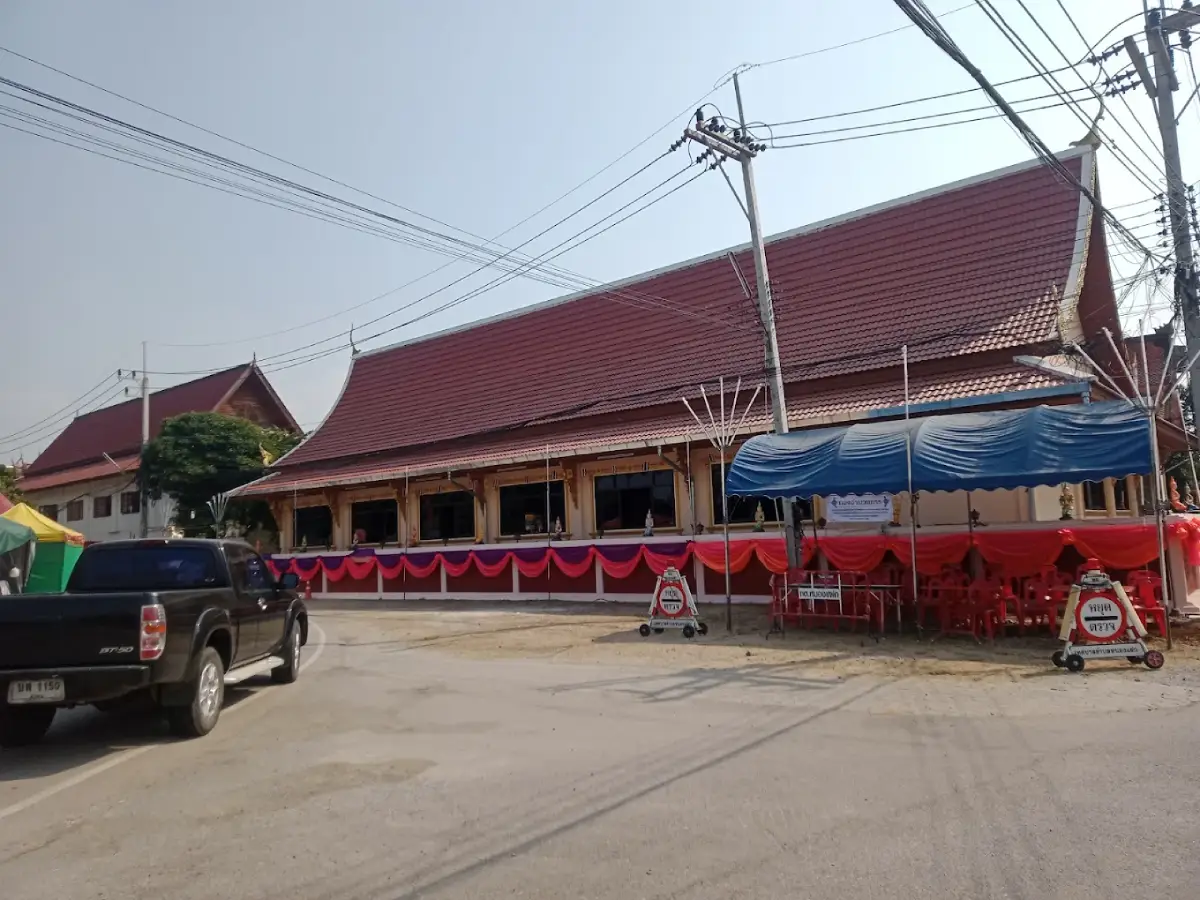
Wat Ku Daeng is a local Buddhist temple under the Mahanikaya monastic order, located at No. 1, Moo 6, Ban Ku Daeng, Nong Faek Subdistrict, Saraphi District, Chiang Mai Province 50140. It is an old community temple of Ban Ku Daeng, established in 1792. The temple land covers 8 rai and 71 square wah under land title No. 25663. Wat Ku Daeng received its Wisungkhamsima on 16 March 1976, with the boundary measuring 40 meters wide and 80 meters long. Important structures include the Tripitaka hall, bell tower, monks’ residence, temple wall, restrooms, viharn, pagoda, and ordination hall. The temple is closely connected with local legends about old ku, or stupas, in Ban Ku Daeng and remains a spiritual center of the Nong Faek community.
Wat Ku Daeng should be understood as an old community temple that reflects history, Buddhism, and the cultural landscape between Chiang Mai and Lamphun. It is not only a village temple; its name, the village name, and local stories about ancient stupas are directly connected. Ban Ku Daeng is remembered as an area with several ku, including Ku Daeng, Ku Klang Ban, and Ku Pho Thao Siri. One important ku was located to the west of the village, in an area associated with the old boundary between Chiang Mai and Lamphun. This gives the temple a distinctive local-historical character.
In local northern Thai usage, ku refers to a stupa or ancient sacred structure. Daeng means red. The name Ku Daeng is linked to an old stupa whose bricks were noticeably red. Local elders also remembered the place as Ku Daen, referring to a boundary stupa between territories, before the name gradually became Ku Daeng. The temple name therefore preserves the memory of ancient remains, red brickwork, and the idea of a historical boundary.
The temple was built in 1792, making it one of the old temples of Saraphi District. Its age reflects the continuity of Ban Ku Daeng for more than two centuries. In the past, village temples were places for merit-making, Dhamma listening, Buddhist ceremonies, and community gathering. In the Lanna cultural world, a temple also functioned as a moral, social, and cultural center for the village.
Nong Faek Subdistrict contains several old communities, temples, and archaeological remains. One important nearby site is Wiang Setthi, an old settlement associated with local legends. Ban Ku Daeng is also remembered for its several ancient stupas. Wat Ku Daeng therefore belongs to a wider cultural landscape that includes village temples, old settlement routes, agricultural areas, and local Buddhist memory.
The temple boundaries in the local information used for this article connect with private orchards on all four sides. This setting reflects the character of a temple embedded in a rural and agricultural community landscape. With 8 rai and 71 square wah of temple land, the compound is large enough to support religious buildings, temple grounds, ceremonies, and community events.
The granting of Wisungkhamsima on 16 March 1976 was an important milestone in the religious history of Wat Ku Daeng. A Wisungkhamsima is the formal monastic boundary used for important Sangha rites, especially ordination and ecclesiastical ceremonies. The boundary of Wat Ku Daeng measures 40 meters wide and 80 meters long, confirming the temple’s complete function as a formal Buddhist temple.
The ordination hall is one of the most important areas of the temple because it is directly connected with the Wisungkhamsima. Visitors should approach it respectfully, speak softly, and avoid disturbing monks or local devotees. The ordination hall confirms the temple’s formal role in Sangha activities and Buddhist practice.
The viharn is the main devotional space for worship, Dhamma listening, and community ceremonies. Visitors should remove shoes where required, speak softly, and pay respect calmly. In a Lanna community temple, the viharn is not merely an architectural feature but a living sacred space used by villagers across generations.
The pagoda is an important sacred feature of Wat Ku Daeng, especially when considered together with the temple name and the local stories about old stupas. In Lanna Buddhism, pagodas symbolize the stability of the religion and serve as points of reverence for local devotees. Visitors should walk respectfully around these areas and avoid touching, climbing, or leaning on sacred structures.
The Tripitaka hall adds an educational and religious dimension to the temple. In a village temple, such a hall reflects the importance of preserving Buddhist teachings and religious knowledge. Its presence shows that Wat Ku Daeng is not only a place for ceremonies but also a place connected with the preservation of Dhamma.
The bell tower contributes to the living atmosphere of the temple. In village temples, the sound of a bell is connected with monastic routines, activity signals, and the shared awareness of the community. It forms part of the religious soundscape that links the temple with everyday life.
The monks’ residence supports the continuity of religious life. With monks residing at the temple, daily chanting, alms-related activities, religious guidance, and ceremonies can continue. This makes Wat Ku Daeng an active Buddhist center rather than merely a historic site.
The temple wall helps mark the transition from village space into sacred space. Entering the temple compound is therefore also a shift into an area where respectful behavior is expected. The boundary of the temple reinforces its identity as a calm and sacred center within the village.
Stories about Ku Daeng, Ku Klang Ban, and Ku Pho Thao Siri give the temple a distinctive identity. Visitors interested in local history should understand that the name Ku Daeng does not come only from the temple itself. It is part of a broader village memory connected with several ancient stupas, red bricks, and the historical landscape between Chiang Mai and Lamphun.
Ban Ku Daeng is also near Wiang Setthi, an important historical site in Nong Faek. Local tradition connects Wiang Setthi with a Lua millionaire named Kumkan and with old settlement memory. A visit to Wat Ku Daeng can therefore be linked with the broader story of ancient sites, old temples, and local legends in Nong Faek.
Phra Sutthinan Thicha appears in public contact information connected with Wat Ku Daeng and is included in this article as an important monk associated with the temple. Older temple-history records also list several former abbots, including Phra Thanan Chai, Phra Duangkham, Phra Panya, Phra Duangkaeo, Phra Si Muen, and Phra Khru Mongkhon Thammawat. This succession reflects long-term monastic care and community support.
Wat Ku Daeng serves as the spiritual center of Ban Ku Daeng. It supports Buddhist holy days, Buddhist Lent, the end of Buddhist Lent, Kathin, robe-offering ceremonies, Songkran, elder-respect customs, Yi Peng, and village merit-making. These events bring villagers together to make merit, offer food, listen to Dhamma, and maintain Lanna Buddhist traditions.
During the Lanna New Year, Wat Ku Daeng is suitable for merit-making, Buddha-image bathing, elder-respect activities, and community ceremonies. These traditions are not merely annual events. They connect younger generations with elders, families with the temple, and village identity with Buddhism.
The main appeal of Wat Ku Daeng for visitors is its founding in 1792, the legend of ancient stupas in Ban Ku Daeng, the meaning of the temple name, the connection with red brick and old boundary memory, the viharn, ordination hall, pagoda, Tripitaka hall, bell tower, and the calm atmosphere of a Lanna community temple. It is suitable for visitors interested in old temples of Saraphi, local legends, and cultural routes through Nong Faek.
The temple atmosphere is calm and local. Visitors should allow around 30 to 60 minutes to observe the viharn, ordination hall, pagoda, Tripitaka hall, bell tower, monks’ residence, temple wall, and surrounding temple grounds. Morning or late afternoon is generally the most comfortable time to walk around and appreciate the character of a community temple.
Visitors should dress modestly, speak softly, remove shoes before entering sacred buildings, avoid touching Buddha images, pagodas, or sacred objects unnecessarily, and avoid disturbing monks or villagers during ceremonies. If a merit-making event, Kathin, robe-offering ceremony, or community gathering is taking place, visitors should allow space for local participants and behave respectfully within the temple grounds.
Getting There is possible by traveling from Chiang Mai city toward Saraphi District, then continuing into Nong Faek Subdistrict and Ban Ku Daeng, Moo 6. Private car, rental car, or local hired transport is the most convenient option. Wat Ku Daeng can be combined with other temples and historical sites in Nong Faek, including Wat Nong Faek, Wat Nong Si Chaeng, Wat Wonnakan, Wat Saraphi, Wat Pak Kong, and Wiang Setthi.
A practical cultural route can begin at Wat Ku Daeng and continue to Wat Nong Faek, Wat Nong Si Chaeng, Wat Wonnakan or Wat San Pa Sak, and Wiang Setthi. Travelers who want to extend the route can continue to Wat Saraphi, Wat Chang Khoeng, Wat Pak Kong, Wat Mongkhon Wanaram, and the temple routes of Nong Phueng Subdistrict. This route helps visitors understand Saraphi through old temples, archaeological remains, village legends, agricultural landscapes, and Lanna Buddhist faith.
Overall, Wat Ku Daeng is valuable for its history, Buddhist identity, and community role. Ban Ku Daeng preserves stories about several old stupas, red-brick remains, and an old boundary between Chiang Mai and Lamphun. The temple was built in 1792, received its Wisungkhamsima in 1976, and still contains key community-temple elements such as the viharn, pagoda, ordination hall, Tripitaka hall, bell tower, and monks’ residence. It is a meaningful destination for visitors interested in Saraphi’s old temples and the local heritage of Nong Faek.
| Name | Wat Ku Daeng |
| Location | Ban Ku Daeng, Moo 6, Nong Faek Subdistrict, Saraphi District, Chiang Mai Province |
| Address | No. 1, Moo 6, Ban Ku Daeng, Nong Faek Subdistrict, Saraphi District, Chiang Mai Province 50140, Thailand |
| Temple Type | Local Buddhist temple under the Mahanikaya monastic order |
| Temple Land | 8 rai and 71 square wah |
| Land Title | Land title No. 25663 |
| Temple Boundaries | North: private orchard South: private orchard East: private orchard West: private orchard |
| Highlights | Old community temple of Ban Ku Daeng, built in 1792, with local legends about ancient red-brick stupas and an old boundary between Chiang Mai and Lamphun |
| History | Built in 1792 as an old community temple of Ban Ku Daeng in Nong Faek Subdistrict, Saraphi District, Chiang Mai Province |
| Name Origin | The name comes from an old red-brick ku, or stupa, and local memory of a boundary stupa between Chiang Mai and Lamphun, with daen gradually remembered as daeng |
| Wisungkhamsima | Granted on 16 March 1976; the boundary measures 40 meters wide and 80 meters long |
| Main Areas / Zones | Tripitaka hall, bell tower, monks’ residence, temple wall, restrooms, viharn, pagoda, and ordination hall |
| Sacred Features | Pagoda inside the temple compound and ancient stupa-related local memory of Ban Ku Daeng |
| Important Monk / Associated Person | Phra Sutthinan Thicha |
| Open Days | Daily |
| Opening Hours | 08.00 – 17.00 |
| Phone | 053-968-171 |
| Important Religious Activities | Buddhist holy days, Buddhist Lent, end of Buddhist Lent, Kathin, robe-offering ceremonies, Songkran, elder-respect activities, Yi Peng, and Ban Ku Daeng village merit-making |
| Travel Information | Travel from Chiang Mai city toward Saraphi District, then continue into Nong Faek Subdistrict and Ban Ku Daeng, Moo 6. Private car, rental car, or local hired transport is the most convenient option |
| Current Status | Active community temple in Nong Faek Subdistrict and a venue for Buddhist worship, village merit-making, and community activities |
| Nearby Tourist Attractions | 1. Wat Nong Faek, about 2 km 2. Wat Nong Si Chaeng, Nong Faek, about 3 km 3. Wat Wonnakan / Wat San Pa Sak, Nong Faek, about 4 km 4. Wiang Setthi, Nong Faek, about 4 km 5. Wat Saraphi, Saraphi, about 6 km 6. Wat Pak Kong, Saraphi, about 7 km |
| Nearby Restaurants | 1. Shabu Skewers With Black Sauce Saraphi, about 2 km, Tel. 096-880-8908 2. Delicious Grilled Pork Saraphi, about 3 km, Tel. 097-007-3989 3. Je Tuk Sticky Rice Pork And Dessert Nong Faek Saraphi, about 4 km 4. Sureerat Made-To-Order Food, Nong Phueng, about 6 km, Tel. 095-450-3692 5. Somtum Vengjun Saraphi Nong Phueng, about 7 km, Tel. 081-594-8323, 093-575-0037 |
| Nearby Accommodations | 1. 9Roomz, about 8 km, Tel. 095-446-0758, 053-963-829 2. Baan Saraphi, about 9 km, Tel. 053-321-942 3. Ruean Thip Resort, about 10 km, Tel. 098-556-6291 4. Baan Nam Ping Riverside Village, about 11 km, Tel. 053-439040 5. Baan Hom Samunphrai, about 12 km, Tel. 053-817-362, 081-885-1429 |
Frequently Asked Questions (FAQ)
Q: Where is Wat Ku Daeng located?
A: Wat Ku Daeng is located at No. 1, Moo 6, Ban Ku Daeng, Nong Faek Subdistrict, Saraphi District, Chiang Mai Province 50140. It is a local Buddhist temple under the Mahanikaya monastic order.
Q: When was Wat Ku Daeng built?
A: Wat Ku Daeng was built in 1792 and received its Wisungkhamsima on 16 March 1976.
Q: What is the origin of the name Ku Daeng?
A: The name comes from an old ku, or stupa, with red bricks. Local memory also connects it with an old boundary stupa between Chiang Mai and Lamphun, with daen gradually remembered as daeng.
Q: What can visitors see at Wat Ku Daeng?
A: Visitors can see the Tripitaka hall, bell tower, monks’ residence, temple wall, viharn, pagoda, ordination hall, and the calm atmosphere of an old Lanna community temple.
Q: What are the opening hours of Wat Ku Daeng?
A: Wat Ku Daeng is open daily from 08.00 to 17.00.
Q: Does Wat Ku Daeng have a public phone number?
A: The public phone number listed for Wat Ku Daeng is 053-968-171.
Q: What type of traveler is Wat Ku Daeng suitable for?
A: It is suitable for visitors interested in old temples, Lanna community temples, local stupa legends, and cultural routes through Nong Faek and Wiang Setthi.
Q: What nearby places can be visited with Wat Ku Daeng?
A: Nearby places include Wat Nong Faek, Wat Nong Si Chaeng, Wat Wonnakan, Wiang Setthi, Wat Saraphi, and Wat Pak Kong.
 Category: ●Places of Worship
 Group: ●Temple
Last Update : 2 DayAgo
 Last Update : 2 DayAgo
 Click to Access the Navigation Map GPS
Wat Ku Daeng Map
Recommend

 Muang Chiang Mai(121)Chom Thong(47)Mae Chaem(25)Chiang Dao(33)Doi Saket(68)Mae Taeng(85)Mae Rim(69)Samoeng(29)Fang(71)Mae Ai(59)Phrao(70)San Pa Tong(103)San Kamphaeng(66)San Sai(73)Hang Dong(73)Hot(32)Doi Tao(22)Omkoi(11)Saraphi(74)Wiang Haeng(15)Chai Prakan(28)Mae Wang(32)Mae On(22)Doi Lo(34)Galyani Vadhana(1)


