
lovethailand home >North Travel Attractions >Chiang Mai Travel Attractions >Saraphi >Saraphi > Wat Chang Khoeng (Saraphi)
TL;DR: Wat Chang Khoeng (Saraphi) is located at Ban Chang Khoeng, Moo 4, Chiang Mai–Lamphun Road, Saraphi Subdistrict, Saraphi District, Chiang Mai Province, open Daily, hours 08.00 – 17.00.
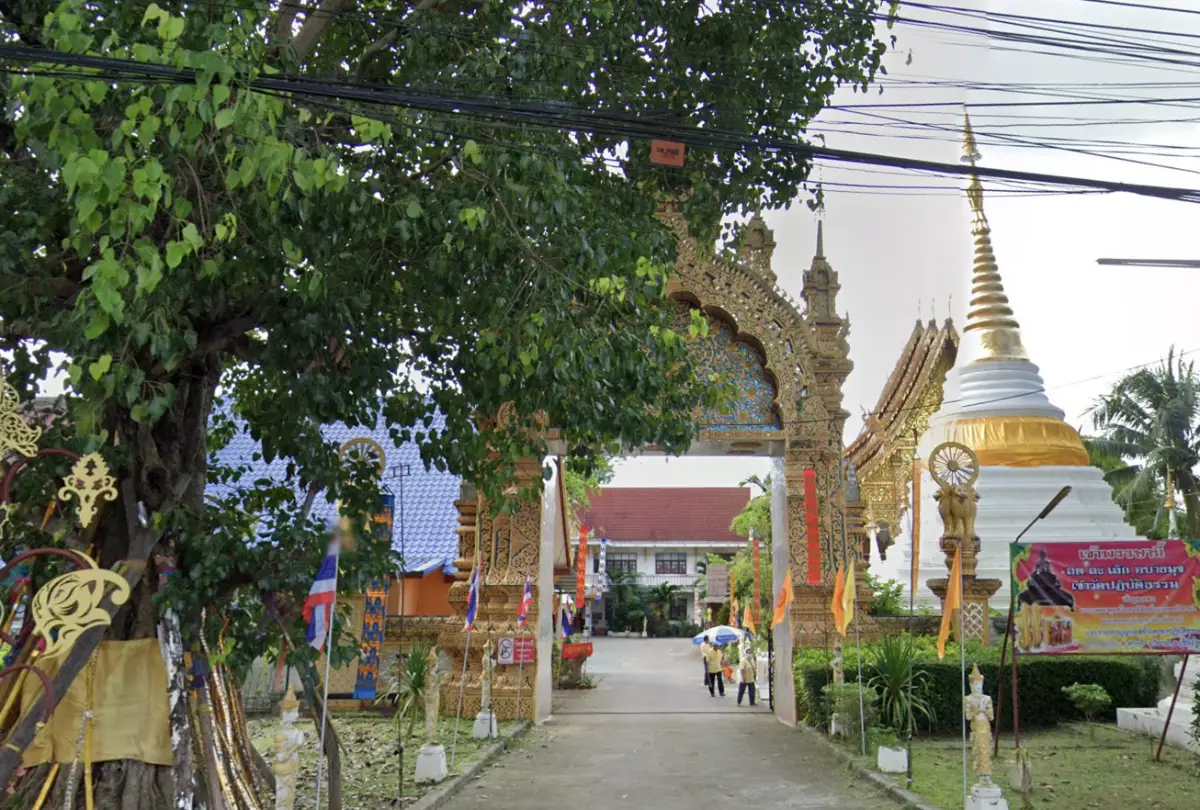
Wat Chang Khoeng (Saraphi)
Open Days: Daily
Opening Hours: 08.00 – 17.00
Wat Chang Khoeng (Saraphi) is a local Buddhist temple under the Mahanikaya monastic order, located at No. 124, Ban Chang Khoeng, Chiang Mai–Lamphun Road, Moo 4, Saraphi Subdistrict, Saraphi District, Chiang Mai Province. It stands along the historic Chiang Mai–Lamphun route, also known for its old yang tree-lined road. The temple was built in 1757, with temple land covering 2 rai, 2 ngan, and 53 square wah, and five monastic land plots totaling 4 rai and 60 square wah. It received its Wisungkhamsima around 1907, with the boundary measuring 22 meters wide and 29 meters long. The current abbot is Phra Khru Pariyat Kit Mongkhon, also known as Phra Maha Mongkhon Mahapanyo.
Wat Chang Khoeng is an important stop for travelers who want to understand Saraphi through old temples, the historic Chiang Mai–Lamphun road, and Lanna Buddhist art. Its value does not come only from age. The temple is also notable for its Lanna-style viharn, mural paintings, traditional local motifs, and contemporary lower-wall paintings. The viharn connects older faith, local craftsmanship, and modern visual storytelling within the same religious space.
The name Chang Khoeng comes from the village name. In the northern Thai language, khoeng means half, middle, or midpoint. This meaning is connected with the temple’s location near kilometer marker 13 on the Chiang Mai–Lamphun route, roughly the midpoint between Chiang Mai city and Lamphun city, with a total distance of about 26 kilometers. The temple name therefore reflects language, geography, and the cultural importance of this old travel route.
The Chiang Mai–Lamphun road is significant in the local history of Saraphi because it connects old settlements, agricultural communities, temples, and village networks. Ban Chang Khoeng, located along this route, has long been part of this cultural corridor. Wat Chang Khoeng functions as both the spiritual center of the village and a religious landmark on one of the most meaningful historic roads in the Chiang Mai–Lamphun area.
The temple’s founding in 1757 makes Wat Chang Khoeng one of the older temples in Saraphi Subdistrict. Its age reflects the settlement history of Ban Chang Khoeng during a period when village temples formed the foundation of local life. A temple provided villagers with a place for merit-making, Dhamma listening, education, ceremonies, and community gatherings. Wat Chang Khoeng therefore represents both religious heritage and community continuity.
The granting of Wisungkhamsima around 1907 was an important milestone in the temple’s history. A Wisungkhamsima is the formal monastic boundary used for important Sangha rites, especially ordination and ecclesiastical ceremonies. The boundary of Wat Chang Khoeng measures 22 meters wide and 29 meters long, confirming the temple’s formal role in Buddhist monastic practice.
The temple compound is compact but contains important elements, including the viharn, ordination hall, alms hall, monks’ residence, temple courtyard, and merit-making areas. Older temple records also describe boundaries connected with village pathways, villagers’ houses, and public irrigation channels. This setting reflects the character of a Lanna community temple closely embedded in everyday village life.
The viharn is one of the most important highlights of Wat Chang Khoeng. It reflects Lanna architectural form and contains mural paintings that deserve careful attention. The upper walls feature motifs connected with local Lanna art and cultural tradition, while the lower wall paintings are more contemporary. Together, they show how older religious art and newer visual expression can coexist in a living Buddhist temple.
Visitors should begin inside the viharn with calm respect. Shoes should be removed where required, voices should be kept low, and worship should be done mindfully. The viharn is not only a place to view paintings. It is a sacred space for worship, Dhamma listening, and community religious activities.
The ordination hall contains an old Buddha image and is another significant area of the temple. It is directly connected with the temple’s Wisungkhamsima and formal Sangha activities. Visitors should treat the ordination hall respectfully, avoid disturbing monks, and understand that it is a sacred area governed by Buddhist monastic discipline.
The alms hall and merit-making spaces reflect the communal nature of Lanna Buddhism. Temple events rely on villagers preparing food, offerings, robes, and religious materials together. These areas show the practical relationship between the temple and the community that continues to support it.
The monks’ residence helps sustain daily religious life. Current temple information lists 5 resident monks. This allows the temple to maintain chanting, monastic routines, alms-related activities, religious guidance, and ceremonies. Wat Chang Khoeng is therefore not just an old temple, but an active community temple.
Phra Khru Pariyat Kit Mongkhon, also known as Phra Maha Mongkhon Mahapanyo, is the abbot of Wat Chang Khoeng and an important monk in Saraphi District. His role in monastic administration and Buddhist education gives the temple additional significance beyond ordinary village merit-making.
The temple also has an educational and scholarly dimension. Monks connected with Wat Chang Khoeng have been involved in Buddhist education and activities related to local religious learning in Saraphi. This connects the temple with Dhamma study, manuscript-related cultural work, and the transmission of Buddhist knowledge to the community.
Within Saraphi Subdistrict, Wat Chang Khoeng is connected with nearby temples such as Wat Saraphi, Wat Pak Kong, Wat Ko Pracham Hong, Wat Hong Kok, Wat Mongkhon Wanaram, and Wat Ton Phueng. These temples form a meaningful cultural route along and near the old Chiang Mai–Lamphun road.
The main appeal of Wat Chang Khoeng is its combination of old temple history, roadside cultural setting, midpoint identity between Chiang Mai and Lamphun, Lanna-style viharn, murals, and old Buddha image in the ordination hall. It is suitable for visitors interested in Lanna art, local temples, historic roads, and cultural routes through Saraphi District.
The temple atmosphere is calm and local. Visitors should allow around 30 to 60 minutes to observe the viharn, mural paintings, ordination hall, alms hall, monks’ residence, and temple grounds. Morning or late afternoon is generally more comfortable for walking and allows visitors to appreciate the quiet character of a community temple.
Religious activities associated with Wat Chang Khoeng include Buddhist holy days, Buddhist Lent, the end of Buddhist Lent, Kathin, robe-offering ceremonies, Songkran, elder-respect activities, Yi Peng, and local merit-making in Ban Chang Khoeng. These events show the temple’s role as a spiritual center where villagers continue to meet, make merit, listen to Dhamma, and preserve Lanna Buddhist traditions.
Visitors should dress modestly, speak softly, remove shoes before entering sacred buildings, avoid touching Buddha images or mural paintings unnecessarily, and avoid leaning on or climbing temple structures. Inside the viharn, extra care should be taken around painted surfaces and interior elements so that the temple’s artistic heritage remains protected.
Getting There is possible by taking the Chiang Mai–Lamphun Road from Chiang Mai city toward Saraphi District. The temple is on the right-hand side in Saraphi Subdistrict and is opposite Wat Saraphi. Private car, rental car, or local hired transport is the most convenient option. Wat Chang Khoeng can be combined easily with other temples along the old road.
A practical cultural route can begin at Wat Chang Khoeng and continue to Wat Saraphi, Wat Pak Kong, Wat Ko Pracham Hong, Wat Hong Kok, Wat Mongkhon Wanaram, Wat Ton Phueng, and Wat Kong Sai. Travelers who want to extend the route can continue to temples in Nong Phueng and the wider Wiang Kum Kam area. This route helps visitors understand Saraphi through old temples, historic roads, yang trees, village settlements, and Lanna Buddhist art.
Overall, Wat Chang Khoeng (Saraphi) is valuable for its history, community role, Buddhist art, and location on the historic Chiang Mai–Lamphun route. Built in 1757, recognized with Wisungkhamsima around 1907, home to a Lanna-style viharn with mural paintings and an ordination hall with an old Buddha image, the temple is a meaningful destination for visitors interested in Lanna temples and the quieter cultural side of Saraphi District.
| Name | Wat Chang Khoeng (Saraphi) |
| Other Spellings | Wat Chang Khoeng, Wat Chang Khoeng Saraphi, Wat Chang Khing |
| Location | Ban Chang Khoeng, Moo 4, Chiang Mai–Lamphun Road, Saraphi Subdistrict, Saraphi District, Chiang Mai Province |
| Address | No. 124, Ban Chang Khoeng, Chiang Mai–Lamphun Road, Moo 4, Saraphi Subdistrict, Saraphi District, Chiang Mai Province 50140, Thailand |
| Temple Type | Local Buddhist temple under the Mahanikaya monastic order |
| Temple Land | 2 rai, 2 ngan, and 53 square wah |
| Monastic Land | 5 plots totaling 4 rai and 60 square wah |
| Highlights | Old temple on the Chiang Mai–Lamphun Road, Lanna-style viharn with mural paintings, old Buddha image in the ordination hall, and a name connected with the midpoint between Chiang Mai and Lamphun |
| History | Built in 1757 as an old community temple of Ban Chang Khoeng in Saraphi Subdistrict |
| Name Origin | Khoeng means half or midpoint in northern Thai, referring to the temple’s location near kilometer marker 13, roughly halfway between Chiang Mai city and Lamphun city |
| Wisungkhamsima | Granted around 1907; the boundary measures 22 meters wide and 29 meters long |
| Main Areas / Zones | Viharn, ordination hall, alms hall, monks’ residence, temple courtyard, and merit-making areas |
| Artistic Highlight | Lanna-style viharn with upper-wall motifs related to local Lanna tradition and lower-wall contemporary mural paintings |
| Abbot | Phra Khru Pariyat Kit Mongkhon (Phra Maha Mongkhon Mahapanyo) |
| Resident Monks | 5 monks |
| Open Days | Daily |
| Opening Hours | 08.00 – 17.00 |
| Important Religious Activities | Buddhist holy days, Buddhist Lent, end of Buddhist Lent, Kathin, robe-offering ceremonies, Songkran, elder-respect activities, Yi Peng, and local merit-making in Ban Chang Khoeng |
| Travel Information | Take the Chiang Mai–Lamphun Road from Chiang Mai city toward Saraphi District. The temple is on the right-hand side in Saraphi Subdistrict, opposite Wat Saraphi. Private car, rental car, or local hired transport is the most convenient option |
| Current Status | Active community temple in Saraphi Subdistrict and a place for ongoing Buddhist activities |
| Nearby Tourist Attractions | 1. Wat Saraphi, about 1 km 2. Wat Pak Kong, Saraphi, about 2 km 3. Wat Ko Pracham Hong, Saraphi, about 3 km 4. Wat Hong Kok, Saraphi, about 4 km 5. Wat Mongkhon Wanaram, Saraphi, about 5 km 6. Wat Kong Sai, Nong Phueng, about 7 km |
| Nearby Restaurants | 1. Nai Ya Kitchen Yang Noeng Saraphi, about 4 km, Tel. 095-830-4248 2. Pee Rung Restaurant Khuamung Moo 5, about 6 km, Tel. 061-065-7961 3. Zaab Isan Khuamung, about 7 km, Tel. 098-172-0983 4. Restime Pizza Khuamung, about 7 km, Tel. 081-472-0954 5. The Khuamung, about 8 km, Tel. 083-313-3733, 062-495-0496 |
| Nearby Accommodations | 1. 9Roomz, about 6 km, Tel. 095-446-0758, 053-963-829 2. Baan Saraphi, about 7 km, Tel. 053-321-942 3. Ruean Thip Resort, about 8 km, Tel. 098-556-6291 4. Baan Nam Ping Riverside Village, about 10 km, Tel. 053-439040 5. Baan Hom Samunphrai, about 11 km, Tel. 053-817-362, 081-885-1429 |
Frequently Asked Questions (FAQ)
Q: Where is Wat Chang Khoeng (Saraphi) located?
A: Wat Chang Khoeng is located at No. 124, Ban Chang Khoeng, Chiang Mai–Lamphun Road, Moo 4, Saraphi Subdistrict, Saraphi District, Chiang Mai Province 50140. It is a local Buddhist temple under the Mahanikaya monastic order.
Q: When was Wat Chang Khoeng built?
A: Wat Chang Khoeng was built in 1757 and received its Wisungkhamsima around 1907.
Q: What does the name Chang Khoeng mean?
A: Khoeng means half or midpoint in northern Thai. The name relates to the temple’s location near kilometer marker 13, roughly halfway between Chiang Mai city and Lamphun city.
Q: What is Wat Chang Khoeng known for?
A: The temple is known for its Lanna-style viharn, mural paintings, local Lanna decorative motifs, contemporary lower-wall paintings, and an old Buddha image in the ordination hall.
Q: Who is the abbot of Wat Chang Khoeng?
A: The abbot of Wat Chang Khoeng is Phra Khru Pariyat Kit Mongkhon, also known as Phra Maha Mongkhon Mahapanyo.
Q: What are the opening hours of Wat Chang Khoeng?
A: Wat Chang Khoeng is open daily from 08.00 to 17.00.
Q: What kind of travelers will enjoy Wat Chang Khoeng?
A: Wat Chang Khoeng is suitable for travelers interested in old Saraphi temples, Lanna art, mural paintings, historic community temples, and the cultural route between Chiang Mai and Lamphun.
Q: What nearby places can be visited with Wat Chang Khoeng?
A: Nearby places include Wat Saraphi, Wat Pak Kong, Wat Ko Pracham Hong, Wat Hong Kok, Wat Mongkhon Wanaram, Wat Kong Sai, and the wider Wiang Kum Kam cultural route.
 Category: ●Places of Worship
 Group: ●Temple
Last Update : 13 HourAgo
 Last Update : 13 HourAgo
 Click to Access the Navigation Map GPS
Wat Chang Khoeng (Saraphi) Map
Recommend

 Muang Chiang Mai(121)Chom Thong(47)Mae Chaem(25)Chiang Dao(33)Doi Saket(68)Mae Taeng(85)Mae Rim(69)Samoeng(29)Fang(71)Mae Ai(59)Phrao(70)San Pa Tong(103)San Kamphaeng(66)San Sai(73)Hang Dong(73)Hot(32)Doi Tao(22)Omkoi(11)Saraphi(74)Wiang Haeng(15)Chai Prakan(28)Mae Wang(32)Mae On(22)Doi Lo(34)Galyani Vadhana(1)


