
lovethailand home >North Travel Attractions >Chiang Mai Travel Attractions >Saraphi >San Sai > Wat Si Don Chai (San Sai)
TL;DR: Wat Si Don Chai (San Sai) is located at Ban Si Don Chai, Moo 4, San Sai Subdistrict, Saraphi District, Chiang Mai Province, open Daily, hours 08.00 – 17.00.
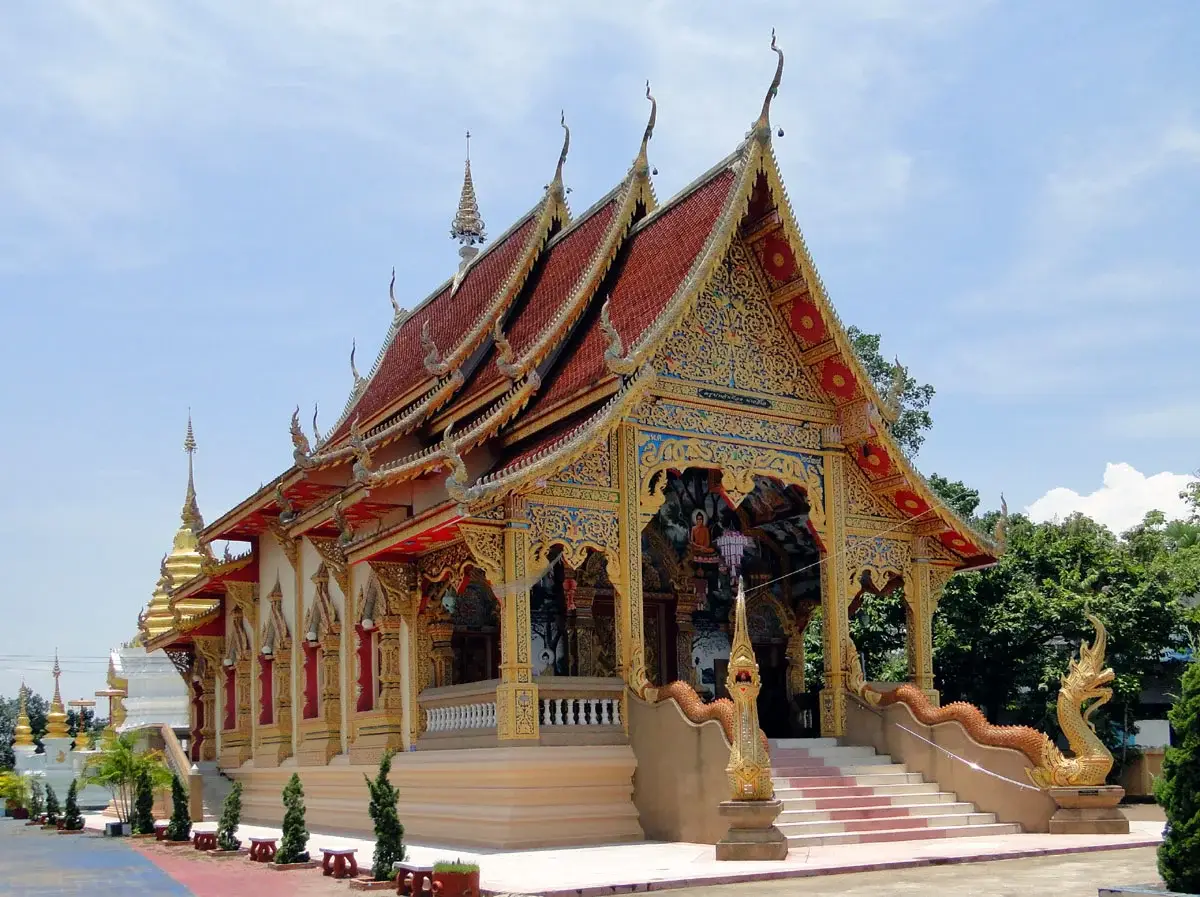
Wat Si Don Chai (San Sai)
Open Days: Daily
Opening Hours: 08.00 – 17.00
Wat Si Don Chai (San Sai) is a local Buddhist temple under the Mahanikaya monastic order, located in Moo 4, Ban Si Don Chai, San Sai Subdistrict, Saraphi District, Chiang Mai Province. The temple was officially established in 1903 and received its Wisungkhamsima in 2008. It is an important community temple for Ban Si Don Chai and reflects the relationship between temple life, village identity, Buddhist devotion, local education, and the Lanna cultural landscape of Saraphi District.
The temple name appears in several spellings, including Wat Si Don Chai and Wat Si Don Chaiy, but in the context of San Sai Subdistrict, Saraphi District, these names refer to the temple in Ban Si Don Chai, Moo 4. The word Si suggests auspiciousness and grace, while Don Chai evokes a raised or meaningful settlement with a sense of victory and stability. The name therefore carries both local and spiritual meaning.
Wat Si Don Chai should be understood primarily as a living community temple rather than a large commercial tourist attraction. Its value lies in its religious and social role for Ban Si Don Chai. The temple serves as a place for merit-making, Dhamma listening, Buddhist ceremonies, and village gatherings. Visitors will experience a local Lanna temple that remains closely connected with everyday community life.
San Sai Subdistrict in Saraphi District is an area where old villages, local temples, irrigation channels, agricultural fields, and community roads remain interconnected. Wat Si Don Chai belongs to this cultural landscape. It is not isolated from the village; rather, it stands as one of the main spiritual markers of Ban Si Don Chai.
The temple’s history is clearly traceable to 1903, the year it was officially established as a temple. During that period, community temples in Lanna were central to village life. They provided a place for monks to reside, villagers to make merit, local people to listen to Dhamma teachings, and the community to gather during important religious occasions.
Older temple records state that Wat Si Don Chai, also written as Si Don Chaiy, was initiated by Khru Ba Panya on land associated with Nai La. This detail shows that the temple grew from individual devotion and local community faith, not only from administrative recognition. Over time, the temple became part of the shared memory of Ban Si Don Chai.
The temple received its Wisungkhamsima in 2008. A Wisungkhamsima is the formal monastic boundary used for important Sangha rites, especially ordination and other ecclesiastical ceremonies. This confirms the temple’s formal role within the Buddhist monastic system and strengthens its position as a complete functioning community temple.
Older records describe the temple land as 2 rai, 3 ngan, and 22 square wah, with an additional monastic land plot of 1 rai, 3 ngan, and 5 square wah. The temple boundaries are associated with a public school, villagers’ houses, a road, and an irrigation channel. This setting reflects the typical character of a Lanna community temple embedded in the daily landscape of village life.
The temple compound includes an ordination hall, monks’ residence, sermon hall, viharn, kitchen building, chanting hall, alms hall, and community activity areas. Local municipal information also lists 1 monk, 2 novices, 1 ordination hall, 1 monks’ residence, 1 sermon hall, 1 viharn, and 1 kitchen building. This shows that Wat Si Don Chai is a compact community temple with the essential structures needed for Buddhist practice and village merit-making.
The viharn is a good place to begin a visit. Visitors should remove shoes where required, speak softly, and pay respect calmly. In a Lanna community temple, the viharn is often the familiar devotional space where villagers worship, listen to teachings, and join ceremonies across the year.
The ordination hall is especially important because of the temple’s Wisungkhamsima. It is used for formal monastic rites and should be treated as a sacred area governed by Buddhist monastic discipline. Visitors should observe the building respectfully and avoid disturbing any religious use of the space.
The temple’s important sacred objects include a gilded brick-and-plaster Buddha image in the meditation posture, described as graceful with a smiling face, as well as Phra Sing Nueng, Phra Sing Song, and Phra Sing Sam. The meditation posture symbolizes calmness and concentration, while the Phra Sing images are connected with Lanna Buddhist devotion. These sacred objects should be approached with respect.
The teak Dhamma seat and wooden seats decorated with patterns and gold leaf are also noteworthy. A Dhamma seat is not merely ceremonial furniture; it is connected with the teaching of Buddhism and the act of listening to Dhamma. Its craftsmanship reflects the respect given to Buddhist teachings in Lanna community temples.
The sermon hall is important to village life. It is used for Dhamma listening, merit-making, meetings, and community religious events. In a Lanna village temple, the sermon hall is more than a multipurpose building. It is a shared space where villagers gather, learn, cooperate, and maintain community bonds through Buddhist practice.
The kitchen building reflects the communal nature of Lanna merit-making. Temple events often rely on villagers working together to prepare food, arrange offerings, and support ceremonies. The kitchen therefore shows the practical relationship between the temple and the community that sustains it.
The monks’ residence supports the continuity of temple life. A temple with resident monks and novices can maintain daily chanting, monastic routines, merit-making, religious guidance, and ceremonies. Wat Si Don Chai therefore remains a living temple rather than only a historical place.
The succession of abbots reflects the temple’s continuity. Older records include names such as Khru Ba Panya, Phra Athikan Run, Phra Athikan Ma, Phra Athikan Si Nuan Chayuchano, Phra Thawi Khantisaro, Phra Un Ruean, and Phra Athikan Chamlong Raksitasilo. The current information provided for this article identifies Phra Khru Sila Khun Sophit Lakkhitasilo as the abbot. This continuity shows that the temple has been cared for by generations of monks and remains active in community religious life.
Wat Si Don Chai plays an important role in Ban Si Don Chai because it stands in a village that shares its name. The nearby Wat Si Don Chai School further strengthens the relationship between temple, education, and community. In many Thai villages, temple and school together form the spiritual and learning centers of local life.
The temple is connected with annual Buddhist and Lanna traditions such as Buddhist holy days, Buddhist Lent, the end of Buddhist Lent, Kathin, robe-offering ceremonies, Songkran, elder-respect customs, and Yi Peng. During these events, villagers gather at the temple to make merit, meet relatives, support monastic activities, and preserve local traditions.
The main appeal of Wat Si Don Chai for travelers is its local authenticity. Visitors can observe the viharn, ordination hall, sermon hall, monks’ residence, kitchen building, Buddha images, Phra Sing images, and teak Dhamma seat. Each element helps tell the story of the temple as the spiritual center of Ban Si Don Chai.
The atmosphere of Wat Si Don Chai is calm and local. It is suitable for travelers who want to pay respect quietly and understand a real Lanna community temple in San Sai Subdistrict. Visitors should allow around 30 to 60 minutes to walk through the temple compound, pay respect, and observe the connection between the temple and the village.
Visitors should dress modestly, speak softly, remove shoes before entering sacred buildings, avoid touching Buddha images or sacred objects unnecessarily, and avoid disturbing monks, novices, or villagers during ceremonies. If community events are taking place, visitors should keep an appropriate distance and allow space for local participants.
Getting There is possible from Chiang Mai city by traveling toward Saraphi District and continuing into San Sai Subdistrict and Ban Si Don Chai, Moo 4. Private car, rental car, or local hired transport is the most convenient option. Travelers can combine the temple with other community temples in San Sai Subdistrict.
A practical cultural route can begin at Wat Si Don Chai and continue to Wat San Sai Maha Wong, Wat Nong Baen, Wat Ton Phueng, Wat Buppharam, Wat Pak Khlong, and Wat Pa Sa. Travelers who want to extend the route can continue to Wat Phrom Wanaram, Wat Hua Dong in Khuamung Subdistrict, or temples in Yang Noeng such as Wat Saen Luang, Wat Si Photharam, Wat Weluwan, and Wat Phra Non Pa Ket Thi.
Overall, Wat Si Don Chai (San Sai) is valuable for its community history, Buddhist role, and relationship with Ban Si Don Chai. It has a clear founding year, a formal Wisungkhamsima, important temple structures, revered Buddha images, Phra Sing images, and a teak Dhamma seat. It is a meaningful stop for visitors who want to explore the quieter cultural side of Chiang Mai and the community temples of Saraphi District.
| Name | Wat Si Don Chai (San Sai) |
| Other Spellings | Wat Si Don Chaiy, Wat Si Khon Chai |
| Location | Ban Si Don Chai, Moo 4, San Sai Subdistrict, Saraphi District, Chiang Mai Province |
| Address | Moo 4, San Sai Subdistrict, Saraphi District, Chiang Mai Province 50140, Thailand |
| Temple Type | Local Buddhist temple under the Mahanikaya monastic order |
| Temple Land | 2 rai, 3 ngan, and 22 square wah, with an additional monastic land plot of 1 rai, 3 ngan, and 5 square wah |
| Highlights | Old community temple of Ban Si Don Chai with a meditation-posture Buddha image, Phra Sing Nueng, Phra Sing Song, Phra Sing Sam, teak Dhamma seat, ordination hall, viharn, and sermon hall |
| History | Officially established in 1903, with older records identifying Khru Ba Panya as an initiator of the temple on locally donated land |
| Wisungkhamsima | Granted in 2008 |
| Main Areas / Zones | Ordination hall, monks’ residence, sermon hall, viharn, kitchen building, chanting hall, alms hall, and community activity areas |
| Sacred Objects | Gilded brick-and-plaster Buddha image in the meditation posture, Phra Sing Nueng, Phra Sing Song, Phra Sing Sam, and carved teak Dhamma seat with gold-leaf decoration |
| Abbot | Phra Khru Sila Khun Sophit Lakkhitasilo |
| Resident Monks And Novices | 1 monk and 2 novices |
| Key Role | Spiritual center of Ban Si Don Chai, venue for merit-making, Dhamma listening, Lanna traditions, and the connection between temple, school, and community |
| Open Days | Daily |
| Opening Hours | 08.00 – 17.00 |
| Important Religious Activities | Buddhist holy days, Buddhist Lent, end of Buddhist Lent, Kathin, robe-offering ceremonies, Songkran, elder-respect activities, Yi Peng, and local merit-making in Ban Si Don Chai |
| Travel Information | From Chiang Mai city, travel toward Saraphi District, then continue into San Sai Subdistrict and Ban Si Don Chai, Moo 4. Private car, rental car, or local hired transport is the most convenient option |
| Current Status | Active community temple in San Sai Subdistrict and a venue for Buddhist religious activities |
| Nearby Tourist Attractions | 1. Wat San Sai Maha Wong, about 2 km 2. Wat Nong Baen, San Sai, about 3 km 3. Wat Ton Phueng, San Sai, about 4 km 4. Wat Buppharam, San Sai, about 5 km 5. Wat Pak Khlong, San Sai, about 6 km 6. Wat Pa Sa, San Sai, about 6 km |
| Nearby Restaurants | 1. Zaab Isan Khuamung, about 5 km, Tel. 098-172-0983 2. Restime Pizza Khuamung, about 5 km, Tel. 081-472-0954 3. The Khuamung, about 6 km, Tel. 083-313-3733, 062-495-0496 4. Pad Thai-Hoy Tod By Phung To Khuamung, about 6 km, Tel. 096-632-7226 5. Nai Ya Kitchen Yang Noeng Saraphi, about 8 km, Tel. 095-830-4248 |
| Nearby Accommodations | 1. 9Roomz, about 9 km, Tel. 095-446-0758 2. Ruean Thip Resort, about 10 km, Tel. 098-556-6291 3. Baan Nam Ping Riverside Village, about 11 km, Tel. 053-439040 4. Relax Garden House, about 12 km 5. Longan Tree, about 12 km |
Frequently Asked Questions (FAQ)
Q: Where is Wat Si Don Chai (San Sai) located?
A: Wat Si Don Chai is located in Moo 4, Ban Si Don Chai, San Sai Subdistrict, Saraphi District, Chiang Mai Province 50140. It is a local Buddhist temple under the Mahanikaya monastic order.
Q: When was Wat Si Don Chai officially established?
A: Wat Si Don Chai was officially established in 1903 and received its Wisungkhamsima in 2008.
Q: What sacred objects are important at Wat Si Don Chai?
A: Important sacred objects include a gilded brick-and-plaster Buddha image in the meditation posture, Phra Sing Nueng, Phra Sing Song, Phra Sing Sam, and a carved teak Dhamma seat decorated with gold leaf.
Q: What can visitors see inside Wat Si Don Chai?
A: Visitors can see the ordination hall, viharn, sermon hall, monks’ residence, kitchen building, chanting hall, alms hall, Buddha images, Phra Sing images, and the local community temple atmosphere.
Q: Who is the abbot of Wat Si Don Chai?
A: The abbot of Wat Si Don Chai is Phra Khru Sila Khun Sophit Lakkhitasilo.
Q: What are the opening hours of Wat Si Don Chai?
A: Wat Si Don Chai is open daily from 08.00 to 17.00.
Q: What kind of travelers will enjoy Wat Si Don Chai?
A: Wat Si Don Chai is suitable for travelers interested in Lanna community temples, old temples in San Sai Subdistrict, Ban Si Don Chai history, and quiet cultural routes in Saraphi District.
Q: What nearby places can be visited with Wat Si Don Chai?
A: Nearby places include Wat San Sai Maha Wong, Wat Nong Baen, Wat Ton Phueng, Wat Buppharam, Wat Pak Khlong, Wat Pa Sa, and Wat Phrom Wanaram.
 Category: ●Places of Worship
 Group: ●Temple
Last Update : 5 DayAgo
 Last Update : 5 DayAgo
 Click to Access the Navigation Map GPS
Wat Si Don Chai (San Sai) Map
Recommend

 Muang Chiang Mai(121)Chom Thong(47)Mae Chaem(25)Chiang Dao(33)Doi Saket(68)Mae Taeng(85)Mae Rim(69)Samoeng(29)Fang(71)Mae Ai(59)Phrao(70)San Pa Tong(103)San Kamphaeng(66)San Sai(73)Hang Dong(73)Hot(32)Doi Tao(22)Omkoi(11)Saraphi(74)Wiang Haeng(15)Chai Prakan(28)Mae Wang(32)Mae On(22)Doi Lo(33)Galyani Vadhana(1)


