
lovethailand home >North Travel Attractions >Chiang Mai Travel Attractions >Saraphi >San Sai > Wat Ton Phueng (San Sai)
TL;DR: Wat Ton Phueng (San Sai) is located at Ban Ton Phueng, San Sai Subdistrict, Saraphi District, Chiang Mai Province. Highlights include Old community temple of Ban Ton Phueng, named after the story of bees nesting in a bodhi tree within the temple area.

Wat Ton Phueng (San Sai)
Operating day: Daily
Operating time: 08.00 - 17.00
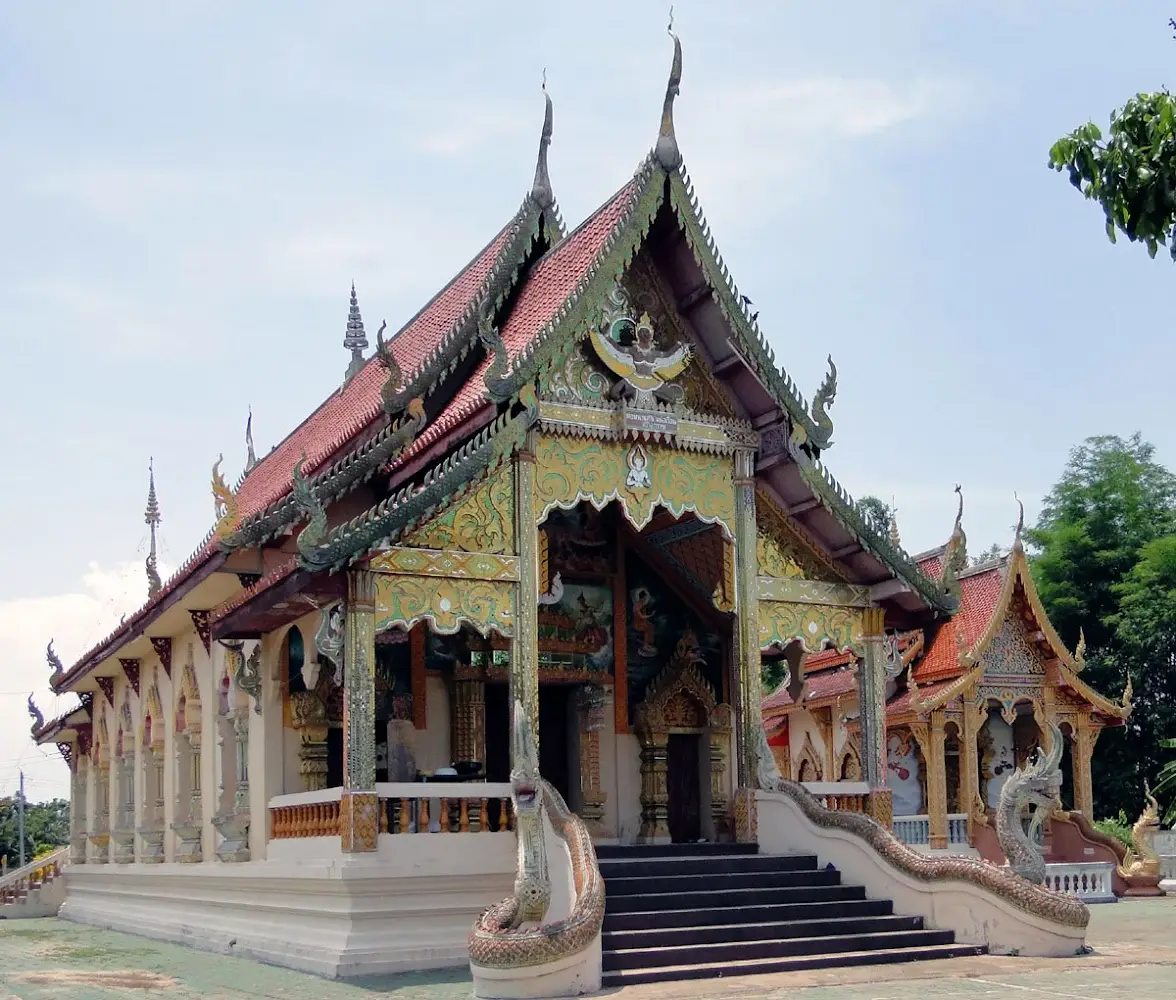
Wat Ton Phueng (San Sai) is a local Buddhist temple under the Mahanikaya monastic order, located in Ban Ton Phueng, San Sai Subdistrict, Saraphi District, Chiang Mai Province. The temple is one of the old community temples in the San Sai area of Saraphi. It was established in 1872 and received its Wisungkhamsima in 2002. The current abbot is Phra Athikan Saifon Kalyanathammo. Wat Ton Phueng is therefore a meaningful religious site with historical, community, and cultural value, closely connected with the identity of Ban Ton Phueng and the wider San Sai community.
The charm of Wat Ton Phueng does not come from being a large tourist temple. Its value lies in its role as a living community temple. Ban Ton Phueng is directly connected with the temple, and the name of the village is rooted in the story of bees making their nests in a bodhi tree within the temple area. This makes the temple more than a place of worship. It is also a landmark of local memory and identity.
San Sai Subdistrict in Saraphi District is a semi-rural community area where old villages, agricultural land, irrigation channels, and local temples remain part of everyday life. Wat Ton Phueng belongs to this cultural landscape. It connects village life, Buddhist faith, local history, and community memory in one place.
The history of Ban Ton Phueng helps explain the meaning of the temple. The area was once associated with the name Pa Phaeng because many phaeng trees grew there. Later, many bees came to make nests in a bodhi tree in the temple area. The village then became known as Ban Ton Phueng, following the name of Wat Ton Phueng. The name therefore reflects both the natural environment and the relationship between the temple and the community.
Wat Ton Phueng was founded in 1872. During that period, many Lanna communities developed around temples that served as the spiritual and social centers of village life. A temple was not only a religious building. It was also a place for monks to reside, villagers to make merit, people to listen to Dhamma teachings, and the community to gather during important Buddhist occasions.
The temple received its Wisungkhamsima in 2002. A Wisungkhamsima is the formally designated monastic boundary used for important Sangha rites, especially ordination and other ecclesiastical ceremonies. Receiving this boundary strengthened the temple’s formal religious role and confirmed its importance as a functioning Buddhist temple in Saraphi District.
The main temple structures include an ordination hall, monks’ residences, sermon hall, viharn, kitchen building, and bell tower. The ordination hall is used for formal monastic rites. The sermon hall supports Dhamma listening, merit-making, and community gatherings. The monks’ residences house the monastic community. The viharn is used for worship and devotional activities. The kitchen building reflects the communal nature of Lanna temple festivals, where villagers often prepare food and offerings together. The bell tower marks the rhythm of temple life and local religious activities.
The viharn is one of the most important places to visit respectfully. In a Lanna community temple, the viharn is the familiar devotional space where villagers worship, listen to teachings, and join ceremonies. Visitors should enter calmly, remove shoes where required, speak softly, and avoid touching Buddha images or sacred objects unnecessarily.
The ordination hall is important because of the temple’s Wisungkhamsima. This building is connected with formal Sangha rites and the continuity of Buddhism within the community. It should be understood not merely as an architectural feature but as a sacred space with a clear monastic function.
The sermon hall and kitchen building reveal the community character of Wat Ton Phueng. Merit-making in Lanna villages often involves collective work by villagers: preparing food, arranging offerings, cleaning the temple compound, and joining Dhamma activities. These spaces show that the temple is not only a ritual site but also a social center of Ban Ton Phueng.
The bell tower adds another layer to the temple atmosphere. In a village temple, the sound of the bell is connected with time, monastic routine, religious observances, and community gatherings. It forms part of the living soundscape of a Buddhist community temple.
The main identity of Wat Ton Phueng comes from the story of the bodhi tree and the bees. The bodhi tree is a powerful Buddhist symbol because of its connection with the Buddha’s enlightenment. Bees suggest fertility, diligence, and collective life. The temple’s name therefore preserves a simple but meaningful story that links nature, Buddhism, and village identity.
The temple has a long sequence of known abbots. The first was Kantha, followed by Phra Athikan Inta, Phra Athikan Kham Pan, Phra Athikan Kham, Phra Athikan Khoei from 1950 to 1957, Phra Athikan La from 1957 to 1965, Phra Athikan Tan from 1965 to 1970, Phra Athikan Bunma Chai Langkaro from 1970 to 1973, Phra Athikan Duangthip Aruno from 1973 to 1977, and Phra Athikan Saifon Kalyanathammo from 1977 onward. This succession shows the continuity of temple leadership across generations.
Current Kathin information lists Wat Ton Phueng as an active local temple with 5 resident monks, led by Phra Athikan Saifon Kalyanathammo. This confirms that the temple continues to function as a living Buddhist community temple, rather than being an abandoned site or a purely historical landmark.
Wat Ton Phueng plays an important role in Ban Ton Phueng community life. It is a place for Buddhist holy day observances, Buddhist Lent, the end of Buddhist Lent, Kathin, robe-offering ceremonies, and local merit-making. It also brings together villagers of different generations through religious activities and community events.
The temple is suitable for travelers who prefer quiet community temples and want to see Saraphi beyond the more frequently visited routes. It is best for those interested in Lanna village culture, local Buddhist temples, community history, and calm cultural travel.
Visitors should allow around 30 to 60 minutes to pay respect, walk around the temple compound, and observe the main structures. Morning and late afternoon are generally more comfortable for walking. During Buddhist holy days or temple events, visitors should behave especially respectfully because local residents may be participating in merit-making activities.
Respectful conduct is important because Wat Ton Phueng remains a living temple. Visitors should dress modestly, speak softly, remove shoes before entering required sacred buildings, avoid touching sacred objects unnecessarily, and keep an appropriate distance if monks or villagers are conducting ceremonies.
Getting There is possible from Chiang Mai city by traveling toward Saraphi District and continuing into San Sai Subdistrict and Ban Ton Phueng. Private car, rental car, or local hired transport is the most convenient option. The temple can be combined with other nearby community temples in San Sai and Saraphi.
A practical cultural route can begin at Wat Ton Phueng and continue to Wat Si Don Chai, Wat San Sai Maha Wong, Wat Pak Khlong, Wat Pa Sa, Wat Nong Baen, and Wat Hua Dong in Khuamung Subdistrict. Travelers who want to extend the trip can continue toward other Saraphi temples and Wiang Kum Kam. This route helps visitors understand Saraphi through old temples, villages, irrigation channels, agricultural landscapes, and local Buddhist traditions.
Overall, Wat Ton Phueng is a meaningful temple for travelers interested in the quieter cultural side of Chiang Mai. It preserves a clear founding date, a distinctive name origin, a long line of abbots, important community temple structures, and an active monastic presence. It is a good example of how a local Lanna temple can preserve both Buddhist faith and village memory within one modest but culturally rich space.
| Name | Wat Ton Phueng (San Sai) |
| Location | Ban Ton Phueng, San Sai Subdistrict, Saraphi District, Chiang Mai Province |
| Address | Moo 4, San Sai Subdistrict, Saraphi District, Chiang Mai Province 50140, Thailand |
| Temple Type | Local Buddhist temple under the Mahanikaya monastic order |
| Highlights | Old community temple of Ban Ton Phueng, named after the story of bees nesting in a bodhi tree within the temple area |
| History | Established in 1872 and granted Wisungkhamsima in 2002 |
| Name Origin | Named after bees that made nests in a bodhi tree in the temple area, which also influenced the name Ban Ton Phueng |
| Main Areas / Zones | Ordination hall, monks’ residences, sermon hall, viharn, kitchen building, and bell tower |
| Abbot | Phra Athikan Saifon Kalyanathammo |
| Resident Monks | 5 monks |
| Important Religious Activities | Kathin, robe-offering ceremonies, Buddhist holy days, Buddhist Lent, end of Buddhist Lent, and local merit-making in Ban Ton Phueng |
| Travel Information | From Chiang Mai city, travel toward Saraphi District, then continue into San Sai Subdistrict and Ban Ton Phueng. Private car, rental car, or local hired transport is the most convenient option |
| Current Status | Active community temple in San Sai Subdistrict with ongoing Buddhist activities |
| Nearby Tourist Attractions | 1. Wat Si Don Chai, San Sai, about 2 km 2. Wat San Sai Maha Wong, about 3 km 3. Wat Pak Khlong, San Sai, about 4 km 4. Wat Pa Sa, San Sai, about 5 km 5. Wat Nong Baen, San Sai, about 6 km 6. Wat Hua Dong, Khuamung, about 7 km |
| Nearby Restaurants | 1. Pad Thai Klai Chan, Ploen Place Hang Dong Branch, about 2 km 2. Zaab Isan Khuamung, about 4 km, Tel. 098-172-0983 3. Restime Pizza Khuamung, about 4 km, Tel. 081-472-0954 4. The Khuamung, about 5 km, Tel. 083-313-3733, 062-495-0496 5. Pad Thai-Hoy Tod By Phung To Khuamung, about 5 km, Tel. 096-632-7226 |
| Nearby Accommodations | 1. 9Roomz, about 10 km, Tel. 095-446-0758 2. Ruean Thip Resort, about 11 km, Tel. 098-556-6291 3. Baan Nam Ping Riverside Village, about 12 km, Tel. 053-439040 4. Relax Garden House, about 13 km, Tel. 090-326-6108 5. Longan Tree, about 13 km |
Frequently Asked Questions (FAQ)
Q: Where is Wat Ton Phueng located?
A: Wat Ton Phueng is located in Ban Ton Phueng, San Sai Subdistrict, Saraphi District, Chiang Mai Province.
Q: When was Wat Ton Phueng established?
A: Wat Ton Phueng was established in 1872 and received its Wisungkhamsima in 2002.
Q: What is the origin of the name Wat Ton Phueng?
A: The name comes from a local story that many bees nested in a bodhi tree in the temple area. This also influenced the name Ban Ton Phueng.
Q: What can visitors see at Wat Ton Phueng?
A: Visitors can see the ordination hall, monks’ residences, sermon hall, viharn, kitchen building, bell tower, and the quiet atmosphere of a Lanna community temple.
Q: Who is the abbot of Wat Ton Phueng?
A: The abbot is Phra Athikan Saifon Kalyanathammo.
Q: What kind of travelers will enjoy Wat Ton Phueng?
A: Wat Ton Phueng is best for travelers interested in quiet community temples, Lanna village culture, local Buddhist history, and cultural routes through Saraphi District.
Q: What nearby places can be visited with Wat Ton Phueng?
A: Nearby places include Wat Si Don Chai, Wat San Sai Maha Wong, Wat Pak Khlong, Wat Pa Sa, Wat Nong Baen, Wat Hua Dong, and other cultural sites in Saraphi District.
 Category: ●Places of Worship
 Group: ●Temple
Last Update : 4 DayAgo
 Last Update : 4 DayAgo
 Click to Access the Navigation Map GPS
Wat Ton Phueng (San Sai) Map
Recommend

 Muang Chiang Mai(121)Chom Thong(47)Mae Chaem(25)Chiang Dao(33)Doi Saket(68)Mae Taeng(85)Mae Rim(69)Samoeng(29)Fang(71)Mae Ai(59)Phrao(70)San Pa Tong(103)San Kamphaeng(66)San Sai(73)Hang Dong(73)Hot(32)Doi Tao(22)Omkoi(11)Saraphi(74)Wiang Haeng(15)Chai Prakan(28)Mae Wang(32)Mae On(22)Doi Lo(33)Galyani Vadhana(1)


