
lovethailand home >North Travel Attractions >Chiang Mai Travel Attractions >Saraphi >Tha Wang Tan > Wat Pa Ngio
TL;DR: Wat Pa Ngio is located at Ban Pa Ngio, Village No. 5, Tha Wang Tan Subdistrict, Saraphi District, Chiang Mai Province, open Daily, hours 08.00 – 17.00.

Wat Pa Ngio
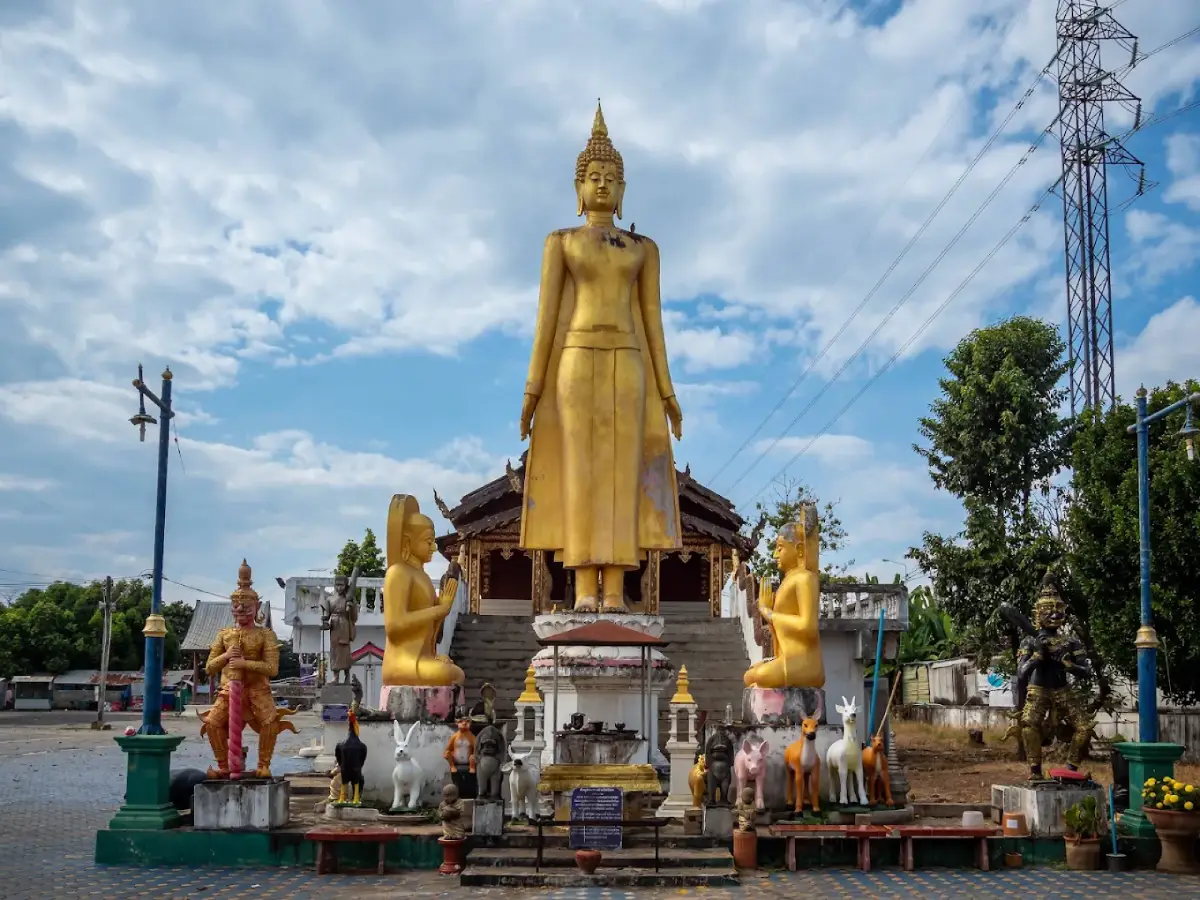
Open Days: Daily
Opening Hours: 08.00 – 17.00
Wat Pa Ngio is located in Ban Pa Ngio, Village No. 5, Tha Wang Tan Subdistrict, Saraphi District, Chiang Mai Province 50140. It is a local Buddhist temple under the Mahanikaya sect. The temple was officially established in B.E. 2435 and received its royal consecrated boundary in B.E. 2541. Wat Pa Ngio is an important community temple of Ban Pa Ngio and one of the living Buddhist temples of Tha Wang Tan, a subdistrict closely connected with the cultural landscape of Wiang Kum Kam and the historical development of Lanna.
The temple was formerly known as Wat Si Bun Rueang. Its foundation story is closely associated with Phra Khru Yannarangsi, also known locally as Tu Luang Pit Ta of Wat Chai Mongkhon Pa Kluai, who played a leading role in the temple’s early construction. The temple was established through the combined faith of Mae Chao Somna, Chao Kaeo Ping Mueang, Pho Noi Intha, Pho Noi Yana, Pho Noi Mano, and local lay supporters. In the early stage, about 25 households formed the core group of supporters. This gives Wat Pa Ngio a strong community-based identity.
The name Wat Pa Ngio is rooted in the village landscape. Many northern Thai temples take their names from trees, water sources, local features, or community memory. Pa Ngio refers to the village of Ban Pa Ngio and reflects the relationship between the temple and its surrounding settlement. This makes the temple not only a Buddhist site but also a cultural marker of the local community.
The relationship between Wat Pa Ngio and Wat Chai Mongkhon Pa Kluai is also important. It shows how temples in Tha Wang Tan are linked through monks, teachers, local faith, and community support. A village temple rarely exists in isolation. It belongs to a network of temples, religious teachers, donors, festivals, and shared cultural memory. Wat Pa Ngio therefore fits naturally into a broader temple route that includes Wat Pa Kluai, Wat Ban Klang, Wat Buak Khrok Nuea, Wat Buak Khrok Tai, Wat Chedi Liam, and Wat Chang Kham.
Wat Pa Ngio was officially established in B.E. 2435 and received its royal consecrated boundary in B.E. 2541. In Thai Buddhism, a consecrated boundary is important because it designates the formal area for Sangha rites. This means the temple is not only a place for lay worship but also a recognized Buddhist monastery capable of supporting formal monastic activities within the Mahanikaya tradition.
Tha Wang Tan Subdistrict is an important part of Saraphi District, located near Chiang Mai city. It covers about 13.63 square kilometers, or approximately 8,614 rai, and consists of 13 villages: Ban Chedi Liam, Ban Pa Poe, Ban Klang, Ban Pong, Ban Pa Ngio, Ban Pa Sao, Ban Buak Hua Chang, Ban Buak Khrok Nuea, Ban Buak Khrok Tai, Ban San Pa Kwao, Ban Chang Kham, Ban Hang Khwae, and Ban Pa Kluai. Wat Pa Ngio stands within this cultural landscape of village temples, roads, homes, irrigation features, markets, and historical routes linked with Wiang Kum Kam.
The wider setting gives Wat Pa Ngio additional meaning. Tha Wang Tan is associated with Wiang Kum Kam, the ancient city linked with King Mangrai and early Lanna history. Major heritage sites such as Wat Chedi Liam, Wat Chang Kham, Wat That Khao, and the Wiang Kum Kam Information Center represent the archaeological side of the subdistrict. Wat Pa Ngio represents the living village side: a temple still used for Buddhist ceremonies, community gatherings, merit-making, and local traditions.
Ban Pa Ngio is a community where temple life remains part of everyday culture. The temple supports Buddhist holy days, Kathin, robe-offering events, sermons, memorial merit-making, and annual community ceremonies. It provides a shared space where monks, elders, families, and young residents meet through religious and cultural activities. This role is central to understanding Wat Pa Ngio as a living institution rather than only a historical name.
The current abbot of Wat Pa Ngio is Phra Palat Piya Dhammavaro. The temple continues to have resident monks, which confirms its ongoing religious function. In a village temple, the abbot’s role extends beyond ritual leadership. It includes caring for monastic life, coordinating merit-making activities, maintaining temple spaces, preserving religious practice, and sustaining the relationship between the temple and local residents.
The temple has been overseen by several generations of monks. Local history records mention 13 abbots up to the present period. Phra Khru Wichian Panya, also known as Khru Ba Than Chai, was associated with the temple before later taking on an advisory role. Phra Athikan Narong Kunasamvaro, originally from Wat Mae Salap in Chomphu Subdistrict, Saraphi District, was invited to serve as acting abbot on March 28, B.E. 2531 and was appointed abbot on June 28, B.E. 2535. These details show the continuity of monastic leadership and community support over time.
Wat Pa Ngio is best understood as a quiet Lanna community temple. Its value does not come from the scale of a major tourist attraction, but from its relationship with Ban Pa Ngio, its foundation by local faith, and its continuing religious use. Visitors should begin by paying respect in the temple’s worship area, then observe the temple grounds and the surrounding village atmosphere.
Publicly available details about the temple’s individual buildings are limited, so the article preserves only verified information. The temple is active, has resident monks, hosts Kathin activity, and functions as a community Buddhist site. It has worship areas, spaces for Buddhist ceremonies, temple grounds for village activities, and areas where residents gather during merit-making events.
One of the temple’s strongest features is its community origin. The early support of around 25 households shows how village temples were often created from collective faith and shared labor. For local residents, a temple is not only a place to worship. It is where people gather, learn manners, practice generosity, support monks, and build relationships across generations.
Important religious activities associated with Wat Pa Ngio include Kathin, robe-offering events, Buddhist Lent, the end of Lent, Buddhist holy days, memorial merit-making, the Phra That bathing tradition, and the Atthami Bucha tradition of Ban Pa Ngio. The Atthami Bucha tradition is especially important because local documents identify it as a distinctive annual tradition of Ban Pa Ngio and Tha Wang Tan. It is held on the eighth waning day of the sixth lunar month and includes the bathing of the temple’s sacred relic monument.
Atthami Bucha is connected with the Buddhist remembrance of events after the Buddha’s passing and the cremation of the Buddha’s body. The continuing observance of this tradition at Ban Pa Ngio makes the temple a meaningful cultural site. It allows younger generations to learn about Buddhist history, local Lanna tradition, temple etiquette, communal preparation, and shared merit-making.
Tha Wang Tan Subdistrict also preserves other traditions such as Songkran, water-pouring ceremonies for elders, support-pole processions, sand-carrying rituals at temples, Yi Peng or Loy Krathong, and activities related to Wiang Kum Kam. Wat Pa Ngio belongs to this wider cultural calendar, in which each village temple helps sustain Buddhist practice and community identity.
For Ban Pa Ngio, the temple remains a spiritual and social center. Residents come to make merit, listen to sermons, offer food to monks, join Kathin and robe-offering events, and take part in local ceremonies. On ordinary days, the temple offers a quiet setting for worship. During important events, it becomes a shared community space where residents prepare food, offerings, and ceremonial areas together.
Wat Pa Ngio is suitable for travelers who appreciate quiet community temples and want to understand the living cultural side of Saraphi. Visitors who have already seen the major Wiang Kum Kam monuments will find that Wat Pa Ngio offers a different perspective: not ancient ruins, but an active village temple shaped by local devotion, monastic leadership, and annual traditions.
A meaningful visit to Wat Pa Ngio should be slow and respectful. Visitors can pay respect, make merit, observe the temple grounds, and learn how the temple connects with Ban Pa Ngio. During Atthami Bucha or other temple festivals, visitors may see stronger community participation, but they should allow space for local worshippers and avoid disturbing ceremonies.
A good cultural route can combine Wat Pa Ngio with Wat Ban Klang, Wat Pa Kluai, Wat Buak Khrok Nuea, Wat Buak Khrok Tai, the Wiang Kum Kam Information Center, Wat Chedi Liam, Wat Chang Kham, and Wat That Khao. A half-day route can focus on Wat Pa Ngio and nearby village temples before entering Wiang Kum Kam. A full-day route can include the Chiang Mai–Lamphun rubber tree road, local restaurants in Tha Wang Tan, and accommodations in Saraphi or the Wiang Kum Kam area.
Getting There is easiest by private car, rental car, motorbike, taxi, or ride-hailing service from Chiang Mai city. Travel south toward Saraphi District, enter Tha Wang Tan Subdistrict, and continue to Ban Pa Ngio, Village No. 5. Local roads connect with the third ring road, Sai Ko Klang Road, and the Wiang Kum Kam route. Travelers planning to see several temples should arrange transport for several hours.
Visitors without their own vehicle should arrange a return trip or hire transport for a half-day itinerary. The temples and historical sites in Tha Wang Tan are spread across village areas. Although many are not far apart, traveling by vehicle saves time and is more practical during the hotter parts of the day.
The best time to visit is in the morning or late afternoon, when the weather is more comfortable and the temple atmosphere is peaceful. Visitors interested in local culture may come during Buddhist holy days, Kathin, robe-offering events, or Atthami Bucha. Those seeking a quiet visit should choose a weekday outside major ceremonies.
Visitors should follow standard Thai temple etiquette: dress modestly, speak softly, remove shoes where required, do not enter private monastic areas, avoid disturbing ceremonies, do not touch sacred objects unnecessarily, and ask permission before photographing people closely. Wat Pa Ngio is an active community temple, so respectful behavior is essential.
In summary, Wat Pa Ngio is a local Mahanikaya temple in Ban Pa Ngio, Tha Wang Tan Subdistrict, Saraphi District, Chiang Mai. Officially established in B.E. 2435 and granted its royal consecrated boundary in B.E. 2541, it was formerly known as Wat Si Bun Rueang and was founded through the faith of Phra Khru Yannarangsi and local supporters. Today, with Phra Palat Piya Dhammavaro as abbot, the temple remains a living Buddhist center of Ban Pa Ngio, known for its community identity, annual merit-making, and distinctive Atthami Bucha tradition. It is a meaningful destination for travelers who want to understand local Lanna Buddhism, village temple life, and the quieter cultural side of Tha Wang Tan near Wiang Kum Kam.
| Name | Wat Pa Ngio |
| Former Name | Wat Si Bun Rueang |
| Location | Ban Pa Ngio, Village No. 5, Tha Wang Tan Subdistrict, Saraphi District, Chiang Mai Province |
| Address | Ban Pa Ngio, Village No. 5, Tha Wang Tan Subdistrict, Saraphi District, Chiang Mai 50140, Thailand |
| Temple Type | Local Buddhist temple under the Mahanikaya sect |
| Temple Code | 350191007 |
| Highlights | Community temple of Ban Pa Ngio, formerly Wat Si Bun Rueang, founded through the faith of Phra Khru Yannarangsi and local supporters from about 25 households |
| History | Officially established as a temple in B.E. 2435 and granted its royal consecrated boundary in B.E. 2541 |
| Key Figures | Phra Khru Yannarangsi, also known as Tu Luang Pit Ta Mae Chao Somna Chao Kaeo Ping Mueang Pho Noi Intha Pho Noi Yana Pho Noi Mano Phra Athikan Narong Kunasamvaro Phra Khru Wichian Panya, also known as Khru Ba Than Chai |
| Community Context | Located in Ban Pa Ngio, one of the 13 villages of Tha Wang Tan Subdistrict, a community area connected with homes, village roads, local markets, and the nearby Wiang Kum Kam cultural route |
| Distinctive Features | A Lanna village temple that preserves local memory through its name, community faith, monastic networks in Tha Wang Tan, and the distinctive Atthami Bucha tradition of Ban Pa Ngio |
| Important Zones And Activity Areas | Worship Area And Buddhist Activity Space Temple Grounds For Merit-Making And Community Events Community Gathering Area For Buddhist Holy Days, Kathin, Robe-Offering Events, And Local Traditions Community Temple Area Linked With Tha Wang Tan And Wiang Kum Kam Routes |
| Important Ceremonies | Atthami Bucha, Phra That bathing tradition, Kathin, robe-offering events, Buddhist Lent, the end of Lent, Buddhist holy days, memorial merit-making, and annual village ceremonies |
| Travel Information | Accessible from Chiang Mai city toward Saraphi District, then Tha Wang Tan Subdistrict and Ban Pa Ngio; best reached by private car, rental car, motorbike, taxi, or ride-hailing service |
| Current Status | Open as an active community temple used for Buddhist ceremonies, merit-making, Kathin, and local village activities |
| Open Days | Daily |
| Opening Hours | 08.00 – 17.00 |
| Abbot / Caretaker | Phra Palat Piya Dhammavaro |
| Nearby Tourist Attractions | 1. Wat Ban Klang, about 2 km 2. Wat Pa Kluai, about 2 km 3. Wat Buak Khrok Tai, about 4 km 4. Wat Buak Khrok Nuea, about 4 km 5. Wiang Kum Kam Information Center, about 5 km 6. Wat Chedi Liam, about 5 km 7. Wat Chang Kham, about 6 km 8. Chiang Mai–Lamphun Rubber Tree Road, about 7 km |
| Nearby Restaurants | 1. Pao Pao Khao Man Kai Tha Wang Tan Ban Pa Ngio, about 1 km, Tel. 098-854-8724 2. Krua Sa Pa Tha Wang Tan, about 2 km, Tel. 080-229-8450 3. Silky Cafe Ban Klang Tha Wang Tan, about 3 km, Tel. 091-856-6624, 099-541-5190, 064-267-0523 4. Fresh Coffee Tha Wang Tan, about 3 km, Tel. 083-515-8180 5. Aunt Ra Duck Noodles Tha Wang Tan Saraphi, about 4 km, Tel. 083-197-0230 6. Beefruit Tha Wang Tan, about 5 km, Tel. 089-757-1117 |
| Nearby Accommodations | 1. Tassana Garden Saraphi Chiangmai, about 4 km, Tel. 081-441-6644 2. Golden Teak Home Resort, about 4 km, Tel. 084-950-6414 3. De Wiangkumkam, about 5 km, Tel. 094-471-0117 4. Wiang Kum Kam Resort, about 5.5 km, Tel. 097-949-4227 5. Maraya Hotel & Resort, about 6 km, Tel. 053-812-121 6. Chiang Mai Garden Bungalows, about 7 km, Tel. 083-272-6681 |
Frequently Asked Questions (FAQ)
Q: Where is Wat Pa Ngio located?
A: Wat Pa Ngio is located in Ban Pa Ngio, Village No. 5, Tha Wang Tan Subdistrict, Saraphi District, Chiang Mai Province 50140.
Q: What are the opening days and hours of Wat Pa Ngio?
A: The temple is open daily from 08.00 to 17.00.
Q: What was the former name of Wat Pa Ngio?
A: Wat Pa Ngio was formerly known as Wat Si Bun Rueang.
Q: Why is Wat Pa Ngio historically important?
A: Wat Pa Ngio was officially established in B.E. 2435 and received its royal consecrated boundary in B.E. 2541. It has long served as a community temple of Ban Pa Ngio.
Q: Who is the abbot of Wat Pa Ngio?
A: The abbot of Wat Pa Ngio is Phra Palat Piya Dhammavaro.
Q: What important ceremonies are associated with Wat Pa Ngio?
A: Important ceremonies include Atthami Bucha, the Phra That bathing tradition, Kathin, robe-offering events, Buddhist Lent, the end of Lent, Buddhist holy days, memorial merit-making, and annual village ceremonies.
Q: What kind of travelers is Wat Pa Ngio suitable for?
A: The temple is suitable for travelers interested in quiet Lanna community temples, local Tha Wang Tan history, Ban Pa Ngio traditions, and temple routes near Wiang Kum Kam.
Q: What nearby places can be visited with Wat Pa Ngio?
A: Nearby places include Wat Ban Klang, Wat Pa Kluai, Wat Buak Khrok Nuea, Wat Buak Khrok Tai, the Wiang Kum Kam Information Center, Wat Chedi Liam, Wat Chang Kham, and the Chiang Mai–Lamphun rubber tree road.
 Category: ●Places of Worship
 Group: ●Temple
Last Update : 3 DayAgo
 Last Update : 3 DayAgo
 Click to Access the Navigation Map GPS
Wat Pa Ngio Map
Recommend

 Muang Chiang Mai(121)Chom Thong(47)Mae Chaem(25)Chiang Dao(33)Doi Saket(68)Mae Taeng(85)Mae Rim(69)Samoeng(29)Fang(71)Mae Ai(59)Phrao(70)San Pa Tong(103)San Kamphaeng(66)San Sai(73)Hang Dong(73)Hot(32)Doi Tao(22)Omkoi(11)Saraphi(74)Wiang Haeng(15)Chai Prakan(28)Mae Wang(32)Mae On(22)Doi Lo(34)Galyani Vadhana(1)


