
lovethailand home >North Travel Attractions >Chiang Mai Travel Attractions >Saraphi >Tha Wang Tan > Wat Chedi Liam
TL;DR: Wat Chedi Liam is located at Ban Chedi Liam, Village No. 1, Tha Wang Tan Subdistrict, Saraphi District, Chiang Mai Province, open Daily, hours 08.00 – 17.00.

Wat Chedi Liam
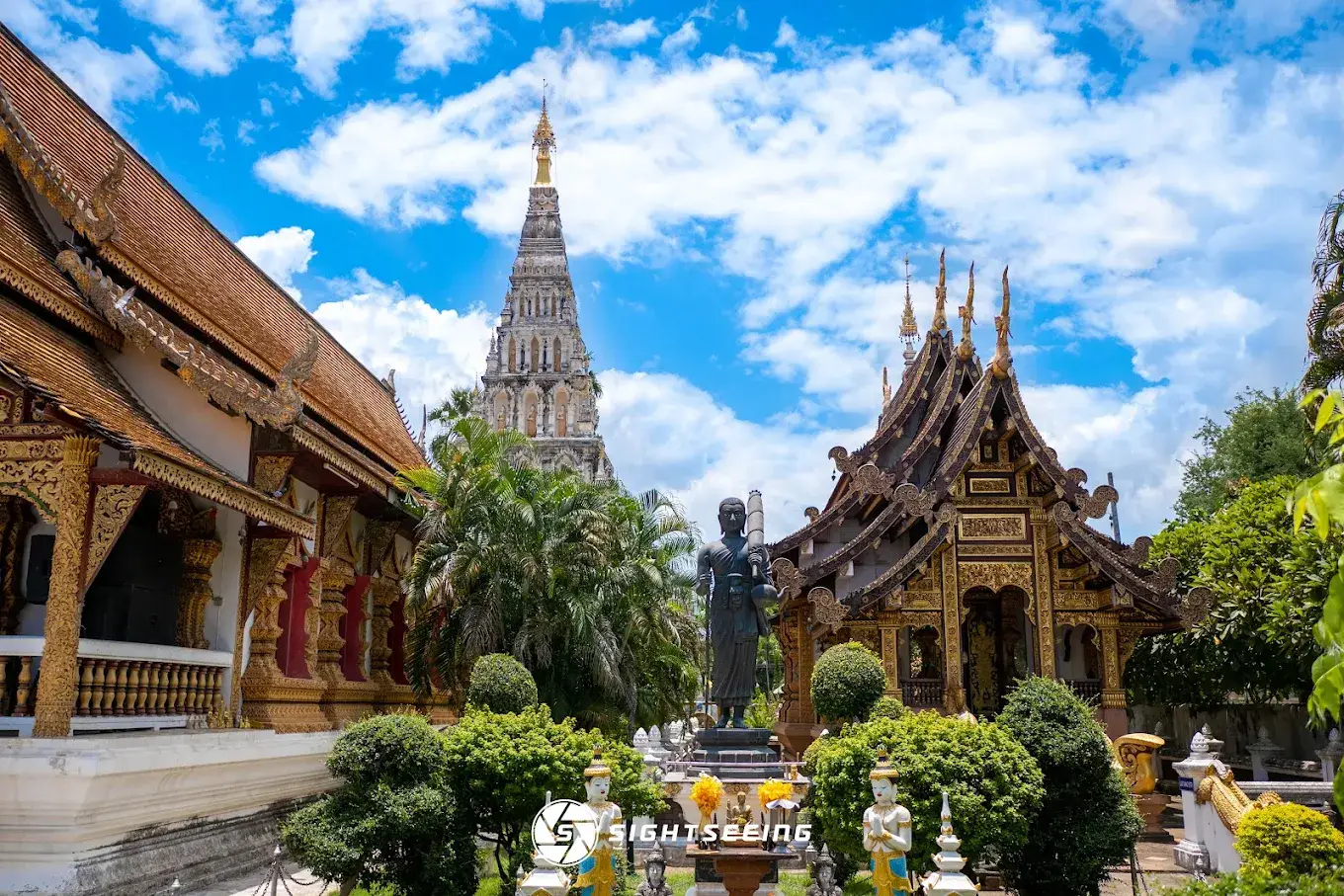
Open Days: Daily
Opening Hours: 08.00 – 17.00
Wat Chedi Liam is located at No. 172, Village No. 1, Ban Chedi Liam, Tha Wang Tan Subdistrict, Saraphi District, Chiang Mai Province 50140. It is a local Buddhist temple under the Mahanikaya sect, covering 6 rai, 1 ngan, and 76 square wah. The temple received its royal consecrated boundary in B.E. 2453 and is one of the most important religious and historical landmarks in Wiang Kum Kam, the ancient city associated with King Mangrai and the early formation of Lanna.
Wat Chedi Liam is also known as Wat Ku Kham. In the Lanna context, “ku” refers to a chedi or stupa, while “kham” means gold. The name therefore suggests a golden sacred monument. Over time, the temple became widely known as Wat Chedi Liam, or the temple of the square chedi, because its principal chedi has a striking square form rising through 5 receding tiers. This distinctive profile makes it one of the most recognizable monuments in the Wiang Kum Kam archaeological area.
The temple is closely tied to Wiang Kum Kam, the ancient city founded by King Mangrai in the lowland area near the Ping River before the establishment of Chiang Mai in its present location. Local chronicles describe the construction of Ku Kham Chedi in B.E. 1831, during the early period of Wiang Kum Kam. Earth from ponds and waterworks near the royal residence was used to make bricks for the chedi. This links the monument not only with Buddhist devotion but also with the physical making of the ancient city.
Wiang Kum Kam is essential for understanding the early history of Chiang Mai. It was once a political, religious, and settlement center before environmental conditions and flooding reduced its role. Wat Chedi Liam stands out among the monuments of the ancient city because its great chedi remains clearly visible and continues to function within an active temple compound. It is therefore both a living temple and an important archaeological site.
The main highlight of the temple is Ku Kham Chedi. Architecturally, it is a square prasat-style chedi rising in 5 receding tiers. Its core form shows strong Hariphunchai influence and is often compared with Ku Kut Chedi at Wat Chamadevi in Lamphun. This relationship shows how early Lanna architecture did not emerge in isolation. It developed through the adaptation of older artistic traditions from Hariphunchai into the new political and cultural world of King Mangrai.
The chedi has a large square base, brick-and-lime construction, and laterite reinforcement in parts of the lower structure. The monument is hollow in character and was once understood as having an interior passage. Around the exterior, Buddha images were placed in niches on each side. The 5 tiers originally held 60 Buddha images. During a major restoration in the late reign of King Rama V, 4 more Buddha-image niches were added at the base, bringing the total to 64, corresponding with the age of Luang Yonakan Wichit, the patron of the restoration.
The restoration by Luang Yonakan Wichit played a major role in shaping the appearance of Wat Chedi Liam today. He was a Burmese-Mon merchant and patron active in Chiang Mai during the late 19th and early 20th centuries. His restoration work brought Burmese artistic influence into the niches, Buddha images, stucco ornament, and floral motifs of the chedi. At the same time, the original square, 5-tiered structure was preserved, allowing the monument to retain its early Lanna-Hariphunchai form.
Wat Chedi Liam is therefore a rare monument where several historical layers can be read at once. The main structure reflects early Lanna adaptation of Hariphunchai models. The surface decoration and many Buddha images reflect the Burmese-influenced restoration of the late King Rama V period. Modern archaeological conservation adds another layer, making the temple a key site for the study of Lanna architecture, restoration history, and urban archaeology.
The Fine Arts Department carried out conservation, structural reinforcement, and archaeological excavation around the principal chedi in B.E. 2539–2540. Archaeological finds included pottery from San Kamphaeng, Wiang Kalong, Si Satchanalai, Hariphunchai-style ceramics, Chinese wares, stucco and bronze Buddha-image fragments, roof tiles, and other materials. These finds show that the temple and surrounding area were connected with long-distance cultural and economic networks in the ancient city.
The circumambulatory terrace around the chedi is one of the best areas for visitors to observe the monument. Walking slowly around the chedi allows visitors to see the square plan, guardian lions, Buddha niches, stucco floral motifs, miniature corner stupas, and gilded metal finial. Each side offers a different view, and the monument is best understood by observing all 4 sides rather than looking only from the front.
The temple also has a viharn that supports worship and Buddhist activities. This means Wat Chedi Liam is not only an archaeological monument but also a living temple. The abbot, Phra Athikan Chamnong Warapanyo, oversees the religious life of the temple and the community of Ban Chedi Liam. The temple therefore continues to serve both local Buddhist practice and cultural tourism.
Visitors should begin by paying respect inside the viharn, then walk around Ku Kham Chedi to study its form and details. The chedi should be understood as a key monument of Wiang Kum Kam, not only as a photo spot. Its structure, layout, and decorative program reveal how Buddhism, royal authority, urban planning, and artistic exchange were connected in early Lanna.
The atmosphere of Wat Chedi Liam is different from that of a purely local village temple. It combines the calm of an active Buddhist temple with the importance of a major historical site. Visitors may see worshippers, tourists, small shops, and community activity in the same area. This makes the temple more dynamic than an isolated ruin because it remains part of the present-day life of Tha Wang Tan.
For the local community, Wat Chedi Liam remains a center for merit-making, Buddhist holy days, sermons, Kathin, robe-offering events, Buddhist Lent, the end of Lent, memorial ceremonies, and village activities. The temple connects the ancient city of Wiang Kum Kam with the modern community of Ban Chedi Liam, preserving both historical memory and living religious practice.
The best itinerary is to make Wat Chedi Liam a main stop on a Wiang Kum Kam route. Nearby sites include the Wiang Kum Kam Information Center, Wat Chang Kham, Wat That Khao, Wat E-Kang, Wat Pu Pia, Wat Phaya Mangrai, and other ancient monuments in the area. This route helps visitors understand Wiang Kum Kam as a whole rather than seeing only one isolated temple.
Travelers can also connect Wat Chedi Liam with the Chiang Mai–Lamphun rubber tree road, nearby temples in Tha Wang Tan and Don Kaew, or riverside cafés and restaurants across the Ping River in Pa Daet. A half-day trip can focus on the temple and Wiang Kum Kam, while a full-day route can combine ancient sites, local temples, riverside dining, and Saraphi’s cultural landscape.
Getting There is easiest by private car, rental car, motorbike, taxi, or ride-hailing service from Chiang Mai city. Travel south toward Saraphi District, enter Tha Wang Tan Subdistrict, and continue to Ban Chedi Liam. The temple lies within the Wiang Kum Kam area, close to several ancient monuments. Visitors who want a structured experience can also use services at the Wiang Kum Kam Information Center, including horse-cart or tram routes through the ancient city.
Visitors without their own vehicle should arrange a return trip or hire transport for several hours because the monuments of Wiang Kum Kam are spread across the community. A single quick stop is possible, but allowing at least half a day gives enough time to visit Wat Chedi Liam, the information center, nearby temples, and local restaurants.
The best time to visit is in the morning or late afternoon. Morning light makes the details of the chedi clear and the weather is more comfortable. Late afternoon gives softer light for photography and a calmer atmosphere. Visitors seeking a quiet visit should choose a weekday outside major Buddhist events.
Visitors should follow standard Thai temple etiquette: dress modestly, speak quietly, remove shoes where required, avoid climbing on ancient structures, do not touch stucco decoration or Buddha images, do not disturb ceremonies, and ask permission before taking close-up photos of people. Wat Chedi Liam is both an active temple and an important historic monument, so respect for the site is essential.
In summary, Wat Chedi Liam is one of the most important temples in Wiang Kum Kam, Saraphi District, Chiang Mai. Its Ku Kham Chedi was built under King Mangrai in the early Lanna period and preserves a rare square, 5-tiered form influenced by Hariphunchai architecture. Later restoration by Luang Yonakan Wichit added Burmese artistic influence while preserving the original structural identity. Today, the temple remains a living religious site, an archaeological landmark, and a key destination for travelers who want to understand the deeper historical roots of Chiang Mai.
| Name | Wat Chedi Liam |
| Alternative Names | Wat Ku Kham, Ku Kham Chedi |
| Location | Ban Chedi Liam, Village No. 1, Tha Wang Tan Subdistrict, Saraphi District, Chiang Mai Province |
| Address | No. 172, Village No. 1, Ban Chedi Liam, Tha Wang Tan Subdistrict, Saraphi District, Chiang Mai 50140, Thailand |
| Coordinates | 18.754046, 98.995629 |
| Temple Type | Local Buddhist temple under the Mahanikaya sect and an important archaeological site in Wiang Kum Kam |
| Temple Code | 3501910001 |
| Area | 6 rai, 1 ngan, 76 square wah |
| Highlights | Ku Kham Chedi, a square 5-tiered chedi built in the King Mangrai period, with Buddha images in niches and major significance within Wiang Kum Kam |
| History | Ku Kham Chedi was built in Wiang Kum Kam in B.E. 1831 according to local chronicles; the temple received its royal consecrated boundary in B.E. 2453 |
| Key Historical Figures | King Mangrai, founder of Wiang Kum Kam and Ku Kham Chedi Luang Yonakan Wichit, patron of the major late King Rama V-period restoration |
| Community Context | Located in Ban Chedi Liam, Tha Wang Tan Subdistrict, within Wiang Kum Kam, an ancient Ping River settlement associated with early Lanna history |
| Architectural Features | Square prasat-style chedi with 5 receding tiers, Hariphunchai influence, Burmese-influenced stucco niches and Buddha images from the major restoration period |
| Important Zones And Structures | Ku Kham Chedi / Chedi Liam Viharn Circumambulatory Terrace Boundary Wall Buddha Niches Around The Chedi Temple Grounds And Community Religious Activity Area |
| Sacred Objects | Ku Kham Chedi, Buddha images in niches around the chedi, and Buddha images within the viharn area |
| Archaeological Evidence | Finds include ceramics from San Kamphaeng, Wiang Kalong, Si Satchanalai, Hariphunchai-style ceramics, Chinese wares, stucco and bronze Buddha-image fragments, roof tiles, and a sandstone inscription fragment |
| Travel Information | Accessible from Chiang Mai city toward Saraphi District, then Tha Wang Tan Subdistrict and Ban Chedi Liam; best reached by private car, rental car, motorbike, taxi, or ride-hailing service and can be combined with a Wiang Kum Kam route |
| Current Status | Open as an active community temple, tourist attraction, and historical learning site within Wiang Kum Kam |
| Open Days | Daily |
| Opening Hours | 08.00 – 17.00 |
| Abbot / Caretaker | Phra Athikan Chamnong Warapanyo |
| Nearby Tourist Attractions | 1. Wiang Kum Kam Information Center, about 2 km 2. Wat Chang Kham, about 2 km 3. Wat That Khao, about 2 km 4. Wat E-Kang, about 2.5 km 5. Wat Pu Pia, about 3 km 6. Phaya Mangrai Ancient Monument Group, about 3 km 7. Chiang Mai–Lamphun Rubber Tree Road, about 6 km |
| Nearby Restaurants | 1. The Pagoda Café, about 1 km, Tel. 061-410-4435 2. Phuket Fishball Noodle Wiang Kum Kam, about 2 km, Tel. 080-724-5664 3. Kuai Tiao Ruea Rim Ping Pa Daet Branch, about 3 km, Tel. 093-510-1123 4. Baan Rimnam Restaurant Chiang Mai, about 4 km, Tel. 053-272-968 5. Paak Dang Riverside Restaurant, about 5 km, Tel. 094-994-9353 |
| Nearby Accommodations | 1. De Wiangkumkam, about 2 km, Tel. 094-471-0117 2. Wiang Kum Kam Resort, about 3 km, Tel. 097-949-4227 3. Maraya Hotel & Resort, about 2 km 4. The Adventure Hotel Chiang Mai, about 4 km, Tel. 094-479-9698 5. Chiang Mai Garden Bungalows, about 6 km, Tel. 083-272-6681 |
Frequently Asked Questions (FAQ)
Q: Where is Wat Chedi Liam located?
A: Wat Chedi Liam is located at No. 172, Village No. 1, Ban Chedi Liam, Tha Wang Tan Subdistrict, Saraphi District, Chiang Mai Province 50140, within the Wiang Kum Kam area.
Q: What are the opening days and hours of Wat Chedi Liam?
A: The temple is open daily from 08.00 to 17.00.
Q: Why is Wat Chedi Liam historically important?
A: Its main monument, Ku Kham Chedi, was built under King Mangrai in the early Wiang Kum Kam period and is one of the key surviving monuments of early Lanna history.
Q: Why is it called Wat Chedi Liam?
A: The name refers to the square form of the principal chedi, which rises in 5 receding tiers and gives the temple its distinctive appearance.
Q: How many Buddha images are associated with Ku Kham Chedi?
A: The original chedi had 60 Buddha images in niches around the monument. After the late King Rama V-period restoration, 4 more were added at the base, bringing the total to 64.
Q: What is the main artistic feature of Wat Chedi Liam?
A: Its main artistic feature is the combination of Hariphunchai-influenced square chedi architecture with Burmese-influenced stucco decoration and Buddha niches from the major restoration period.
Q: What nearby places can be visited with Wat Chedi Liam?
A: Nearby places include the Wiang Kum Kam Information Center, Wat Chang Kham, Wat That Khao, Wat E-Kang, Wat Pu Pia, the Phaya Mangrai ancient monument group, and the Chiang Mai–Lamphun rubber tree road.
Q: How can travelers get to Wat Chedi Liam?
A: The easiest way is to travel from Chiang Mai city toward Saraphi District, then continue into Tha Wang Tan Subdistrict and Ban Chedi Liam by private car, rental car, motorbike, taxi, or ride-hailing service.
 Category: ●Places of Worship
 Group: ●Temple
Last Update : 7 DayAgo
 Last Update : 7 DayAgo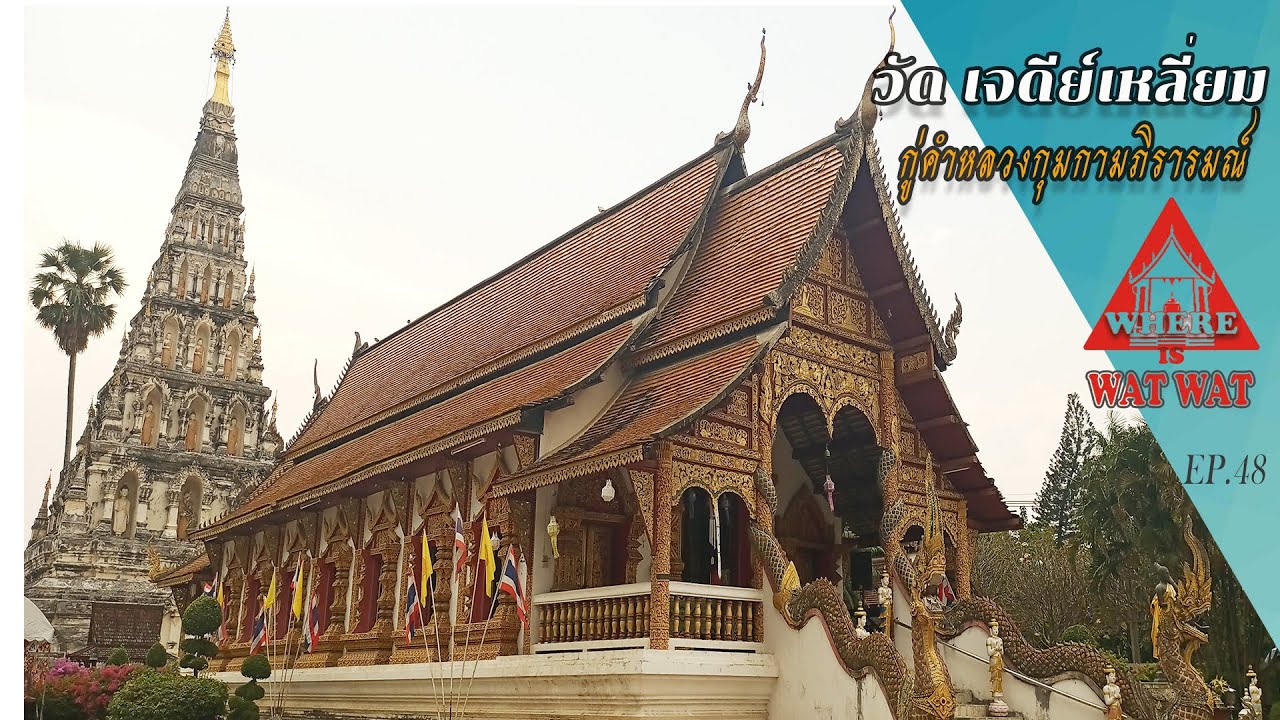
 Click to Access the Navigation Map GPS
Wat Chedi Liam Map
Recommend

 Muang Chiang Mai(121)Chom Thong(47)Mae Chaem(25)Chiang Dao(33)Doi Saket(68)Mae Taeng(85)Mae Rim(69)Samoeng(29)Fang(71)Mae Ai(59)Phrao(70)San Pa Tong(103)San Kamphaeng(66)San Sai(73)Hang Dong(73)Hot(32)Doi Tao(22)Omkoi(11)Saraphi(74)Wiang Haeng(15)Chai Prakan(28)Mae Wang(32)Mae On(22)Doi Lo(33)Galyani Vadhana(1)


