
lovethailand home >North Travel Attractions >Chiang Mai Travel Attractions >Saraphi >Chai Sathan > Wat Phothi Mongkhon
TL;DR: Wat Phothi Mongkhon is located at Ban Phothi Mongkhon, Village No. 6, Chai Sathan Subdistrict, Saraphi District, Chiang Mai Province, open Daily, hours 08.00 – 17.00.
Wat Phothi Mongkhon
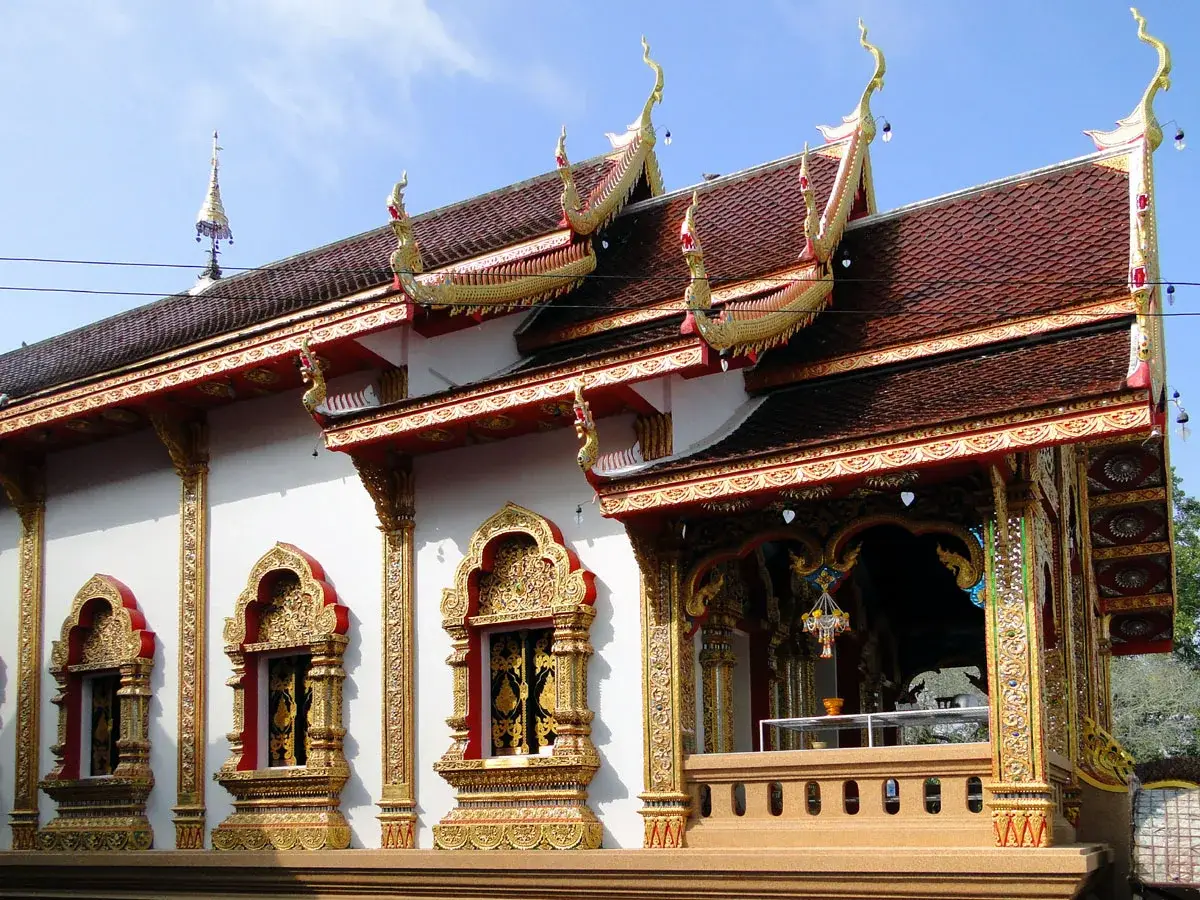
Open Days: Daily
Opening Hours: 08.00 – 17.00
Wat Phothi Mongkhon is located at No. 6, Ban Phothi Mongkhon, Village No. 6, Chai Sathan Subdistrict, Saraphi District, Chiang Mai Province. It is a local Buddhist temple under the Mahanikaya sect and one of the historic community temples of Chai Sathan. The temple was founded in B.E. 2305 and was formerly known as Wat Kala Bo. Its origin is connected with two Burmese donors, Mr. Po and Mrs. Ka, who donated the land and initiated the construction of the temple. Wat Phothi Mongkhon is therefore both a religious site and an important cultural landmark of Ban Phothi Mongkhon.
The temple is closely linked with the history of Ban Phothi Mongkhon, Village No. 6. The village was formerly known as Ban Mangkhala Po. Local history explains that Burmese soldiers once stayed in this area and that their leader, named Mangkhala, built a temple as a place of spiritual rest and worship. The word “po” in Burmese refers to a leader. Over time, the settlement developed into Ban Phothi Mongkhon, and the temple became the spiritual center of the local community.
One notable feature of Wat Phothi Mongkhon is that the temple faces north, unlike many nearby temples that traditionally face east. This distinctive orientation is meaningful because it connects with the temple’s local origin story and the Burmese cultural context associated with its early foundation. For visitors, the temple is therefore worth appreciating not only as a place of worship but also as a site of community history and cultural memory.
The temple grounds cover 2 rai, 1 ngan, and 80 square wah. It also has one plot of monastic land measuring 2 ngan. The northern boundary extends approximately 90 wah to a road, the southern boundary approximately 90 wah to the village, and the western boundary approximately 78 wah to a school. This setting reflects the character of a local Lanna village temple, where the temple, road, homes, and school are closely connected with everyday community life.
The confirmed monastic structures of Wat Phothi Mongkhon include one viharn, one sala bat, one sermon hall, one monks’ residence, and a surrounding wall. The viharn is the main worship space used for paying respect to Buddha images, listening to sermons, and holding Buddhist ceremonies. The sala bat supports merit-making and food offerings, while the sermon hall serves as a shared space for religious teaching, community gatherings, and temple activities. The monks’ residence supports the daily monastic life of the temple.
The most important sacred objects at Wat Phothi Mongkhon are two old Chiang Saen-style Buddha images, along with several other ancient Buddha images in different postures. Chiang Saen-style Buddha images are highly valued in northern Buddhist art because of their calm expression, balanced form, and strong connection with Lanna and northern Thai Buddhist culture. Paying respect to these old Buddha images is one of the main reasons to visit the temple.
Another important feature is the Burmese-style chedi within the temple grounds. This chedi adds a distinctive cultural layer to the temple, reflecting the connection between local Lanna Buddhism and Burmese-influenced community history. Together with the temple’s old name and foundation story, the chedi makes Wat Phothi Mongkhon a valuable place for travelers interested in the cultural interactions that shaped local Buddhist communities in Saraphi.
Wat Phothi Mongkhon has a faith community of about 150 households. This shows that the temple remains closely tied to village life. It is not only a historic site but also an active religious center where local residents continue to make merit, support temple activities, join Buddhist ceremonies, and gather for community events.
The abbot of Wat Phothi Mongkhon is Phra Maha Decha Thitiwanno. In a village temple, the abbot’s role is deeply connected with both religion and community life. The abbot supports Buddhist practice, conducts ceremonies, guides local residents, and helps maintain the relationship between the temple and the village. This gives Wat Phothi Mongkhon an important role as a living community temple rather than a purely historical monument.
The temple also continues to serve as a public religious space for Chai Sathan Subdistrict. Local activities such as candle and bathing-cloth offerings during the Buddhist Lent season have been held at Wat Phothi Mongkhon with participation from monks from all 8 temples in Chai Sathan. This shows the temple’s active role as a shared space for local Buddhist and community activities.
Annual Buddhist traditions associated with the temple include Buddhist holy days, Buddhist Lent, the end of Lent, Kathin, robe-offering events, candle offerings, Songkran or Northern Thai New Year activities, and Yi Peng traditions in the village. These occasions allow residents to make merit, preserve local customs, and pass community values from one generation to the next.
The atmosphere of Wat Phothi Mongkhon is peaceful and community-oriented. Its appeal comes from the story of Wat Kala Bo, the Burmese donors, the Chiang Saen-style Buddha images, the Burmese-style chedi, and the unusual north-facing orientation of the temple. Visitors should begin with the viharn, pay respect to the old Buddha images, observe the chedi, and then take time to appreciate the temple compound, including the sala bat, sermon hall, monks’ residence, surrounding wall, and open temple grounds.
Wat Phothi Mongkhon is suitable for travelers interested in old Chiang Mai temples, Saraphi cultural routes, Lanna Buddhist art, and community history connected with Burmese influence. It is best visited slowly and respectfully. The temple is not a large commercial tourist attraction. Its value lies in its history, sacred objects, living village role, and cultural identity.
The temple can be included in a wider cultural route through Chai Sathan Subdistrict. From Wat Phothi Mongkhon, travelers can continue to Wat Chiang Khang, Wat Nantararam, Wat Si Song Mueang, Wat Ton Yang Luang, Wat Ton Chok Luang, and the Chiang Mai–Lamphun rubber tree road. This route gives a strong overview of local Lanna temples and village communities south of Chiang Mai city.
Travelers can also continue to Wiang Kum Kam, one of the most important historic sites in the Chiang Mai area. Combining Wat Phothi Mongkhon with Wiang Kum Kam and the Chiang Mai–Lamphun rubber tree road creates a rich cultural itinerary that connects village temples, historic roads, tree-lined landscapes, and ancient Lanna heritage.
Getting There is easiest by private car, rental car, motorbike, taxi, or ride-hailing service from Chiang Mai city. Travel south toward Saraphi District, enter Chai Sathan Subdistrict, and continue to Ban Phothi Mongkhon, Village No. 6. The temple is located within a community area, so visitors who do not drive should arrange a return trip or hire a vehicle for several hours if they plan to visit nearby temples, restaurants, and accommodations.
The best time to visit is in the morning or late afternoon when the weather is more comfortable and the temple atmosphere is calm. During Buddhist festivals such as candle-offering events, Buddhist Lent, Kathin, robe-offering ceremonies, Northern Thai New Year, and Yi Peng, the temple may become livelier with local participation. Visitors seeking a quieter visit should choose a weekday outside major ceremonies.
Visitors should follow standard Thai temple etiquette: dress modestly, speak softly, remove shoes where required, avoid entering private monastic areas, do not disturb ceremonies, and ask permission before taking close-up photos of people or religious activities. Respectful behavior is especially important because this is an active village temple and a living religious space for the local community.
In summary, Wat Phothi Mongkhon is a historic community temple in Ban Phothi Mongkhon, Chai Sathan Subdistrict, Saraphi District, Chiang Mai. Founded in B.E. 2305 and formerly known as Wat Kala Bo, the temple preserves a distinctive story of Burmese donors, Chiang Saen-style Buddha images, a Burmese-style chedi, and an active faith community of about 150 households. It is a meaningful stop for travelers who want to understand local Lanna Buddhism, village history, and the quieter cultural side of Saraphi.
| Name | Wat Phothi Mongkhon |
| Location | Ban Phothi Mongkhon, Village No. 6, Chai Sathan Subdistrict, Saraphi District, Chiang Mai Province |
| Address | No. 6, Ban Phothi Mongkhon, Village No. 6, Chai Sathan Subdistrict, Saraphi District, Chiang Mai, Thailand |
| Coordinates | 18.76407, 99.04424 |
| Temple Type | Local Buddhist temple under the Mahanikaya sect |
| Temple Code | 350190405 |
| Area | 2 rai, 1 ngan, 80 square wah |
| Monastic Land | One plot, 2 ngan |
| Boundaries | North: about 90 wah, adjoining a road South: about 90 wah, adjoining the village West: about 78 wah, adjoining a school |
| Highlights | Historic village temple formerly known as Wat Kala Bo, with old Chiang Saen-style Buddha images and a Burmese-style chedi |
| History | Founded in B.E. 2305 by Burmese donors Mr. Po and Mrs. Ka, who donated the land and initiated the temple construction |
| Former Name | Wat Kala Bo |
| Name Origin | The former name combined the names of Mr. Po and Mrs. Ka, the donors and early founders of the temple; the village later became known as Ban Phothi Mongkhon |
| Distinctive Features | A north-facing temple with a foundation story connected to Burmese settlers and the local history of Ban Mangkhala Po |
| Important Zones And Structures | One viharn One sala bat One sermon hall One monks’ residence One Burmese-style chedi Surrounding temple wall Temple grounds and community religious activity area |
| Sacred Objects | Two old Chiang Saen-style Buddha images and several other old Buddha images in different postures |
| Faith Community | About 150 households |
| Travel Information | Accessible from Chiang Mai city toward Saraphi District, then Chai Sathan Subdistrict and Ban Phothi Mongkhon; best reached by private car, rental car, motorbike, taxi, or ride-hailing service |
| Current Status | Open as an active community temple used for Buddhist ceremonies, merit-making, and local activities in Chai Sathan Subdistrict |
| Open Days | Daily |
| Opening Hours | 08.00 – 17.00 |
| Abbot / Caretaker | Phra Maha Decha Thitiwanno |
| Main Contact Number | 083-323-5479 |
| Nearby Tourist Attractions | 1. Wat Ton Yang Luang, about 3 km 2. Chiang Mai–Lamphun Rubber Tree Road, about 4 km 3. Wat Chiang Khang, about 5 km 4. Wat Nantararam, about 6 km 5. Wiang Kum Kam, about 11 km |
| Nearby Restaurants | 1. Chayapad Shop Ton Yang Luang - Ban Yuam, about 3 km, Tel. 093-808-8985 2. Five Star Saraphi, about 4 km, Tel. 097-937-8355, 062-387-5535 3. 51 Café @Saraphi, about 5 km, Tel. 085-878-8220 4. Miracle Coffee Chai Sathan Saraphi Branch, about 5 km, Tel. 096-115-4102 5. Queensbaker Chai Sathan, about 6 km, Tel. 053-895-198 |
| Nearby Accommodations | 1. Kham Mon Lanna Resort Chiang Mai, about 2 km 2. Chaisathan Cottage, about 5 km, Tel. 086-856-4152 3. Bua Saree Resort, about 6 km, Tel. 081-861-3013 4. Saku Boutique Homestay, about 8 km, Tel. 085-128-7748 5. De Wiangkumkam, about 11 km, Tel. 094-471-0117 |
Frequently Asked Questions (FAQ)
Q: Where is Wat Phothi Mongkhon located?
A: Wat Phothi Mongkhon is located at No. 6, Ban Phothi Mongkhon, Village No. 6, Chai Sathan Subdistrict, Saraphi District, Chiang Mai Province.
Q: What are the opening days and hours of Wat Phothi Mongkhon?
A: The temple is open daily from 08.00 to 17.00.
Q: Why is Wat Phothi Mongkhon historically important?
A: Wat Phothi Mongkhon was founded in B.E. 2305 and was formerly known as Wat Kala Bo. Its origin is connected with Burmese donors who contributed land and initiated the temple construction.
Q: What important structures are found at Wat Phothi Mongkhon?
A: Important structures include a viharn, sala bat, sermon hall, monks’ residence, surrounding temple wall, and one Burmese-style chedi.
Q: What sacred objects are important at Wat Phothi Mongkhon?
A: The temple has two old Chiang Saen-style Buddha images and several other old Buddha images in different postures.
Q: What is the main highlight of Wat Phothi Mongkhon?
A: Its highlights are the former name Wat Kala Bo, the Burmese foundation story, the old Chiang Saen-style Buddha images, the Burmese-style chedi, and its unusual north-facing orientation.
Q: How can travelers get to Wat Phothi Mongkhon?
A: The easiest way is to travel from Chiang Mai city toward Saraphi District, then continue into Chai Sathan Subdistrict and Ban Phothi Mongkhon by private car, rental car, motorbike, taxi, or ride-hailing service.
Q: What nearby places can be visited with Wat Phothi Mongkhon?
A: Nearby places include Wat Ton Yang Luang, the Chiang Mai–Lamphun rubber tree road, Wat Chiang Khang, Wat Nantararam, and Wiang Kum Kam.
 Category: ●Places of Worship
 Group: ●Temple
Last Update : 5 DayAgo
 Last Update : 5 DayAgo
 Click to Access the Navigation Map GPS
Wat Phothi Mongkhon Map
Recommend

 Muang Chiang Mai(121)Chom Thong(47)Mae Chaem(25)Chiang Dao(33)Doi Saket(68)Mae Taeng(85)Mae Rim(69)Samoeng(29)Fang(71)Mae Ai(59)Phrao(70)San Pa Tong(103)San Kamphaeng(66)San Sai(73)Hang Dong(73)Hot(32)Doi Tao(22)Omkoi(11)Saraphi(74)Wiang Haeng(15)Chai Prakan(28)Mae Wang(32)Mae On(22)Doi Lo(33)Galyani Vadhana(1)


