
lovethailand home >North Travel Attractions >Chiang Mai Travel Attractions >Saraphi >Khua Mung > Wat Rai Dong Phuttharam
TL;DR: Wat Rai Dong Phuttharam is located at No. 140, Moo 8, Ban Rai Dong, Khua Mung – San Sai Mahawong Road, Khua Mung Subdistrict, Saraphi District, Chiang Mai Province 50140, open Daily, hours 08.00 – 17.00.

Wat Rai Dong Phuttharam
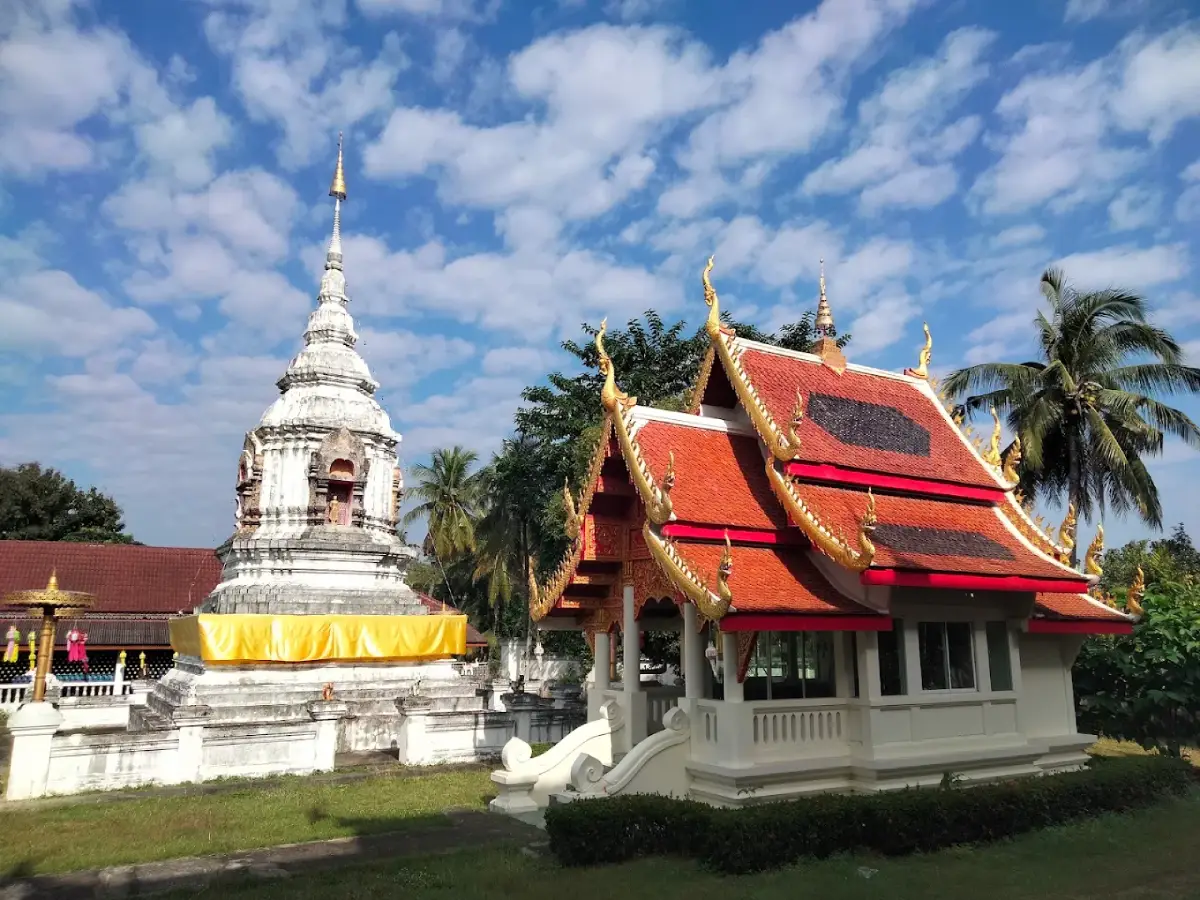
Open Days: Daily
Opening Hours: 08.00 – 17.00
Wat Rai Dong Phuttharam is located at No. 140, Moo 8, Ban Rai Dong, on the Khua Mung – San Sai Mahawong Road, Khua Mung Subdistrict, Saraphi District, Chiang Mai Province 50140. It is a local Buddhist temple under the Mahanikaya sect. The temple was officially established in 1999, received its royal consecrated boundary, or Wisungkhamsima, on 3 October 2002, and was recognized as a model developed temple in 2007. The current abbot is Phra Palat Thirasak Thanissaro. Wat Rai Dong Phuttharam is especially meaningful because it was revived from an abandoned temple formerly known as Wat Hua Dong or Wat Hua Dong Rang.
Wat Rai Dong Phuttharam is suitable for visitors who want to understand how a local community temple can be revived and developed through monastic leadership and village faith. Khua Mung Subdistrict is an agricultural community near Chiang Mai city, shaped by canals, local roads, rice fields, and village temples. In this landscape, Wat Rai Dong Phuttharam represents a modern example of Buddhist revival: an abandoned religious site transformed into an active temple serving Ban Rai Dong and the surrounding community.
Before becoming Wat Rai Dong Phuttharam, the site was known as Wat Hua Dong, an abandoned temple located beside the Khua Mung – San Sai Mahawong road. A public irrigation canal passes through the area. The northern and southern boundaries adjoin public canals, the eastern boundary adjoins local rice fields, and the western boundary adjoins the Khua Mung – San Sai road. This setting places the temple within the agricultural and water-based landscape of Saraphi.
The temple land covers 7 rai, 2 ngan, and 36 square wah under land title deed No. 32194. This area allowed the community to develop several important religious structures, including the stupa, sermon hall, scripture hall, monks’ residences, ubosot, viharns, kitchen hall, and dining hall. The temple was therefore rebuilt not as a small isolated shrine, but as a complete community religious space.
The modern revival began on 26 December 1993, when villagers started rebuilding the abandoned temple. Phra Athikan Thirasak Thanissaro played an important role together with local devotees. Through community effort, the temple grounds were restored and new religious structures were built. On 5 August 1999, the site was elevated from an abandoned temple to a temple with monks in residence.
The granting of Wisungkhamsima on 3 October 2002 was a major religious milestone. The consecrated boundary measures 20 meters wide and 40 meters long. The temple later held the boundary-marking ceremony and buried the sacred boundary stones on Saturday, 8 March 2003. This confirmed the temple’s ability to support important Buddhist monastic ceremonies and strengthened its formal status as a functioning Buddhist institution.
On 5 September 2003, the National Office of Buddhism announced the change of name from Wat Hua Dong Rang to Wat Rai Dong Phuttharam, with approval from the Sangha Supreme Council. The reason was to avoid duplication with another temple name. The new name links the temple with Ban Rai Dong and expresses its identity as a Buddhist monastery. It gave the revived temple a clear and distinct identity within Khua Mung Subdistrict.
Important structures at Wat Rai Dong Phuttharam include the stupa, Sala Kan Parian Luang Pho Thongkham, scripture hall, monks’ residences named Luang Pho Ngoen, ubosot named Luang Pho Phut, Viharn Luang Pho Phet Phuttha Mongkhon, Viharn Buraphachan Luang Pho Kaeo Somjai Nueak, and the kitchen and dining hall named Luang Pho Mi Lap. These structures show the scale of the temple’s revival and the faith of the community that supported its development.
The stupa is one of the most important points of worship at the temple. In a Lanna Buddhist temple, a stupa often functions as a spiritual focus and a symbol of continuity. At Wat Rai Dong Phuttharam, the stupa also represents the transformation of an abandoned site into an active temple. Paying respect at the stupa helps visitors understand the deeper meaning of the temple’s revival.
The ubosot and viharns serve important religious roles. The ubosot supports monastic ceremonies, while the viharns are spaces for worship and merit-making. The named buildings reflect the faith of donors, monks, and villagers who took part in developing the temple. Each structure carries both religious meaning and community memory.
The sermon hall, kitchen, and dining hall show the temple’s strong community function. A temple with these facilities can support Buddhist holy day gatherings, Kathin, robe-offering ceremonies, food offerings, community meetings, and larger merit-making events. Wat Rai Dong Phuttharam therefore functions not only as a place of worship but also as a social and cultural gathering space for Ban Rai Dong.
Phra Palat Thirasak Thanissaro is the abbot of Wat Rai Dong Phuttharam and has been central to the temple’s modern development. His role is closely connected with the restoration of the abandoned temple, the construction of religious buildings, and the continuation of Buddhist activities in the community. The temple’s story shows how monastic leadership and village cooperation can revive a forgotten religious site.
The temple was recognized as a model developed temple in 2007. This recognition reflects the continuing care, organization, and development of the temple after its formal establishment and consecrated boundary. Wat Rai Dong Phuttharam is therefore a strong example of a revived temple that became an active and well-developed community religious center within a few decades.
Wat Rai Dong Phuttharam serves Ban Rai Dong and Khua Mung Subdistrict through annual Buddhist activities such as Buddhist holy day merit-making, food offerings, Dhamma listening, Buddhist Lent, the end of Buddhist Lent, Kathin, robe-offering ceremonies, Songkran, water-pouring ceremonies for elders, and Yi Peng. The temple also serves as a location for community development and temple-cleaning activities.
Songkran, water-pouring ceremonies, and Yi Peng are important traditions in northern Thai communities. They connect merit-making with family respect, light offerings, village cooperation, and Buddhist faith. As the community temple of Ban Rai Dong, Wat Rai Dong Phuttharam helps keep these traditions connected with everyday village life.
The main appeal of Wat Rai Dong Phuttharam is its clear story of renewal. Visitors can pay respect at the stupa, observe the ubosot and viharns, see the scripture hall and community buildings, and understand how the temple developed from Wat Hua Dong Rang into Wat Rai Dong Phuttharam. It is suitable for travelers interested in local temples, Buddhist revival, community history, and cultural routes near Chiang Mai city.
Getting There is convenient because the temple is located in Saraphi District, not far from Chiang Mai city. Visitors can travel from Chiang Mai city toward Saraphi and Khua Mung Subdistrict, then continue to Ban Rai Dong, Moo 8, on the Khua Mung – San Sai Mahawong road. Private car, motorcycle, or local transport can be used. The temple is suitable for a half-day or full-day cultural route in Khua Mung.
Wat Rai Dong Phuttharam can be combined with nearby temples and cultural places such as Wat Hua Dong, Wat Khua Mung, Wat Pak Mueang, Wat Pa Duea, Wat Si Mun Rueang, Wat Uthumphon Aram, and Wiang Kum Kam. A meaningful route can begin at Wat Rai Dong Phuttharam to understand temple revival, then continue to older temples in Khua Mung and finally to Wiang Kum Kam for a broader Lanna historical context.
Wat Pak Mueang and Wat Pa Duea are especially useful companion stops. Wat Pak Mueang highlights irrigation canals and Lanna palm-leaf manuscript culture, while Wat Pa Duea is connected with Khru Ba Uttama and the Ping River landscape. Visiting these temples together with Wat Rai Dong Phuttharam gives a fuller picture of Khua Mung’s religious and community history.
Restaurants around Wat Rai Dong Phuttharam include local eateries in Khua Mung, made-to-order food shops, pizza shops, drink shops, and restaurants in Saraphi. Accommodations can be found in Saraphi and nearby Chiang Mai areas, making the temple easy to include in a cultural route that also covers Wiang Kum Kam, Chiang Mai city, or Lamphun.
Visitors should dress modestly, speak quietly, avoid disturbing monks or local residents, and respect the temple’s religious areas, especially the stupa, ubosot, viharns, and monks’ residences. Wat Rai Dong Phuttharam is an active community temple, and a calm, respectful visit allows travelers to appreciate both its spiritual and community value.
In summary, Wat Rai Dong Phuttharam is a Mahanikaya community temple in Ban Rai Dong, Moo 8, Khua Mung Subdistrict, Saraphi District, Chiang Mai Province. The temple was formally established in 1999, received its Wisungkhamsima on 3 October 2002, held its boundary-marking ceremony on 8 March 2003, changed its name from Wat Hua Dong Rang to Wat Rai Dong Phuttharam on 5 September 2003, and was recognized as a model developed temple in 2007. Its importance lies in the revival of an abandoned temple into a complete and active Buddhist center for the local community.
| Name | Wat Rai Dong Phuttharam |
| Type | Local Buddhist temple under the Mahanikaya sect |
| Location | No. 140, Moo 8, Ban Rai Dong, Khua Mung – San Sai Mahawong Road, Khua Mung Subdistrict, Saraphi District, Chiang Mai Province 50140 |
| Address | Ban Rai Dong, Moo 8, Khua Mung Subdistrict, Saraphi District, Chiang Mai 50140, Thailand |
| Highlights | Revived from the abandoned Wat Hua Dong site and developed into a complete community temple with a stupa, ubosot, viharns, scripture hall, and community religious buildings |
| History | Rebuilding began on 26 December 1993; the site was elevated from an abandoned temple to a temple with monks in residence on 5 August 1999 |
| Current Temple Status | Officially established as a temple in 1999 and recognized as a model developed temple in 2007 |
| Wisungkhamsima | Granted on 3 October 2002; boundary area 20 meters wide and 40 meters long; boundary-stone ceremony held on 8 March 2003 |
| Former Name | Wat Hua Dong / Wat Hua Dong Rang |
| Name Change | Changed from Wat Hua Dong Rang to Wat Rai Dong Phuttharam by National Office of Buddhism announcement on 5 September 2003 |
| Temple Land | 7 rai, 2 ngan, and 36 square wah under land title deed No. 32194 |
| Boundaries | North: public irrigation canal South: public irrigation canal East: local rice fields West: Khua Mung – San Sai road |
| Important Structures | Stupa, Sala Kan Parian Luang Pho Thongkham, scripture hall, monks’ residences named Luang Pho Ngoen, ubosot named Luang Pho Phut, Viharn Luang Pho Phet Phuttha Mongkhon, Viharn Buraphachan Luang Pho Kaeo Somjai Nueak, and kitchen-dining hall named Luang Pho Mi Lap |
| Main Devotional Points | Stupa, ubosot, Viharn Luang Pho Phet Phuttha Mongkhon, and Viharn Buraphachan Luang Pho Kaeo Somjai Nueak |
| Abbot / Caretaker | Phra Palat Thirasak Thanissaro |
| Open Days | Daily |
| Opening Hours | 08.00 – 17.00 |
| Local Contact | Khua Mung Subdistrict Municipality, Tel. 053-429-622 |
| Community Role | Spiritual center of Ban Rai Dong, place for merit-making, Dhamma listening, annual traditions, and community temple-development activities |
| Merit Events / Traditions | Buddhist holy day merit-making, Buddhist Lent, end of Buddhist Lent, Kathin, robe offerings, Songkran, water-pouring ceremonies, and Yi Peng |
| Travel Information | Travel from Chiang Mai city toward Saraphi and Khua Mung Subdistrict, then continue to Ban Rai Dong, Moo 8, on the Khua Mung – San Sai Mahawong Road. Private car, motorcycle, or local transport is suitable. |
| Nearby Tourist Attractions | 1. Wat Hua Dong, about 3–5 km 2. Wat Khua Mung, about 5–8 km 3. Wat Pak Mueang, about 5–8 km 4. Wat Pa Duea, about 5–8 km 5. Wat Si Mun Rueang, about 5–8 km 6. Wat Uthumphon Aram, about 5–8 km 7. Wiang Kum Kam, about 10–15 km |
| Nearby Restaurants / Khua Mung and Saraphi Route | 1. Pi Rung Khua Mung Moo 5, about 5–8 km, Tel. 061-065-7961 2. Rest Time Pizza Khua Mung, about 5–8 km, Tel. 081-472-0954 3. Raja Bubble Milk Tea Ban Khua Mung, about 5–8 km, Tel. 096-694-8874 4. Ro Noi Aroi Nae Rad Na @ Made to Order, about 5–9 km, Tel. 087-305-2840 5. Suki Saraphi, about 10–14 km, Tel. 081-033-1248 |
| Nearby / Saraphi and Chiang Mai Area Accommodations | 1. 9Roomz Hotel, about 10–15 km, Tel. 053-963-829, 095-446-0758 2. Baan Hom Samunphrai, about 10–15 km, Tel. 053-817-362, 081-885-1429 3. Baan Saraphi, about 10–15 km 4. Ruenthip Resort, about 10–15 km 5. Zen Retreat Chiang Mai Villa, about 12–18 km |
Frequently Asked Questions (FAQ)
Q: Where is Wat Rai Dong Phuttharam located?
A: Wat Rai Dong Phuttharam is located at No. 140, Moo 8, Ban Rai Dong, on the Khua Mung – San Sai Mahawong Road, Khua Mung Subdistrict, Saraphi District, Chiang Mai Province 50140.
Q: What was the former name of Wat Rai Dong Phuttharam?
A: The former name was Wat Hua Dong or Wat Hua Dong Rang. It was later renamed Wat Rai Dong Phuttharam by announcement of the National Office of Buddhism on 5 September 2003.
Q: When was Wat Rai Dong Phuttharam officially established?
A: The temple was officially established in 1999 after the local community revived the abandoned temple site.
Q: When did Wat Rai Dong Phuttharam receive its Wisungkhamsima?
A: Wat Rai Dong Phuttharam received its Wisungkhamsima on 3 October 2002, with a boundary area measuring 20 meters wide and 40 meters long. The boundary-stone ceremony was held on 8 March 2003.
Q: What important structures are found at Wat Rai Dong Phuttharam?
A: Important structures include the stupa, Sala Kan Parian Luang Pho Thongkham, scripture hall, monks’ residences named Luang Pho Ngoen, ubosot named Luang Pho Phut, Viharn Luang Pho Phet Phuttha Mongkhon, Viharn Buraphachan Luang Pho Kaeo Somjai Nueak, and the kitchen-dining hall named Luang Pho Mi Lap.
Q: Who is the abbot of Wat Rai Dong Phuttharam?
A: The abbot is Phra Palat Thirasak Thanissaro.
Q: What is the main highlight of Wat Rai Dong Phuttharam?
A: Its main highlight is the revival of an abandoned temple into a complete community Buddhist center with a stupa, ubosot, viharns, scripture hall, and model developed temple recognition.
Q: What nearby places can be combined with this visit?
A: Nearby route options include Wat Hua Dong, Wat Khua Mung, Wat Pak Mueang, Wat Pa Duea, Wat Si Mun Rueang, Wat Uthumphon Aram, and Wiang Kum Kam.
 Category: ●Places of Worship
 Group: ●Temple
Last Update : 3 DayAgo
 Last Update : 3 DayAgo
 Click to Access the Navigation Map GPS
Wat Rai Dong Phuttharam Map
Recommend

 Muang Chiang Mai(121)Chom Thong(47)Mae Chaem(25)Chiang Dao(33)Doi Saket(68)Mae Taeng(85)Mae Rim(69)Samoeng(29)Fang(71)Mae Ai(59)Phrao(70)San Pa Tong(103)San Kamphaeng(66)San Sai(73)Hang Dong(73)Hot(32)Doi Tao(22)Omkoi(11)Saraphi(74)Wiang Haeng(15)Chai Prakan(28)Mae Wang(32)Mae On(22)Doi Lo(34)Galyani Vadhana(1)


