
lovethailand home >North Travel Attractions >Chiang Mai Travel Attractions >Saraphi >Khua Mung > Wat Hua Dong (Khua Mung)
TL;DR: Wat Hua Dong (Khua Mung) is located at Moo 7, Ban Hua Dong, Khua Mung Subdistrict, Saraphi District, Chiang Mai Province 50140, open Daily, hours 08.00 – 17.00.

Wat Hua Dong (Khua Mung)
Open Days: Daily
Opening Hours: 08.00 – 17.00
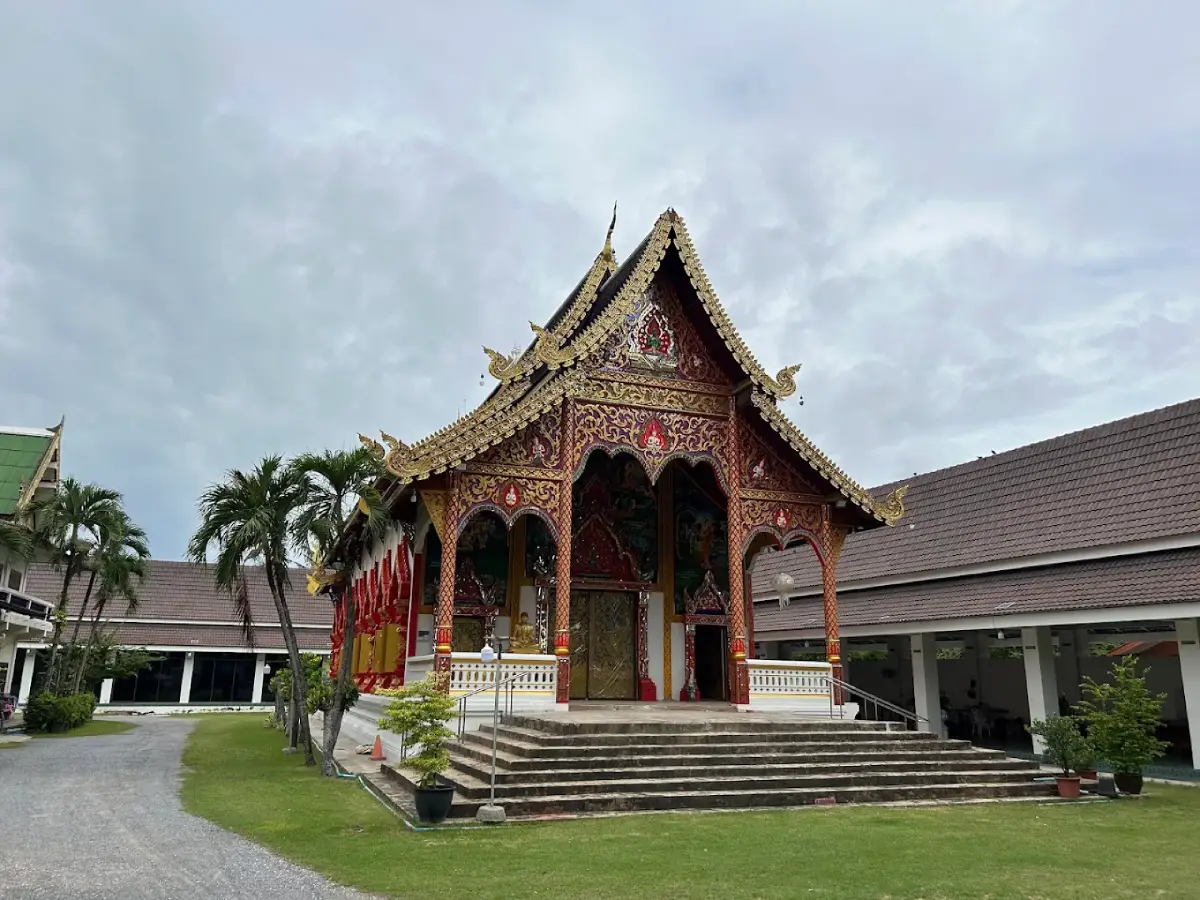
Wat Hua Dong (Khua Mung) is located in Moo 7, Ban Hua Dong, Khua Mung Subdistrict, Saraphi District, Chiang Mai Province 50140. It is a local Buddhist temple under the Mahanikaya sect. The temple was officially established in 1871 and received its royal consecrated boundary, or Wisungkhamsima, in 1943. The current abbot is Phra Khru Wisut Praphakon Pabhakaro. Wat Hua Dong is an old community temple of Khua Mung, serving Ban Hua Dong as a place for merit-making, Dhamma listening, Buddhist ceremonies, and community gathering for more than 150 years.
Wat Hua Dong is best understood as a living community temple rather than a major tourist temple. Its value lies in its long relationship with Ban Hua Dong and Khua Mung Subdistrict. Saraphi lies south of Chiang Mai city and has long been connected with agriculture, irrigation routes, village temples, and Lanna cultural practice. In this setting, Wat Hua Dong functions as a spiritual anchor for the village and as part of a wider network of local temples in Khua Mung.
Khua Mung Subdistrict has a strong community identity. The area is associated with agriculture, tall yang-na trees, local culture, and the continuity of Lanna traditions. Nearby temples such as Wat Khua Mung, Wat Pak Mueang, Wat Pa Duea, Wat Si Mun Rueang, Wat Rai Dong Phuttharam, and Wat Uthumphon Aram show how densely rooted Buddhist culture is in this part of Saraphi. Wat Hua Dong belongs to this same local religious landscape.
The history of Wat Hua Dong begins in 1871. The temple was founded through the effort of local residents, with the original builders remembered as Lung Metha, Lung Chai, Lung Puang, Lung Paeng, Lung Peng, and Lung Chanta. Their names are important because they show that the temple emerged from community faith and cooperation. Wat Hua Dong was not simply a religious building; it was a shared project created by villagers who wanted a Buddhist center for Ban Hua Dong.
The temple’s establishment in 1871 places it within the historical development of Saraphi’s village communities south of Chiang Mai. In this area, temples supported more than ritual activity. They gave villagers a place to make merit, gather for ceremonies, listen to Dhamma, educate younger generations in moral values, and maintain village identity. Wat Hua Dong therefore represents the continuity of local Buddhist life across many generations.
The granting of Wisungkhamsima in 1943 was an important milestone. A Wisungkhamsima is the consecrated monastic boundary used for important Buddhist ceremonies. Receiving this boundary strengthened the temple’s formal religious status and confirmed its role as a fully functioning Buddhist institution for the local community.
The name “Wat Hua Dong” directly links the temple with Ban Hua Dong, Moo 7 of Khua Mung Subdistrict. The name reflects the temple’s role as the community temple of the village. It does not need a complex legend to be meaningful; its meaning lies in the close relationship between the temple and the people of Ban Hua Dong.
The abbot succession at Wat Hua Dong shows the temple’s continuity. The first abbot was Khru Ba Kan Kittasaddho, who served from 1871 to 1881. Later abbots included Phra Athikan Ta Nantawiraso, Phra Athikan Suriya Suriyo, Phra Chan Khanthawiraso, Khru Ba Tep Tepawong, Phra Athikan Chai Chayalangkalo, Phra Athikan Ti Narathawiraso, Phra Athikan Kaeo Intachakkawiraso, Phra Khru Pan Pandito, and the present abbot, Phra Khru Wisut Praphakon.
Phra Khru Wisut Praphakon Pabhakaro plays an important role as the current abbot of Wat Hua Dong. His responsibilities include caring for the temple, guiding Buddhist ceremonies, teaching Dhamma, coordinating with villagers, and maintaining the temple as a peaceful community space. In a village temple, the abbot’s role is closely connected with daily local life, not only with formal religious duties.
Visitors to Wat Hua Dong should pay attention to the atmosphere of an old community temple: the temple grounds, the religious activity areas, the village setting, and the quiet relationship between the temple and Ban Hua Dong. The temple’s appeal lies in its simplicity and continuity rather than in large-scale tourism infrastructure. It is suitable for visitors who want to understand how local temples continue to support communities in Saraphi.
Wat Hua Dong remains important to Ban Hua Dong as a center of merit-making and Buddhist practice. Villagers use the temple for Buddhist holy days, food offerings, Dhamma listening, Buddhist Lent, the end of Buddhist Lent, Kathin, robe-offering ceremonies, Songkran, water-pouring ceremonies for elders, and Yi Peng. These events help maintain social bonds and keep Lanna Buddhist culture alive across generations.
Songkran and the water-pouring tradition are particularly meaningful in northern Thai communities because they connect merit-making, gratitude to elders, and family reunion. Yi Peng also gives temples an important role in bringing people together through light offerings, Buddhist ceremonies, and community participation. Wat Hua Dong therefore functions as a place where annual traditions remain connected to village life.
The main appeal of Wat Hua Dong for visitors is its authenticity as an old community temple founded by local people. It has a long abbot succession, a clear relationship with Ban Hua Dong, and a continuing role in Buddhist practice. Travelers interested in local temple history, Lanna village culture, and the cultural routes of Saraphi will find the temple meaningful.
Getting There is convenient because the temple is located in Saraphi District, not far from Chiang Mai city. Visitors can travel from Chiang Mai city toward Saraphi and Khua Mung Subdistrict, then continue to Ban Hua Dong, Moo 7. Private car, motorcycle, or local transport can be used. Visitors should allow extra time during morning and evening traffic around Chiang Mai and Saraphi.
Wat Hua Dong can be combined with several nearby temples and cultural places, including Wat Khua Mung, Wat Rai Dong Phuttharam, Wat Pak Mueang, Wat Si Mun Rueang, Wat Pa Duea, Wat Uthumphon Aram, and Wiang Kum Kam. A temple-focused route within Khua Mung allows visitors to understand the local religious landscape, while a longer historical route can continue to Wiang Kum Kam and old temples in the Chiang Mai-Saraphi area.
Wat Rai Dong Phuttharam is a nearby temple with an interesting name-history connection because it was formerly associated with a deserted temple called Wat Hua Dong Rang before later being renamed. This makes it useful to visit together with Wat Hua Dong, while understanding that they are different temples today. The route helps travelers see how temple names, village history, and community restoration are connected in Khua Mung.
Restaurants around Wat Hua Dong include local eateries in Khua Mung, made-to-order food shops, pizza shops, drink shops, and restaurants in Saraphi. Accommodations can be found in Saraphi and nearby Chiang Mai areas, making the temple easy to include in a cultural route that also covers Wiang Kum Kam, Saraphi, Chiang Mai city, or Lamphun.
Visitors should dress modestly, speak quietly, avoid disturbing monks or local residents, and treat the temple grounds respectfully. If visiting during a merit-making event, follow temple guidance and local etiquette. Wat Hua Dong is an active religious space used by the community, so a respectful and unhurried visit is the best way to appreciate its meaning.
In summary, Wat Hua Dong (Khua Mung) is a Mahanikaya community temple in Ban Hua Dong, Moo 7, Khua Mung Subdistrict, Saraphi District, Chiang Mai Province. It is open daily from 08.00 to 17.00. Established in 1871 and granted its Wisungkhamsima in 1943, the temple remains an important spiritual center for Ban Hua Dong and a meaningful stop for travelers interested in old community temples, Lanna culture, and the cultural routes of Saraphi.
| Name | Wat Hua Dong (Khua Mung) |
| Type | Local Buddhist temple under the Mahanikaya sect |
| Location | Moo 7, Ban Hua Dong, Khua Mung Subdistrict, Saraphi District, Chiang Mai Province 50140 |
| Address | Ban Hua Dong, Moo 7, Khua Mung Subdistrict, Saraphi District, Chiang Mai 50140, Thailand |
| Highlights | Old community temple of Ban Hua Dong, established in 1871, with a long abbot succession and a strong village role |
| History | Officially established in 1871, giving the temple more than 150 years of local history in Saraphi District |
| Founding Supporters | Lung Metha, Lung Chai, Lung Puang, Lung Paeng, Lung Peng, and Lung Chanta |
| Wisungkhamsima | Granted in 1943 |
| Name Origin | The name links the temple directly with Ban Hua Dong, Moo 7 of Khua Mung Subdistrict |
| Distinctive Features | An old village temple suitable for merit-making, quiet worship, and learning about Lanna Buddhist community life in Saraphi |
| Abbot / Caretaker | Phra Khru Wisut Praphakon Pabhakaro |
| Known Abbot Succession | 1. Khru Ba Kan Kittasaddho, 1871–1881 2. Phra Athikan Ta Nantawiraso, 1881–1885 3. Phra Athikan Suriya Suriyo, 1885–1887 4. Phra Chan Khanthawiraso, 1887–1888 5. Khru Ba Tep Tepawong, 1888–1911 6. Phra Athikan Chai Chayalangkalo, 1911–1921 7. Phra Athikan Ti Narathawiraso, 1921–1927 8. Phra Athikan Kaeo Intachakkawiraso, 1927–1931 9. Phra Khru Pan Pandito, 1931–1975 10. Phra Khru Wisut Praphakon, 1975–present |
| Open Days | Daily |
| Opening Hours | 08.00 – 17.00 |
| Temple Contact | 081-960-6548 |
| Local Contact | Khua Mung Subdistrict Municipality, Tel. 053-429-622 |
| Merit Events / Traditions | Buddhist holy day merit-making, Buddhist Lent, end of Buddhist Lent, Kathin, robe offerings, Songkran, water-pouring ceremonies, and Yi Peng |
| Travel Information | Travel from Chiang Mai city toward Saraphi and Khua Mung Subdistrict, then continue to Ban Hua Dong, Moo 7. Private car, motorcycle, or local transport is suitable. |
| Current Status | Still listed as a temple in Khua Mung Subdistrict, Saraphi District, Chiang Mai Province, with monks present in the temple area |
| Nearby Tourist Attractions | 1. Wat Khua Mung, about 2–4 km 2. Wat Rai Dong Phuttharam, about 3–5 km 3. Wat Pak Mueang, about 3–5 km 4. Wat Si Mun Rueang, about 3–6 km 5. Wat Pa Duea, about 4–7 km 6. Wat Uthumphon Aram, about 5–8 km 7. Wiang Kum Kam, about 10–15 km |
| Nearby Restaurants / Khua Mung and Saraphi Route | 1. Pi Rung Khua Mung Moo 5, about 2–4 km, Tel. 061-065-7961 2. Rest Time Pizza Khua Mung, about 3–5 km, Tel. 081-472-0954 3. Raja Bubble Milk Tea Ban Khua Mung, about 3–5 km, Tel. 096-694-8874 4. Ro Noi Aroi Nae Rad Na @ Made to Order, about 3–6 km, Tel. 087-305-2840 5. Suki Saraphi, about 8–12 km, Tel. 081-033-1248 |
| Nearby / Saraphi and Chiang Mai Area Accommodations | 1. 9Roomz Hotel, about 8–12 km, Tel. 053-963-829, 095-446-0758 2. Baan Hom Samunphrai, about 10–15 km, Tel. 053-817-362, 081-885-1429 3. Baan Saraphi, about 8–12 km, Tel. 053-321-942 4. Ruenthip Resort, about 8–12 km, Tel. 098-556-6291 5. Zen Retreat Chiang Mai Villa, about 10–15 km |
Frequently Asked Questions (FAQ)
Q: Where is Wat Hua Dong (Khua Mung) located?
A: Wat Hua Dong is located in Moo 7, Ban Hua Dong, Khua Mung Subdistrict, Saraphi District, Chiang Mai Province 50140.
Q: What are Wat Hua Dong’s opening days and hours?
A: The temple is open daily from 08.00 to 17.00.
Q: When was Wat Hua Dong established?
A: Wat Hua Dong was officially established in 1871.
Q: When did Wat Hua Dong receive its Wisungkhamsima?
A: Wat Hua Dong received its Wisungkhamsima in 1943.
Q: Who originally supported the founding of Wat Hua Dong?
A: The temple was founded through the effort of local supporters remembered as Lung Metha, Lung Chai, Lung Puang, Lung Paeng, Lung Peng, and Lung Chanta.
Q: Who is the abbot of Wat Hua Dong?
A: The abbot is Phra Khru Wisut Praphakon Pabhakaro.
Q: Who should visit Wat Hua Dong?
A: It is suitable for visitors interested in old community temples, Lanna village culture, local history of Khua Mung, and temple routes in Saraphi District.
Q: What nearby places can be combined with this visit?
A: Nearby route options include Wat Khua Mung, Wat Rai Dong Phuttharam, Wat Pak Mueang, Wat Si Mun Rueang, Wat Pa Duea, Wat Uthumphon Aram, and Wiang Kum Kam.
 Category: ●Places of Worship
 Group: ●Temple
Last Update : 1 DayAgo
 Last Update : 1 DayAgo
 Click to Access the Navigation Map GPS
Wat Hua Dong (Khua Mung) Map
Recommend

 Muang Chiang Mai(121)Chom Thong(47)Mae Chaem(25)Chiang Dao(33)Doi Saket(68)Mae Taeng(85)Mae Rim(69)Samoeng(29)Fang(71)Mae Ai(59)Phrao(70)San Pa Tong(103)San Kamphaeng(66)San Sai(73)Hang Dong(73)Hot(32)Doi Tao(22)Omkoi(11)Saraphi(74)Wiang Haeng(15)Chai Prakan(28)Mae Wang(32)Mae On(22)Doi Lo(34)Galyani Vadhana(1)


