
lovethailand home >North Travel Attractions >Chiang Mai Travel Attractions >San Pa Tong >Mae Ka > Wat Nong Khaem
TL;DR: Wat Nong Khaem is located at Ban San Khok Chang, Mu 7, Mae Ka Subdistrict, San Pa Tong District, Chiang Mai Province, open Daily, hours 08.00 – 17.00.

Wat Nong Khaem
Open Days: Daily
Opening Hours: 08.00 – 17.00
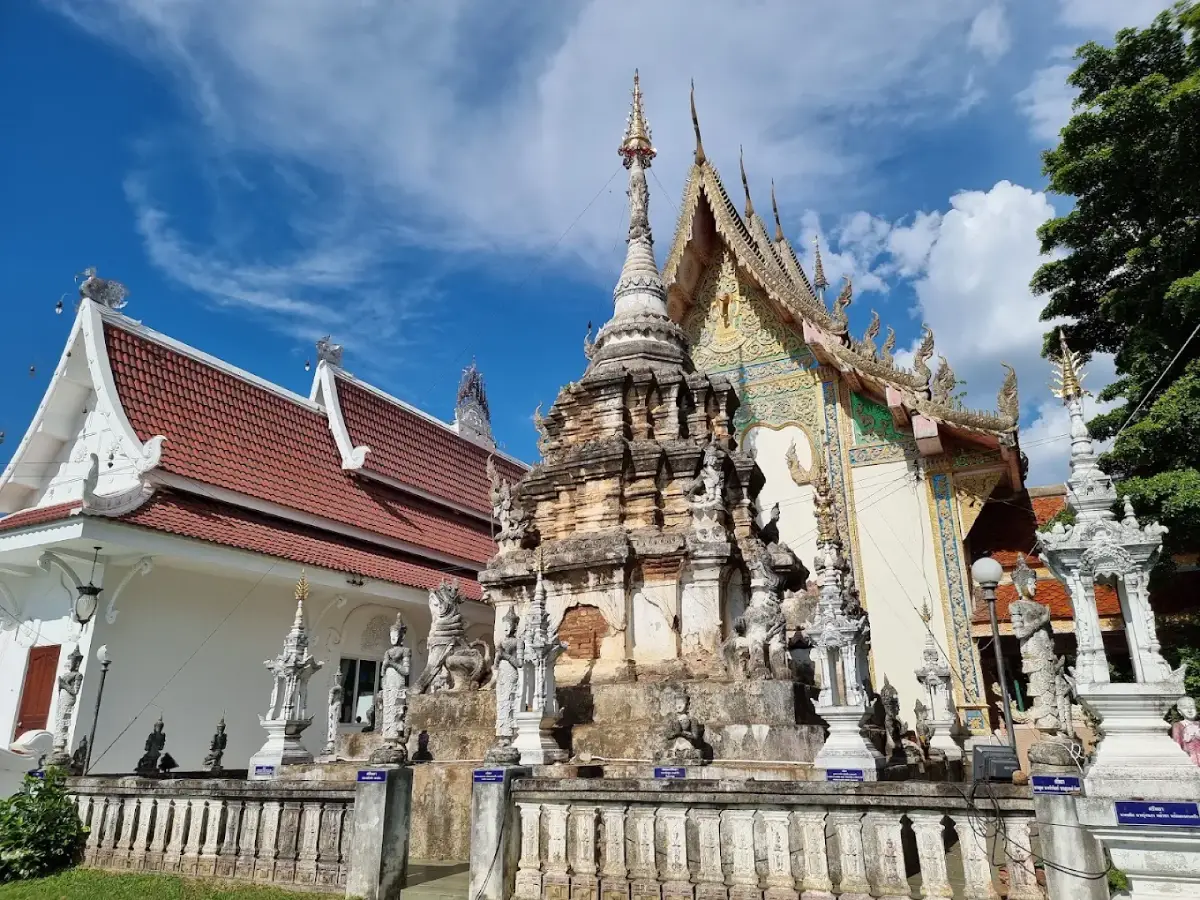
Wat Nong Khaem is a local Buddhist temple under the Mahanikaya order, located at No. 160, Ban San Khok Chang, Mu 7, Mae Ka Subdistrict, San Pa Tong District, Chiang Mai Province. The temple land covers 3 rai, 1 ngan, and 96 square wah, with two plots of monastic land. Wat Nong Khaem was originally an abandoned temple before Khru Ba Kuna encouraged local villagers to restore it and rebuild the temple in 1897. The temple is therefore significant as a revived sacred site, a community temple, and a place where the annual relic-stupa bathing tradition remains central to local Buddhist life.
Wat Nong Khaem has several names connected with local memory and temple records. Villagers also refer to it as Wat San Khok Chang, after the name of the village where it is located. In provincial temple records, it appears as Wat Nong Saem. These names show different layers of local identity: the name used by villagers, the name linked with the village, and the name recorded in official temple documentation. All of them point to the same community temple of Ban San Khok Chang in Mae Ka Subdistrict.
The temple’s rebuilding in 1897 is an important part of its story. Wat Nong Khaem did not begin as an ordinary newly established temple. It grew from the restoration of an older abandoned sacred site. Khru Ba Kuna played a key role by inviting villagers to help restore and rebuild the temple. In Lanna communities, abandoned temple sites often remain alive in local memory, and when community faith returns, such places can be revived as active temples once again.
Ban San Khok Chang is a community in Mae Ka Subdistrict with more than one important religious site. Wat Nong Khaem is part of the same village landscape as Wat San Khok Chang and Wat Phra Chao Ton Luang. This concentration of temples and sacred places reflects a strong Buddhist foundation in the village. Wat Nong Khaem has its own distinct identity as a revived abandoned temple with an ancient chedi and an annual relic-stupa bathing ceremony.
Mae Ka Subdistrict contains several village temples, including Wat Ko Chok, Wat Sai Mun, Wat Mae Ka, Wat Rong Khut, Wat Rong Wua, Wat San Kawan, Wat San Khok Chang, Wat Nong Khrop, Wat Nong Tao Kham, Wat Inthawichai, and Wat Nong Khaem. These temples reflect the Lanna pattern in which each village maintains a temple as a center of faith, tradition, social relationship, and local memory. Wat Nong Khaem is part of this wider Buddhist landscape in San Pa Tong.
Important structures at Wat Nong Khaem include a viharn, monks’ residence, sermon hall, multipurpose hall, alms pavilion, and toilets. The temple’s important sacred object is an ancient chedi. These elements allow the temple to support both monastic and lay community activities. The viharn serves as the main worship space. The monks’ residence supports daily monastic life. The sermon hall and multipurpose hall support Dharma listening, ceremonies, and community gatherings. The alms pavilion supports food offerings and merit-making activities.
The viharn is the main devotional space of Wat Nong Khaem. It is where villagers and visitors pay respect, make merit, listen to Dharma, and take part in Buddhist ceremonies. In Lanna community temples, a viharn is more than an architectural structure. It is the heart of the relationship between monks and laypeople, a place where faith, chanting, offerings, and annual religious events bring the community together.
The monks’ residence is important because it allows the temple to remain active in everyday Buddhist life. Resident monks use it for living, chanting, study, temple care, and preparation for religious duties. A temple with resident monks serves the community not only during major festivals but throughout the year through Buddhist holy days, family ceremonies, and spiritual guidance.
The sermon hall and multipurpose hall reflect the temple’s role as a social and religious center. These spaces support Dharma listening, temple meetings, family merit-making, and village events. In northern Thai communities, such halls often serve as places where villagers gather to prepare merit-making events, cook food, organize offerings, and maintain local traditions.
The alms pavilion is closely connected with food offerings and merit-making. In village temple life, offering food to monks is one of the most visible forms of lay Buddhist practice. The alms pavilion therefore represents generosity, cooperation, and the everyday relationship between the temple and the local community.
The ancient chedi is the most important sacred object at Wat Nong Khaem and the central focus of its annual relic-stupa bathing ceremony. A chedi in a Lanna community temple represents faith, continuity, and the sacred identity of the temple grounds. The presence of an ancient chedi gives Wat Nong Khaem historical depth and links the present temple with an older sacred past remembered by the community.
The annual relic-stupa bathing ceremony is the temple’s most important tradition. It is held every year on the eighth waning day of the ninth lunar month. The event includes a merit-making ceremony for life blessing and the bathing of the relic stupa. This tradition connects the chedi, the temple, and the community in a visible and meaningful way. It is a time when villagers gather to make merit, renew faith, and honor the sacred heritage of the temple.
The life-blessing ceremony held together with the relic-stupa bathing ceremony has deep meaning in Lanna culture. It is associated with strengthening life, renewing morale, and creating auspiciousness for individuals, families, and the community. When combined with the bathing of the chedi, the annual event becomes both a Buddhist ceremony and a social gathering that reinforces community faith.
Phra Suphatthanachot Sutthayano is the abbot of Wat Nong Khaem. The abbot plays an important role in maintaining the temple, guiding Buddhist activities, coordinating with lay supporters, and preserving the relationship between the temple and Ban San Khok Chang. For a temple revived from an abandoned sacred site and centered around an ancient chedi, continuous care is essential for keeping the temple active and meaningful.
Wat Nong Khaem serves the local community in many ways. It is a place where elders make merit, where young people learn temple manners, where families hold ceremonies, and where villagers gather for annual temple events. The temple supports Buddhist holy day observances, Dharma listening, Kathin robe-offering ceremonies, pha pa merit-making, Buddhist Lent, end-of-Lent activities, family merit-making, and the annual relic-stupa bathing ceremony.
The main appeal of Wat Nong Khaem lies in three elements: its revival from an abandoned temple site, its ancient chedi, and its annual relic-stupa bathing tradition. The temple is not defined by large-scale tourism or monumental buildings. Its value comes from continuity, local memory, and the way Buddhist faith remains woven into the life of Ban San Khok Chang.
The main things to appreciate at Wat Nong Khaem are the viharn, ancient chedi, sermon hall, multipurpose hall, alms pavilion, and the atmosphere of a living community temple. Visitors should begin by paying respect in the main worship area and then observe the ancient chedi calmly and respectfully. Visiting during the annual relic-stupa bathing ceremony offers a deeper view of community participation and Lanna Buddhist tradition.
Wat Nong Khaem can be included in a connected cultural route in Mae Ka and San Pa Tong. Nearby places include Wat San Khok Chang, Wat Phra Chao Ton Luang, Wat Nong Khrop, Wat Nong Tao Kham, Wat San Kawan, Thung Fa Bot Market or Kad Ngua San Pa Tong, and Wiang Tha Kan Ancient Town. This route works well for a half-day or full-day trip combining temple visits, local food, village culture, and local history.
Getting There is easiest by private car or rental car. From Chiang Mai city, take the Chiang Mai–Hot Road, also known as Highway 108, toward San Pa Tong District. Continue into Mae Ka Subdistrict and Ban San Khok Chang, Mu 7. The temple is located within the village area, so drivers should proceed carefully, especially on Buddhist holy days, weekends, and during the annual relic-stupa bathing ceremony.
The best time to visit is in the morning or afternoon before evening. These periods are suitable for worship, quiet walking, and observing the viharn and ancient chedi. Travelers who want to experience the temple’s annual tradition should plan around the eighth waning day of the ninth lunar month. Those who prefer a quieter visit can come on ordinary weekdays.
Visitors should follow normal Thai temple etiquette. Dress modestly, keep voices low, avoid touching sacred objects without permission, do not disturb monks or local residents, and take photographs respectfully. Extra care should be taken around the ancient chedi and worship areas because these are sacred spaces of the temple and community.
In summary, Wat Nong Khaem is an old community temple in Ban San Khok Chang, Mu 7, Mae Ka Subdistrict, San Pa Tong District, Chiang Mai. Rebuilt in 1897 from an abandoned temple site through the leadership of Khru Ba Kuna and local villagers, the temple contains a viharn, monks’ residence, sermon hall, multipurpose hall, alms pavilion, and an ancient chedi. Its annual relic-stupa bathing ceremony on the eighth waning day of the ninth lunar month is the temple’s most important tradition and makes Wat Nong Khaem a meaningful destination for merit-making, local history, and quiet Lanna cultural travel.
| Name | Wat Nong Khaem |
| Alternative Names | Wat San Khok Chang, Wat Nong Saem |
| Location | Ban San Khok Chang, Mu 7, Mae Ka Subdistrict, San Pa Tong District, Chiang Mai Province |
| Address | No. 160, Ban San Khok Chang, Mu 7, Mae Ka Subdistrict, San Pa Tong District, Chiang Mai Province |
| Place Type | Local Buddhist temple under the Mahanikaya order |
| Temple Area | 3 rai, 1 ngan, 96 square wah, with two plots of monastic land |
| Highlights | An old temple revived from an abandoned sacred site, with an ancient chedi and an annual relic-stupa bathing ceremony on the eighth waning day of the ninth lunar month |
| History | Rebuilt in 1897 from an abandoned temple site after Khru Ba Kuna encouraged villagers to restore and rebuild the temple |
| Distinctive Features | A Lanna community temple with a restored abandoned-temple history, an ancient chedi, and a living annual temple tradition |
| Travel Information | From Chiang Mai city, take the Chiang Mai–Hot Road toward San Pa Tong, then continue into Mae Ka Subdistrict and Ban San Khok Chang, Mu 7; private car or rental car is most convenient |
| Current Status | A community temple of Ban San Khok Chang, Mae Ka Subdistrict, open for daily visits and merit-making |
| Open Days | Daily |
| Opening Hours | 08.00 – 17.00 |
| Important Structures | Viharn, monks’ residence, sermon hall, multipurpose hall, alms pavilion, and toilets |
| Important Sacred Object | Ancient chedi |
| Abbot / Caretaker | Phra Suphatthanachot Sutthayano |
| Main Contact Number | 053-837-268 |
| Main Tradition | Annual relic-stupa bathing ceremony on the eighth waning day of the ninth lunar month, with life-blessing merit-making and chedi bathing |
| Nearby Tourist Attractions | 1. Wat San Khok Chang / Wat Phra Chao Ton Luang, about 1 km 2. Wat Nong Khrop, about 2 km 3. Wat Nong Tao Kham, about 3 km 4. Wat San Kawan, about 4 km 5. Thung Fa Bot Market / Kad Ngua San Pa Tong, about 8 km |
| Nearby Restaurants | 1. Baan Ton Mai Home Stay & Coffee, about 5 km, Tel. 084-613-4997 2. Nong Fluke Restaurant, about 6 km, Tel. 053-829-528 3. 9 Kaprao Ban Ton Krok, about 7 km, Tel. 089-647-4487, 096-559-0311 4. Cafe Vintage1980 San Pa Tong, about 8 km, Tel. 096-084-0462 5. ZAPALiMENE San Pa Tong, about 9 km, Tel. 096-236-9197, 064-874-2594 |
| Nearby Accommodations | 1. Huen Ui Oey (Sane Wang Khrok), about 5 km, Tel. 087-680-4038 2. Tai Resort Sanpatong, about 8 km, Tel. 063-096-7000 3. Home Thai Resort, about 10 km, Tel. 063-952-8228 4. P Resort & W Resort, about 11 km, Tel. 064-334-4566 5. Kaomai Lanna Resort, about 14 km, Tel. 053-481-201, 086-428-7481 |
Frequently Asked Questions (FAQ)
Q: Where is Wat Nong Khaem located?
A: Wat Nong Khaem is located at No. 160, Ban San Khok Chang, Mu 7, Mae Ka Subdistrict, San Pa Tong District, Chiang Mai Province.
Q: Does Wat Nong Khaem have other names?
A: Yes. It is also known locally as Wat San Khok Chang, and it appears in provincial temple records as Wat Nong Saem.
Q: When was Wat Nong Khaem built?
A: Wat Nong Khaem was rebuilt in 1897 from an abandoned temple site after Khru Ba Kuna encouraged local villagers to restore and rebuild it.
Q: What important structures are found at Wat Nong Khaem?
A: Important structures include a viharn, monks’ residence, sermon hall, multipurpose hall, alms pavilion, and toilets.
Q: What is the most important sacred object at Wat Nong Khaem?
A: The most important sacred object is the ancient chedi, which is the focus of the annual relic-stupa bathing ceremony.
Q: What is the main annual tradition at Wat Nong Khaem?
A: The main annual tradition is the relic-stupa bathing ceremony held on the eighth waning day of the ninth lunar month, with life-blessing merit-making and chedi bathing.
Q: Who is the abbot of Wat Nong Khaem?
A: Phra Suphatthanachot Sutthayano is the abbot of Wat Nong Khaem.
Q: What type of traveler is Wat Nong Khaem suitable for?
A: It is suitable for travelers interested in Lanna community temples, revived abandoned temple sites, ancient chedi, annual temple traditions, and quiet cultural routes in San Pa Tong.
 Category: ●Places of Worship
 Group: ●Temple
Last Update : 1 WeekAgo
 Last Update : 1 WeekAgo
 Click to Access the Navigation Map GPS
 Muang Chiang Mai(121)Chom Thong(47)Mae Chaem(25)Chiang Dao(33)Doi Saket(68)Mae Taeng(85)Mae Rim(69)Samoeng(29)Fang(71)Mae Ai(59)Phrao(70)San Pa Tong(103)San Kamphaeng(66)San Sai(73)Hang Dong(73)Hot(32)Doi Tao(22)Omkoi(11)Saraphi(74)Wiang Haeng(15)Chai Prakan(28)Mae Wang(32)Mae On(22)Doi Lo(33)Galyani Vadhana(1)


