
lovethailand home >North Travel Attractions >Chiang Mai Travel Attractions >San Pa Tong >Mae Ka > Wat Rong Khut
TL;DR: Wat Rong Khut is located at Ban Rong Khut, Mu 10, Mae Ka Subdistrict, San Pa Tong District, Chiang Mai Province, open Daily, hours 08.00 – 17.00.
Wat Rong Khut
Open Days: Daily
Opening Hours: 08.00 – 17.00
Wat Rong Khut is a local Buddhist temple under the Mahanikaya order, located at No. 116, Mu 10, Ban Rong Khut, Mae Ka Subdistrict, San Pa Tong District, Chiang Mai Province. The temple was built in 1881, during the period when San Pa Tong was formerly known as Ban Mae District. Important local devotees included Pho Phaya Si, Mae Si Wan, and Pho Ma Machomphu, while Khru Ba Kue Ma led the temple construction. Wat Rong Khut is especially meaningful because it was moved from an older abandoned temple site located about 1 kilometer northeast of the present temple. Its history is closely connected with the Ping River, seasonal flooding, water drainage, and the change of name from Wat Si Bun Rueang to Wat Rong Khut.
The history of Wat Rong Khut begins with an older abandoned temple whose remaining evidence included a chedi base near the Ping River. The former temple site was affected by frequent flooding during the rainy season because there was no modern flood embankment at that time. When the old location became unsuitable for continuous religious use, the community moved the temple to its present site. This makes Wat Rong Khut not simply a newly built temple, but a continuation of faith from an older sacred site and the memory of a riverside community.
The temple was formerly known as Wat Si Bun Rueang. Because several temples in the area carried the same name, religious authorities later asked the community for distinguishing local evidence. Villagers explained that the community had dug a drainage channel from a canal into the Ping River, about 700 meters long, to release floodwater during the rainy season. This local feature became the basis for the new name Wat Rong Khut. The name therefore reflects the landscape, water management, and collective effort of the community.
The meaning of Rong Khut is closely tied to waterways, drainage, and the act of digging a channel to direct water toward the Ping River. The name preserves a practical memory of how villagers responded to flooding. It is not merely a place name, but a record of local cooperation, environmental adaptation, and the community’s determination to protect both its village and its place of faith.
Khru Ba Kue Ma led the temple construction in 1881. After the temple was built, he stayed for only one Buddhist Lent before continuing his ascetic journey toward Lamphun Province. Later, Phra Surin Panyawachiro became abbot in 1882 and remained for about 30 rains retreats before leaving the monkhood. Phra Khru Ba Tao Khamphiro later served as abbot, and the provincial Sangha appointed Phra Athikan Tao Khamphiro as abbot from 1934 until 1975. After that, Phra Khru Wisutthisilasangwon, also known as Khru Ba Sai, became abbot.
The sequence of abbots shows the temple’s continuity as a community Buddhist institution. Each abbot played a role not only in monastic practice, but also in maintaining the temple, guiding lay supporters, preserving local memory, and supporting community merit-making. For a temple with a history of relocation from an older riverside site, the cooperation between monks and villagers has been essential to its survival and continued meaning.
Wat Rong Khut is located in Mae Ka Subdistrict, an area with many village temples, including Wat Ko Chok, Wat Sai Mun, Wat Mae Ka, Wat Rong Wua, Wat San Kawan, Wat Nong Khrop, Wat Nong Tao Kham, and Wat Inthawichai. These temples reflect the Lanna pattern in which each village has its own temple as a center of faith, tradition, merit-making, and community relationship. Wat Rong Khut is part of this local Buddhist landscape and is especially notable for its connection with the Ping River and local water management.
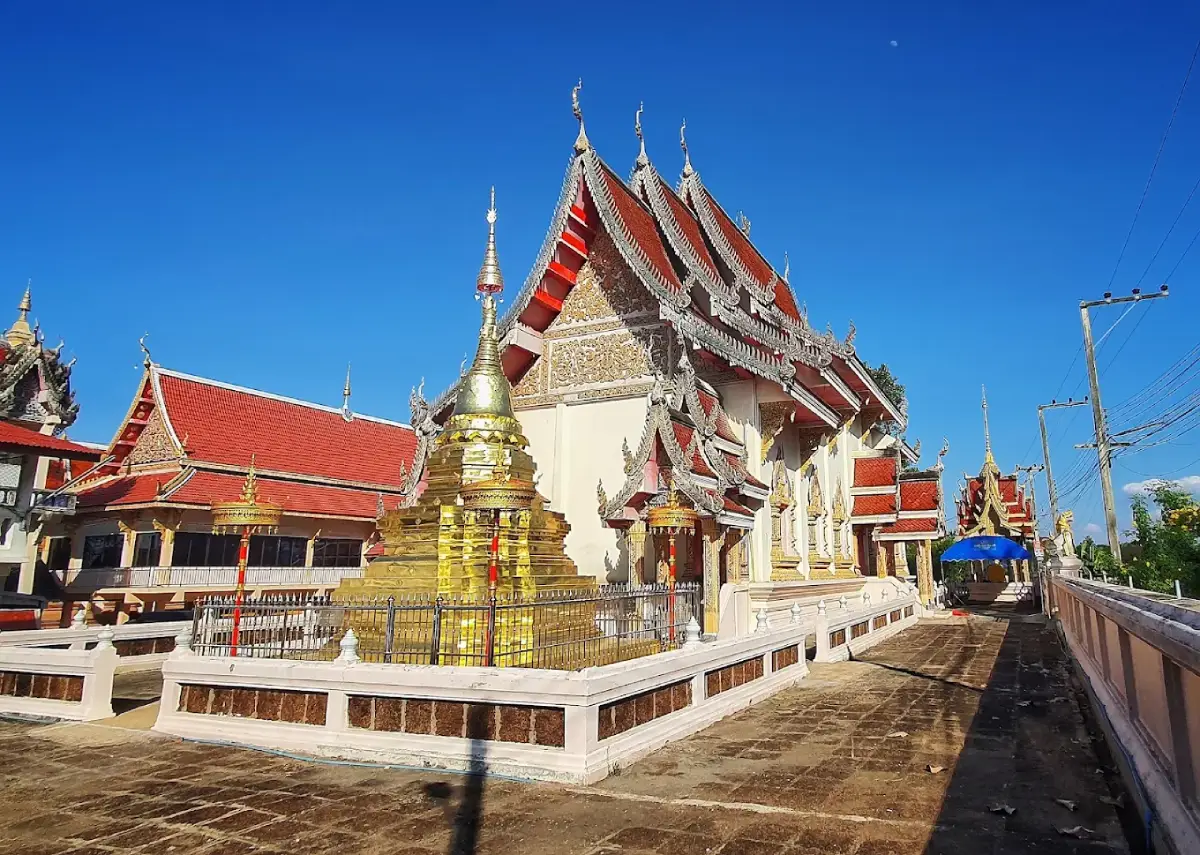
Important structures at Wat Rong Khut are clearly recorded. The temple has one chedi with a square base, 5 meters wide and 18 meters high. The viharn measures 8 meters wide and 23 meters long. The sermon hall measures 8 meters wide and 18 meters long, with a small corrugated tile roof. The monks’ residence measures 12 meters wide and 18 meters long and has two floors, with four rooms upstairs and four rooms downstairs, topped with a Thai-style glazed clay-tile roof. The bell tower is square, 4 meters wide and 9 meters high. The merit-making hall measures 4 meters wide and 27 meters long.
The chedi is one of the most important sacred structures at Wat Rong Khut. A chedi is a Buddhist symbol of devotion and continuity. The temple’s chedi, with its square base and height of 18 meters, forms a prominent religious landmark in the temple compound. The temple history also refers to the remaining chedi base at the older abandoned temple site near the Ping River, giving the chedi theme both religious and historical significance.
The viharn is the main worship space at Wat Rong Khut. It supports merit-making, worship, Dharma listening, and Buddhist ceremonies for local residents and visitors. In a Lanna community temple, the viharn is not just an architectural building; it is the heart of the temple’s devotional life. It is where monks and laypeople meet through worship, offerings, chanting, and annual religious activities.
The sermon hall functions as a central community space. It is used for Dharma listening, preparing temple events, family merit-making, and Buddhist observances. In Lanna village temples, a sermon hall often serves both religious and social purposes. It is where the community gathers, organizes merit-making events, and maintains local relationships through shared Buddhist practice.
The monks’ residence gives the temple a continuing monastic life. Its two-floor structure provides rooms for monks and supports daily chanting, study, temple care, and religious preparation. A temple with resident monks is a living religious institution rather than only a place for occasional visits. Through the presence of monks, Wat Rong Khut continues to serve the spiritual needs of Ban Rong Khut.
The bell tower is another meaningful feature of the temple. In Thai Buddhist culture, the bell is connected with the rhythm of temple life, the call to religious activity, and the atmosphere of merit-making. The bell tower is therefore not only an architectural element but also a symbol of community gathering and Buddhist practice.
The merit-making hall supports temple ceremonies, family merit-making, and community events. In Lanna communities, temples are used for many important moments in life, including funeral merit-making, annual offerings, and family ceremonies. This hall reflects the temple’s role as a place of spiritual support for villagers.
Phra Khru Wisutthisilasangwon, also known as Khru Ba Sai, is the abbot of Wat Rong Khut. The abbot is responsible for maintaining the temple, guiding Buddhist activities, and preserving the relationship between the temple and Ban Rong Khut. A temple with a long history and several important structures requires continuous care in order to remain an active center of faith.
The role of Wat Rong Khut in the community can be seen clearly through the story of villagers digging a 700-meter drainage channel into the Ping River. This act reflects the close relationship between the temple and everyday life. The temple name preserves the memory of a practical community solution to flooding and shows how Buddhist faith, settlement, and water management were connected.
Annual activities at Wat Rong Khut follow the rhythm of Lanna community temples. These include Buddhist holy day observances, Dharma listening, Kathin robe-offering ceremonies, pha pa merit-making, Songkran or northern Thai New Year activities, candle offerings for Buddhist Lent, the end of Buddhist Lent, and family merit-making ceremonies. During temple events, villagers help prepare the place, food, offerings, and ceremonial items, showing the continued cooperation of the community.
The main things to appreciate at Wat Rong Khut are the viharn, chedi, bell tower, sermon hall, merit-making hall, and the temple’s connection with the Ping River. Visitors should move slowly and respectfully, observing the temple as a living community space. The temple is best understood through its history of relocation, flooding, drainage, and community cooperation.
Visitors should pay respect in the main worship area and at the chedi. Making merit at Wat Rong Khut can be understood as more than a personal request for blessings. It is also a way to acknowledge the continuity of faith that began from an older temple site and has been preserved by monks and villagers over generations.
Wat Rong Khut is suitable for travelers interested in Lanna village temples, old temple histories, riverside communities, temple relocation stories, and cultural routes in Mae Ka Subdistrict. It is not a large-scale tourist attraction, but it offers a meaningful view of how temples, water, flooding, and village identity are connected in northern Thailand.
Wat Rong Khut can be included in a cultural route in Mae Ka and San Pa Tong. Nearby places include Wat Mae Ka, Wat Ko Chok, Wat Sai Mun, Wat Rong Wua, Wat Inthawichai, Thung Fa Bot Market or Kad Ngua San Pa Tong, and Wiang Tha Kan Ancient Town. This route works well for a half-day or full-day trip combining temple visits, local food, village culture, and local history.
Getting There is easiest by private car or rental car. From Chiang Mai city, take the Chiang Mai–Hot Road, also known as Highway 108, toward San Pa Tong District. Continue into Mae Ka Subdistrict and Ban Rong Khut, Mu 10. Local roads pass through village areas, so drivers should proceed carefully, especially on Buddhist holy days, weekends, and temple-event days.
The best time to visit is in the morning or afternoon before evening. These periods are suitable for worship, quiet walking, and continuing to nearby temples or attractions. Travelers who want to visit Thung Fa Bot Market should plan according to the market schedule. Those interested in local history can continue to Wiang Tha Kan Ancient Town on the same cultural route.
Visitors should follow normal Thai temple etiquette. Dress modestly, keep voices low, avoid touching sacred objects without permission, do not disturb monks or local residents, and take photographs respectfully. If visiting during a ceremony or merit-making event, follow the guidance of the temple and community.
In summary, Wat Rong Khut is an important community temple in Ban Rong Khut, Mae Ka Subdistrict, San Pa Tong District, Chiang Mai. Built in 1881 under the leadership of Khru Ba Kue Ma, it continues the faith of an older abandoned temple formerly known as Wat Si Bun Rueang. Its present name comes from the community’s effort to dig a drainage channel into the Ping River. With a chedi, viharn, sermon hall, monks’ residence, bell tower, and merit-making hall, Wat Rong Khut offers a meaningful view of Lanna village Buddhism, local water management, and community resilience.
| Name | Wat Rong Khut |
| Former Name | Wat Si Bun Rueang |
| Location | Ban Rong Khut, Mu 10, Mae Ka Subdistrict, San Pa Tong District, Chiang Mai Province |
| Address | No. 116, Mu 10, Mae Ka Subdistrict, San Pa Tong District, Chiang Mai 50120 |
| Place Type | Local Buddhist temple under the Mahanikaya order |
| Highlights | An old community temple connected with a former abandoned riverside temple, flooding, drainage work, and the Ping River |
| History | Built in 1881 under the leadership of Khru Ba Kue Ma and connected with an older abandoned temple formerly known as Wat Si Bun Rueang |
| Name Origin | The name comes from villagers digging a drainage channel about 700 meters long from a canal into the Ping River to manage flooding during the rainy season |
| Distinctive Features | A Lanna community temple with a history of relocation from an older flood-prone temple site near the Ping River |
| Travel Information | From Chiang Mai city, take the Chiang Mai–Hot Road toward San Pa Tong, then continue into Mae Ka Subdistrict and Ban Rong Khut, Mu 10; private car or rental car is most convenient |
| Current Status | A community temple of Ban Rong Khut, Mae Ka Subdistrict, open for daily visits and merit-making |
| Open Days | Daily |
| Opening Hours | 08.00 – 17.00 |
| Important Structures | Chedi, viharn, sermon hall, monks’ residence, bell tower, and merit-making hall |
| Structure Details | Chedi: 5 meters wide and 18 meters high Viharn: 8 meters wide and 23 meters long Sermon hall: 8 meters wide and 18 meters long Monks’ residence: 12 meters wide and 18 meters long Bell tower: 4 meters wide and 9 meters high Merit-making hall: 4 meters wide and 27 meters long |
| Abbot / Caretaker | Phra Khru Wisutthisilasangwon (Sai) |
| Main Contact Number | 053-837-364 |
| Important Historical Figures | Pho Phaya Si, Mae Si Wan, Pho Ma Machomphu, Khru Ba Kue Ma, Phra Surin Panyawachiro, Phra Khru Ba Tao Khamphiro, and Phra Khru Wisutthisilasangwon (Sai) |
| Nearby Tourist Attractions | 1. Wat Mae Ka, about 2 km 2. Wat Ko Chok, about 3 km 3. Wat Sai Mun, about 4 km 4. Thung Fa Bot Market / Kad Ngua San Pa Tong, about 7 km 5. Wiang Tha Kan Ancient Town, about 11 km |
| Nearby Restaurants | 1. Baan Ton Mai Home Stay & Coffee, about 4 km, Tel. 084-613-4997 2. Nong Fluke Restaurant, about 6 km, Tel. 053-829-528 3. Steamed Fish and Grilled Fish Wraps (Pla Ka Yam) San Pa Tong, about 7 km 4. ZAPALiMENE San Pa Tong, about 8 km, Tel. 096-236-9197, 064-874-2594 5. Charcoal Pork Leg Rice San Pa Tong, about 9 km, Tel. 081-881-5112 |
| Nearby Accommodations | 1. Huen Ui Oey (Sane Wang Khrok), about 2 km, Tel. 087-680-4038 2. Tai Resort Sanpatong, about 8 km, Tel. 063-096-7000 3. Home Thai Resort, about 10 km, Tel. 063-952-8228 4. P Resort & W Resort, about 11 km, Tel. 064-334-4566 5. Kaomai Lanna Resort, about 14 km, Tel. 053-481-201 |
Frequently Asked Questions (FAQ)
Q: Where is Wat Rong Khut located?
A: Wat Rong Khut is located at No. 116, Mu 10, Ban Rong Khut, Mae Ka Subdistrict, San Pa Tong District, Chiang Mai Province.
Q: When was Wat Rong Khut built?
A: Wat Rong Khut was built in 1881.
Q: What was the former name of Wat Rong Khut?
A: Wat Rong Khut was formerly known as Wat Si Bun Rueang before it was renamed after the community drainage channel story.
Q: What is the origin of the name Wat Rong Khut?
A: The name comes from villagers digging a drainage channel about 700 meters long from a canal into the Ping River to manage seasonal flooding.
Q: What important structures are found at Wat Rong Khut?
A: Important structures include a chedi, viharn, sermon hall, monks’ residence, bell tower, and merit-making hall.
Q: Who is the abbot of Wat Rong Khut?
A: Phra Khru Wisutthisilasangwon (Sai) is the abbot of Wat Rong Khut.
Q: What type of traveler is Wat Rong Khut suitable for?
A: It is suitable for travelers interested in Lanna community temples, old temples, riverside village history, quiet merit-making, and cultural routes in San Pa Tong.
Q: What is the best way to get to Wat Rong Khut?
A: A private car or rental car is the most convenient option. Take the Chiang Mai–Hot Road toward San Pa Tong, then continue into Mae Ka Subdistrict and Ban Rong Khut, Mu 10.
 Category: ●Places of Worship
 Group: ●Temple
Last Update : 3 DayAgo
 Last Update : 3 DayAgo
 Click to Access the Navigation Map GPS
 Muang Chiang Mai(121)Chom Thong(47)Mae Chaem(25)Chiang Dao(33)Doi Saket(68)Mae Taeng(85)Mae Rim(69)Samoeng(29)Fang(71)Mae Ai(59)Phrao(70)San Pa Tong(103)San Kamphaeng(66)San Sai(73)Hang Dong(73)Hot(32)Doi Tao(22)Omkoi(11)Saraphi(74)Wiang Haeng(15)Chai Prakan(28)Mae Wang(32)Mae On(22)Doi Lo(34)Galyani Vadhana(1)


