
lovethailand home >North Travel Attractions >Chiang Mai Travel Attractions >San Pa Tong >Makham Luang > Wat Mongkhon (Makham Luang)
TL;DR: Wat Mongkhon (Makham Luang) is located at Ban Dong Khi Lek, Mu 7, Makham Luang Subdistrict, San Pa Tong District, Chiang Mai Province, open Daily, hours 08.00 – 17.00.
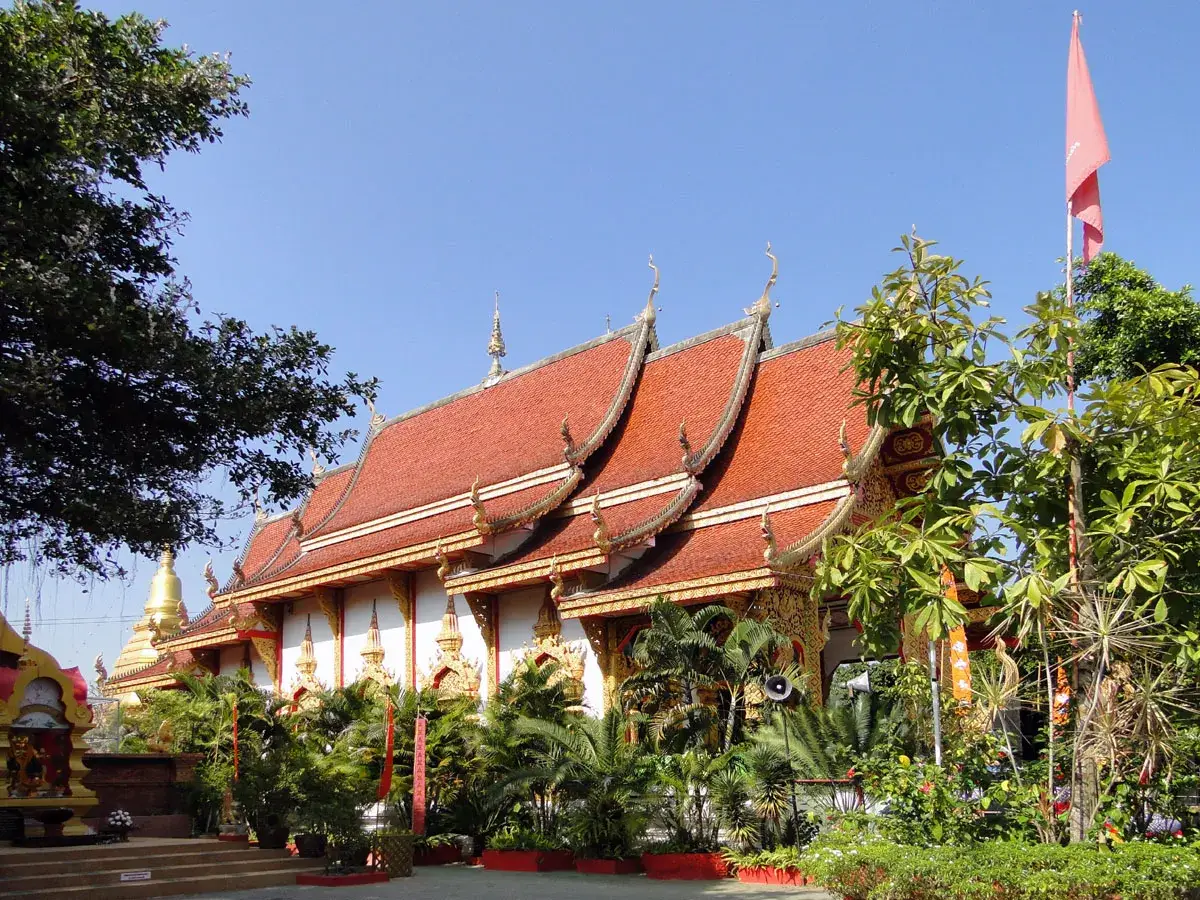
Wat Mongkhon (Makham Luang)
Open Days: Daily
Opening Hours: 08.00 – 17.00
Wat Mongkhon (Makham Luang) is a local Buddhist temple in Ban Dong Khi Lek, Makham Luang Subdistrict, San Pa Tong District, Chiang Mai Province. It is a community temple under the Mahanikaya order and stands on a site that local residents once called Wat Rang Mongkhon, meaning an abandoned temple known by the name Mongkhon. The temple was officially declared a Buddhist temple on 1 August 1989. Although it is not a large tourist temple, it has strong local significance as a living religious center for merit-making, Buddhist ceremonies, community gatherings, and local Lanna spiritual life.
The temple is located at No. 282, Mu 7, Dong Khi Lek, Makham Luang Subdistrict, San Pa Tong District, Chiang Mai 50120. Its temple land covers 2 rai, 2 ngan, and 84 square wah. This modest scale gives Wat Mongkhon a quiet and intimate atmosphere. Instead of monumental architecture, its value lies in the way it serves the community: as a place for worship, Buddhist rites, funeral merit-making, village activities, and the continuity of local faith.
The name “Mongkhon” means auspiciousness, prosperity, and blessing. This meaning is closely tied to the temple’s history as a restored sacred site. When an abandoned temple is revived and returned to active religious use, it is not merely a physical restoration. It is also a return of spiritual identity to the village. Wat Mongkhon therefore represents a local effort to preserve a sacred place and allow it to serve the people of Ban Dong Khi Lek again.
The local context of Makham Luang and San Pa Tong is important to understanding the temple. This area is part of southern Chiang Mai, where village temples remain closely connected with everyday life. Wat Mongkhon is not separate from the community. It supports family ceremonies, annual merit-making, Buddhist holy day activities, and communal events. In this sense, the temple functions as both a religious site and a social center for the village.
Phra Khru Sangharak Saiyut Attamano is identified as the abbot of Wat Mongkhon. In a community temple, the abbot plays a key role in maintaining the religious compound, organizing Buddhist rites, guiding laypeople, and preserving the temple’s place in local life. The continuity of monastic leadership is important for a temple like Wat Mongkhon because its value depends on regular use, community trust, and ongoing religious practice.
The sermon hall, or sala kan parian, is one of the temple’s important functional buildings. It is used for listening to Dharma teachings, organizing merit-making events, and hosting community religious gatherings. In northern Thai village temples, this type of hall often serves as a shared religious and social space. It is where villagers gather during Buddhist holy days, Kathin ceremonies, robe-offering events, funeral rites, and family merit-making occasions.
The Thai-Lanna style viharn is an important structure within Wat Mongkhon. It reflects the temple’s northern Thai cultural identity through its religious function and architectural character. The viharn is the main worship space where visitors can pay respect to Buddha images and experience the quiet atmosphere of a local Lanna temple. For travelers interested in community temples rather than crowded landmarks, this is the most meaningful part of the visit.
The monks’ residence, or kuti, supports the daily life of resident monks. Its presence shows that the temple is not only a ceremonial space, but also a place of monastic living, study, discipline, and religious service. A community temple remains active because monks are present to perform rituals, teach, care for the temple compound, and maintain the connection between Buddhism and laypeople.
The merit-making pavilion and multipurpose hall make the temple useful for a wide range of community activities. The merit-making pavilion is especially important for funeral rites and ceremonies dedicated to departed relatives. The multipurpose hall supports events that require flexible space. The kitchen and storage room are practical but essential parts of the temple, especially during festivals and large merit-making gatherings when villagers prepare food and supplies together.
Wat Mongkhon houses several important sacred objects, including Buddha images in the Mara-vijaya posture and meditation posture, a replica stupa, a replica Emerald Buddha, a copper Naga-protected Buddha image, Phra Singh Nueng, Phra Singh Sam, and 2 standing chief disciple images. These sacred objects give visitors several points of worship and reflection. The Mara-vijaya image symbolizes the Buddha’s victory over temptation, while the meditation posture represents concentration, stillness, and spiritual discipline.
The replica stupa allows devotees to pay respect to the idea of sacred relic worship, a major tradition in Thai Buddhism. The replica Emerald Buddha reflects one of Thailand’s most recognized Buddhist symbols. The Naga-protected Buddha image connects with the protective naga motif in Buddhist art. These objects make the temple spiritually meaningful even though it is small in physical size.
Phra Singh Nueng and Phra Singh Sam add a clear Lanna Buddhist art dimension to the temple. Buddha images in the Phra Singh tradition are closely associated with northern Thai religious aesthetics and devotional culture. Their presence at Wat Mongkhon helps link the temple to the wider artistic and spiritual heritage of Chiang Mai and Lanna Buddhism.
The 2 standing chief disciple images complete the sacred arrangement by reminding visitors of the Buddha’s great disciples and the importance of learning, wisdom, and disciplined practice. Together with the Buddha images, stupa, and Lanna-style sacred objects, they make Wat Mongkhon a compact but meaningful worship site for local residents and travelers interested in Buddhist culture.
The main appeal of Wat Mongkhon is not spectacle, but authenticity. It is a quiet village temple where religious life continues in a practical, everyday way. Visitors can come to make merit, offer donations, pay respect to Buddha images, observe a local Lanna temple environment, and understand how temples support village life in San Pa Tong. This makes the temple especially suitable for travelers who prefer calm cultural routes over heavily visited tourist sites.
The temple’s annual and seasonal activities follow the pattern of northern Thai community temples. These include Buddhist holy day observances, Dharma listening, Kathin robe-offering ceremonies, pha pa merit-making, Songkran or northern Thai New Year activities, funeral merit-making, and family religious rites. During such occasions, the temple becomes a place where villagers cooperate, prepare food, arrange the space, receive monks, and renew social bonds through shared religious practice.
Wat Mongkhon can be included in a broader San Pa Tong cultural route. Nearby places include Wat Phrabat Yang Wit, Wat Makham Luang, Thung Fa Bot Market or Kad Ngua San Pa Tong, Wiang Tha Kan Ancient Town, and Baan Tawai Handicraft Village. This makes the temple a useful stop for travelers exploring village temples, local markets, archaeological sites, and craft communities south of Chiang Mai city.
Getting There is easiest by private car or rental car. From Chiang Mai city, take the Chiang Mai–Hot Road, also known as Highway 108, toward San Pa Tong District. Continue into Makham Luang Subdistrict and Ban Dong Khi Lek. The temple is located within the village area of Mu 7. Drive carefully through the community road, especially on Buddhist holy days, weekends, or during local temple events.
To get the most from a visit, allow time to walk quietly around the viharn, pay respect to the sacred objects, and observe the layout of a local Lanna community temple. Visitors should dress modestly, speak quietly, avoid touching sacred objects without permission, and take photographs respectfully. Wat Mongkhon is best appreciated as a living temple for the local community rather than as a simple sightseeing stop.
In summary, Wat Mongkhon (Makham Luang) is a small but meaningful community temple in San Pa Tong, Chiang Mai. Its story begins with an abandoned temple site that was revived and officially recognized in 1989. Today it contains important religious buildings, a Thai-Lanna style viharn, practical community facilities, and several sacred objects. For travelers who want to experience a quieter and more local side of Chiang Mai, Wat Mongkhon offers a sincere view of Lanna Buddhist life in a village setting.
| Name | Wat Mongkhon (Makham Luang) |
| Location | Ban Dong Khi Lek, Mu 7, Makham Luang Subdistrict, San Pa Tong District, Chiang Mai Province |
| Address | No. 282, Mu 7, Dong Khi Lek, Makham Luang Subdistrict, San Pa Tong District, Chiang Mai 50120 |
| Coordinates | 18.57379, 98.92113 |
| Place Type | Local Buddhist temple under the Mahanikaya order |
| Temple Area | 2 rai, 2 ngan, 84 square wah |
| Highlights | A restored former abandoned temple with a Thai-Lanna style viharn, several sacred objects, and an active role in the Ban Dong Khi Lek community |
| History | Formerly known locally as Wat Rang Mongkhon; officially declared a Buddhist temple on 1 August 1989 |
| Name Origin | The name Mongkhon means auspiciousness and is connected with the former local name Wat Rang Mongkhon |
| Distinctive Features | A compact community temple with complete facilities for merit-making, funeral rites, Buddhist events, and village gatherings |
| Travel Information | From Chiang Mai city, follow the Chiang Mai–Hot Road toward San Pa Tong, then enter Ban Dong Khi Lek in Makham Luang Subdistrict; private car or rental car is most convenient |
| Current Status | The temple still appears in current temple lists and location sources for Makham Luang Subdistrict, San Pa Tong District, Chiang Mai Province |
| Open Days | Daily |
| Opening Hours | 08.00 – 17.00 |
| Important Structures | Sermon hall, monks’ residence, Thai-Lanna style viharn, merit-making pavilion, multipurpose hall, kitchen, and storage room |
| Important Sacred Objects | Buddha image in Mara-vijaya posture, Buddha image in meditation posture, replica stupa, replica Emerald Buddha, copper Naga-protected Buddha image, Phra Singh Nueng, Phra Singh Sam, and 2 standing chief disciple images |
| Abbot / Caretaker | Phra Khru Sangharak Saiyut Attamano |
| Nearby Tourist Attractions | 1. Wat Phrabat Yang Wit, about 3 km 2. Wat Makham Luang, about 4 km 3. Thung Fa Bot Market / Kad Ngua San Pa Tong, about 5 km 4. Wiang Tha Kan Ancient Town, about 9 km 5. Baan Tawai Handicraft Village, about 17 km |
| Nearby Restaurants | 1. Kap Khao Maton, about 3 km, Tel. 084-615-7789 2. Klin Kaprao Khao Ho Mok San Pa Tong, about 3 km, Tel. 093-243-8923 3. Yim Yim Grilled Pork Makham Luang, about 4 km, Tel. 095-047-6761 4. Delicious Pork Noodles Makham Luang, about 4 km, Tel. 087-195-3342 5. Mae Phrom Makham Luang A La Carte, Noodles and Som Tum, about 4 km, Tel. 089-998-2236 |
| Nearby Accommodations | 1. Tai Resort Sanpatong, about 6 km, Tel. 063-096-7000 2. P Resort & W Resort, about 8 km, Tel. 064-334-4566 3. Home Thai Resort, about 9 km, Tel. 063-952-8228 4. Bannoi Himsuan, about 11 km, Tel. 090-329-6108 5. Kaomai Lanna Resort, about 12 km, Tel. 053-481-201, 086-428-7481 |
Frequently Asked Questions (FAQ)
Q: Where is Wat Mongkhon (Makham Luang) located?
A: Wat Mongkhon is located at No. 282, Mu 7, Ban Dong Khi Lek, Makham Luang Subdistrict, San Pa Tong District, Chiang Mai Province.
Q: Was Wat Mongkhon formerly an abandoned temple?
A: Yes. Local residents formerly called it Wat Rang Mongkhon before it was officially declared a Buddhist temple on 1 August 1989.
Q: What important structures are found at Wat Mongkhon?
A: The temple includes a sermon hall, monks’ residence, Thai-Lanna style viharn, merit-making pavilion, multipurpose hall, kitchen, and storage room.
Q: What sacred objects can visitors see at Wat Mongkhon?
A: Visitors can pay respect to Buddha images in Mara-vijaya and meditation postures, a replica stupa, a replica Emerald Buddha, a copper Naga-protected Buddha image, Phra Singh images, and 2 standing chief disciple images.
Q: Who is the abbot of Wat Mongkhon?
A: Phra Khru Sangharak Saiyut Attamano is identified as the abbot of Wat Mongkhon.
Q: What type of traveler is Wat Mongkhon suitable for?
A: It is suitable for travelers interested in quiet community temples, Lanna Buddhist culture, merit-making, and local routes in San Pa Tong.
Q: What is the best way to get to Wat Mongkhon?
A: A private car or rental car is the most convenient option. Take the Chiang Mai–Hot Road toward San Pa Tong, then continue into Ban Dong Khi Lek in Makham Luang Subdistrict.
 Category: ●Places of Worship
 Group: ●Temple
Last Update : 4 DayAgo
 Last Update : 4 DayAgo
 Click to Access the Navigation Map GPS
Wat Mongkhon (Makham Luang) Map
Recommend

 Muang Chiang Mai(121)Chom Thong(47)Mae Chaem(25)Chiang Dao(33)Doi Saket(68)Mae Taeng(85)Mae Rim(69)Samoeng(29)Fang(71)Mae Ai(59)Phrao(70)San Pa Tong(103)San Kamphaeng(66)San Sai(73)Hang Dong(73)Hot(32)Doi Tao(22)Omkoi(11)Saraphi(74)Wiang Haeng(15)Chai Prakan(28)Mae Wang(32)Mae On(22)Doi Lo(34)Galyani Vadhana(1)


