
lovethailand home >North Travel Attractions >Chiang Mai Travel Attractions >San Pa Tong >Makham Luang > Wat Thung Tum
TL;DR: Wat Thung Tum is located at Ban Thung Tum, Moo 2, Makham Luang Subdistrict, San Pa Tong District, Chiang Mai Province, open Daily, hours 08.00 – 17.00.
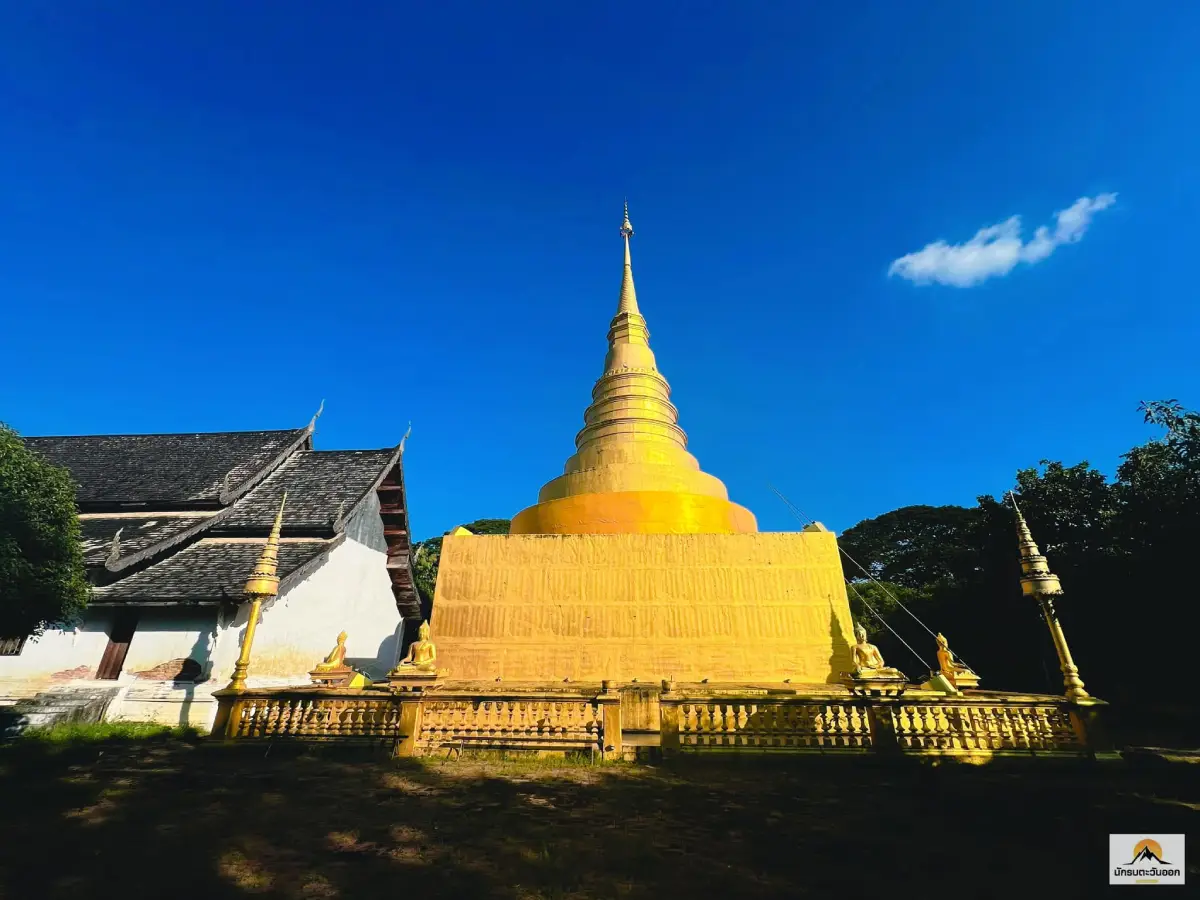
Wat Thung Tum
Open Days: Daily
Opening Hours: 08.00 – 17.00
Wat Thung Tum is located in Ban Thung Tum, Moo 2, Makham Luang Subdistrict, San Pa Tong District, Chiang Mai Province, postal code 50120. It is a local Mahanikaya Buddhist temple with important religious and community value. The temple was officially permitted to be established in 1927, and Phra Athikan Decha Jirasilo is the abbot in the temple history used for this article. Wat Thung Tum is especially notable because it was once an old temple, and its deteriorated structures were restored by Kruba Srivichai, one of the most revered monks in Lanna history.
Wat Thung Tum should be understood as a living Lanna village temple rather than a large commercial tourist attraction. Its value lies in community faith, its agricultural setting, and its history of restoration. The connection with Kruba Srivichai gives the temple additional spiritual and historical significance because he played a major role in restoring temples, roads, and Buddhist sites across northern Thailand. A temple associated with his restoration work carries meaning for visitors interested in Lanna Buddhist history.
Makham Luang Subdistrict contains many community temples, including Wat Makham Luang, Wat Khuan Nimit, Wat Ton Kaew, Wat Thung Pui, Wat Khuang Muen, Wat Saeng Sawang, Wat San Khayom, Wat Mongkhon, Wat Nong Ueng, and Wat Phra Bat Yang Wit. Wat Thung Tum belongs to this wider network of temples that shape religious, social, and cultural life in San Pa Tong District.
The temple’s modern historical record begins clearly in 1927, when it was built and officially permitted to be established as a temple. Before that, the site was remembered as an old temple. Kruba Srivichai later restored the deteriorated structures and improved their condition. This gives Wat Thung Tum 2 historical layers: an older sacred-site identity and a modern restoration and registration period beginning in 1927.
Restoring an old temple in the Lanna context was not simply a matter of repairing buildings. It meant reviving a spiritual center so that villagers could once again make merit, listen to sermons, perform ceremonies, and use the temple as a place of community gathering. Wat Thung Tum therefore reflects the shared faith of monks and local people who wanted to preserve a Buddhist site for the community.
The temple boundaries show its strong relationship with agricultural life. To the north, the temple borders a path for about 5 sen and 8 wa. To the south, it borders private rice fields for about 5 sen and 8 wa. To the east, it borders private rice fields for about 3 sen and 8 wa. To the west, it borders private rice fields for about 3 sen and 7 wa. These details show that the temple stands within a landscape of paths and rice fields.
This setting is typical of many Lanna village temples. A temple, paths, rice fields, homes, and community life are not separate from one another. They form a connected village landscape. On Buddhist holy days and merit-making occasions, villagers move through familiar paths and fields toward the temple, linking daily life with religious practice.
The main temple structures include an ordination hall, monks’ residences, viharn, and pavilions around the temple. These buildings allow Wat Thung Tum to support monastic ceremonies, worship, sermons, monks’ residence, merit-making, and community activities. The ordination hall is important for formal Sangha acts. The viharn serves as the main devotional space. The monks’ residences allow monks to live and practice at the temple, while the surrounding pavilions support community gatherings and merit-making events.
The ordination hall is the most important building in terms of monastic discipline. Even though detailed architectural information is limited, the existence of an ordination hall shows that the temple supports formal religious functions. Visitors should treat the ordination hall area with special respect, dress modestly, speak quietly, and avoid entering restricted areas.
The viharn is the main space where villagers and visitors pay respect to the Buddha, listen to sermons, make merit, and gather during important Buddhist occasions. In a village temple, the viharn is more than a building. It is where the relationship between monks, lay devotees, and the community becomes visible through daily and seasonal religious practice.
The monks’ residences are essential to the temple’s living role. A temple with resident monks can maintain daily chanting, Buddhist routines, merit-making ceremonies, and spiritual support for the local community. These residences are therefore part of the practical foundation that allows Wat Thung Tum to function continuously as a village temple.
The pavilions around the temple support the practical needs of community merit-making. During Buddhist holy days, Buddhist Lent, the end of Buddhist Lent, Kathin, Pha Pa, memorial ceremonies, or family merit-making events, many villagers may gather at the temple. The pavilions provide spaces for resting, preparing activities, and joining community events without disturbing the main ceremonial areas.
The key sacred object at Wat Thung Tum is the stupa. In Lanna Buddhist culture, a stupa is an important symbol of faith, merit, and continuity. Even when detailed architectural information is not available, the presence of a stupa gives the temple a complete sacred character and makes it a meaningful point of respect for visitors.
The connection with Kruba Srivichai is one of the main reasons Wat Thung Tum is historically interesting. In northern Thailand, Kruba Srivichai is remembered as a revered monk who mobilized faith for temple and infrastructure restoration. His restoration work was not only architectural but also social and spiritual, strengthening Buddhist communities through shared devotion.
Phra Athikan Decha Jirasilo is the abbot of Wat Thung Tum in the temple history used for this article. The abbot of a village temple plays an essential role in caring for temple buildings, supporting monastic routines, organizing merit-making activities, guiding lay devotees, and maintaining the relationship between the temple and the local community.
Wat Thung Tum serves the community on several levels. Spiritually, it is a place for worship, merit-making, and reflection. Ritually, it supports Buddhist holy days, Buddhist Lent, the end of Buddhist Lent, Kathin, Pha Pa, memorial rites, and family ceremonies. Socially, it provides a gathering space for villagers. Historically, it preserves the memory of an old temple restored by Kruba Srivichai.
Religious events at Wat Thung Tum follow the rhythm of northern Thai village temple life. These include Buddhist holy days, Buddhist Lent, the end of Buddhist Lent, Kathin, Pha Pa, memorial rites, family merit-making, and village activities. The ordination hall, viharn, monks’ residences, and surrounding pavilions support these activities in an organized way.
Important things to see at Wat Thung Tum include the ordination hall, viharn, monks’ residences, surrounding pavilions, stupa, and the quiet agricultural setting of Ban Thung Tum. Visitors interested in local history should pay attention to the temple’s old-site background and its restoration by Kruba Srivichai.
Wat Thung Tum is suitable for travelers interested in Lanna village temples, old temple restoration, Kruba Srivichai-related history, and quiet cultural travel. It is not a large commercial tourist site. Its value lies in its simplicity, its active role in local religious life, and its relationship with the surrounding community and rice-field landscape.
Visitors should dress respectfully, speak quietly, and avoid entering monks’ private areas without permission. If a merit-making ceremony, memorial rite, or village activity is taking place, visitors should give priority to local residents. Wat Thung Tum remains an active community temple, so respectful conduct is essential.
Getting There is most convenient by private car, rental car, or local hired transport. From Chiang Mai city, take Highway 108, the Chiang Mai–Hot Road, toward San Pa Tong District. Continue into Makham Luang Subdistrict and Ban Thung Tum, Moo 2. When using a map application, search for “Wat Thung Tum Makham Luang San Pa Tong” to avoid confusion with similarly named temples elsewhere.
A suitable connected route begins at Wat Thung Tum and continues to Wat Makham Luang, Wat Ton Kaew, Wat Khuan Nimit, Wat Thung Pui, Wat Khuang Muen, Wat Saeng Sawang, and Wat Nong Ueng. Visitors who want to extend the route can continue to Yu Wa Subdistrict to visit Wat San Pa Tong, Wat Si Koet, Wat Si Pan Ngoen, or the Yu Wa woodcarving craft center.
Overall, Wat Thung Tum is a local Mahanikaya community temple of Ban Thung Tum, Moo 2, Makham Luang Subdistrict, San Pa Tong District. Its key strengths include its old temple background, official establishment in 1927, restoration by Kruba Srivichai, ordination hall, viharn, monks’ residences, surrounding pavilions, and stupa. It is suitable for travelers who want to understand Chiang Mai through Lanna village temples, local Buddhist history, and the faith-based community life of San Pa Tong.
| Name | Wat Thung Tum |
| Location | Ban Thung Tum, Moo 2, Makham Luang Subdistrict, San Pa Tong District, Chiang Mai Province |
| Address | Moo 2, Makham Luang Subdistrict, San Pa Tong District, Chiang Mai 50120, Thailand |
| Highlights | An old community temple officially established in 1927, restored by Kruba Srivichai, with an ordination hall, viharn, monks’ residences, surrounding pavilions, and a stupa |
| History | Built and officially established in 1927; originally an old temple whose deteriorated structures were restored by Kruba Srivichai |
| Temple Type / Sect | Community temple under the Mahanikaya Buddhist order |
| Boundaries | North: path, about 5 sen and 8 wa; South: private rice fields, about 5 sen and 8 wa; East: private rice fields, about 3 sen and 8 wa; West: private rice fields, about 3 sen and 7 wa |
| Landscape | A village temple in Ban Thung Tum, surrounded by paths, rice fields, agricultural land, and Makham Luang community life |
| Main Areas / Zones | Ordination hall, viharn, monks’ residences, surrounding pavilions, stupa area, worship area, and community religious activity spaces |
| Important Structures | Ordination hall, monks’ residences, viharn, and surrounding pavilions |
| Sacred Object | Stupa |
| Important Related Figure | Kruba Srivichai is remembered in the temple history as the monk who restored deteriorated structures at the old temple site |
| Abbot / Caretaker | Phra Athikan Decha Jirasilo |
| Local Importance | A spiritual center of Ban Thung Tum, Moo 2, Makham Luang Subdistrict, and one of the old temples of San Pa Tong with a restoration history connected to Lanna Buddhist faith |
| Traditions / Merit-Making | Supports Buddhist holy days, Buddhist Lent, the end of Buddhist Lent, Kathin, Pha Pa, memorial rites, and community merit-making events |
| Travel Information | Travel from Chiang Mai city via Highway 108, the Chiang Mai–Hot Road, toward San Pa Tong. Continue into Makham Luang Subdistrict and Ban Thung Tum, Moo 2. Private car, rental car, or local hired transport is recommended. |
| Current Status | A registered Mahanikaya community temple serving Ban Thung Tum, Makham Luang Subdistrict |
| Open Days | Daily |
| Opening Hours | 08.00 – 17.00 |
| Facilities | Ordination hall, viharn, monks’ residences, surrounding pavilions, worship area, merit-making area, and community religious activity spaces |
| Nearby Tourist Attractions | 1. Wat Makham Luang, about 2 km 2. Wat Ton Kaew, about 3 km 3. Wat Khuan Nimit, about 4 km 4. Wat Thung Pui, about 4 km 5. Wat Khuang Muen, about 5 km 6. Wat Saeng Sawang, about 5 km |
| Nearby Restaurants | 1. Kap Khao Maton, about 2 km, Tel. 084-615-7789 2. Yim Yim Moo Yang Makham Luang, about 3 km, Tel. 095-047-6761 3. Klin Kaphrao Khao Ho Mok San Pa Tong, about 3 km, Tel. 093-243-8923 4. Kuai Tiao Moo Lam Makham Luang San Pa Tong, about 3 km, Tel. 087-195-3342 5. Mae Phrom Makham Luang A La Carte, Noodles And Som Tum, about 4 km, Tel. 089-998-2236 6. Cafe Vintage1980 San Pa Tong, about 6 km, Tel. 096-084-0462 |
| Nearby Accommodations | 1. Tai Resort Sanpatong, about 3 km, Tel. 063-096-7000 2. Wooden Hut Homestay, about 4 km 3. Kulap Hotel, about 4 km 4. Non Bao Bao San Pa Tong Accommodation, about 6 km, Tel. 063-539-9952 5. Fun Rak Resort, about 6 km, Tel. 061-936-4951 6. Kaomai Lanna Resort, about 8 km, Tel. 053-481-201 |
Frequently Asked Questions (FAQ)
Q: Where is Wat Thung Tum located?
A: Wat Thung Tum is located in Ban Thung Tum, Moo 2, Makham Luang Subdistrict, San Pa Tong District, Chiang Mai Province.
Q: What are the open days and opening hours of Wat Thung Tum?
A: Wat Thung Tum is open daily from 08.00 to 17.00.
Q: When was Wat Thung Tum built?
A: Wat Thung Tum was built and officially established as a temple in 1927.
Q: How is Wat Thung Tum connected with Kruba Srivichai?
A: The temple history states that Wat Thung Tum was originally an old temple and that Kruba Srivichai restored its deteriorated structures.
Q: What are the main things to see at Wat Thung Tum?
A: Key features include the ordination hall, viharn, monks’ residences, surrounding pavilions, and stupa.
Q: Who is the abbot of Wat Thung Tum?
A: The abbot of Wat Thung Tum is Phra Athikan Decha Jirasilo.
Q: How can travelers get to Wat Thung Tum?
A: Travelers can take Highway 108, the Chiang Mai–Hot Road, from Chiang Mai city toward San Pa Tong, then continue into Makham Luang Subdistrict and Ban Thung Tum, Moo 2.
Q: What nearby places can be visited with Wat Thung Tum?
A: Nearby places include Wat Makham Luang, Wat Ton Kaew, Wat Khuan Nimit, Wat Thung Pui, Wat Khuang Muen, and Wat Saeng Sawang.
 Category: ●Places of Worship
 Group: ●Temple
Last Update : 2 DayAgo
 Last Update : 2 DayAgo
 Click to Access the Navigation Map GPS
 Muang Chiang Mai(121)Chom Thong(47)Mae Chaem(25)Chiang Dao(33)Doi Saket(68)Mae Taeng(85)Mae Rim(69)Samoeng(29)Fang(71)Mae Ai(59)Phrao(70)San Pa Tong(103)San Kamphaeng(66)San Sai(73)Hang Dong(73)Hot(32)Doi Tao(22)Omkoi(11)Saraphi(74)Wiang Haeng(15)Chai Prakan(28)Mae Wang(32)Mae On(22)Doi Lo(34)Galyani Vadhana(1)


