
lovethailand home >North Travel Attractions >Chiang Mai Travel Attractions >San Pa Tong >Yu Wa > Wat Nong Phan Ngoen
TL;DR: Wat Nong Phan Ngoen is located at Ban Nong Phan Ngoen, Moo 13, Yu Wa Subdistrict, San Pa Tong District, Chiang Mai Province, open Daily, hours 08.00 – 17.00.
Wat Nong Phan Ngoen
Open Days: Daily
Opening Hours: 08.00 – 17.00
Wat Nong Phan Ngoen, also known locally in connection with Phra Chao Phet, is located at 166 Ban Nong Phan Ngoen, Moo 13, Yu Wa Subdistrict, San Pa Tong District, Chiang Mai Province. It is a local Mahanikaya Buddhist temple with important religious and community value. The temple was first built in 1928 and officially established on May 5, 1932. Its history is closely connected with an older temple site, traces of ancient brickwork, the relocation of an important Buddha image, and the collective effort of villagers who wanted to keep their sacred image close to the community.
Wat Nong Phan Ngoen must be understood carefully because the name Nong Phan Ngoen is also linked with the former name of Wat Si Pan Ngoen, or the old Nong Salap area. In this article, Wat Nong Phan Ngoen refers to the present temple in Ban Nong Phan Ngoen, Moo 13, Yu Wa Subdistrict. The present temple developed after the older temple site became difficult for villagers to access. Because the old site was far from the community and harder to maintain, villagers decided to move the center of worship and build a new temple in a more practical location.
The temple land covers 8 rai and 50 square wah. To the north, it borders private land. To the south, it borders private land and forest. To the east, it borders a road and land connected with the Department of Livestock Development. To the west, it borders an irrigation channel and rice fields. The temple also has 1 plot of monastic land covering 1 rai, 2 ngan, and 88 square wah. These boundaries show that the temple belongs to a semi-agricultural village landscape of roads, irrigation water, fields, public land, and local households.
The irrigation channel on the western side is especially important in the Lanna village context. Irrigation channels in northern Thailand are connected with rice cultivation, water sharing, and community cooperation. Wat Nong Phan Ngoen therefore stands within a living agricultural landscape where temple, village, road, water, and fields remain closely connected.
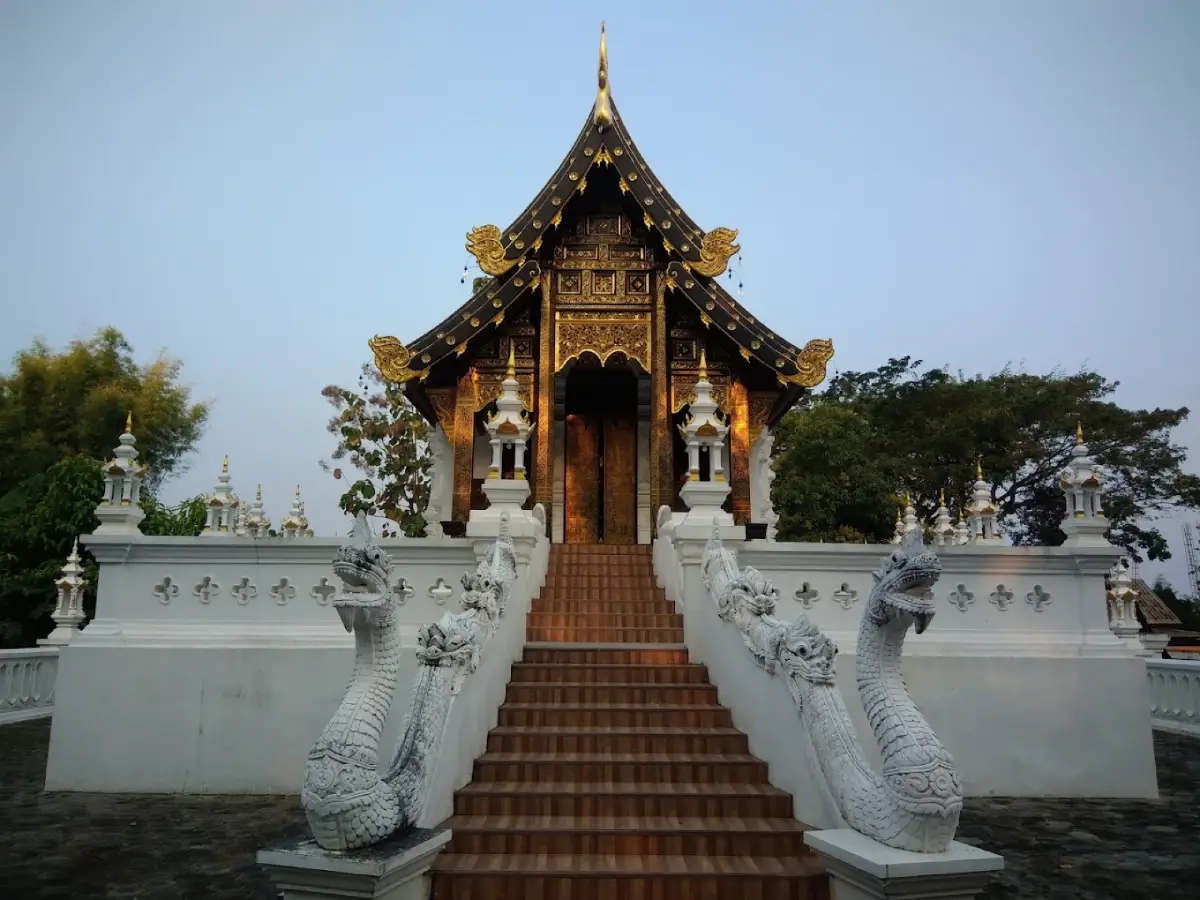
The temple buildings include a viharn, sermon hall, dining hall, monks’ residences, and merit-making hall. These structures allow Wat Nong Phan Ngoen to support the main functions of a community temple. The viharn is the main worship space and the place where the important Buddha image is enshrined. The sermon hall supports Dhamma listening and community gatherings. The dining hall supports monastic routines. The monks’ residences allow monks to live and practice at the temple, while the merit-making hall supports Buddhist ceremonies and family merit-making.
The most important sacred object of Wat Nong Phan Ngoen is Phra Chao Phet, a gilded bronze Buddha image in the posture of subduing Mara, created in the Lanna artistic tradition of the Chiang Mai school. Phra Chao Phet is not only the temple’s principal object of devotion. It is the central reason why villagers moved and developed the present temple site, ensuring that the sacred image could be protected, maintained, and worshipped by the local community.
The relocation history of Phra Chao Phet is central to the temple’s identity. The image was once connected with an older temple site that was far from the village. Because the old temple had few people living nearby and access was difficult, villagers feared that the temple might become abandoned and the sacred image might not be properly cared for. The community therefore moved the image to the present Wat Nong Phan Ngoen, where it could serve as a living spiritual center for the village.
After Phra Chao Phet was brought to the present temple, villagers built a small viharn to enshrine the image. They also built a monks’ residence so monks could stay and care for the temple. Later, they added a wall and other supporting structures. This development pattern reflects the way many Lanna village temples grew: beginning with a sacred image and community faith, then expanding into a full religious site with buildings for monks, ceremonies, and local devotees.
Another important part of the temple’s history is the presence of ancient brick remains at the present site. This suggests that Wat Nong Phan Ngoen may stand on or near an older religious site. The temple therefore has historical depth beyond its modern construction in 1928. It represents continuity between older sacred traces and the present community temple.
The temple was also associated with the older name Wat Nong Man Ngoen and with the history of the old Wat Nong Phan Ngoen area now connected with Wat Si Pan Ngoen or Nong Salap. These connections show that temple history in Yu Wa Subdistrict is often layered. Temples, ponds, abandoned sites, Buddha images, and village routes are remembered together across different communities.
Phra Athikan Pok Photha presided over the construction of Wat Nong Phan Ngoen in 1928 and appears as the first abbot in the recorded history of the temple. His role was important in laying the foundation of the present temple, establishing the viharn, monks’ residence, and religious life around Phra Chao Phet.
The recorded abbots of Wat Nong Phan Ngoen include Phra Athikan Pok Photha from 1931 to 1945, Phra Intha from 1940 to 1954, Phra Athikan Thip from 1954 to 1957, Phra Chan Kantasilo from 1957 to 1958, Phra Boontha from 1958 to 1960, Phra Dee Sudhammo from 1960 to 1962, Phra Kham Khantiphlo from 1963 to 1966, Phra Boonchom Kandhawaro from 1972 to 1976, Phra Tho Atiwanno from 1976 to 1988, Phra Khian Chanthasawaro from 1977 to 1980, Phra Damrong Sajjawaro from 1981 to 1988, Phra Athikan Khamsaen Techapanyo from 1977 to 1996, and Phra Athikan Pradit Atiphalo from 1996 onward.
This long line of abbots shows the continuity of temple care from the founding period to the present. A village temple depends on monastic leadership for maintaining buildings, guiding lay supporters, organizing ceremonies, managing the temple grounds, and preserving the relationship between monks and villagers. Wat Nong Phan Ngoen has remained meaningful because of this continuing religious administration.
Later local sources also mention Phra Chaturathep Thitathammo as acting abbot. The temple history therefore contains more than one layer of leadership information. For article use, the older recorded abbot list should be preserved while more recent local information can be mentioned separately to avoid confusing the historical sequence.
Wat Nong Phan Ngoen serves Ban Nong Phan Ngoen on several levels. Spiritually, it is a place for worship, merit-making, and paying respect to Phra Chao Phet. Ritually, it supports Buddhist holy days, Buddhist Lent, the end of Buddhist Lent, Kathin, Pha Pa, memorial rites, and family ceremonies. Historically, it preserves the story of moving a sacred Buddha image from an older temple site. In landscape terms, it stands among roads, irrigation water, fields, and agricultural community life.
Religious events at Wat Nong Phan Ngoen follow the rhythm of northern Thai village temple life. These include Buddhist holy days, Buddhist Lent, the end of Buddhist Lent, Kathin, Pha Pa, merit-making ceremonies, memorial rites, and village Buddhist activities. The viharn, sermon hall, dining hall, monks’ residences, and merit-making hall support these activities in an organized way.
Important things to see at Wat Nong Phan Ngoen include Phra Chao Phet in the viharn, the temple’s relocation history, the sermon hall, dining hall, monks’ residences, merit-making hall, and the agricultural landscape of irrigation channels and rice fields around the temple. Visitors interested in local history should pay attention to the story of ancient brick remains at the temple site because it adds another historical layer to the present temple.
Phra Chao Phet is the heart of a visit to Wat Nong Phan Ngoen. Visitors should begin by paying respect to this sacred image quietly and respectfully. They should not touch the image, base, or sacred structures without permission. Old Buddha images and temple objects are community religious heritage and should be treated with care.
Wat Nong Phan Ngoen is suitable for travelers interested in Lanna village temples, important Buddha images, temple relocation history, and temple routes in Yu Wa Subdistrict. It is not a commercial tourist site. Its value lies in its community faith, quiet atmosphere, local history, and the continuing devotion surrounding Phra Chao Phet.
Visitors should dress respectfully, speak quietly, and avoid entering monks’ private areas without permission. If a merit-making ceremony, memorial rite, or village activity is taking place, visitors should give priority to local residents. Wat Nong Phan Ngoen remains an active community temple, so respectful conduct is essential.
Getting There is most convenient by private car, rental car, or local hired transport. From Chiang Mai city, take Highway 108, the Chiang Mai–Hot Road, toward San Pa Tong District. Continue into Yu Wa Subdistrict and Ban Nong Phan Ngoen, Moo 13. The temple is located at 166 Moo 13, with a paved road reaching the temple. Local access can be made through the route passing San Pa Tong Hospital before continuing toward the temple area. When using a map application, search for “Wat Nong Phan Ngoen Phra Chao Phet San Pa Tong” to avoid confusion with the former Wat Nong Phan Ngoen name associated with Wat Si Pan Ngoen.
A suitable connected route begins at Wat Nong Phan Ngoen and continues to Wat Si Pan Ngoen, Wat Makab Tong, Wat Rong Sran, Wat Si Koet, Wat San Pa Tong, Wat Ton Chok, and the Yu Wa woodcarving craft center. For a broader historical route, visitors can continue to Ban Klang Subdistrict to visit Wat Sri Nawarat, Wat Tha Kan, and Wiang Tha Kan Archaeological Site.
Overall, Wat Nong Phan Ngoen is an important community temple of Ban Nong Phan Ngoen, Moo 13, Yu Wa Subdistrict, San Pa Tong District. Its key strengths include its construction in 1928, official establishment on May 5, 1932, the relocation of worship from an older temple site, Phra Chao Phet as a gilded bronze Lanna Buddha image, the viharn, sermon hall, dining hall, monks’ residences, merit-making hall, and its landscape of roads, irrigation channels, fields, and village life. It is a suitable destination for travelers who want to understand Chiang Mai through Lanna village temples, sacred Buddha images, and local Buddhist life in San Pa Tong.
| Name | Wat Nong Phan Ngoen / Wat Nong Phan Ngoen Phra Chao Phet |
| Location | Ban Nong Phan Ngoen, Moo 13, Yu Wa Subdistrict, San Pa Tong District, Chiang Mai Province |
| Address | 166 Moo 13, Yu Wa Subdistrict, San Pa Tong District, Chiang Mai 50120, Thailand |
| Coordinates | Approximately Latitude 18.60308, Longitude 98.86468 |
| Highlights | A community temple of Ban Nong Phan Ngoen with Phra Chao Phet as its key sacred Buddha image, linked with the relocation of worship from an older temple site and traces of ancient brickwork at the present site |
| History | Built in 1928 under the leadership of Phra Athikan Pok Photha and officially established as a temple on May 5, 1932 |
| Former Name / Historical Link | Connected with the older name Wat Nong Man Ngoen and the former Wat Nong Phan Ngoen area now associated with Wat Si Pan Ngoen or Nong Salap |
| Temple Land | Temple land covers 8 rai and 50 square wah; monastic land includes 1 plot covering 1 rai, 2 ngan, and 88 square wah |
| Boundaries | North: private land; South: private land and forest; East: road and Department of Livestock Development land; West: irrigation channel and rice fields |
| Landscape | A village temple in Ban Nong Phan Ngoen, connected with roads, irrigation channels, rice fields, agricultural land, and Yu Wa community life |
| Main Areas / Zones | Viharn enshrining Phra Chao Phet, sermon hall, dining hall, monks’ residences, merit-making hall, worship area, and community religious activity spaces |
| Important Structures | Viharn, sermon hall, dining hall, monks’ residences, and merit-making hall |
| Sacred Object | Phra Chao Phet, a gilded bronze Buddha image in the posture of subduing Mara, in the Lanna Chiang Mai school style |
| Abbot / Caretaker In Recorded History | Phra Athikan Pradit Atiphalo from 1996 onward; later local sources mention Phra Chaturathep Thitathammo as acting abbot |
| Recorded Abbots | Phra Athikan Pok Photha, Phra Intha, Phra Athikan Thip, Phra Chan Kantasilo, Phra Boontha, Phra Dee Sudhammo, Phra Kham Khantiphlo, Phra Boonchom Kandhawaro, Phra Tho Atiwanno, Phra Khian Chanthasawaro, Phra Damrong Sajjawaro, Phra Athikan Khamsaen Techapanyo, and Phra Athikan Pradit Atiphalo |
| Local Importance | A spiritual center of Ban Nong Phan Ngoen, an important shrine of Phra Chao Phet, and one of the cultural temple stops in Yu Wa Subdistrict, San Pa Tong District |
| Travel Information | Travel from Chiang Mai city via Highway 108, the Chiang Mai–Hot Road, toward San Pa Tong. Continue into Yu Wa Subdistrict and Ban Nong Phan Ngoen, Moo 13. The route can pass San Pa Tong Hospital before continuing toward the temple. |
| Current Status | A registered Mahanikaya community temple serving Ban Nong Phan Ngoen, Yu Wa Subdistrict |
| Open Days | Daily |
| Opening Hours | 08.00 – 17.00 |
| Facilities | Viharn, sermon hall, dining hall, monks’ residences, merit-making hall, worship area, merit-making area, and community religious activity spaces |
| Nearby Tourist Attractions | 1. Wat Si Pan Ngoen, about 3 km 2. Wat Makab Tong, about 3 km 3. Wat Rong Sran, about 4 km 4. Wat Si Koet, about 5 km 5. Wat San Pa Tong, about 5 km 6. Yu Wa Woodcarving Craft Center, about 6 km |
| Nearby Restaurants | 1. Aunt Nong’s Kitchen San Pa Tong, about 5 km, Tel. 085-934-1984 2. Khunnai Gallery San Pa Tong, about 5 km, Tel. 061-316-5599, 081-960-5911 3. Som Tam Aoy Jai, about 5 km, Tel. 088-316-9066 4. Tang Heng Bar, about 5 km, Tel. 093-837-9311 5. Virgin Ville Cafe & Restaurant, about 6 km, Tel. 063-365-9878 6. Cafe Vintage1980 San Pa Tong, about 7 km, Tel. 096-084-0462 |
| Nearby Accommodations | 1. Non Bao Bao San Pa Tong Accommodation, about 5 km, Tel. 063-539-9952 2. Fun Rak Resort, about 5 km, Tel. 061-936-4951 3. Home Thai Resort, about 6 km, Tel. 063-952-8228 4. Mor-Nu Apartment, about 6 km, Tel. 091-464-7896 5. Tai Resort Sanpatong, about 7 km 6. Kaomai Lanna Resort, about 8 km, Tel. 053-481-201 |
Frequently Asked Questions (FAQ)
Q: Where is Wat Nong Phan Ngoen located?
A: Wat Nong Phan Ngoen is located at 166 Ban Nong Phan Ngoen, Moo 13, Yu Wa Subdistrict, San Pa Tong District, Chiang Mai Province.
Q: When was Wat Nong Phan Ngoen built?
A: Wat Nong Phan Ngoen was first built in 1928 and officially established as a temple on May 5, 1932.
Q: How is Wat Nong Phan Ngoen connected with Wat Si Pan Ngoen?
A: The present Wat Nong Phan Ngoen is linked with the relocation of community worship and Phra Chao Phet from the older temple area associated with Wat Si Pan Ngoen or Nong Salap because the older site was far from the village and difficult to maintain.
Q: What is Phra Chao Phet?
A: Phra Chao Phet is a gilded bronze Buddha image in the posture of subduing Mara, made in the Lanna Chiang Mai school style, and is the most important sacred object of Wat Nong Phan Ngoen.
Q: What are the main things to see at Wat Nong Phan Ngoen?
A: Key features include Phra Chao Phet, the viharn, sermon hall, dining hall, monks’ residences, merit-making hall, and the local history of ancient brick remains at the temple site.
Q: Who is the abbot of Wat Nong Phan Ngoen?
A: The recorded temple history lists Phra Athikan Pradit Atiphalo from 1996 onward, while later local sources mention Phra Chaturathep Thitathammo as acting abbot.
Q: How can travelers get to Wat Nong Phan Ngoen?
A: Travelers can take Highway 108, the Chiang Mai–Hot Road, from Chiang Mai city toward San Pa Tong, then continue into Yu Wa Subdistrict and Ban Nong Phan Ngoen, Moo 13.
Q: What nearby places can be visited with Wat Nong Phan Ngoen?
A: Nearby places include Wat Si Pan Ngoen, Wat Makab Tong, Wat Rong Sran, Wat Si Koet, Wat San Pa Tong, and the Yu Wa woodcarving craft center.
 Category: ●Places of Worship
 Group: ●Temple
Last Update : 6 DayAgo
 Last Update : 6 DayAgo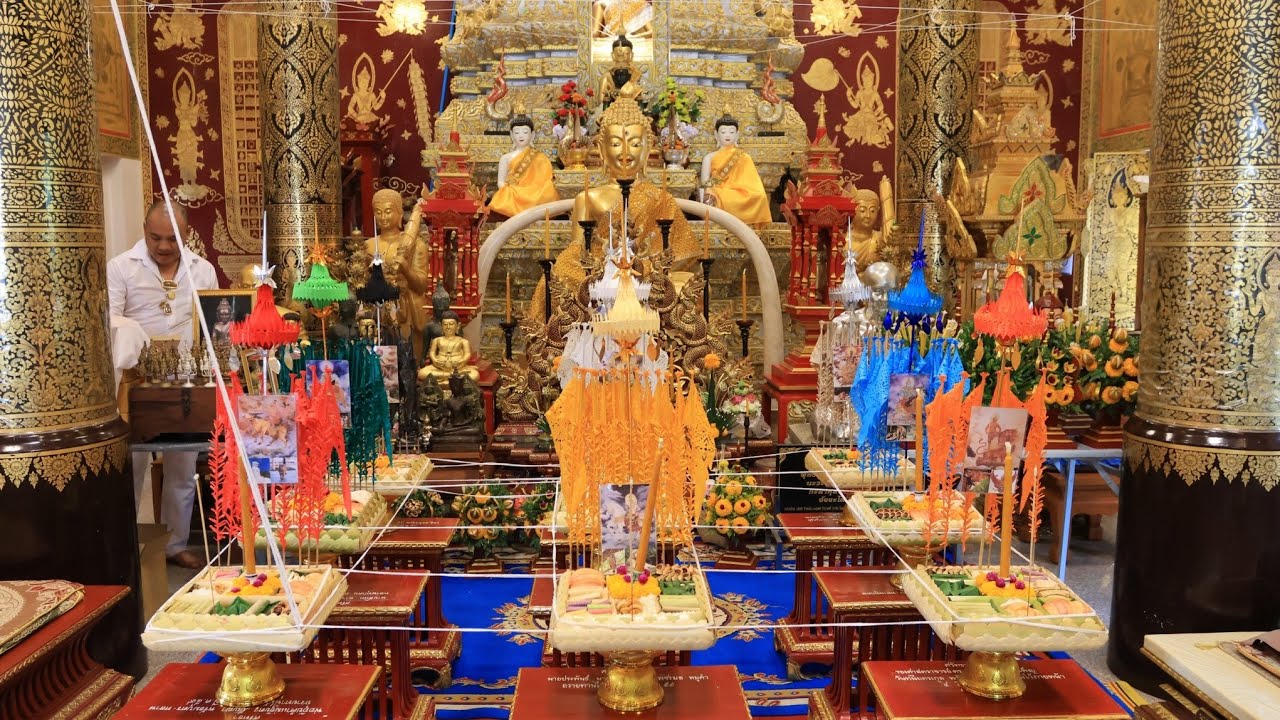
 Click to Access the Navigation Map GPS
Wat Nong Phan Ngoen Map
Recommend

 Muang Chiang Mai(121)Chom Thong(47)Mae Chaem(25)Chiang Dao(33)Doi Saket(68)Mae Taeng(85)Mae Rim(69)Samoeng(29)Fang(71)Mae Ai(59)Phrao(70)San Pa Tong(103)San Kamphaeng(66)San Sai(73)Hang Dong(73)Hot(32)Doi Tao(22)Omkoi(11)Saraphi(74)Wiang Haeng(15)Chai Prakan(28)Mae Wang(32)Mae On(22)Doi Lo(34)Galyani Vadhana(1)


