
lovethailand home >North Travel Attractions >Chiang Mai Travel Attractions >San Pa Tong >Yu Wa > Wat Ton Chok
TL;DR: Wat Ton Chok is located at Ban Rong, Moo 8, Yu Wa Subdistrict, San Pa Tong District, Chiang Mai Province, open Daily, hours 08.00 – 17.00.
Wat Ton Chok
Open Days: Daily
Opening Hours: 08.00 – 17.00
Wat Ton Chok is located at 73 Ban Rong, Moo 8, Yu Wa Subdistrict, San Pa Tong District, Chiang Mai Province. It is a local Mahanikaya Buddhist temple with an important role in the Ban Rong community. The temple was originally an abandoned temple site before being revived in 1913 by Phra Phothi Dhammasaro from Wat San Pa Tong, together with local devotees from Ban Rong, Moo 8. This revival story makes Wat Ton Chok a meaningful example of how village faith can restore an abandoned religious site into an active community temple.
The name “Wat Ton Chok” comes from a chok tree that stood in front of the temple. This gives the temple name a direct connection with the original landscape of the site and the memory of local villagers. The temple’s identity is therefore linked not only to Buddhist buildings but also to the natural feature that marked the place when the community restored it. For visitors, the name helps explain how temples in northern Thai villages often preserve local memory through landscape, trees, water, and shared stories.
Ban Rong, Moo 8, is part of Yu Wa Subdistrict in San Pa Tong District. Yu Wa is an area with old community temples, irrigation channels, village roads, agricultural land, and woodcarving craft routes. Wat Ton Chok stands within this kind of living community landscape. It should be understood not only as a place of worship but also as a temple connected with village life, local education, agriculture, and the cultural identity of San Pa Tong.
The temple land covers 3 rai and 46 square wah under title deed number 53451. To the north, the temple borders an irrigation channel for about 42 wa and 2 sok. To the south, it borders a road for about 48 wa and 1 sok. To the east, it borders private rice-field land for about 34 wa and 2 sok. To the west, it borders private rice-field land for about 34 wa. These boundaries show that the temple is located within a village-agricultural landscape shaped by water, roads, and fields.
The irrigation channel on the northern side is significant. In northern Thailand, irrigation channels are part of local water-management systems that support rice farming and community cooperation. Wat Ton Chok’s connection with an irrigation channel shows that the temple is not separated from everyday village life. It belongs to a landscape where Buddhism, water, agriculture, roads, and local households are closely connected.
The temple’s revival began with Phra Phothi Dhammasaro, who came from Wat San Pa Tong. Together with local devotees of Ban Rong, he helped rebuild the abandoned temple in 1913. Reviving a temple in this way required more than constructing buildings. It required shared faith, labor, resources, and community commitment. Wat Ton Chok therefore reflects the power of villagers to bring a sacred site back into active religious use.
In the early phase of the temple’s revival, the Ban Rong community played an essential role. Villagers helped create the basic religious spaces needed for monks to reside and for laypeople to make merit and listen to sermons. As the temple became active again, it gradually became the spiritual center of the village. This is an important part of the temple’s identity because its history is rooted in community participation.
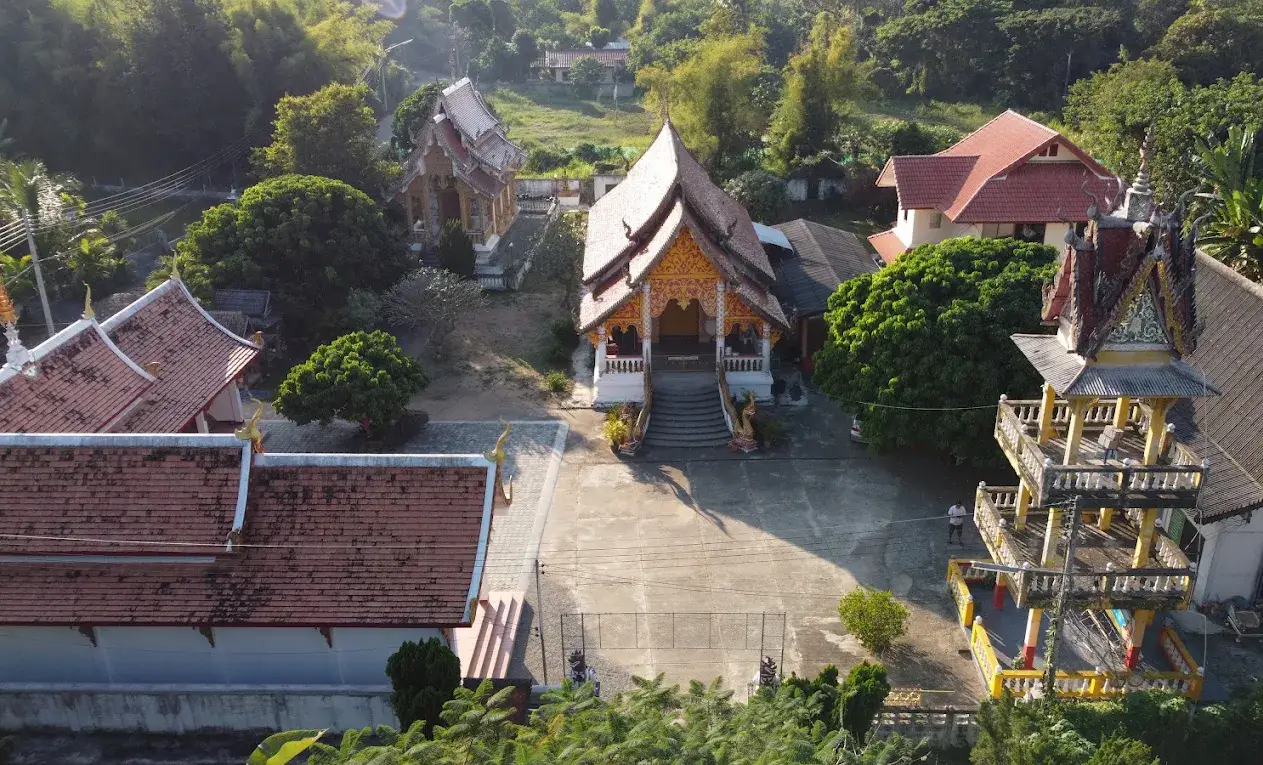
The main temple buildings include a viharn, sermon hall, and monks’ residences. The viharn is the primary devotional space where villagers pay respect to Buddha images, make merit, listen to sermons, and participate in Buddhist activities. The sermon hall supports teachings, meetings, merit-making, and community gatherings. The monks’ residences allow monks to live and practice at the temple, making it an active religious site rather than only a historical location.
The viharn is one of the most important areas for visitors to observe. It is where local people connect with Buddhist practice in daily and annual religious life. Merit-making, sermon listening, and village Buddhist activities often center around the viharn. Paying respect in this area helps visitors understand the temple as a living place of faith.
The sermon hall also plays an important community role. In northern Thai village temples, a sermon hall is not only a place for listening to Dhamma. It is also used for meetings, community events, merit-making preparation, and gatherings during important occasions. At Wat Ton Chok, this building helps the temple serve both religious and social functions.
The monks’ residences are essential because they allow the temple to maintain monastic life. A temple with resident monks can continue daily chanting, Buddhist ceremonies, alms-related routines, and spiritual support for villagers. These residences therefore help sustain the religious continuity of Wat Ton Chok.
The temple’s important sacred object is a stupa. In Lanna Buddhist culture, a stupa is a major symbol of devotion and a focus of worship. For Wat Ton Chok, the stupa helps connect the temple’s revived history with the ongoing faith of the community. Visitors should pay attention to the stupa area as one of the temple’s key sacred features.
Wat Ton Chok also has an early childhood training center within the temple, opened in 1984. This gives the temple a strong educational and social role. Village temples in Thailand often support community learning, moral education, and care for children. The early childhood center makes Wat Ton Chok important not only for merit-making but also for families and young children in the community.
The presence of the early childhood center connects the temple with people of many generations, including monks, elders, parents, guardians, and children. It makes the temple part of daily community life, not only a place visited during Buddhist holy days. This educational role is one of the temple’s most important social contributions.
The recorded abbots of Wat Ton Chok show continuity in temple leadership. The list begins with Phra Athikan Phothi Dhammasaro during 1913–1927, followed by Phra Khru Mueang Chandakosol during 1927–1939, Phra Athikan Saen Yanawaro during 1939–1944, Phra Athikan Panya Kandhasilo during 1944–1959, Phra Athikan Singkham Chakkawaro during 1959–1967, Phra Tuangchan Khemarato during 1967–1975, Phra Athikan Thongkham Khamphirathammo during 1975–1979, Phra Chamnan Sirithammo during 1979–1983, and Phra Khru Inthawiranwat from 1983 onward.
This succession of abbots is important because a community temple survives through continuous religious leadership. Each abbot helps maintain temple buildings, organize ceremonies, guide lay supporters, and preserve the connection between monks and villagers. The recorded leadership of Wat Ton Chok from 1913 onward shows that the temple has continued as an active religious institution across generations.
Wat Ton Chok serves the Ban Rong community on several levels. Spiritually, it is a place for worship, merit-making, and reflection. Ritually, it supports Buddhist holy days, Buddhist Lent, the end of Buddhist Lent, Kathin, Pha Pa, memorial rites, and village ceremonies. Socially, it is a gathering place for local residents. Educationally, it supports early childhood training within the temple grounds.
Religious events at Wat Ton Chok follow the rhythm of northern Thai village temple life. These include Buddhist holy days, Buddhist Lent, the end of Buddhist Lent, Kathin, Pha Pa, merit-making ceremonies, and community events. The viharn, sermon hall, and temple grounds support these activities and help maintain the relationship between home, temple, monks, and local families.
Important things to see at Wat Ton Chok include the stupa, viharn, sermon hall, monks’ residences, early childhood training center area, and the temple’s village setting near irrigation channels, roads, and rice fields. The temple’s appeal does not come from grand scale. It comes from its quiet village character and the story of how an abandoned temple was revived by local faith.
The temple atmosphere is calm and community-oriented. Wat Ton Chok is suitable for travelers interested in old temples, Lanna village culture, temple revival stories, local education, and cultural routes in Yu Wa and San Pa Tong. Visitors should take time to observe the relationship between the temple buildings and the surrounding village landscape.
Visitors should dress respectfully, speak quietly, and avoid entering monks’ private areas without permission. If a merit-making ceremony, funeral rite, temple activity, or early childhood center activity is taking place, visitors should give priority to the local community. Wat Ton Chok is an active religious and community site, so respectful conduct is essential.
Getting There is most convenient by private car, rental car, or local hired transport. From Chiang Mai city, take Highway 108, the Chiang Mai–Hot Road, toward San Pa Tong District. Continue into Yu Wa Subdistrict and Ban Rong, Moo 8. When using a map application, search for “Wat Ton Chok Yu Wa San Pa Tong” to avoid confusion with Wat Ton Chok in Lamphun, Wat Ton Chok in Chai Prakan, or Wat Ton Chok Luang in Saraphi.
A suitable connected route includes temples and communities in Yu Wa Subdistrict. Visitors can combine Wat Ton Chok with Wat San Pa Tong, Wat Si Koet, Wat Ton Phueng, Wat Ku Kham, Wat Kiu Lae Luang, and the Yu Wa woodcarving craft center. For a broader historical route, visitors can continue to Ban Klang Subdistrict to visit Wat Sri Nawarat, Wat Tha Kan, and Wiang Tha Kan Archaeological Site.
Yu Wa Subdistrict is a useful area for understanding the cultural diversity of San Pa Tong. It includes old community temples, woodcarving craft areas, village markets, schools, agricultural communities, and routes connected with Ban Klang. Wat Ton Chok can therefore serve as a starting point for travelers who want to understand San Pa Tong beyond the main highway.
Overall, Wat Ton Chok is a meaningful old community temple in Yu Wa Subdistrict. Its key elements include its revival from an abandoned temple in 1913, the role of Phra Phothi Dhammasaro and Ban Rong devotees, the name derived from the chok tree in front of the temple, its land connected with irrigation channels, roads, and rice fields, the stupa as its key sacred object, and the early childhood training center opened in 1984. It is a suitable destination for travelers who want to understand Chiang Mai through Lanna village temples, local faith, and community life in San Pa Tong.
| Name | Wat Ton Chok (Yu Wa) |
| Location | Ban Rong, Moo 8, Yu Wa Subdistrict, San Pa Tong District, Chiang Mai Province |
| Address | 73 Ban Rong, Moo 8, Yu Wa Subdistrict, San Pa Tong District, Chiang Mai 50120, Thailand |
| Coordinates | Latitude 18.61774, Longitude 98.88056 |
| Highlights | A Yu Wa community temple revived from an abandoned temple site in 1913, with a viharn, sermon hall, monks’ residences, stupa, and early childhood training center within the temple |
| History | Originally an abandoned temple; revived in 1913 by Phra Phothi Dhammasaro from Wat San Pa Tong and local devotees of Ban Rong, Moo 8, Yu Wa Subdistrict |
| Name Origin | Named Wat Ton Chok because a chok tree stood in front of the temple |
| Temple Land | Temple land covers 3 rai and 46 square wah under title deed number 53451 |
| Boundaries | North: irrigation channel, about 42 wa and 2 sok; South: road, about 48 wa and 1 sok; East: private rice-field land, about 34 wa and 2 sok; West: private rice-field land, about 34 wa |
| Landscape | A village temple in Ban Rong, connected with irrigation channels, roads, rice fields, and Yu Wa community life |
| Main Areas / Zones | Viharn, sermon hall, monks’ residences, stupa area, merit-making area, and early childhood training center area |
| Important Structures | Viharn, sermon hall, and monks’ residences |
| Sacred Object | Stupa |
| Education / Community Role | Early childhood training center within the temple, opened in 1984 |
| Latest Abbot In Recorded Temple History | Phra Khru Inthawiranwat from 1983 onward |
| Recorded Abbots | Phra Athikan Phothi Dhammasaro, Phra Khru Mueang Chandakosol, Phra Athikan Saen Yanawaro, Phra Athikan Panya Kandhasilo, Phra Athikan Singkham Chakkawaro, Phra Tuangchan Khemarato, Phra Athikan Thongkham Khamphirathammo, Phra Chamnan Sirithammo, and Phra Khru Inthawiranwat |
| Local Importance | A spiritual center of Ban Rong, supporting merit-making, Buddhist learning, community activities, and early childhood training in Yu Wa Subdistrict |
| Travel Information | Travel from Chiang Mai city via Highway 108, the Chiang Mai–Hot Road, toward San Pa Tong. Continue into Yu Wa Subdistrict and Ban Rong, Moo 8. Private car, rental car, or local hired transport is recommended. |
| Current Status | A registered Mahanikaya community temple serving Ban Rong, Yu Wa Subdistrict |
| Open Days | Daily |
| Opening Hours | 08.00 – 17.00 |
| Facilities | Viharn, sermon hall, monks’ residences, merit-making area, early childhood training center area, and community religious activity spaces |
| Nearby Tourist Attractions | 1. Wat San Pa Tong, about 1.5 km 2. Wat Si Koet, about 2 km 3. Wat Ton Phueng, about 3 km 4. Wat Ku Kham, Yu Wa Subdistrict, about 4 km 5. Yu Wa Woodcarving Craft Center, about 5 km 6. Ban Kiu Lae Noi Woodcarving Village, about 6 km |
| Nearby Restaurants | 1. Tam Sang Phochana Near San Pa Tong Hospital, about 2 km, Tel. 093-154-8468 2. Nong Ple Made-To-Order Food Behind San Pa Tong Hospital, about 2 km, Tel. 095-467-7147 3. Khunnai Gallery San Pa Tong, about 2 km, Tel. 061-316-5599, 081-960-5911 4. Naracha Chak San Pa Tong Branch, about 2 km, Tel. 093-209-8939 5. Somtam Oi Jai, about 2 km, Tel. 088-316-9066 6. Virgin Ville, about 3 km, Tel. 063-365-9878 |
| Nearby Accommodations | 1. Non Bao Bao San Pa Tong Accommodation, about 2 km, Tel. 063-539-9952 2. Fun Rak Resort, about 3 km, Tel. 061-936-4951 3. Villa Lacroix Luxury Organic Farm Stay, about 3 km 4. Regal Eagle Guesthouse, about 4 km 5. Kaomai Lanna Resort, about 6 km, Tel. 053-481-201 6. Tai Resort Sanpatong, about 8 km, Tel. 063-096-7000 |
Frequently Asked Questions (FAQ)
Q: Where is Wat Ton Chok (Yu Wa) located?
A: Wat Ton Chok is located at 73 Ban Rong, Moo 8, Yu Wa Subdistrict, San Pa Tong District, Chiang Mai Province.
Q: What is the main historical story of Wat Ton Chok?
A: Wat Ton Chok was originally an abandoned temple. In 1913, Phra Phothi Dhammasaro from Wat San Pa Tong and local devotees from Ban Rong revived and rebuilt the temple.
Q: Where does the name Wat Ton Chok come from?
A: The name comes from a chok tree that stood in front of the temple.
Q: What are the main things to see at Wat Ton Chok?
A: Key features include the viharn, sermon hall, monks’ residences, stupa, and early childhood training center area within the temple.
Q: What educational role does Wat Ton Chok have?
A: The temple has an early childhood training center that opened in 1984, giving the temple an important community and educational role.
Q: What kind of traveler is Wat Ton Chok suitable for?
A: It is suitable for travelers interested in old temples, Lanna village culture, temple revival stories, Yu Wa community life, and temple routes in San Pa Tong.
Q: How can travelers get to Wat Ton Chok?
A: Travelers can take Highway 108, the Chiang Mai–Hot Road, from Chiang Mai city toward San Pa Tong, then continue into Yu Wa Subdistrict and Ban Rong, Moo 8.
Q: What nearby places can be visited with Wat Ton Chok?
A: Nearby places include Wat San Pa Tong, Wat Si Koet, Wat Ton Phueng, Wat Ku Kham, the Yu Wa woodcarving craft center, and Ban Kiu Lae Noi.
 Category: ●Places of Worship
 Group: ●Temple
Last Update : 5 DayAgo
 Last Update : 5 DayAgo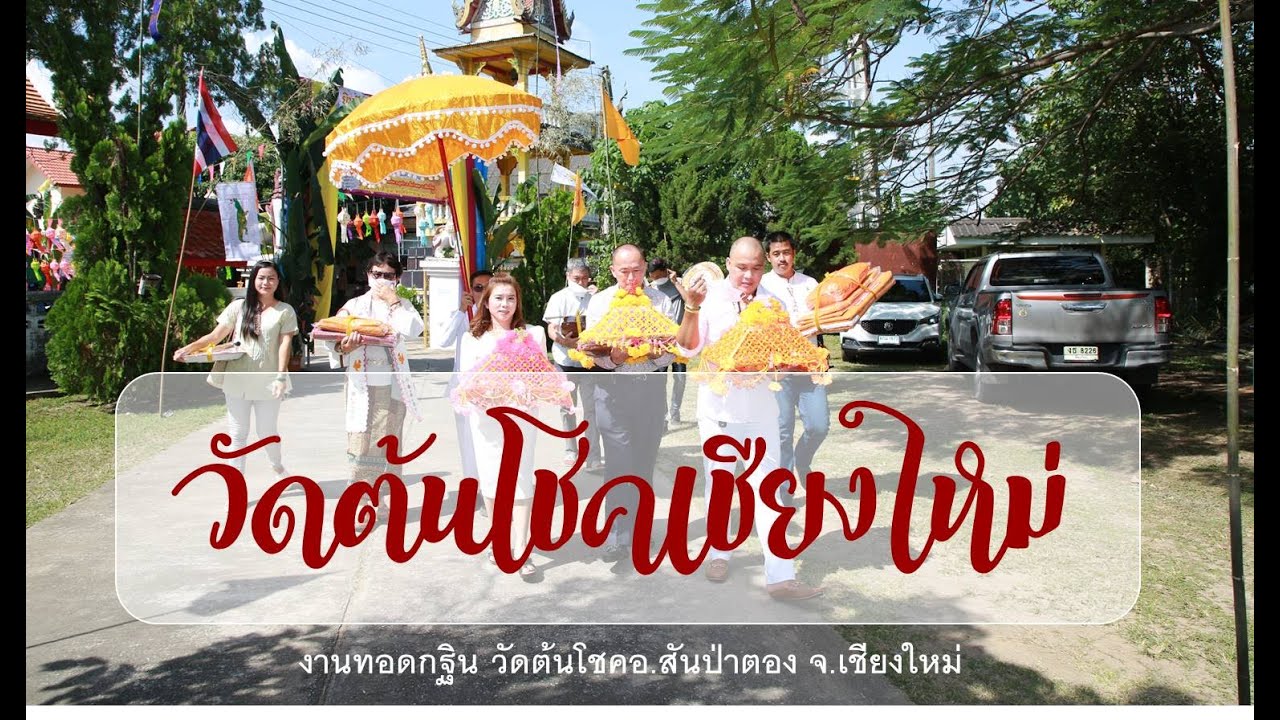
 Click to Access the Navigation Map GPS
Wat Ton Chok Map
Recommend

 Muang Chiang Mai(121)Chom Thong(47)Mae Chaem(25)Chiang Dao(33)Doi Saket(68)Mae Taeng(85)Mae Rim(69)Samoeng(29)Fang(71)Mae Ai(59)Phrao(70)San Pa Tong(103)San Kamphaeng(66)San Sai(73)Hang Dong(73)Hot(32)Doi Tao(22)Omkoi(11)Saraphi(74)Wiang Haeng(15)Chai Prakan(28)Mae Wang(32)Mae On(22)Doi Lo(34)Galyani Vadhana(1)


