
lovethailand home >North Travel Attractions >Chiang Mai Travel Attractions >San Pa Tong >Ban Klang > Wat San Hao
TL;DR: Wat San Hao is located at Ban San Hao, Moo 7, Ban Klang Subdistrict, San Pa Tong District, Chiang Mai Province, open Daily, hours 08.00 – 17.00.

Wat San Hao
Open Days: Daily
Opening Hours: 08.00 – 17.00
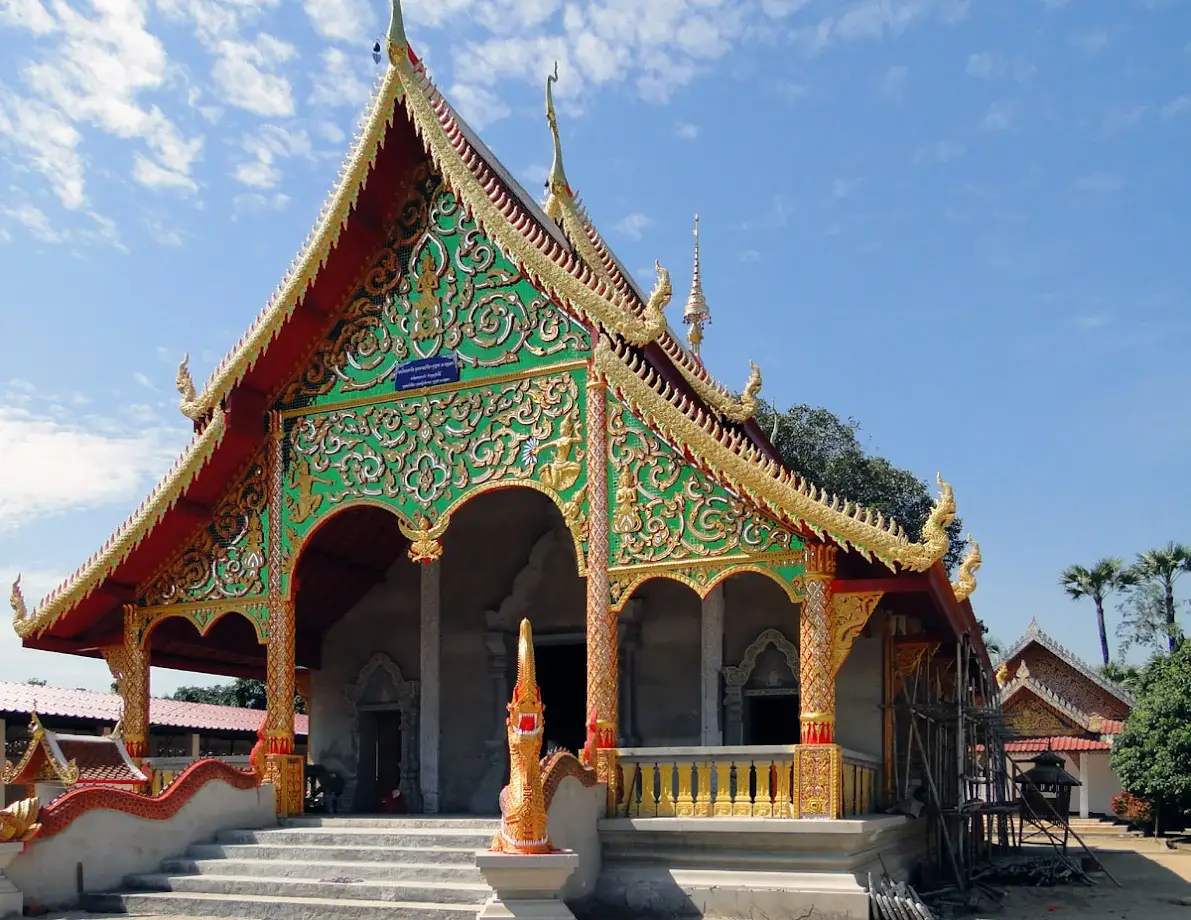
Wat San Hao is located at 52 Ban San Hao, Moo 7, Ban Klang Subdistrict, San Pa Tong District, Chiang Mai Province. It is a local Mahanikaya Buddhist temple founded in 1826 and remains an important religious center of Ban San Hao. The temple is meaningful because its history is strongly connected with the revival of an abandoned temple site. The area once contained a damaged old stupa and dense overgrowth before local villagers cleared the land, invited a monk to reside there, and rebuilt the temple as a place of Buddhist worship and community faith.
Wat San Hao is not a large commercial tourist attraction. Its value lies in its local history, village identity, and religious role within Ban Klang Subdistrict. The temple contains an ordination hall, viharn, monks’ residence, multipurpose hall, merit-making halls, scripture hall, bell tower, Buddha images, a Mara-vijaya Buddha image, and a stupa built in 1921. These elements make it a meaningful village temple for travelers who want to understand San Pa Tong through active community temples rather than only through major tourist landmarks.
The temple was founded in 1826. Before becoming the present temple, the site was remembered as an abandoned temple area with a damaged stupa. The land was a raised sandy area covered with large trees, small trees, and thick vines. Local stories say that wild animals, including tigers, once lived in the overgrown area. When villagers lost cattle or buffalo, they sometimes found remains in the abandoned temple area. This memory shows how remote and forested the site once was before the community reclaimed it for religious use.
As more people settled in the area, villagers worked together to clear the abandoned temple site. They then invited Phra Choon from Wat San Khayom in Yu Wa Subdistrict, San Pa Tong District, to become the monk who helped revive the temple. The villagers contributed labor, ideas, and resources to build temporary bamboo structures, including a monks’ residence and a viharn, so that monks could reside there and local people could come to make merit and listen to sermons.
After the temple became active again, the community named it Wat San Hao. This name ties the temple directly to Ban San Hao and reflects the close relationship between temple and village. The story of Wat San Hao is therefore a story of community revival. A place once remembered as wild and abandoned became a Buddhist temple again through the cooperation of villagers, monks, and local faith.
Wat San Hao received its royal consecrated boundary, or Wisungkhamsima, on February 20, 1826. The consecrated boundary measures 20 meters wide and 40 meters long, and the boundary ceremony was completed in the same year. In Thai Buddhist practice, this boundary is essential for formal monastic ceremonies such as ordination and Sangha acts. Its presence confirms the temple’s status as a complete Buddhist institution for the community.
The temple land covers 3 rai, 3 ngan, and 70 square wah under title deed number 642808. To the north, the temple borders land of Wat San Hao School. To the south, it borders local residential land. To the east, it borders irrigation-channel land. To the west, it borders villagers’ rice fields. The temple also has 1 plot of monastic land covering 3 rai, 3 ngan, and 94 square wah in Ban Klang Subdistrict. These boundaries show that the temple is closely connected with the school, village homes, irrigation systems, and farmland.
The temple grounds are flat and located within the Ban San Hao community. The north side’s connection with Wat San Hao School shows the temple’s relationship with local education. The east side’s connection with an irrigation channel reflects the importance of water management in village life. The west side’s connection with rice fields further shows that Wat San Hao is part of an agricultural landscape rather than an isolated religious site.
The ordination hall measures 5 meters wide and 10 meters long. It was built in 1926 with brick-and-plaster construction and a wooden roof covered with clay tiles. Although compact in size, the ordination hall is one of the most important structures because it is directly connected with the consecrated boundary and formal monastic ceremonies. Its size and construction reflect the practical character of a village temple built according to local needs and community resources.
The viharn measures 11 meters wide and 21 meters long and was built in 1954. The viharn is a major devotional space where villagers come to pay respect to Buddha images, make merit, listen to sermons, and participate in Buddhist activities. In northern Thai village temples, the viharn is often the building most closely connected with laypeople because it is used regularly for community worship and merit-making.
Wat San Hao has 1 monks’ residence, described as a half-concrete, half-wood building. This type of structure is common in many northern Thai village temples because it combines the strength of masonry with the familiarity of wood. The monks’ residence allows the temple to function as a living religious site where monks reside, practice, and support the spiritual life of the community.
The multipurpose hall measures 10 meters wide and 10 meters long and was built in 1993. It supports many forms of community and temple activity, including merit-making, meetings, memorial events, and village gatherings. The temple also has 2 concrete merit-making halls, which support funeral rites, merit ceremonies, and other community events that require shared space.
The scripture hall measures 4 meters wide and 6 meters long. In a Lanna temple, a scripture hall is significant because it is traditionally associated with the preservation of Buddhist texts, palm-leaf manuscripts, and religious knowledge. Even when detailed artistic information is not recorded, the presence of a scripture hall shows that Wat San Hao has a role in preserving Buddhist learning, not only in performing rituals.
The bell tower measures 4 meters wide and 4 meters long. A bell tower in a village temple is more than an architectural feature. The sound of the bell marks temple routines, signals activities, and links the rhythm of the temple with the life of the village. It is one of the elements that shows how the temple remains active within everyday community life.
The sacred objects of Wat San Hao include a Mara-vijaya Buddha image, other Buddha images in the temple, 1 Buddha image in the merit-making hall, and 1 stupa built in 1921. The Mara-vijaya posture represents the Buddha’s victory over temptation and obstacles before enlightenment. The stupa is also important as a religious marker and a symbol of continuing faith after the temple’s revival.
The story of the old damaged stupa and the later stupa built in 1921 gives the temple an important historical dimension. The stupa represents continuity between the abandoned temple past and the active community temple of the present. Visitors should view the stupa area as a key part of the temple’s story, connecting memory, revival, and local Buddhist devotion.
Wat San Hao serves the Ban San Hao community on several levels. Spiritually, it is a place for villagers to make merit, pray, and seek peace. Ritually, it supports Buddhist ceremonies, merit-making, funeral rites, and memorial activities. Socially, it is a gathering place for the village. Culturally, it preserves the memory of the abandoned temple, the clearing of the old site, the invitation of Phra Choon, and the relationship between the temple, school, irrigation channels, and rice fields.
Religious events at Wat San Hao follow the rhythm of northern Thai Buddhist village life. These include Buddhist holy days, Buddhist Lent, the end of Buddhist Lent, Kathin, Pha Pa, merit-making ceremonies, and community memorial rites. The viharn, multipurpose hall, merit-making halls, ordination hall, and bell tower allow these activities to take place in an organized way.
Important things to see at Wat San Hao include the ordination hall built in 1926, the viharn built in 1954, the multipurpose hall built in 1993, the scripture hall, the bell tower, the Mara-vijaya Buddha image, and the stupa built in 1921. The temple’s value lies not in grandeur but in the story of how an abandoned, overgrown site became a living Buddhist temple again through community effort.
The atmosphere of Wat San Hao is quiet and local. It is suitable for travelers interested in old temples, Lanna village culture, temple revival stories, agricultural landscapes, and cultural routes in Ban Klang. Visitors should dress respectfully, speak quietly, and avoid entering monks’ private areas without permission. If a ceremony or community activity is taking place, local people should be given priority.
Wat San Hao can be included in a cultural route through Ban Klang Subdistrict. Nearby places include Wat Sam Lang, Wat Ton Kok, Wat Tha Kan, Wiang Tha Kan Archaeological Site, Wat Sri Nawarat, and Wat Pa Sak. This route helps visitors understand Ban Klang as an area of old temples, village communities, irrigation channels, rice fields, and historical remains.
Wiang Tha Kan is one of the important archaeological sites in Ban Klang. It contains remains of an ancient settlement, moats, earthen walls, old temple sites, stupas, viharn bases, and archaeological evidence from several periods. Combining Wat San Hao with Wiang Tha Kan gives travelers a broader view of San Pa Tong, from living village temples to the deeper historical landscape of the area.
Getting There is most convenient by private car, rental car, or local hired transport. From Chiang Mai city, take Highway 108, also known as the Chiang Mai–Hot Road, toward San Pa Tong District. Continue into Ban Klang Subdistrict and Ban San Hao, Moo 7. When using a map application, search for “Wat San Hao Ban Klang San Pa Tong” to avoid confusion with similarly named places.
Daytime travel is recommended because the temple is located within a local village setting. A half-day route can include Wat San Hao, Wat Sam Lang, Wat Ton Kok, Wat Tha Kan, and Wiang Tha Kan. A longer route can continue to Wat Sri Nawarat, Wat Pa Sak, and Wat Phra Chao Thong Thip for a fuller understanding of Ban Klang’s temple landscape.
Overall, Wat San Hao is a meaningful old temple of Ban Klang with religious, historical, and community value. Its key elements include its founding in 1826, the revival of an abandoned temple site, the community’s invitation of Phra Choon from Wat San Khayom, the consecrated boundary, the ordination hall, the viharn, the scripture hall, the bell tower, Buddha images, and the stupa built in 1921. It is a suitable destination for travelers who want to understand Chiang Mai through village temples and the local faith of San Pa Tong.
| Name | Wat San Hao |
| Location | Ban San Hao, Moo 7, Ban Klang Subdistrict, San Pa Tong District, Chiang Mai Province |
| Address | 52 Ban San Hao, Moo 7, Ban Klang Subdistrict, San Pa Tong District, Chiang Mai 50120, Thailand |
| Coordinates | Latitude 18.55325, Longitude 98.89672 |
| Highlights | An old Ban San Hao community temple founded in 1826, with a history of reviving an abandoned temple site, an ordination hall, viharn, scripture hall, bell tower, Mara-vijaya Buddha image, and stupa built in 1921 |
| History | Founded in 1826; originally an abandoned temple with a damaged stupa and overgrown grounds before villagers cleared the area and invited Phra Choon from Wat San Khayom to revive the temple |
| Consecrated Boundary | Granted on February 20, 1826; the Wisungkhamsima measures 20 meters wide and 40 meters long; boundary ceremony completed in 1826 |
| Temple Land | Temple land covers 3 rai, 3 ngan, and 70 square wah under title deed number 642808; the temple also has 1 monastic land plot covering 3 rai, 3 ngan, and 94 square wah |
| Boundaries | North: Wat San Hao School land; South: local residential land; East: irrigation-channel land; West: villagers’ rice fields |
| Landscape | Flat temple grounds within Ban San Hao community, connected with the school, irrigation channels, rice fields, and local homes |
| Main Areas / Zones | Ordination hall, viharn, monks’ residence, multipurpose hall, merit-making halls, scripture hall, bell tower, Buddha-image area, and stupa area |
| Important Structures | Ordination hall measuring 5 by 10 meters, built in 1926 with brick-and-plaster walls and a wooden roof with clay tiles; viharn measuring 11 by 21 meters, built in 1954; multipurpose hall measuring 10 by 10 meters, built in 1993 |
| Other Buildings | 1 half-concrete, half-wood monks’ residence; 2 concrete merit-making halls; scripture hall measuring 4 by 6 meters; and bell tower measuring 4 by 4 meters |
| Sacred Objects | Mara-vijaya Buddha image, other Buddha images in the temple, 1 Buddha image in the merit-making hall, and 1 stupa built in 1921 |
| Historic Abbot Mentioned | Phra Choon from Wat San Khayom, Yu Wa Subdistrict, San Pa Tong District, was invited by villagers to help revive the temple |
| Local Importance | A spiritual center of Ban San Hao and a community temple connected with the school, irrigation channel, rice fields, and Ban Klang’s old temple route |
| Travel Information | Travel from Chiang Mai city via Highway 108, the Chiang Mai–Hot Road, toward San Pa Tong. Continue into Ban Klang Subdistrict and Ban San Hao, Moo 7. Private car, rental car, or local hired transport is recommended. |
| Current Status | A registered Mahanikaya community temple serving Ban San Hao |
| Open Days | Daily |
| Opening Hours | 08.00 – 17.00 |
| Main Contact Number | 053-829-206 |
| Facilities | Ordination hall, viharn, multipurpose hall, merit-making halls, monks’ residence, scripture hall, bell tower, religious activity areas, and accessible parking |
| Nearby Tourist Attractions | 1. Wat Sam Lang, about 2 km 2. Wat Ton Kok, about 3 km 3. Wat Tha Kan, about 4 km 4. Wiang Tha Kan Archaeological Site, about 4 km 5. Wat Sri Nawarat, about 5 km 6. Wat Pa Sak, about 5 km |
| Nearby Restaurants | 1. Cafe Vintage1980 San Pa Tong, about 3 km, Tel. 096-084-0462 2. Kuai Tiao Ton Kok, about 3 km, Tel. 092-872-6536 3. Baan Plai Suan Restaurant San Pa Tong, about 4 km, Tel. 063-847-3142, 093-321-0885, 062-541-2652 4. Thoe Na Cha Chob Tam Sang San Pa Tong, about 5 km, Tel. 096-694-7277 5. Lake View @ San Pa Tong, about 7 km, Tel. 097-079-8448 6. Saming Cha Cafe, about 7 km, Tel. 095-447-0110 |
| Nearby Accommodations | 1. Kaomai Lanna Resort, about 3 km, Tel. 053-481-201, 086-428-7481 2. Lan Long Khao Cafe & Resort, about 4 km, Tel. 093-571-5888 3. Tai Resort Sanpatong, about 6 km, Tel. 063-096-7000 4. Huen Hom Kham Homestay, about 7 km, Tel. 086-183-1327 5. Bannoi Himsuan, about 8 km, Tel. 090-329-6108 6. Baan Suan Kaew Huen Kham @ San Pa Tong, about 9 km, Tel. 081-366-2382 |
Frequently Asked Questions (FAQ)
Q: Where is Wat San Hao located?
A: Wat San Hao is located at 52 Ban San Hao, Moo 7, Ban Klang Subdistrict, San Pa Tong District, Chiang Mai Province.
Q: When was Wat San Hao founded?
A: Wat San Hao was founded in 1826 and received its royal consecrated boundary on February 20, 1826.
Q: What is the main historical story of Wat San Hao?
A: The temple was once an abandoned site with a damaged stupa and overgrown forest. Villagers later cleared the area, revived the temple, and invited Phra Choon from Wat San Khayom to reside there.
Q: What are the main things to see at Wat San Hao?
A: Key features include the ordination hall, viharn, scripture hall, bell tower, Mara-vijaya Buddha image, multipurpose hall, merit-making halls, and the stupa built in 1921.
Q: Why is Wat San Hao important to the local community?
A: It is a spiritual center of Ban San Hao and supports Buddhist ceremonies, merit-making, memorial rites, and community activities connected with the local school, irrigation channels, and rice fields.
Q: What kind of traveler is Wat San Hao suitable for?
A: It is suitable for travelers interested in old temples, Lanna village culture, temple revival stories, local agricultural landscapes, and cultural routes connected with Wiang Tha Kan.
Q: How can travelers get to Wat San Hao?
A: Travelers can take Highway 108, the Chiang Mai–Hot Road, from Chiang Mai city toward San Pa Tong, then continue into Ban Klang Subdistrict and Ban San Hao, Moo 7.
Q: What nearby places can be visited with Wat San Hao?
A: Nearby places include Wat Sam Lang, Wat Ton Kok, Wat Tha Kan, Wiang Tha Kan Archaeological Site, Wat Sri Nawarat, and Wat Pa Sak.
 Category: ●Places of Worship
 Group: ●Temple
Last Update : 1 DayAgo
 Last Update : 1 DayAgo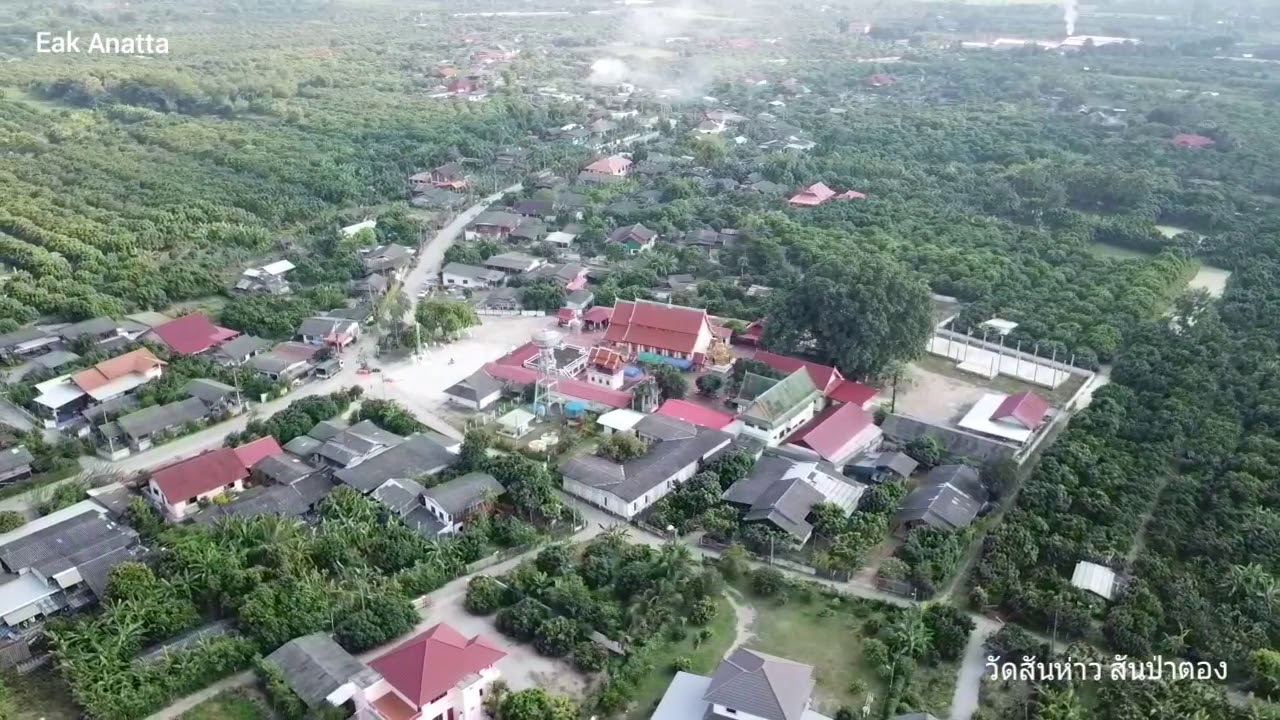
 Click to Access the Navigation Map GPS
Wat San Hao Map
Recommend

 Muang Chiang Mai(121)Chom Thong(47)Mae Chaem(25)Chiang Dao(33)Doi Saket(68)Mae Taeng(85)Mae Rim(69)Samoeng(29)Fang(71)Mae Ai(59)Phrao(70)San Pa Tong(103)San Kamphaeng(66)San Sai(73)Hang Dong(74)Hot(32)Doi Tao(22)Omkoi(11)Saraphi(74)Wiang Haeng(15)Chai Prakan(28)Mae Wang(32)Mae On(22)Doi Lo(34)Galyani Vadhana(1)


