
lovethailand home >North Travel Attractions >Chiang Mai Travel Attractions >San Pa Tong >Thung Satok > Wat Pa Mai Daeng (Thung Satok)
TL;DR: Wat Pa Mai Daeng (Thung Satok) is located at Ban Pa Oi, Village No. 5, Thung Satok Subdistrict, San Pa Tong District, Chiang Mai Province.

Wat Pa Mai Daeng (Thung Satok)
Operating day: Daily
Operating time: 08.00 - 17.00
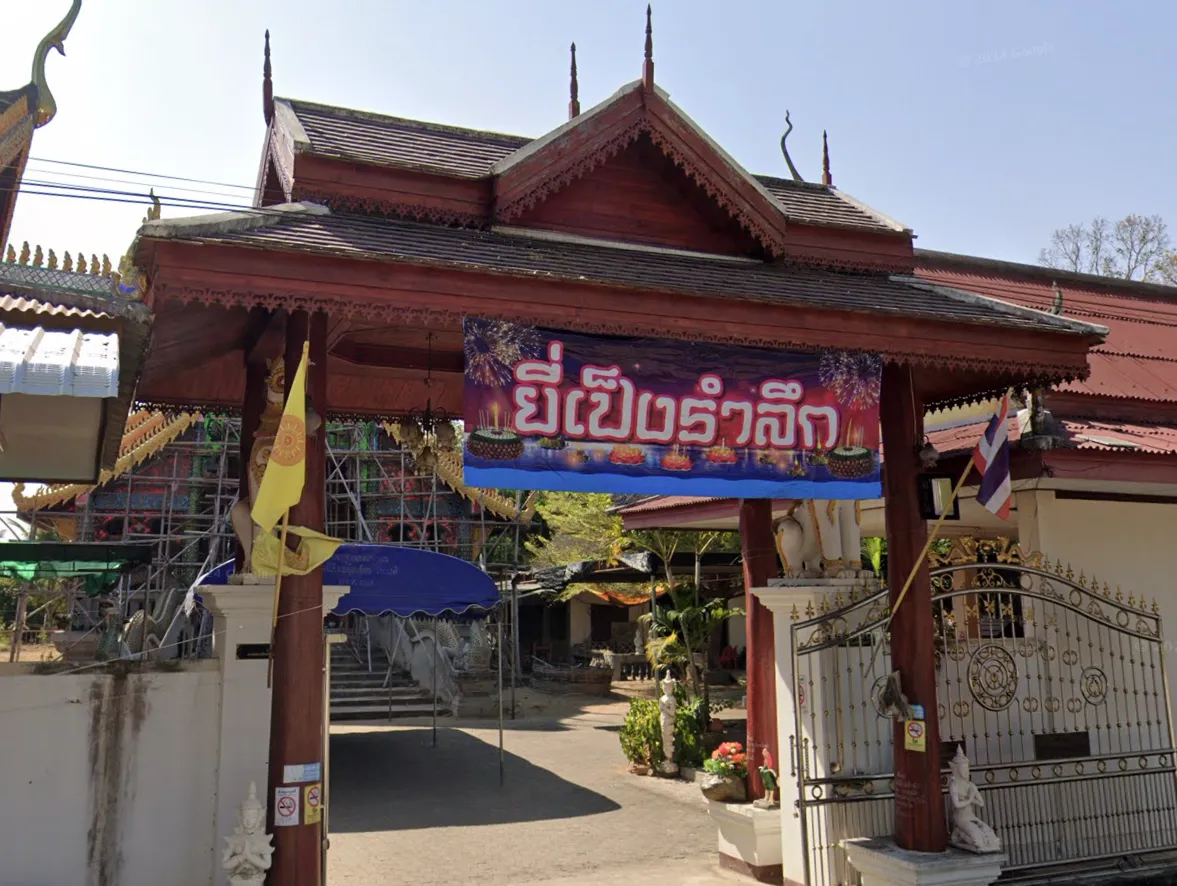
Wat Pa Mai Daeng (Thung Satok), also locally known as Wat Pa Oi, is an old community Buddhist temple in Ban Pa Oi, Village No. 5, Thung Satok Subdistrict, San Pa Tong District, Chiang Mai Province. The temple belongs to the Mahanikaya monastic order and was founded in 1732. It received Wisungkham Sima in 1736, making it an important religious site for the local community. Wat Pa Mai Daeng is best understood as a living Lanna village temple, with a viharn, sermon hall, salabat hall, monks’ residence, kitchen, Sing Sam Buddha image, and chedi forming the core of its religious and community life.
The temple is located at No. 1014, Ban Pa Oi, Village No. 5, Thung Satok Subdistrict, San Pa Tong District, Chiang Mai Province. Its temple land covers 1 rai, 3 ngan, and 82 square wah, with four additional monastic land plots totaling 11 rai and 82 square wah. The temple’s boundaries reveal the landscape of a rural Lanna community: the north borders a school, the south borders a road, the east borders rice fields, and the west borders an irrigation canal. This setting shows how the temple is connected with education, agriculture, local roads, and traditional water systems.
The name Wat Pa Mai Daeng is used as the temple’s main name, while local villagers also call it Wat Pa Oi, after Ban Pa Oi, the village where it is located. This kind of dual naming is common in northern Thai communities, where official temple names and local village names often coexist. In this case, the temple’s official identity and its village-based name both help explain its role as a spiritual center of Ban Pa Oi and Thung Satok.
Wat Pa Mai Daeng was established in 1732, during a period when temples were central to the formation and continuity of rural Lanna communities. Village temples were built by local faith and collective effort, giving residents a place to make merit, listen to sermons, observe Buddhist holy days, and gather for important ceremonies. Wat Pa Mai Daeng therefore represents more than a religious structure; it is a historical marker of Ban Pa Oi’s community life and Buddhist identity.
The temple received Wisungkham Sima in 1736. In Thai Buddhist tradition, Wisungkham Sima is associated with the formal boundary required for monastic acts, especially those connected with an ordination hall and the Sangha’s formal ceremonies. This detail gives Wat Pa Mai Daeng added religious importance and shows that the temple had developed into an established Buddhist institution early in its history.
The surrounding context of Ban Pa Oi and Thung Satok makes the temple especially meaningful. The temple stands near a school, road, rice fields, and canal, all of which are key elements of village life. The school to the north suggests a relationship between temple and learning, while the rice fields and canal reflect the agricultural foundation of the community. Wat Pa Mai Daeng is therefore part of a wider local system in which religion, education, farming, and community cooperation are closely linked.
The main monastic structures at Wat Pa Mai Daeng include a sermon hall, salabat hall, viharn, monks’ residence, and kitchen. These buildings allow the temple to support both monastic and community functions. The sermon hall provides space for Dhamma talks, merit-making, and larger gatherings. The salabat hall supports food offerings and communal Buddhist activities. The viharn is the main space for worship. The monks’ residence supports daily monastic life, while the kitchen is essential during temple festivals and community merit-making events.
The viharn is one of the key areas visitors should pay attention to. In a Lanna village temple, the viharn is not simply a building; it is the heart of worship and the place where villagers gather to receive precepts, listen to sermons, and pay respect to the Buddha. At Wat Pa Mai Daeng, the viharn is connected with the temple’s important sacred object, the Sing Sam Buddha image, which is one of the main points of devotion for local worshippers.
The Sing Sam Buddha image is one of the temple’s important sacred objects. The name is associated with Lanna Buddhist artistic tradition, and Buddha images of the Sing style are significant in northern Thai religious culture. The presence of a Sing Sam Buddha image gives Wat Pa Mai Daeng both devotional and cultural value. Visitors should approach the image respectfully and take time to appreciate its role as a spiritual focus of the temple and the Ban Pa Oi community.
The chedi is another important sacred feature of Wat Pa Mai Daeng. In northern Thai temples, a chedi often represents the continuity of Buddhist faith and the accumulated merit of generations. Although detailed measurements or architectural descriptions of this specific chedi are not available, its inclusion among the temple’s sacred objects shows that it is an important religious landmark within the temple grounds.
The sermon hall plays a major role in the temple’s community life. In village temples, this hall is commonly used for sermons, merit-making ceremonies, community meetings, and gatherings during Buddhist festivals. Its presence allows Wat Pa Mai Daeng to serve more than individual worship. It supports group activities and makes the temple a shared cultural space for Ban Pa Oi.
The salabat hall reflects northern Thai merit-making culture. Food offerings, almsgiving, and shared meals are important parts of temple life. During Buddhist holy days, the rainy-season retreat, the end of Buddhist Lent, Kathin, robe-offering ceremonies, and other merit-making occasions, the salabat hall helps organize the relationship between monks and lay supporters. It is one of the practical spaces that keeps Buddhist community life active.
The monks’ residence shows that Wat Pa Mai Daeng continues to function as a living temple. Monks’ quarters support daily religious practice, residence, and the ongoing presence of the Sangha. In a village community, resident monks provide spiritual guidance, receive offerings, conduct ceremonies, and maintain the temple’s role as a center of Buddhist practice.
The temple kitchen is equally important during major merit-making events. In Lanna temple culture, villagers often work together to prepare food for monks and participants. The kitchen turns faith into collective action: people cook, serve, clean, organize, and help one another. This cooperative work is a defining feature of village temples and shows how Buddhism is lived through shared labor as well as ritual.
The known abbot listed in the temple’s historical record is Phra Wong Suwanno. An abbot in a village temple plays a role beyond managing buildings. He guides religious practice, supports Buddhist ceremonies, coordinates with lay supporters, and helps maintain the relationship between temple and community. In a place like Wat Pa Mai Daeng, the abbot’s role is central to keeping the temple active and meaningful for local people.
Wat Pa Mai Daeng serves as a spiritual center for Ban Pa Oi and Village No. 5 of Thung Satok. It supports daily merit-making, Buddhist observances, annual festivals, and community activities. Villagers use the temple for worship, sermons, collective ceremonies, and seasonal events. This is the essence of a Lanna community temple: it is not separate from village life but woven into family, farming, education, and local identity.
The temple’s relationship with Lanna culture is visible through its functions and setting. Buddhist Lent, the end of Buddhist Lent, Kathin, robe-offering ceremonies, almsgiving, and other merit-making occasions create a yearly rhythm for villagers. Wat Pa Mai Daeng supports these activities through its viharn, halls, monks’ residence, and kitchen. The temple therefore helps preserve the cultural rhythm of Ban Pa Oi and Thung Satok.
The atmosphere of Wat Pa Mai Daeng is quiet and local. It is suitable for travelers who appreciate modest village temples rather than crowded tourist attractions. Visitors can pay respect to the Sing Sam Buddha image, observe the chedi, walk through the temple courtyard, and understand how the temple’s different buildings support religious and community life. The best way to visit is slowly and respectfully.
Important areas to see include the viharn, Sing Sam Buddha image, chedi, sermon hall, salabat hall, monks’ residence, kitchen, and temple courtyard. Each area shows a different function of a living temple. The viharn and Buddha image represent worship, the chedi represents continuity of faith, the halls support community activities, the monks’ residence supports monastic life, and the kitchen reflects the collective work behind Buddhist merit-making.
Visitors should dress respectfully, keep their voices low, avoid disturbing monks’ living areas, and refrain from touching sacred objects unless permission is clearly given. If a ceremony or local event is taking place, visitors should follow the guidance of monks or caretakers. Wat Pa Mai Daeng remains an active community temple, so it should be approached as a sacred place rather than a commercial tourist stop.
Getting There is most convenient by private car, rental car, or local hired transport. From Chiang Mai city, travel toward San Pa Tong District, then continue into Thung Satok Subdistrict and Ban Pa Oi, Village No. 5. The temple can be combined with nearby temples and cultural sites such as Wat Tha Champi, Wat Tha Sa, Wat Thung Kiang, Wat Prasat, Wat Pa Chi, and Wiang Tha Kan Archaeological Site.
A meaningful route around Wat Pa Mai Daeng is to explore the temples and communities of Thung Satok. Start at Wat Pa Mai Daeng to pay respect to the Sing Sam Buddha image and see the chedi, then continue to nearby temples and historical sites in San Pa Tong. This route gives travelers a fuller picture of Lanna village Buddhism, local agriculture, community temples, and the historical depth of southern Chiang Mai.
Overall, Wat Pa Mai Daeng (Thung Satok) is a valuable cultural and religious stop in San Pa Tong District. Its importance comes from its founding in 1732, its Wisungkham Sima in 1736, its relationship with Ban Pa Oi, its sacred Sing Sam Buddha image and chedi, and its continuing role as a spiritual center of the local community. For travelers who want to experience a quieter, deeper side of Chiang Mai, this temple is worth visiting with care and respect.
| Name | Wat Pa Mai Daeng (Thung Satok) Or Wat Pa Oi |
| Location | Ban Pa Oi, Village No. 5, Thung Satok Subdistrict, San Pa Tong District, Chiang Mai Province |
| Address | No. 1014, Ban Pa Oi, Village No. 5, Thung Satok Subdistrict, San Pa Tong District, Chiang Mai, Thailand |
| Monastic Order | Mahanikaya |
| Highlights | Old community temple of Ban Pa Oi, founded in 1732, with a Sing Sam Buddha image, chedi, and important Lanna village temple structures |
| History | Founded in 1732, locally known as Wat Pa Oi, and received Wisungkham Sima in 1736 |
| Temple Land | 1 Rai, 3 Ngan, And 82 Square Wah |
| Monastic Land | 4 Plots, 11 Rai And 82 Square Wah |
| Boundaries | North: About 34 Wah To A School; South: About 34 Wah To A Road; East: About 23 Wah To Rice Fields; West: About 23 Wah To An Irrigation Canal |
| Distinctive Features | A historic Lanna community temple connected with Ban Pa Oi, local school, road, rice fields, and irrigation canal |
| Sacred Objects | Sing Sam Buddha Image And Chedi |
| Important Structures | Sermon Hall, Salabat Hall, Viharn, Monks’ Residence, And Kitchen |
| Main Areas / Zones | Viharn, Chedi, Sermon Hall, Salabat Hall, Monks’ Residence, Kitchen, And Temple Courtyard |
| Abbot / Caretaker | Phra Wong Suwanno |
| Current Status | Active community temple in Ban Pa Oi, Village No. 5, Thung Satok Subdistrict, San Pa Tong District, Chiang Mai Province |
| Travel Information | Travel from Chiang Mai city toward San Pa Tong District, then continue into Thung Satok Subdistrict and Ban Pa Oi; private car, rental car, or local hired transport is recommended |
| Nearby Tourist Attractions | 1. Wat Tha Champi, about 4 km 2. Wat Tha Sa, about 5 km 3. Wat Thung Kiang, about 7 km 4. Wat Prasat (Thung Satok), about 4 km 5. Wiang Tha Kan Archaeological Site, about 10 km |
| Nearby Restaurants | 1. Aunt Phan’s Kitchen San Pa Tong, about 3 km, Tel. 084-609-6109 2. Thung Satok@San Pa Tong, about 4 km 3. Sam Saep Ahan Tam Sang, about 4 km 4. Nong Ple Ahan Tam Sang Behind San Pa Tong Hospital, about 8 km, Tel. 095-467-7147 5. Thoe Na Cha Chob Tam Sang San Pa Tong, about 9 km, Tel. 096-694-7277 |
| Nearby Accommodations | 1. Home At 9, about 12 km, Tel. 088-636-2679 2. P Resort & W Resort, about 12 km, Tel. 064-334-4566 3. Fortune Hotel, about 12 km, Tel. 095-129-9564 4. Bannoi Himsuan, about 13 km, Tel. 090-329-6108 5. Tai Resort, about 13 km |
Frequently Asked Questions (FAQ)
Q: Where is Wat Pa Mai Daeng (Thung Satok) located?
A: Wat Pa Mai Daeng is located at No. 1014, Ban Pa Oi, Village No. 5, Thung Satok Subdistrict, San Pa Tong District, Chiang Mai Province.
Q: Does Wat Pa Mai Daeng have another local name?
A: Yes. Local villagers also call it Wat Pa Oi, after Ban Pa Oi where the temple is located.
Q: When was Wat Pa Mai Daeng founded?
A: Wat Pa Mai Daeng was founded in 1732 and received Wisungkham Sima in 1736.
Q: What are the main sacred objects at Wat Pa Mai Daeng?
A: The temple’s important sacred objects are the Sing Sam Buddha image and the chedi.
Q: What important structures are inside Wat Pa Mai Daeng?
A: Important structures include the sermon hall, salabat hall, viharn, monks’ residence, and kitchen.
Q: What kind of travelers should visit Wat Pa Mai Daeng?
A: The temple is suitable for travelers interested in quiet Lanna village temples, local Buddhist culture, and cultural routes in San Pa Tong.
Q: How can travelers get to Wat Pa Mai Daeng?
A: Travel from Chiang Mai city toward San Pa Tong District, then continue into Thung Satok Subdistrict and Ban Pa Oi by private car, rental car, or local hired transport.
Q: What nearby places can be visited together with Wat Pa Mai Daeng?
A: Nearby places include Wat Tha Champi, Wat Tha Sa, Wat Thung Kiang, Wat Prasat, and Wiang Tha Kan Archaeological Site.
 Category: ●Places of Worship
 Group: ●Temple
Last Update : 4 HourAgo
 Last Update : 4 HourAgo
 Click to Access the Navigation Map GPS
Wat Pa Mai Daeng (Thung Satok) Map
Recommend

 Muang Chiang Mai(121)Chom Thong(47)Mae Chaem(25)Chiang Dao(33)Doi Saket(68)Mae Taeng(85)Mae Rim(69)Samoeng(29)Fang(71)Mae Ai(59)Phrao(70)San Pa Tong(105)San Kamphaeng(66)San Sai(73)Hang Dong(74)Hot(32)Doi Tao(22)Omkoi(11)Saraphi(74)Wiang Haeng(15)Chai Prakan(28)Mae Wang(32)Mae On(22)Doi Lo(34)Galyani Vadhana(1)


