
lovethailand home >North Travel Attractions >Chiang Mai Travel Attractions >San Pa Tong >Thung Satok > Wat Thung Kieng
TL;DR: Wat Thung Kieng is located at Ban Thung Kiang, Moo 12, Thung Satok Subdistrict, San Pa Tong District, Chiang Mai Province.
Wat Thung Kieng
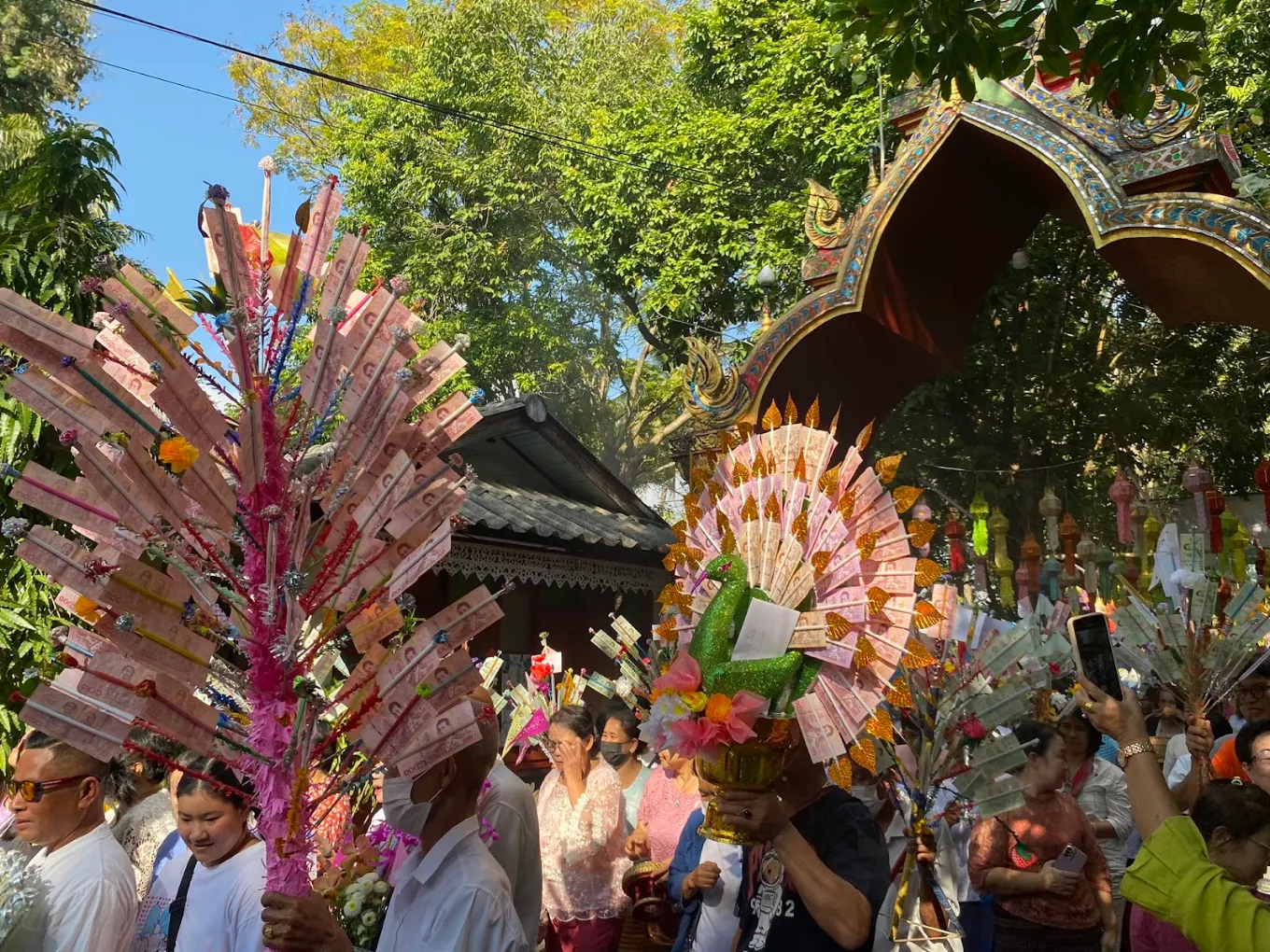
Operating day: Daily
Operating time: 08.00 - 17.00
Wat Thung Kiang is an old Mahanikaya community temple in Ban Thung Kiang, Moo 12, Thung Satok Subdistrict, San Pa Tong District, Chiang Mai Province. Founded on 9 January 1732 by Phra Insom Sumano during the Ayutthaya period, the temple preserves a quiet Lanna village-temple atmosphere with an ordination hall, viharn, monks’ residences, sermon hall, relic chedi, alms pavilion, bell tower, kitchen, old Buddha images, and an ancient chedi. It is suitable for visitors interested in peaceful worship, local Buddhist heritage, and connected temple routes in Thung Satok.
Wat Thung Kiang is located at 86 Moo 12, Thung Satok Subdistrict, San Pa Tong District, Chiang Mai Province 50120. It is a local Buddhist temple under the Mahanikaya order. The temple land covers 4 rai, 2 ngan, and 49 square wah under land title deed number 69974, volume 700, page 74. Wat Thung Kiang is an important religious center for Ban Thung Kiang, serving as a place for worship, Dhamma listening, merit-making, ordinations, funerals, Kathin offerings, forest robe offerings, and community Buddhist activities.
The name Wat Thung Kiang is closely connected with the village name and local landscape. “Thung” suggests open fields or agricultural land, a common feature of San Pa Tong District. “Kiang” is the local place name preserved through village memory. The temple therefore belongs directly to the identity of Ban Thung Kiang, where the name of the temple, the name of the village, and the surrounding rural landscape are closely linked.
Wat Thung Kiang was founded on 9 January 1732 by Phra Insom Sumano. This founding date places the temple in the Ayutthaya period and gives it strong historical value. The mention of Phra Insom Sumano as the initiator shows that the temple was not simply a physical construction but a religious effort led by a monk and local faith. It was created as a place for monks to reside, for villagers to make merit, and for the community to preserve Buddhist practice.
Because the temple was established in 1732, Wat Thung Kiang has passed through many changes in local society, administration, and community life. Old Lanna village temples are living institutions rather than fixed monuments. They are repaired, maintained, adapted, and used by successive generations. Wat Thung Kiang therefore represents continuity of faith from the Ayutthaya period to the present-day Thung Satok community.
Thung Satok Subdistrict is a lowland area of San Pa Tong District connected with waterways, irrigation channels, rice fields, orchards, local roads, and village settlement. Wat Thung Kiang belongs to this rural Lanna setting, where temples, fields, water systems, houses, and community cooperation form a connected way of life. The temple should therefore be understood together with the village landscape around it.
The temple boundaries show its relationship with the community. The southern side borders private houses. The eastern side borders a public irrigation channel, and the western side borders the Wang Nam Rin housing project. This setting places Wat Thung Kiang between older village life, water-management infrastructure, and contemporary residential development. The public irrigation channel reflects the importance of water systems in northern Thai rural communities.
Ban Thung Kiang, Moo 12, is one of the communities of Thung Satok Subdistrict where the temple functions as a spiritual center. In a Lanna village, the temple is not only a ceremonial place. It is also where children learn temple manners, adults support merit-making, elders listen to Dhamma, and monks guide the religious life of the village. Wat Thung Kiang continues to play this local role.
The important structures of Wat Thung Kiang include the ordination hall, monks’ residences, viharn, sermon hall, relic chedi, alms pavilion, bell tower, and kitchen. These structures allow the temple to support both monastic life and lay community activities. The ordination hall is connected with formal monastic acts. The viharn is the main devotional space. The monks’ residences support daily monastic life. The sermon hall and alms pavilion support merit-making events. The bell tower shapes the rhythm of temple life, while the kitchen supports communal meals and festival preparation.
The ordination hall is one of the most sacred areas of the temple. It is associated with monastic discipline and formal Buddhist acts. Visitors should approach this area respectfully, dress modestly, avoid loud conversations, and not treat it as a casual photography spot. Understanding the role of the ordination hall helps visitors appreciate the temple beyond its buildings.
The viharn is the religious space visitors should approach first for worship. In a Lanna community temple, the viharn is where laypeople pay respect to Buddha images, listen to Dhamma, make merit, and gather for ceremonies. Wat Thung Kiang preserves old Buddha images as important sacred objects, so visitors should enter the viharn calmly, remove shoes, keep voices low, and avoid touching sacred objects without permission.
The monks’ residences are living spaces for monks. They support residence, study, rest, and daily religious duties. Visitors should not enter monastic residential areas without permission and should avoid taking intrusive photographs. Wat Thung Kiang remains an active religious place used by monks and the community, not merely a sightseeing location.
The sermon hall supports Dhamma talks, meetings of lay supporters, ordinations, funerals, Kathin robe offerings, forest robe offerings, and other merit-making events. In a community temple, the sermon hall is where different generations meet through religious activities. It is one of the most important social spaces of the temple.
The alms pavilion is closely connected with food offerings and communal merit-making. Temple festivals in northern Thai villages often require organized preparation of food, offerings, and ceremonial items. The alms pavilion helps these activities proceed in an orderly way and reflects the cooperation of local devotees who support the monks and temple events.
The bell tower is a meaningful structure in temple life. The sound of the bell can mark time, call people to religious activities, and create a sacred atmosphere. Although visitors may see it as a small structure, in a village temple it represents rhythm, order, and the living presence of Buddhist practice.
The kitchen is important for merit-making events because community temple ceremonies often involve preparing meals, receiving guests, and offering food to monks. The kitchen shows the practical side of Buddhist merit-making, where faith becomes visible through shared labor, cooking, serving, and hospitality.
The relic chedi and ancient chedi are among the temple’s most important sacred structures. In Lanna Buddhist culture, a chedi symbolizes continuity of Buddhism, reverence for the Triple Gem, and community devotion. The presence of an ancient chedi gives Wat Thung Kiang historical and spiritual depth. Visitors should walk around the chedi respectfully and avoid touching or climbing any sacred structure.
Old Buddha images are another important sacred feature of Wat Thung Kiang. In a community temple, old Buddha images preserve the faith of earlier generations and remain the focus of worship for the present community. Even when public details about artistic style or age are limited, their function is clear: they are sacred objects that gather devotion, prayer, and memory.
Wat Thung Kiang plays several roles for Ban Thung Kiang. It is a place for Buddhist holy days, meal offerings, ordinations, funerals, Kathin robe offerings, forest robe offerings, dedication ceremonies, and annual village merit-making. These activities allow villagers of different ages to participate in Buddhist practice, maintain social ties, and pass temple manners to younger generations.
Religious traditions associated with Wat Thung Kiang should be understood within the broader pattern of Lanna community temples. These include Buddhist Lent, the end of Buddhist Lent, Kathin offerings, forest robe offerings, ordinations, funerals, dedication ceremonies, and seasonal merit-making. Such traditions are not only rituals; they are systems of cooperation that keep the village community connected.
Thung Satok Subdistrict contains many temples that can be connected with Wat Thung Kiang in a cultural route, including Wat Tha Sa, Wat Tha Champi, Wat Talat Kaew, Wat Don Kaew, Wat Prasat, Wat Hua Rin, Wat Pa Chi, Wat Pa Mai Daeng, Wat Rong Som Poi, and Wat Sawang Arom. Visiting several temples in the same subdistrict helps travelers understand the wider Buddhist landscape of San Pa Tong.
The main appeal of Wat Thung Kiang is its old community-temple character. Founded in 1732 by Phra Insom Sumano, the temple preserves a calm village atmosphere, important religious structures, old Buddha images, and an ancient chedi. It is best appreciated by visitors who are interested in local Lanna Buddhist life rather than large commercialized tourist temples.
Visitors should experience Wat Thung Kiang slowly. Begin by paying respect in the viharn, then observe the relic chedi, ancient chedi, sermon hall, alms pavilion, bell tower, and other temple spaces. A community temple of this type is meaningful because it shows how Buddhism remains connected with everyday village life, not because it is designed as a tourist spectacle.
Temple etiquette is important. Visitors should dress modestly, remove shoes before entering religious buildings, keep voices low, avoid entering monks’ private areas without permission, avoid touching old Buddha images or chedis, and give priority to monks and local worshippers during ceremonies. Since Wat Thung Kiang is actively used by the community, respectful conduct is essential.
Getting There is most convenient by private car or rental car. From Chiang Mai city, travel south via the Chiang Mai – Hang Dong – San Pa Tong route or the Chiang Mai – Hot Road, then continue into Thung Satok Subdistrict and Ban Thung Kiang, Moo 12. The temple is located within a village area connected with local roads and irrigation channels.
A practical connected route can begin at Wat Thung Kiang, then continue to Wat Tha Sa, Wat Tha Champi, Wat Talat Kaew, Wat Don Kaew, Wat Prasat, Wat Hua Rin, Wat Pa Chi, Wat Pa Mai Daeng, Wat Rong Som Poi, and Wat Sawang Arom. Travelers who want to extend the route beyond Thung Satok can continue to Wiang Tha Kan, Wat Buppharam, Wat Huai Som, Wat Kantharam, Wat Phra Bat Thung O, and Wat Ubosot in San Klang Subdistrict.
The best time to visit is in the morning or late afternoon, when the weather is more comfortable and the atmosphere is suitable for quiet worship. During the rainy season, visitors should allow extra travel time because Thung Satok is a lowland area connected with local water systems. If a ceremony, funeral, ordination, Kathin event, or other community activity is taking place, visitors should give priority to local participants and follow temple etiquette carefully.
Overall, Wat Thung Kiang is an old local Mahanikaya temple of Ban Thung Kiang, Moo 12, Thung Satok Subdistrict, San Pa Tong District, Chiang Mai Province. Founded on 9 January 1732 by Phra Insom Sumano, it preserves important religious structures such as the ordination hall, viharn, monks’ residences, sermon hall, relic chedi, alms pavilion, bell tower, kitchen, old Buddha images, and ancient chedi. It is a meaningful stop for visitors interested in Lanna community temples and connected temple routes in San Pa Tong.
| Name | Wat Thung Kiang |
| Name Variants | Wat Thung Kiang / Wat Thung Kiang With Local Spelling Variation |
| Location | Ban Thung Kiang, Moo 12, Thung Satok Subdistrict, San Pa Tong District, Chiang Mai Province |
| Address | 86 Moo 12, Thung Satok Subdistrict, San Pa Tong District, Chiang Mai 50120, Thailand |
| Temple Type | Local Buddhist Temple Under The Mahanikaya Order |
| Temple Land | 4 Rai, 2 Ngan, 49 Square Wah, land title deed number 69974, volume 700, page 74 |
| Boundaries | South: Private Houses East: Public Irrigation Channel West: Wang Nam Rin Housing Project |
| History | Founded on 9 January 1732 by Phra Insom Sumano during the Ayutthaya period |
| Important Structures | Ordination Hall Monks’ Residences Viharn Sermon Hall Relic Chedi Alms Pavilion Bell Tower Kitchen |
| Important Sacred Objects | Old Buddha Images And Ancient Chedi |
| Highlights | An old Ban Thung Kiang community temple from the Ayutthaya period, with several important religious structures, old Buddha images, an ancient chedi, a relic chedi, bell tower, and calm Lanna village-temple atmosphere |
| Community Role | A spiritual center for Ban Thung Kiang, used for merit-making, Dhamma listening, Buddhist ceremonies, ordinations, funerals, Kathin offerings, forest robe offerings, dedication ceremonies, and annual community activities |
| Related Traditions | Buddhist Holy Days, Buddhist Lent, The End Of Buddhist Lent, Kathin Robe Offerings, Forest Robe Offerings, Meal Offerings, Ordinations, Funerals, Dedication Ceremonies, And Lanna Community Merit-Making |
| Travel Information | Private car or rental car is the most convenient option. From Chiang Mai city, travel via the Chiang Mai – Hang Dong – San Pa Tong route or the Chiang Mai – Hot Road, then continue into Thung Satok Subdistrict and Ban Thung Kiang, Moo 12. |
| Current Status | Active local Mahanikaya temple in Thung Satok Subdistrict, San Pa Tong District, Chiang Mai Province, serving religious, merit-making, and community functions |
| Nearby Tourist Attractions | 1. Wat Tha Sa, about 5 km 2. Wat Tha Champi, about 6 km 3. Wat Talat Kaew, about 6 km 4. Wat Don Kaew (Thung Satok), about 7 km 5. Wat Prasat (Thung Satok), about 8 km 6. Wiang Tha Kan, about 16 km |
| Nearby Restaurants | 1. Khrua Pa Phan San Pa Tong, about 7 km, Tel. 084-609-6109 2. Hong Larb Mae Wang 88, about 7 km, Tel. 081-062-2544 3. Anuwat Salapao San Pa Tong, about 8 km, Tel. 061-368-2385 4. Lung Ta Coffee, about 8 km, Tel. 086-672-5722 5. Ton Khao Shop, about 12 km, Tel. 098-792-6440 6. Pla Salawin Restaurant, about 14 km, Tel. 086-919-3851 |
| Nearby Accommodations | 1. Home At 9, about 12 km, Tel. 088-636-2679 2. Kaomai Lanna Resort, about 14 km, Tel. 053-481-201 3. Tai Resort Sanpatong, about 15 km, Tel. 063-096-7000 4. Wanwan Lanna By Pat, about 18 km, Tel. 080-892-7724 5. P Resort & W Resort, about 18 km, Tel. 064-334-4566 |
Frequently Asked Questions (FAQ)
Q: Where Is Wat Thung Kiang Located?
A: Wat Thung Kiang is located at 86 Moo 12, Thung Satok Subdistrict, San Pa Tong District, Chiang Mai Province 50120.
Q: What Buddhist Order Does Wat Thung Kiang Belong To?
A: Wat Thung Kiang is a local Buddhist temple under the Mahanikaya order.
Q: When Was Wat Thung Kiang Founded?
A: Wat Thung Kiang was founded on 9 January 1732 by Phra Insom Sumano.
Q: What Important Structures Are Found At Wat Thung Kiang?
A: Important structures include the ordination hall, monks’ residences, viharn, sermon hall, relic chedi, alms pavilion, bell tower, and kitchen.
Q: What Important Sacred Objects Are Found At Wat Thung Kiang?
A: Important sacred objects include old Buddha images and an ancient chedi.
Q: What Type Of Visit Is Wat Thung Kiang Suitable For?
A: It is suitable for quiet worship, learning about a Lanna community temple, and exploring old temple routes in Thung Satok Subdistrict.
Q: What Nearby Places Can Be Visited With Wat Thung Kiang?
A: Nearby places include Wat Tha Sa, Wat Tha Champi, Wat Talat Kaew, Wat Don Kaew, Wat Prasat, and Wiang Tha Kan.
Q: How Should Visitors Behave At Wat Thung Kiang?
A: Visitors should dress modestly, remove shoes before entering sacred buildings, keep voices low, avoid entering monks’ private areas without permission, and avoid touching old Buddha images or chedis.
 Category: ●Places of Worship
 Group: ●Temple
Last Update : 7 DayAgo
 Last Update : 7 DayAgo
 Click to Access the Navigation Map GPS
 Muang Chiang Mai(121)Chom Thong(47)Mae Chaem(25)Chiang Dao(33)Doi Saket(68)Mae Taeng(85)Mae Rim(69)Samoeng(29)Fang(71)Mae Ai(59)Phrao(70)San Pa Tong(103)San Kamphaeng(66)San Sai(73)Hang Dong(73)Hot(32)Doi Tao(22)Omkoi(11)Saraphi(74)Wiang Haeng(15)Chai Prakan(28)Mae Wang(32)Mae On(22)Doi Lo(34)Galyani Vadhana(1)


