
lovethailand home >North Travel Attractions >Chiang Mai Travel Attractions >San Pa Tong >Thung Tom > Wat Suphan Rangsri
TL;DR: Wat Suphan Rangsri is located at Ban Si Pho Ngam, Moo 11, Thung Tom Subdistrict, San Pa Tong District, Chiang Mai Province, open Daily, hours 08.00 – 17.00.

Wat Suphan Rangsri
Open Days: Daily
Opening Hours: 08.00 – 17.00
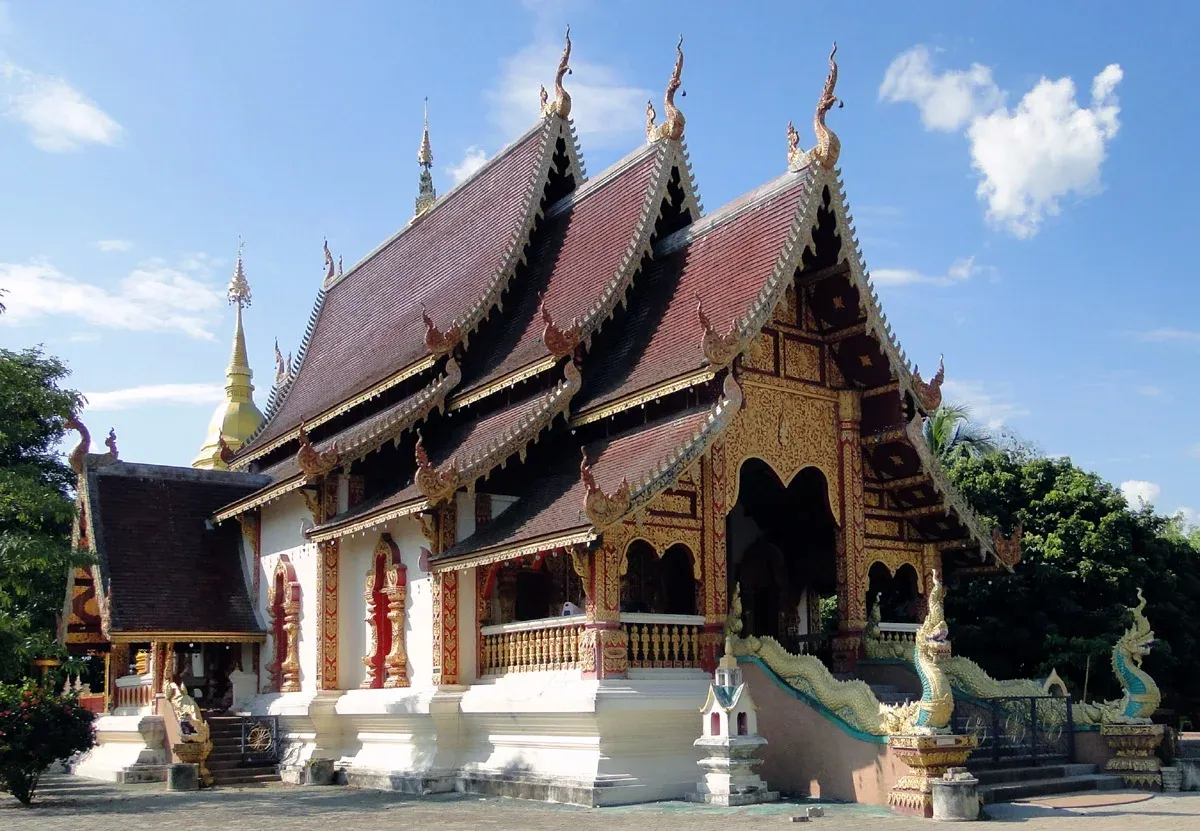
Wat Suphan Rangsri is a local Mahanikaya temple located at 304 Moo 11, Ban Si Pho Ngam, Thung Tom Subdistrict, San Pa Tong District, Chiang Mai Province. It covers 6 rai, 1 ngan, and 73 square wah. The temple was officially permitted as a temple in 1866 and received its royal Wisungkhamsima in 1975. Its construction history began in Chula Sakarat 1268, corresponding to 1865, on the 10th waxing day of the northern sixth lunar month, when the viharn and Buddha image inside the viharn were started. Phra Chomphu, the second abbot, initiated the construction together with monks, novices, temple boys, local leaders, nearby devotees, eight village households, and the faith group from Wat Phra Chao Liam. A relic chedi was also built as a sacred object for worship and remains important to the temple today.
Wat Suphan Rangsri is located at 304 Moo 11, Ban Si Pho Ngam, Thung Tom Subdistrict, San Pa Tong District, Chiang Mai Province 50120. It is a local Buddhist temple under the Mahanikaya order. The temple occupies 6 rai, 1 ngan, and 73 square wah. Wat Suphan Rangsri is an important community temple for Ban Si Pho Ngam and nearby villages in Thung Tom. It serves as a place for merit-making, Dhamma listening, family ceremonies, annual traditions, and community religious activities.
The name Wat Suphan Rangsri carries an auspicious meaning. “Suphan” suggests gold, beauty, and value, while “Rangsri” means radiance or light. Together, the name evokes the image of a temple that serves as a radiant center of Buddhist faith for the community. This meaning fits the temple’s role as a spiritual anchor of Ban Si Pho Ngam and a continuing religious site within the temple network of Thung Tom Subdistrict.
The temple’s early construction began in 1865, corresponding to Chula Sakarat 1268, on the 10th waxing day of the northern sixth lunar month. The first major works were the viharn and the Buddha image inside the viharn. This is significant because the viharn is the main worship space for lay supporters, and the Buddha image is the devotional heart of the temple. Beginning with these elements shows that the temple was founded around the practical and spiritual needs of the local Buddhist community.
Wat Suphan Rangsri was officially permitted as a temple in 1866. When read together with the construction beginning in 1865, the temple’s development can be understood as a sequence of community faith followed by formal recognition. The temple did not begin as an abstract institution; it began with monks and villagers working together to build a sacred place, and it later gained official temple status within the Mahanikaya order.
Phra Chomphu, the second abbot, was the key figure in the temple’s early construction. He worked together with monks including Phra Ariya, Phra Potha, Phra Kantha, and Phra Nanchai, as well as novices and temple boys. This reflects the living structure of a Lanna community temple, where monks, novices, and temple attendants shared labor and responsibility in establishing a sacred space for the village.
Lay supporters also played a crucial role. The temple history mentions Thao Intharat and his descendants, Saen Siri and his family, Chantra and his descendants, nearby household devotees, eight village households, and the faith group from Wat Phra Chao Liam led by Phra Kantha. These details show that Wat Suphan Rangsri was not created by a single person. It was built through a broad network of devotion that connected monks, families, local leaders, neighboring communities, and another temple community.
The participation of eight village households is especially meaningful. It gives a human scale to the temple’s foundation and shows how a small early community could create a lasting religious institution. In rural Lanna society, temples were often built through shared labor, donated materials, food preparation, financial support, and repeated acts of merit. Wat Suphan Rangsri therefore preserves the memory of collective effort across generations.
Another important part of the temple’s foundation was the construction of the relic chedi. The chedi was built as a sacred object for worship and continues to be important today. In Lanna Buddhist culture, a relic chedi represents continuity, reverence for the Buddha, collective merit, and the spiritual center of a temple. It is not merely an architectural feature but a devotional focus that links the temple’s earliest supporters with present-day worshippers.
Wat Suphan Rangsri received its royal Wisungkhamsima in 1975. A Wisungkhamsima is a consecrated boundary used for formal monastic acts. Receiving this status marked an important stage in the temple’s development and strengthened its role as a functioning Buddhist institution. Visitors should treat areas connected with the ordination boundary and monastic activities with respect, keeping voices low and avoiding disruptive behavior.
Ban Si Pho Ngam, Moo 11, is one of the communities in Thung Tom Subdistrict. Its name carries an auspicious quality: “Si” suggests prosperity or dignity, “Pho” refers to the Bodhi tree associated with enlightenment, and “Ngam” means beauty. The name of the village and the name of the temple both evoke light, value, and Buddhist meaning. This makes Wat Suphan Rangsri a natural spiritual center for the village.
Thung Tom Subdistrict is a lowland area of San Pa Tong District shaped by irrigation channels, fields, gardens, village roads, and community temple networks. Nearby temples include Wat Si Arun, Wat Sop Han, Wat Pa Lan, Wat Klang Thung, Wat Ko Kao, Wat Chang Kradat, Wat Boon Nak, and Wat Rattanaram. Wat Suphan Rangsri should therefore be understood as part of a wider Lanna community-temple landscape, where each temple preserves a different layer of local history.
The viharn is the most important structure mentioned in the temple’s early history. It was part of the first construction phase and remains central to the temple’s identity. In a Lanna community temple, the viharn is where villagers pay respect to the Buddha, listen to teachings, make merit, and gather for religious events. It is the space where visitors can best sense the continuity between the temple’s founding and its present religious life.
The Buddha image inside the viharn is another key sacred object. It was created as part of the early construction of the temple and stands at the center of devotional practice. Worshippers approach the Buddha image to cultivate calmness, make merit, and remember the Buddha, the Dhamma, and the Sangha. Visitors should dress modestly, remove shoes before entering the viharn, and behave quietly and respectfully.
The relic chedi gives Wat Suphan Rangsri a strong ritual and symbolic focus. It is associated with the temple’s foundation and remains central to worship. A chedi in a Lanna village temple often becomes a focus of annual bathing ceremonies, merit-making, and community gathering. Visitors should walk around the chedi respectfully, avoid climbing or touching sacred structures, and treat the area as a sacred Buddhist space.
One of the temple’s important annual traditions is the relic-bathing ceremony at Wat Suphan Rangsri. This tradition brings together monks, local leaders, villagers, and devotees through merit-making, offerings, and the ritual bathing of the chedi. It strengthens the bond between the temple and the community and allows younger generations to learn temple etiquette and local Buddhist customs through participation.
Wat Suphan Rangsri has also appeared in the Wat Pracha Rat Sang Suk project in San Pa Tong District. This project aims to develop temples into suitable, peaceful, and community-centered spaces. The temple’s participation in such community development activities shows that it remains active in the present, not only as an old temple with historical value but also as a living religious and social center.
Phra Samuh Sasiphong Silasamvaro is listed as the abbot of Wat Suphan Rangsri. In a community temple, the abbot plays an important role in maintaining temple order, guiding religious activities, caring for temple structures, coordinating with lay supporters, and preserving the temple as a peaceful center of Buddhist practice. Wat Suphan Rangsri continues to depend on cooperation among monks, temple committees, village leaders, local authorities, and residents.
Wat Suphan Rangsri plays an important role for Ban Si Pho Ngam and nearby communities. It is used for Buddhist holy days, Dhamma listening, ordinations, funerals, dedication ceremonies, Kathin robe offerings, forest robe offerings, and annual temple traditions. These activities allow villagers to support monks, honor ancestors, maintain family rituals, and strengthen social bonds through repeated acts of merit-making.
Religious traditions connected with Wat Suphan Rangsri should be understood within the wider context of Lanna community temples. Buddhist Lent, the end of Buddhist Lent, Kathin robe offerings, forest robe offerings, family merit-making, and relic-bathing traditions all help maintain the relationship between the temple and the community. Such traditions are not only rituals; they are systems of cooperation, memory, and intergenerational learning.
The main highlights of Wat Suphan Rangsri are its detailed founding history, its early viharn and Buddha image, its relic chedi, its annual relic-bathing tradition, and its continuing role in community development activities. Unlike many small temple records that preserve only a name and date, Wat Suphan Rangsri preserves the names of monks, lay leaders, families, neighboring devotees, and related temple communities involved in its foundation. This makes it especially valuable for visitors interested in local Buddhist history.
Visitors should approach Wat Suphan Rangsri respectfully. Dress modestly, remove shoes before entering religious buildings, keep voices low, avoid entering monks’ private areas without permission, and do not touch sacred objects or old religious structures. If a ceremony or annual relic-bathing event is taking place, visitors should give priority to local participants and follow temple etiquette carefully.
Getting There is most convenient by private car or rental car. From Chiang Mai city, travel south via the Chiang Mai – Hang Dong – San Pa Tong route or Highway 108, then continue into Thung Tom Subdistrict and Ban Si Pho Ngam, Moo 11. The temple is located within the village area and can be combined with nearby temples, restaurants, and accommodations in San Pa Tong.
A practical connected route can begin at Wat Suphan Rangsri, then continue to Wat Si Arun, Wat Sop Han, Wat Pa Lan, Wat Klang Thung, Wat Ko Kao, Wat Chang Kradat, Wat Boon Nak, Wat Rattanaram, and Wiang Tha Kan. Travelers who want a broader cultural route can continue toward Tha Wang Phrao Subdistrict, where old temples such as Wat Ton Naen Luang, Wat Tha Wang Phrao, Wat Mongkhon, Wat Si Rattanaram, and Wat Don Chai add further depth to the San Pa Tong temple route.
The best time to visit is in the morning or late afternoon during opening hours. These periods are more comfortable for a quiet temple visit. During the rainy season, visitors should consider local road and irrigation conditions because Thung Tom is a lowland area with canals and village roads. During Buddhist holy days or annual temple traditions, visitors should behave with particular restraint and give priority to the local community.
Overall, Wat Suphan Rangsri is an old Mahanikaya community temple of Ban Si Pho Ngam, Moo 11, Thung Tom Subdistrict, San Pa Tong District, Chiang Mai Province. Its construction began in 1865, it was officially permitted as a temple in 1866, and it received royal Wisungkhamsima in 1975. With its viharn, Buddha image, relic chedi, annual relic-bathing tradition, and detailed foundation history involving monks and village devotees, Wat Suphan Rangsri is a meaningful stop for travelers interested in Lanna community temples and cultural routes in San Pa Tong.
| Name | Wat Suphan Rangsri |
| Location | Ban Si Pho Ngam, Moo 11, Thung Tom Subdistrict, San Pa Tong District, Chiang Mai Province |
| Address | 304 Moo 11, Ban Si Pho Ngam, Thung Tom Subdistrict, San Pa Tong District, Chiang Mai 50120, Thailand |
| Temple Type | Local Buddhist Temple Under The Mahanikaya Order |
| Temple Land | 6 Rai, 1 Ngan, 73 Square Wah |
| History | Construction began in Chula Sakarat 1268, corresponding to 1865, on the 10th waxing day of the northern sixth lunar month; officially permitted as a temple in 1866 |
| Wisungkhamsima | Granted royal Wisungkhamsima in 1975 |
| Abbot / Caretaker | Phra Samuh Sasiphong Silasamvaro |
| Contact Number | 053-312-363 |
| Important Historical Figures | Phra Chomphu, The Second Abbot Phra Ariya Phra Potha Phra Kantha Phra Nanchai Thao Intharat And Family Saen Siri And Family Chantra And Family Nearby Devotees Eight Village Households Faith Group From Wat Phra Chao Liam |
| Important Structures | Viharn Relic Chedi Community Buddhist Activity Area |
| Important Sacred Objects | Buddha Image In The Viharn Relic Chedi Built During The Early Foundation Of The Temple |
| Important Temple Tradition | Annual Relic-Bathing Ceremony At Wat Suphan Rangsri |
| Highlights | An old Ban Si Pho Ngam community temple with a clear foundation history from 1865, an early viharn, Buddha image, relic chedi, and annual relic-bathing tradition |
| Community Role | A spiritual center for Ban Si Pho Ngam and nearby communities, used for merit-making, Dhamma listening, Buddhist ceremonies, ordinations, funerals, dedication ceremonies, annual temple traditions, and local community activities |
| Related Traditions | Buddhist Holy Days, Buddhist Lent, The End Of Buddhist Lent, Kathin Robe Offerings, Forest Robe Offerings, Ordination Ceremonies, Funerals, Dedication Ceremonies, And The Annual Relic-Bathing Tradition |
| Open Days | Daily |
| Opening Hours | 08.00 – 17.00 |
| Travel Information | Private car or rental car is the most convenient option. From Chiang Mai city, travel via the Chiang Mai – Hang Dong – San Pa Tong route or Highway 108, then continue into Thung Tom Subdistrict and Ban Si Pho Ngam, Moo 11. |
| Current Status | Active local Mahanikaya temple in Thung Tom Subdistrict, San Pa Tong District, Chiang Mai Province, appearing in community temple-development activities and annual local traditions |
| Nearby Tourist Attractions | 1. Wat Si Arun, about 3 km 2. Wat Sop Han, about 4 km 3. Wat Pa Lan (Thung Tom), about 5 km 4. Wat Klang Thung (Thung Tom), about 5 km 5. Wat Rattanaram (Thung Tom), about 6 km 6. Wiang Tha Kan, about 12 km |
| Nearby Restaurants | 1. Pla Salawin Restaurant, about 8 km, Tel. 086-919-3851 2. Ton Khao Shop, about 8 km, Tel. 098-792-6440 3. Lake View @ San Pa Tong, about 9 km, Tel. 097-079-8448 4. Klin Kaphrao Khao Ho Mok San Pa Tong, about 10 km, Tel. 093-243-8923 5. Charcoal Pork Leg Rice San Pa Tong, about 10 km, Tel. 081-881-5112 6. Khrua Pa Phan San Pa Tong, about 12 km, Tel. 084-609-6109 |
| Nearby Accommodations | 1. Khuang Chan Resort, about 7 km, Tel. 089-835-3057 2. P Resort & W Resort, about 8 km, Tel. 064-334-4566 3. Ban Muan Jai Hotel (Ton Naen), about 9 km, Tel. 089-261-1426 4. Sompor Inn Hotel, about 9 km, Tel. 053-025-112 5. The Elephant House And Pool Villa, about 10 km |
Frequently Asked Questions (FAQ)
Q: Where is Wat Suphan Rangsri located?
A: Wat Suphan Rangsri is located at 304 Moo 11, Ban Si Pho Ngam, Thung Tom Subdistrict, San Pa Tong District, Chiang Mai Province 50120.
Q: What are the open days and opening hours?
A: Wat Suphan Rangsri is open daily from 08.00 to 17.00.
Q: When did the construction of Wat Suphan Rangsri begin?
A: Construction began in Chula Sakarat 1268, corresponding to 1865, on the 10th waxing day of the northern sixth lunar month. The temple was officially permitted as a temple in 1866.
Q: Who initiated the construction of Wat Suphan Rangsri?
A: The key initiator was Phra Chomphu, the second abbot, together with Phra Ariya, Phra Potha, Phra Kantha, Phra Nanchai, novices, temple boys, Thao Intharat, Saen Siri, Chantra, nearby devotees, eight village households, and the faith group from Wat Phra Chao Liam.
Q: What are the important sacred objects at Wat Suphan Rangsri?
A: Important sacred objects include the Buddha image in the viharn and the relic chedi built during the early foundation of the temple.
Q: What important tradition is associated with Wat Suphan Rangsri?
A: Wat Suphan Rangsri is associated with its annual relic-bathing ceremony, an important local Buddhist tradition of the temple and community.
Q: Who is the abbot of Wat Suphan Rangsri?
A: The abbot is Phra Samuh Sasiphong Silasamvaro.
Q: What nearby places can be visited with Wat Suphan Rangsri?
A: Nearby places include Wat Si Arun, Wat Sop Han, Wat Pa Lan, Wat Klang Thung, Wat Rattanaram, and Wiang Tha Kan.
 Category: ●Places of Worship
 Group: ●Temple
Last Update : 1 HourAgo
 Last Update : 1 HourAgo
 Click to Access the Navigation Map GPS
 Muang Chiang Mai(121)Chom Thong(47)Mae Chaem(25)Chiang Dao(33)Doi Saket(68)Mae Taeng(85)Mae Rim(69)Samoeng(29)Fang(71)Mae Ai(59)Phrao(70)San Pa Tong(105)San Kamphaeng(66)San Sai(73)Hang Dong(74)Hot(32)Doi Tao(22)Omkoi(11)Saraphi(74)Wiang Haeng(15)Chai Prakan(28)Mae Wang(32)Mae On(22)Doi Lo(34)Galyani Vadhana(1)


