
lovethailand home >North Travel Attractions >Chiang Mai Travel Attractions >San Pa Tong >Tha Wang Phrao > Wat Si Ratanaram
TL;DR: Wat Si Ratanaram is located at Ban Thung Luk, Moo 3, Tha Wang Phrao Subdistrict, San Pa Tong District, Chiang Mai Province, open Daily, hours 08.00 – 17.00.

Wat Si Ratanaram
Open Days: Daily
Opening Hours: 08.00 – 17.00
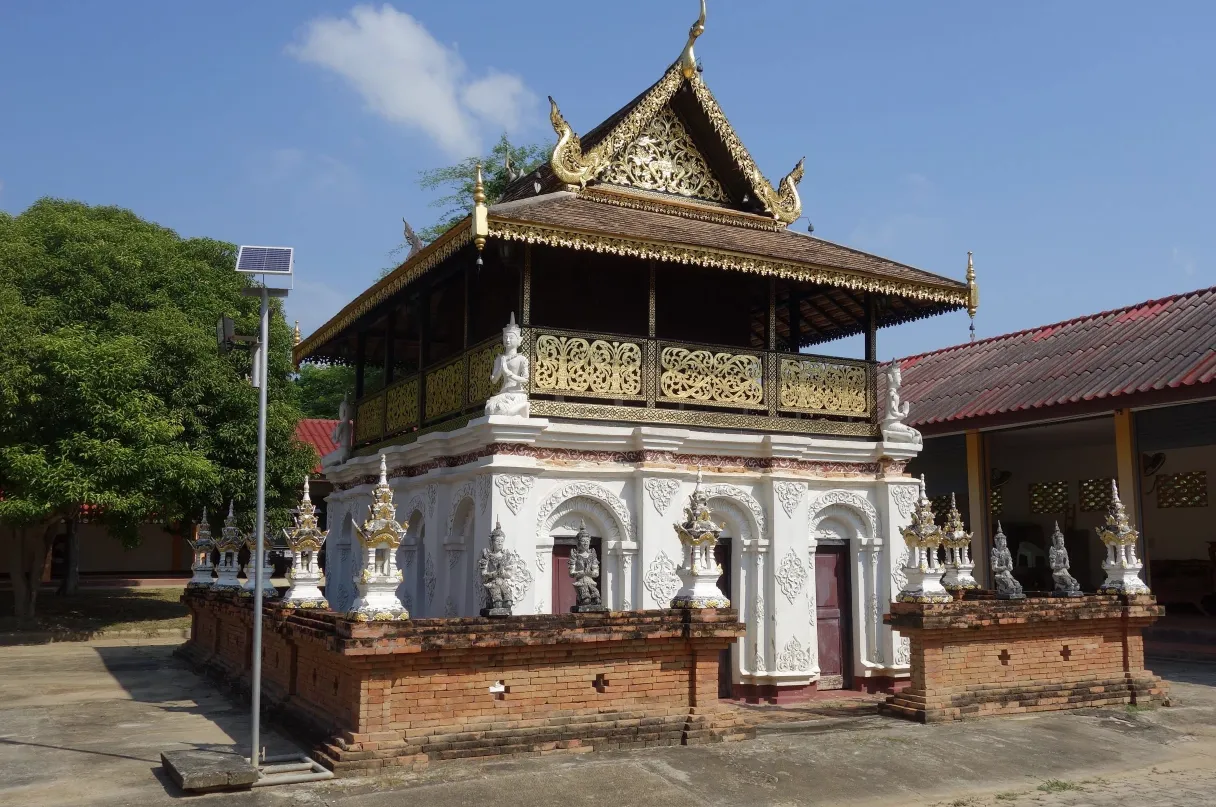
Wat Si Rattanaram, also known locally as Wat Thung Luk, is an old Mahanikaya community temple in Ban Thung Luk, Tha Wang Phrao Subdistrict, San Pa Tong District, Chiang Mai Province. Built on 1 January 1810 and granted its royal Wisungkhamsima on 2 August 1946, the temple is closely connected with local rice farming, irrigation channels, and the traditional luk water-lifting device used by villagers. Key features include the ordination hall, viharn, monks’ residences, pavilion, and important sacred images known as Phra Kaew Khao, Phra Setangkamani, and Phra Phet.
Wat Si Rattanaram is located in Ban Thung Luk, Moo 3, Tha Wang Phrao Subdistrict, San Pa Tong District, Chiang Mai Province 50120. It is a local Buddhist temple under the Mahanikaya order and is also known locally as Wat Thung Luk. The temple was built on 1 January 1810. Its land covers 3 rai, 2 ngan, and 79 square wah under a Nor Sor 3 document, Book 1, Page 81, Register Book Moo 9, Page Number 130. The temple received its royal Wisungkhamsima on 2 August 1946, with a consecrated boundary measuring 40 meters wide and 80 meters long. Phra Athikan Wasan Thanathammo is listed as the abbot of the temple.
The importance of Wat Si Rattanaram lies in its direct relationship with Ban Thung Luk and the local Buddhist history of Tha Wang Phrao. The temple’s early establishment is connected with Phra Athikan Thep of Wat Thung Tho in Song Khwae Subdistrict, Chom Thong District, Chiang Mai Province. He initiated the creation of the temple to support the growth of Buddhism and to help Ban Thung Luk develop spiritually and socially. He also assigned Phra Panya, one of his disciples, to stay at the temple in its early period. This origin story shows that Wat Si Rattanaram began from monastic intention and community faith.
The temple’s name has an important history. In the beginning, it was named Wat Ton Kaew. Later, villagers in Ban Thung Luk farmed rice and used a traditional water-lifting device called “luk” to move water from the Mae Khan River into agricultural fields. Because this device became a strong part of the village’s identity, the temple came to be called Wat Thung Luk. Later, the Sangha gave the temple the new name Wat Si Rattanaram, which remains its official name today.
Each name reflects a different layer of the temple’s history. Wat Ton Kaew suggests auspicious beginnings and the founding of a sacred place. Wat Thung Luk reflects the rice fields, water management, and farming knowledge of the village. Wat Si Rattanaram gives the temple a more formal religious name. “Si” suggests auspiciousness, “rattana” means jewel or precious object, and “aram” refers to a temple or peaceful monastic place. The current name is therefore closely connected with the temple’s sacred images and the community’s devotion.
Ban Thung Luk belongs to Tha Wang Phrao Subdistrict, an area of San Pa Tong District where old temples, farming communities, roads, irrigation channels, and village settlements are closely connected. Nearby temples include Wat Ton Naen Luang, Wat Tha Wang Phrao, Wat Mongkhon, Wat Don Chai, and Wat San Khuang Kham. Wat Si Rattanaram is part of this wider network of religious sites, and each temple in the subdistrict preserves a different layer of village history, Buddhist practice, and rural Lanna culture.
The boundaries of Wat Si Rattanaram reveal its close relationship with the village. The northern boundary, approximately 45 meters long, adjoins a primary school. The southern boundary, approximately 77 meters long, adjoins a road. The eastern boundary, approximately 100 meters long, adjoins an irrigation channel. The western boundary, approximately 100 meters long, adjoins a road. These details show that the temple stands within a living village environment, connected with education, roads, irrigation, and community movement.
The northern boundary adjoining a primary school reflects the long relationship between temples and education in Thai communities. Many village temples historically supported learning, moral training, and community organization. Even when modern schools became separate institutions, their physical proximity to temples continued to express the older connection between religion, education, and village life. Wat Si Rattanaram therefore remains part of a wider social landscape, not only a religious site.
The irrigation channel on the eastern side of the temple is especially meaningful because the temple’s local name, Wat Thung Luk, comes from the village’s use of the luk water-lifting device in rice farming. Irrigation channels are vital to Lanna agricultural communities because they bring water to fields and orchards. A temple located beside an irrigation channel is therefore part of a landscape made up of houses, roads, fields, water, and worship. This setting helps explain the temple’s identity more deeply than its buildings alone.
The important structures of Wat Si Rattanaram include an ordination hall, viharn, monks’ residences, and a pavilion. The ordination hall is the sacred area associated with the consecrated boundary and important monastic acts. The viharn is used for worship and merit-making. The monks’ residences support monastic life, study, and daily duties. The pavilion provides space for Dhamma listening, community gatherings, and merit-making events. Together, these structures make the temple a functioning community temple.
The ordination hall is especially important because Wat Si Rattanaram received its royal Wisungkhamsima on 2 August 1946. The consecrated boundary measures 40 meters wide and 80 meters long. A formally granted Wisungkhamsima allows the temple to conduct important monastic acts and confirms the temple’s religious status. Visitors should treat the ordination hall with particular respect, dress modestly, and maintain quiet behavior around sacred areas.
The viharn is an important place for worship and for understanding the sacred identity of the temple. Wat Si Rattanaram has important temple images known as Phra Kaew Khao, Phra Setangkamani, and Phra Phet. These names are closely related to ideas of purity, brightness, preciousness, and auspiciousness. They also connect meaningfully with the word “rattana” in the temple’s name, which refers to a jewel or precious object. The sacred images therefore form the devotional heart of the temple.
Phra Kaew Khao and Phra Setangkamani evoke the image of a bright or white crystal-like Buddha image, while Phra Phet suggests brilliance, firmness, and precious value. As the principal sacred images of Wat Si Rattanaram, they represent the faith that local residents have maintained over generations. Visitors should pay respect quietly and understand these images as central to the religious identity of the temple and the community.
The monks’ residences represent the living side of the temple. They are used by monks for residence, study, rest, and daily religious responsibilities. Visitors should avoid entering monastic residential areas without permission, avoid loud noise near the residences, and avoid close photography of monks or private spaces. Wat Si Rattanaram remains a functioning community temple, so respectful conduct is essential.
The temple pavilion supports the social role of Wat Si Rattanaram. During Buddhist ceremonies and village merit-making events, it provides space for lay supporters to gather, listen to Dhamma, offer food, prepare activities, and support the monks. In rural Lanna temples, the pavilion often becomes the bridge between monastic life and community participation. It is where villagers cooperate and maintain their shared religious life.
Phra Athikan Wasan Thanathammo, the abbot of Wat Si Rattanaram, plays an important role in temple administration and community religious life. A village temple remains active through the cooperation of monks, temple committees, village leaders, and lay supporters. The abbot’s role includes overseeing religious activities, maintaining temple order, caring for temple structures, and sustaining the relationship between the temple and the community.
Wat Si Rattanaram has several roles in Ban Thung Luk. It is a place for Buddhist holy days, merit-making, Dhamma listening, family ceremonies, dedication ceremonies, ordinations, funerals, and seasonal Buddhist activities. Through these repeated activities, the temple helps maintain relationships among villagers and preserves the connection between Buddhism and local daily life.
Religious traditions associated with Wat Si Rattanaram should be understood within the context of Lanna community temples. These include Buddhist holy days, Buddhist Lent, the end of Buddhist Lent, Kathin robe offerings, forest robe offerings, ordination ceremonies, funerals, and local merit-making activities. Such events bring villagers together to prepare food, clean the temple, support monks, welcome guests, and preserve local Buddhist customs.
The distinctive value of Wat Si Rattanaram lies in the relationship between its name, village history, and water landscape. It began with the name Wat Ton Kaew, became known as Wat Thung Luk because of the luk water-lifting device used in rice farming, and was later named Wat Si Rattanaram by the Sangha. This layered history gives the temple a strong identity. It is not only an old temple, but also a record of agricultural life, irrigation, community memory, and Buddhist devotion.
The atmosphere of Wat Si Rattanaram is suitable for visitors who prefer quiet local temples and cultural learning rather than crowded tourist sites. The temple is close to a school, roads, and an irrigation channel, and its story helps explain the relationship between Buddhism and rural Lanna life. A visit here is most meaningful when the temple is viewed together with the village, the water system, and the surrounding temple route of Tha Wang Phrao.
Getting There is most convenient by private car or rental car. From Chiang Mai city, travel south via the Chiang Mai – Hang Dong – San Pa Tong route or Highway 108 on the Chiang Mai – Hot road. Continue into Tha Wang Phrao Subdistrict and Ban Thung Luk, Moo 3. The temple is located within the village area and can be combined easily with nearby temples, restaurants, and accommodation in San Pa Tong.
A practical connected route can begin at Wat Si Rattanaram, then continue to Wat Mongkhon in Ban Thung Paeng, Wat Tha Wang Phrao, Wat Ton Naen Luang, Wat Don Chai, Wat San Khuang Kham, and Wiang Tha Kan. Travelers who want to focus on Tha Wang Phrao Subdistrict can combine Wat Si Rattanaram with nearby old village temples. Wiang Tha Kan adds archaeological and ancient settlement history to the route, making the journey broader and more complete.
Visitors should approach Wat Si Rattanaram respectfully. Dress modestly, keep voices low, remove shoes before entering religious buildings, avoid entering monks’ private areas without permission, and do not disturb residents during ceremonies. If visiting during a merit-making event, visitors should give priority to local participants and observe community etiquette. The temple is a living religious place, so restraint and respect are essential.
The best time to visit is in the morning or late afternoon during opening hours. These periods are more comfortable for walking through the temple grounds and paying respect quietly. During the farming season or when irrigation channels are active, visitors may better understand the historical meaning of the name Wat Thung Luk. During temple events, the community role of the temple becomes especially visible, but visitors should remain considerate and avoid interrupting ceremonies.
Overall, Wat Si Rattanaram, or Wat Thung Luk, is an old Mahanikaya community temple of Ban Thung Luk in Tha Wang Phrao Subdistrict. Built on 1 January 1810 and granted its royal Wisungkhamsima on 2 August 1946, it contains an ordination hall, viharn, monks’ residences, pavilion, and important sacred images: Phra Kaew Khao, Phra Setangkamani, and Phra Phet. For travelers interested in local temples, irrigation-based farming history, and rural Lanna Buddhist culture, Wat Si Rattanaram is a meaningful stop in San Pa Tong District.
| Name | Wat Si Rattanaram |
| Local Name | Wat Thung Luk |
| Former Name | Wat Ton Kaew |
| Location | Ban Thung Luk, Moo 3, Tha Wang Phrao Subdistrict, San Pa Tong District, Chiang Mai Province |
| Address | Ban Thung Luk, Moo 3, Tha Wang Phrao Subdistrict, San Pa Tong District, Chiang Mai 50120, Thailand |
| Temple Type | Local Buddhist Temple Under The Mahanikaya Order |
| Temple Land | 3 Rai, 2 Ngan, 79 Square Wah under Nor Sor 3, Book 1, Page 81, Register Book Moo 9, Page Number 130 |
| Boundaries | North: about 45 m adjoining a primary school South: about 77 m adjoining a road East: about 100 m adjoining an irrigation channel West: about 100 m adjoining a road |
| History | Built on 1 January 1810; first named Wat Ton Kaew, later called Wat Thung Luk by villagers, and finally renamed Wat Si Rattanaram by the Sangha |
| Wisungkhamsima | Granted royal Wisungkhamsima on 2 August 1946, with a consecrated boundary measuring 40 m wide and 80 m long |
| Abbot / Caretaker | Phra Athikan Wasan Thanathammo |
| Important Structures | Ordination Hall Viharn Monks’ Residences Pavilion |
| Important Sacred Objects | Phra Kaew Khao Phra Setangkamani Phra Phet |
| Highlights | An old Ban Thung Luk temple whose history is connected with the luk water-lifting device, rice farming, irrigation channels, and sacred jewel-like Buddha images |
| Community Role | A spiritual center for Ban Thung Luk, used for merit-making, Dhamma listening, Buddhist ceremonies, family rites, and local Lanna community activities |
| Related Traditions | Buddhist holy days, Buddhist Lent, the end of Buddhist Lent, Kathin robe offerings, forest robe offerings, ordination ceremonies, funerals, and local merit-making |
| Open Days | Daily |
| Opening Hours | 08.00 – 17.00 |
| Travel Information | Private car or rental car is the most convenient option. From Chiang Mai city, travel via the Chiang Mai – Hang Dong – San Pa Tong route or Highway 108 on the Chiang Mai – Hot road, then continue into Ban Thung Luk, Moo 3, Tha Wang Phrao Subdistrict. |
| Current Status | Active local Mahanikaya temple in Moo 3, Ban Thung Luk, Tha Wang Phrao Subdistrict, San Pa Tong District, Chiang Mai Province |
| Nearby Tourist Attractions | 1. Wat Mongkhon, Ban Thung Paeng, about 3 km 2. Wat Tha Wang Phrao, about 6 km 3. Wat Ton Naen Luang, about 6 km 4. Wat Don Chai (Tha Wang Phrao), about 6 km 5. Wat San Khuang Kham, Ban Tha Tum, about 8 km 6. Wiang Tha Kan, about 12 km |
| Nearby Restaurants | 1. Pla Salawin Restaurant, about 4 km, Tel. 086-919-3851 2. Ton Khao Shop, about 5 km, Tel. 098-792-6440 3. Lake View @ San Pa Tong, about 8 km, Tel. 097-079-8448 4. Klin Kaphrao Khao Ho Mok San Pa Tong, about 9 km, Tel. 093-243-8923 5. Charcoal Pork Leg Rice San Pa Tong, about 9 km, Tel. 081-881-5112 6. Khrua Pa Phan San Pa Tong, about 11 km, Tel. 084-609-6109 |
| Nearby Accommodations | 1. Khuang Chan Resort, about 1 km, Tel. 089-835-3057 2. P Resort & W Resort, about 2 km, Tel. 064-334-4566 3. Ban Muan Jai Hotel (Ton Naen), about 3 km, Tel. 089-261-1426 4. Sompor Inn Hotel, about 5 km, Tel. 053-025-112 5. The Elephant House And Pool Villa, about 6 km, Tel. 098-963-2274 6. Fortune Hotel, about 7 km, Tel. 095-129-9564 |
Frequently Asked Questions (FAQ)
Q: Where is Wat Si Rattanaram located?
A: Wat Si Rattanaram is located in Ban Thung Luk, Moo 3, Tha Wang Phrao Subdistrict, San Pa Tong District, Chiang Mai Province 50120.
Q: What are the open days and opening hours?
A: Wat Si Rattanaram is open daily from 08.00 to 17.00.
Q: What were the temple’s former names?
A: The temple was first named Wat Ton Kaew, later called Wat Thung Luk by local villagers, and eventually renamed Wat Si Rattanaram.
Q: Why is Wat Si Rattanaram historically important?
A: The temple was built on 1 January 1810 and received its royal Wisungkhamsima on 2 August 1946, with a consecrated boundary measuring 40 meters wide and 80 meters long.
Q: What important structures are found at Wat Si Rattanaram?
A: Important structures include the ordination hall, viharn, monks’ residences, and pavilion.
Q: What sacred images are important at Wat Si Rattanaram?
A: The temple’s important sacred images are Phra Kaew Khao, Phra Setangkamani, and Phra Phet.
Q: Who is the abbot of Wat Si Rattanaram?
A: The abbot is Phra Athikan Wasan Thanathammo.
Q: What nearby places can be visited with Wat Si Rattanaram?
A: Nearby places include Wat Mongkhon, Wat Tha Wang Phrao, Wat Ton Naen Luang, Wat Don Chai, Wat San Khuang Kham, and Wiang Tha Kan.
 Category: ●Places of Worship
 Group: ●Temple
Last Update : 1 DayAgo
 Last Update : 1 DayAgo
 Click to Access the Navigation Map GPS
 Muang Chiang Mai(121)Chom Thong(47)Mae Chaem(25)Chiang Dao(33)Doi Saket(68)Mae Taeng(85)Mae Rim(69)Samoeng(29)Fang(71)Mae Ai(59)Phrao(70)San Pa Tong(103)San Kamphaeng(66)San Sai(73)Hang Dong(74)Hot(32)Doi Tao(22)Omkoi(11)Saraphi(74)Wiang Haeng(15)Chai Prakan(28)Mae Wang(32)Mae On(22)Doi Lo(34)Galyani Vadhana(1)


