
lovethailand home >North Travel Attractions >Chiang Mai Travel Attractions >San Pa Tong >Tha Wang Phrao > Wat Ton Naen Luang
TL;DR: Wat Ton Naen Luang is located at Ban Ton Naen Luang, Moo 1, Tha Wang Phrao Subdistrict, San Pa Tong District, Chiang Mai Province, open Daily, hours 08.00 – 17.00.

Wat Ton Naen Luang
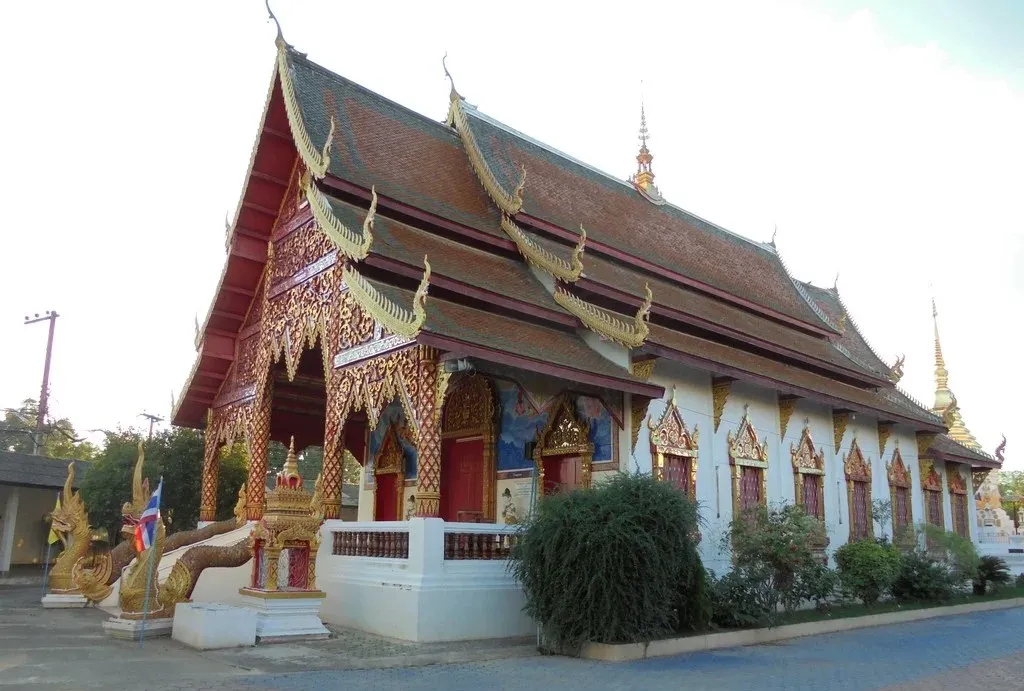
Open Days: Daily
Opening Hours: 08.00 – 17.00
Wat Ton Naen Luang is an old Mahanikaya community temple in Ban Ton Naen Luang, Tha Wang Phrao Subdistrict, San Pa Tong District, Chiang Mai Province. It is closely connected with the local Tai Khun community, the historic name of the village, the Mae Khan River landscape, and the Chiang Mai – Hot route. The temple is suitable for merit-making, quiet temple visits, learning about Tai Khun cultural roots, and connecting a San Pa Tong cultural route with nearby temples and Wiang Tha Kan.
Wat Ton Naen Luang is located at 121 Moo 1, Ban Ton Naen Luang, Chiang Mai – Hot Road, Tha Wang Phrao Subdistrict, San Pa Tong District, Chiang Mai Province 50120. It is a local Buddhist temple under the Mahanikaya order. The temple land covers 2 rai under a Nor Sor 3 document. Wat Ton Naen Luang was built in 1784 and received its royal Wisungkhamsima on 13 November 1930. The consecrated boundary measures 58 meters wide and 64 meters long. The abbot is Phra Khru Bandit Woraphiphat Chawanpanyo. These details make the temple an important religious and cultural landmark of Ban Ton Naen Luang.
The significance of Wat Ton Naen Luang is not limited to its age. The temple is deeply connected with the local Tai Khun, also known as Tai Khuen, community of Ban Ton Naen Luang. The community traces its roots to migration from Kengtung in Shan State. People moved into Chiang Mai through trade routes and caravan travel, including cattle-and-horse trading journeys. When they found fertile land near local waterways, they settled, cultivated the land, and gradually built a community with houses, kinship networks, cultural practices, and a temple as its spiritual center.
The name Ban Ton Naen Luang comes from a large naen tree that once stood near Wat Ton Naen Luang. The tree was remembered as a major landmark of the community, and its name became part of the village identity. The word “luang” conveys the idea of something large or important. As the temple was established within this village, it naturally took the name Wat Ton Naen Luang. The name of the temple therefore preserves a memory of trees, land, settlement, and community faith.
Ban Ton Naen Luang remains culturally distinctive because of its Tai Khun heritage. Local identity is reflected in language, dress, handicrafts, lanterns, Lanna ceremonial flags, Tai Khun weaving patterns, agriculture, and the organization of local wisdom groups. The temple stands within this cultural landscape. It is not simply a religious building beside a road. It belongs to a community with its own history of migration, craftsmanship, farming, and cultural continuity.
Wat Ton Naen Luang functions as the spiritual center of Ban Ton Naen Luang. Local residents use the temple for Buddhist holy days, merit-making, Dhamma listening, community ceremonies, and seasonal religious events. A community temple of this kind is also a social space. It allows villagers to meet, cooperate, prepare ceremonies, support monks, and preserve relationships between families and generations. The temple therefore helps maintain both religious life and social cohesion.
The temple land covers 2 rai. Its northern boundary extends about 70 meters to a lane, its southern boundary about 43 meters to a road, its eastern boundary about 56 meters to a road, and its western boundary about 45 meters to the Mae Khan River. These boundaries show that the temple is located within a living village environment, connected to both roads and water. The Mae Khan River is significant for local settlement and agriculture, and the temple’s western boundary reinforces the relationship between the temple, the river, and community life.
The surrounding community is agricultural, with longan cultivation, household gardens, local roads, water channels, and homes arranged around kinship and village spaces. Wat Ton Naen Luang reflects the traditional relationship between Lanna temples and rural life. It is a temple embedded in real community geography rather than a destination separated from its surroundings. Visitors can understand the temple more deeply by seeing it together with the village, the Mae Khan landscape, and the cultural practices of the Tai Khun community.
The main religious structures of Wat Ton Naen Luang include an ordination hall, a sermon hall, and monks’ residences. The ordination hall is especially important because the temple received its royal Wisungkhamsima in 1930, allowing important monastic acts to be performed within the consecrated boundary. The sermon hall supports Dhamma listening, merit-making, and community activities. The monks’ residences support monastic life, study, and daily religious practice.
The ordination hall should be treated as one of the most sacred areas of the temple. It is connected with the formal religious identity of the temple and the consecrated boundary granted in 1930. Visitors should dress modestly, speak quietly, and behave respectfully around the ordination hall. The presence of a formally recognized Wisungkhamsima also shows that Wat Ton Naen Luang developed into a complete temple capable of supporting important monastic ceremonies.
The sermon hall has a major role in village temple life. In Lanna communities, a sermon hall often functions as a place for listening to Dhamma teachings, making merit, receiving guests, organizing ceremonies, and gathering lay supporters during Buddhist festivals. On occasions such as Buddhist Lent, the end of Buddhist Lent, Kathin robe offerings, and forest robe offerings, the sermon hall becomes a shared religious and social space for the community.
The monks’ residences represent the living side of the temple. They are used by monks for residence, study, rest, and religious duties. Visitors should avoid entering monastic residential areas without permission. They should also avoid loud noise and close photography of monks or private spaces. Wat Ton Naen Luang remains a functioning temple, so respectful conduct is essential.
Phra Khru Bandit Woraphiphat Chawanpanyo, the abbot of Wat Ton Naen Luang, plays an important role in maintaining the temple’s religious life and community relationship. A local temple remains strong through cooperation among monks, lay supporters, village leaders, and residents. The abbot’s role includes overseeing religious activities, maintaining temple order, caring for temple structures, and sustaining the temple as a peaceful space for merit-making and Dhamma practice.
The temple’s distinctive value lies in its close connection with community identity. Ban Ton Naen Luang has a history of Tai Khun migration from Kengtung, caravan trade, the use of phang lang bells on cattle and horses, and settlement near fertile waterways. Wat Ton Naen Luang preserves these memories through place, name, ritual, and community life. Visitors interested in cultural history will see that religion and ethnicity are not separate here. They are part of the same lived landscape.
Wat Ton Naen Luang is also suitable for travelers who want to learn about Tai Khun culture in San Pa Tong. The community continues to preserve language, dress, handicrafts, local wisdom, and agricultural life. A temple visit can therefore be connected with a broader understanding of the village. Travelers should view the temple together with Ban Ton Naen Luang, local markets, community craft groups, and nearby temples, because the value of the temple is inseparable from the community that supports it.
Religious traditions connected with Wat Ton Naen Luang should be understood within the context of Lanna village temples. These include Buddhist holy days, Buddhist Lent, the end of Buddhist Lent, Kathin robe offerings, forest robe offerings, dedication ceremonies, and seasonal merit-making activities. Such events are not only religious. They also bring villagers together to prepare food, arrange spaces, welcome guests, support monks, and maintain the social bonds of the community.
The atmosphere of Wat Ton Naen Luang is best suited to visitors looking for a quiet and culturally grounded temple visit. The temple is located along an important San Pa Tong route and is close to other temples, restaurants, accommodations, and community sites. Visitors can begin at Wat Ton Naen Luang, then continue to Wat Don Chai, Wat Tha Wang Phrao, Wat Mongkhon, Wat Si Rattanaram, Wat San Khuang Kham, and Wiang Tha Kan. This route gives a wider view of local temples, Tai Khun settlement history, and the cultural geography of southern Chiang Mai.
Getting There is most convenient by private car or rental car. From Chiang Mai city, travel south via the Chiang Mai – Hang Dong – San Pa Tong route or Highway 108 on the Chiang Mai – Hot road. Continue into Tha Wang Phrao Subdistrict and Ban Ton Naen Luang. The temple is located in Moo 1 within the village area and can be combined easily with nearby temples, local restaurants, and accommodations in Tha Wang Phrao and San Pa Tong.
Visitors should plan to travel during the daytime, especially in the morning or late afternoon when the weather is more comfortable. During merit-making events, visitors should give priority to local residents and avoid disturbing ceremonies. Dress modestly, speak quietly, and respect the ordination hall, sermon hall, and monastic areas. A visit to Wat Ton Naen Luang is best approached slowly because the temple’s value lies in its connection with the Tai Khun community, local agriculture, and the Mae Khan River landscape.
Overall, Wat Ton Naen Luang is a Mahanikaya community temple with historical, religious, ethnic, and cultural value. Built in 1784 and granted its royal Wisungkhamsima on 13 November 1930, the temple contains key structures such as the ordination hall, sermon hall, and monks’ residences. It stands within a Tai Khun village whose name is tied to a large naen tree once found near the temple. For travelers who want to understand San Pa Tong through local temples, village history, and Tai Khun cultural identity, Wat Ton Naen Luang is a meaningful stop in Tha Wang Phrao.
| Name | Wat Ton Naen Luang |
| Location | Ban Ton Naen Luang, Moo 1, Tha Wang Phrao Subdistrict, San Pa Tong District, Chiang Mai Province |
| Address | 121 Moo 1, Ban Ton Naen Luang, Chiang Mai – Hot Road, Tha Wang Phrao Subdistrict, San Pa Tong District, Chiang Mai 50120, Thailand |
| Temple Type | Local Buddhist Temple Under The Mahanikaya Order |
| Temple Land | 2 Rai under a Nor Sor 3 document |
| Boundaries | North: about 70 m to a lane South: about 43 m to a road East: about 56 m to a road West: about 45 m to the Mae Khan River |
| History | Built in 1784 and granted its royal Wisungkhamsima on 13 November 1930 |
| Wisungkhamsima Boundary | 58 Meters Wide And 64 Meters Long |
| Abbot / Caretaker | Phra Khru Bandit Woraphiphat Chawanpanyo |
| Contact Number | 053-829-758, 085-626-4587 |
| Important Structures | Ordination Hall Sermon Hall Monks’ Residences |
| Highlights | An old Tai Khun community temple built in 1784, named after the large naen tree once associated with the village, and located near the Mae Khan River |
| Community Role | A spiritual center for Ban Ton Naen Luang, used for merit-making, Dhamma listening, Buddhist ceremonies, and preserving Lanna-Tai Khun community life |
| Related Traditions | Buddhist holy days, Buddhist Lent, the end of Buddhist Lent, Kathin robe offerings, forest robe offerings, dedication ceremonies, and local Lanna merit-making |
| Open Days | Daily |
| Opening Hours | 08.00 – 17.00 |
| Travel Information | Private car or rental car is the most convenient option. From Chiang Mai city, travel via the Chiang Mai – Hang Dong – San Pa Tong route or Highway 108 on the Chiang Mai – Hot road, then continue into Tha Wang Phrao Subdistrict and Ban Ton Naen Luang. |
| Current Status | Active local Mahanikaya temple in Moo 1, Tha Wang Phrao Subdistrict, San Pa Tong District, Chiang Mai Province |
| Nearby Tourist Attractions | 1. Wat Don Chai (Tha Wang Phrao), about 2 km 2. Wat Tha Wang Phrao, about 4 km 3. Wat Mongkhon, Ban Thung Paeng, about 5 km 4. Wat Si Rattanaram, about 6 km 5. Wat San Khuang Kham, Ban Tha Tum, about 8 km 6. Wiang Tha Kan, about 12 km |
| Nearby Restaurants | 1. Ton Khao Shop, about 1 km, Tel. 098-792-6440 2. Pla Salawin Restaurant, about 4 km, Tel. 086-919-3851 3. Lake View @ San Pa Tong, about 8 km, Tel. 097-079-8448 4. Klin Kaphrao Khao Ho Mok San Pa Tong, about 9 km, Tel. 093-243-8923 5. Charcoal Pork Leg Rice San Pa Tong, about 9 km, Tel. 081-881-5112 6. Khrua Pa Phan San Pa Tong, about 11 km, Tel. 084-609-6109 |
| Nearby Accommodations | 1. P Resort & W Resort, about 1 km, Tel. 064-334-4566 2. Ban Muan Jai Hotel (Ton Naen), about 2 km, Tel. 089-261-1426 3. Khuang Chan Resort, about 3 km, Tel. 089-835-3057 4. Sompor Inn Hotel, about 5 km, Tel. 053-025-112 5. The Elephant House And Pool Villa, about 6 km, Tel. 098-963-2274 6. Fortune Hotel, about 7 km, Tel. 095-129-9564 |
Frequently Asked Questions (FAQ)
Q: Where is Wat Ton Naen Luang located?
A: Wat Ton Naen Luang is located at 121 Moo 1, Ban Ton Naen Luang, Chiang Mai – Hot Road, Tha Wang Phrao Subdistrict, San Pa Tong District, Chiang Mai Province 50120.
Q: What are the open days and opening hours?
A: Wat Ton Naen Luang is open daily from 08.00 to 17.00.
Q: Why is Wat Ton Naen Luang historically important?
A: The temple was built in 1784 and received its royal Wisungkhamsima on 13 November 1930.
Q: How is Wat Ton Naen Luang connected with the Tai Khun community?
A: The temple stands in Ban Ton Naen Luang, a Tai Khun community with roots in migration from Kengtung and a continuing tradition of language, crafts, agriculture, and local cultural practices.
Q: What important structures are found at Wat Ton Naen Luang?
A: Important structures include the ordination hall, sermon hall, and monks’ residences.
Q: Who is the abbot of Wat Ton Naen Luang?
A: The abbot is Phra Khru Bandit Woraphiphat Chawanpanyo.
Q: What kind of travelers is Wat Ton Naen Luang suitable for?
A: It is suitable for visitors interested in merit-making, old community temples, Tai Khun culture, Lanna village history, and temple routes in San Pa Tong.
Q: What nearby places can be visited with Wat Ton Naen Luang?
A: Nearby places include Wat Don Chai, Wat Tha Wang Phrao, Wat Mongkhon, Wat Si Rattanaram, Wat San Khuang Kham, and Wiang Tha Kan.
 Category: ●Places of Worship
 Group: ●Temple
Last Update : 1 WeekAgo
 Last Update : 1 WeekAgo
 Click to Access the Navigation Map GPS
 Muang Chiang Mai(121)Chom Thong(47)Mae Chaem(25)Chiang Dao(33)Doi Saket(68)Mae Taeng(85)Mae Rim(69)Samoeng(29)Fang(71)Mae Ai(59)Phrao(70)San Pa Tong(103)San Kamphaeng(66)San Sai(73)Hang Dong(73)Hot(32)Doi Tao(22)Omkoi(11)Saraphi(74)Wiang Haeng(15)Chai Prakan(28)Mae Wang(32)Mae On(22)Doi Lo(33)Galyani Vadhana(1)


