
lovethailand home >North Travel Attractions >Chiang Mai Travel Attractions >San Sai >Nong Han > Wat Mae Tao Hai
TL;DR: Wat Mae Tao Hai is located at Ban Mae Tao Hai, Moo 1, Nong Han Subdistrict, San Sai District, Chiang Mai Province, open Daily, hours 08.00 – 17.00.

Wat Mae Tao Hai
Open Days: Daily
Opening Hours: 08.00 – 17.00
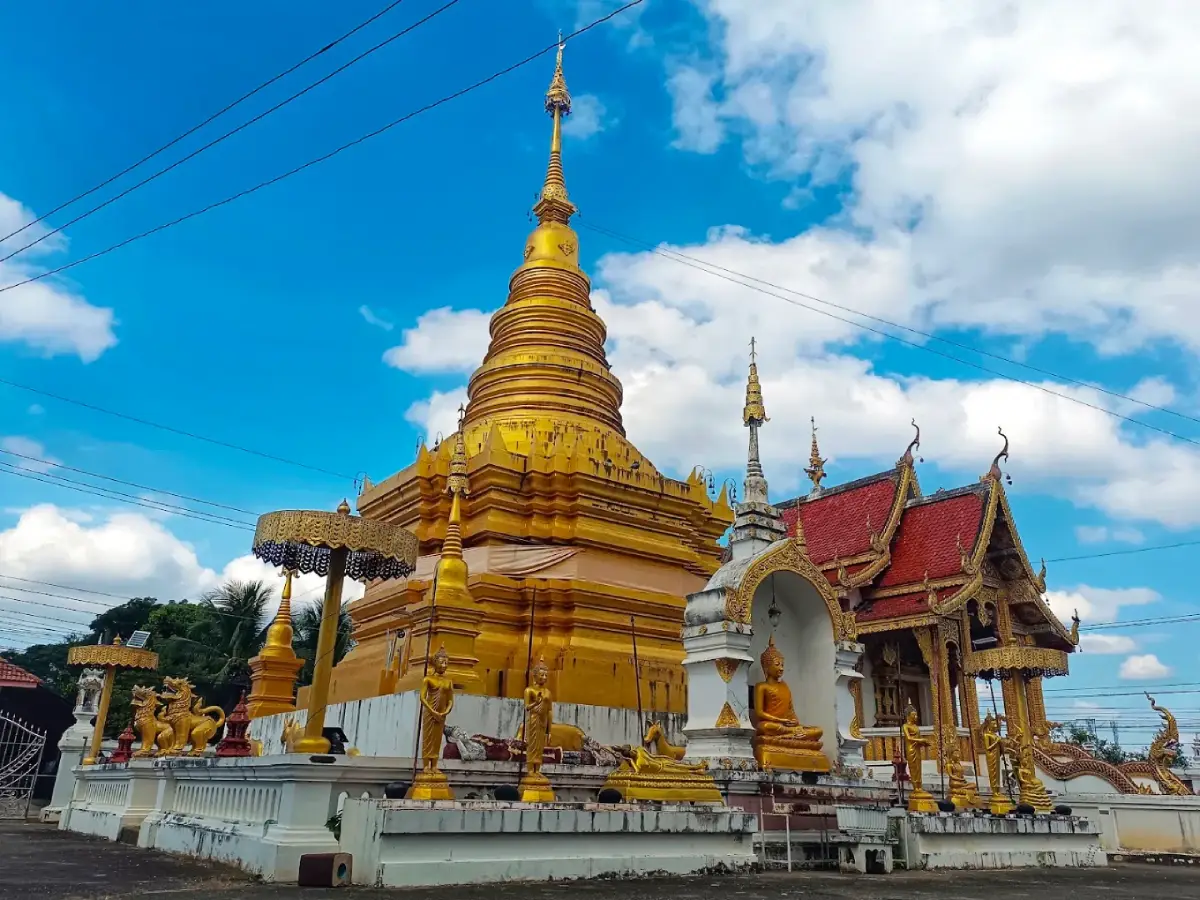
Wat Mae Tao Hai is a local Buddhist temple under the Maha Nikaya order, located at 75 Moo 1, Ban Mae Tao Hai, Nong Han Subdistrict, San Sai District, Chiang Mai Province 50290. The temple was founded in 1868, officially recognized as a temple in 1887, and granted Wisungkham Sima on 26 June 2008. It is an old community temple of Ban Mae Tao Hai, with important sacred features including Luang Pho Thong, Luang Pho Pak Daeng, Luang Pho Suk Jai, the monument of Khruba Chao Siwichai, and Phuttha Chinaworathat Chedi.
Wat Mae Tao Hai is located in Nong Han Subdistrict, an important area of San Sai District and Mae Jo Municipality. The surrounding area includes old communities, former agricultural land, the Chiang Mai–Phrao road, Maejo University, schools, shops, accommodations, and several village temples. Nearby temples include Wat Mae Jo, Wat Thung Muen Noi, Wat Thung Pa Ket, Wat Pa Bong, Wat Huai Kiang, and Wat Mae Kaet Noi. This network reflects the traditional Lanna relationship between temples, villages, waterways, farmland, and community life.
The name Mae Tao Hai carries a strong local story. One explanation suggests that the original name was Mae Kham Kao Hai, with kham in northern Thai meaning gold. A later local story connects the name with a severe drought, when the lack of water and vegetables was remembered so strongly that people said even turtles cried. The name Mae Tao Hai gradually became the familiar local name. For this reason, the temple name is not only a place name but also a memory of landscape, drought, water, and local speech.
The temple’s foundation in 1868 gives Wat Mae Tao Hai a history of more than 150 years. It grew through the cooperation of local residents who wanted a spiritual center for the village. Like many Lanna community temples, it did not develop from a single construction project. It grew gradually through the faith, labor, donations, and participation of local people across generations.
The official recognition of the temple in 1887 strengthened its status as a village temple. Later, the granting of Wisungkham Sima on 26 June 2008 confirmed its full role within the Thai Buddhist monastic system. A Wisungkham Sima boundary defines the consecrated area for formal Sangha acts such as ordination. This makes Wat Mae Tao Hai a complete religious institution for the community.
The temple land covers 3 rai, 1 ngan, and 79 square wah. Its northern boundary adjoins a public road, the southern boundary adjoins private gardens, the eastern boundary adjoins an irrigation canal, and the western boundary adjoins local residences. This setting clearly shows the temple’s relationship with roads, homes, gardens, and the irrigation landscape of Nong Han.
The irrigation canal on the eastern side of the temple is especially meaningful because the Mae Jo and Nong Han area has long been connected with agriculture and water management. When this is considered together with the name story involving drought and water shortage, Wat Mae Tao Hai becomes a place where religious space, village memory, and the importance of water in local life meet.
The main structures of Wat Mae Tao Hai include the ubosot, viharn, monks’ residences, sermon hall, Bun Raksa pavilion, monument of Khruba Chao Siwichai, and Phuttha Chinaworathat Chedi. Each space has a role in temple life. The ubosot is connected with formal monastic rites, the viharn is used for worship, the monks’ residences support monastic life, the sermon hall supports teaching and gatherings, and the chedi is a devotional focus for the community.
The ubosot houses Luang Pho Thong, one of the important Buddha images of the temple. The ubosot is a sacred space because it is connected with monastic acts and the Sima boundary. Visitors should pay respect quietly and follow temple etiquette. Luang Pho Thong gives the ubosot both ritual and devotional importance.
The viharn houses Luang Pho Pak Daeng, the oldest Buddha image in the temple, with an age of more than 100 years. This makes Luang Pho Pak Daeng one of the most important sacred objects at Wat Mae Tao Hai. Old Buddha images in community temples are not valued only for age or artistic qualities. They also carry the memory of generations of villagers who have come to worship, pray, make merit, and seek peace of mind.
The sermon hall houses Luang Pho Suk Jai. The name Suk Jai suggests peace, happiness, and mental comfort, which fits the purpose of visiting a village temple. The sermon hall is also a practical community space used for listening to teachings, gathering for ceremonies, and supporting Buddhist activities with local residents.
The Bun Raksa pavilion reflects the temple’s role in supporting community merit-making. Village temples need spaces for Kathin, Pa Pha, funerals, ordinations, food offerings, and local gatherings. A pavilion like this allows the temple to serve the practical needs of the community while keeping merit-making traditions alive.
The monument of Khruba Chao Siwichai is another important point in the temple. Khruba Chao Siwichai is deeply revered in northern Thailand as a major Lanna monk associated with temple restoration and Buddhist devotion. His monument at Wat Mae Tao Hai connects this local village temple with the wider devotional culture of Lanna Buddhism.
Phuttha Chinaworathat Chedi is one of the temple’s main sacred features. In Lanna Buddhist culture, a chedi is a focus of reverence, reflection, and ritual practice. Visitors should approach the chedi respectfully, keep voices low, and remember that it is a sacred space for local devotees, not merely an architectural object.
Wat Mae Tao Hai is included in the Mae Jo Municipality nine-temple worship route, together with Wat Thung Pa Ket, Wat Thung Muen Noi, Wat Sirimongkhon, Wat Pa Bong, Wat Huai Kiang, Wat Mae Kaet Noi, Wat Mae Jo, and Wat Mongkhon Setthi. This makes it a useful stop for visitors who want to pay respect at several temples in the Mae Jo and Nong Han area in one trip.
The temple serves the community in several ways. Religiously, it is a place for worship, merit-making, sermons, and Buddhist ceremonies. Socially, it is a gathering place for local families during Kathin, Pa Pha, funerals, ordinations, and village events. Culturally, it preserves the name story of Ban Mae Tao Hai, Lanna Buddhist practice, and devotion to important Buddha images. Spatially, it stands at the center of a living village environment shaped by roads, homes, gardens, and irrigation routes.
Recent Kathin activity records show that Wat Mae Tao Hai continues to hold Buddhist ceremonies and remains active in the religious life of the community. The records list Phra Athikan Ekkharin Yanyiro as the abbot for the 2024 Kathin activity. This confirms that the temple is not a deserted site but a living place of worship with continuing community participation.
Wat Mae Tao Hai is suitable for visitors who want to experience a calm community temple in the Mae Jo area. Important points to see include Luang Pho Thong in the ubosot, Luang Pho Pak Daeng in the viharn, Luang Pho Suk Jai in the sermon hall, the monument of Khruba Chao Siwichai, Phuttha Chinaworathat Chedi, Bun Raksa pavilion, and the overall village-temple atmosphere.
The temple is not a large commercial tourist attraction. Its value lies in its long history, local name story, sacred images, and continuing role in the community. Visitors interested in Lanna culture, village Buddhism, local temple routes, and the quieter side of the Mae Jo area will find Wat Mae Tao Hai meaningful.
Wat Mae Tao Hai can be combined with nearby temples in Mae Jo Municipality, including Wat Mae Jo, Wat Pa Bong, Wat Thung Muen Noi, Wat Thung Pa Ket, Wat Huai Kiang, and Wat Mae Kaet Noi. For a more relaxed route, visitors can add Tweechol Botanic Garden or stop at restaurants and cafes in Mae Jo. This makes a practical half-day or full-day cultural route through Nong Han and San Sai.
Getting There is easiest by private car, rental car, or ride-hailing service. Set the destination as Wat Mae Tao Hai, 75 Moo 1, Nong Han Subdistrict, San Sai District, Chiang Mai Province. From Chiang Mai city, travel toward Mae Jo or along the Chiang Mai–Phrao route, then continue into Ban Mae Tao Hai. Extra travel time is useful during morning and evening traffic because Mae Jo has schools, university traffic, shops, and local commuting routes.
Because Wat Mae Tao Hai is an active religious place, visitors should dress modestly, keep voices low, remove shoes where required, avoid touching Buddha images, chedis, or sacred objects without permission, and give space to monks and local residents during ceremonies. If visiting during Kathin, Pa Pha, or other temple activities, visitors should respect the community ritual before taking photographs.
| Name | Wat Mae Tao Hai |
| Location | Ban Mae Tao Hai, Moo 1, Nong Han Subdistrict, San Sai District, Chiang Mai Province |
| Address | 75 Moo 1, Nong Han Subdistrict, San Sai District, Chiang Mai 50290, Thailand |
| Temple Type | Local Buddhist Temple |
| Buddhist Order | Maha Nikaya |
| Land Area | 3 Rai, 1 Ngan, 79 Square Wah |
| Boundaries | North: Public Road; South: Private Gardens; East: Irrigation Canal; West: Local Residences |
| Highlights | Historic village temple with Luang Pho Thong, Luang Pho Pak Daeng, Luang Pho Suk Jai, Khruba Chao Siwichai monument, and Phuttha Chinaworathat Chedi |
| History | Founded in 1868, officially recognized as a temple in 1887, and granted Wisungkham Sima on 26 June 2008 |
| Name Origin | The name comes from local stories about Mae Kham Kao Hai and a severe drought remembered through the phrase Mae Tao Hai |
| Sacred Objects | Luang Pho Thong, Luang Pho Pak Daeng, Luang Pho Suk Jai, and Phuttha Chinaworathat Chedi |
| Main Areas / Zones | Ubosot, viharn, monks’ residences, sermon hall, Bun Raksa pavilion, Khruba Chao Siwichai monument, and Phuttha Chinaworathat Chedi |
| Main Worship Points | Luang Pho Thong in the ubosot, Luang Pho Pak Daeng in the viharn, Luang Pho Suk Jai in the sermon hall, and Phuttha Chinaworathat Chedi |
| Abbot / Caretaker | Phra Athikan Ekkharin Yanyiro |
| Local Traditions / Activities | Kathin ceremony, Pa Pha offerings, Buddhist holy day merit-making, major Buddhist observances, and the Mae Jo Municipality nine-temple worship route |
| Travel Information | Accessible by private car, rental car, or ride-hailing service; set the destination as Wat Mae Tao Hai, 75 Moo 1, Nong Han Subdistrict, San Sai District, Chiang Mai Province |
| Current Status | Open as an active community temple with Buddhist activities |
| Open Days | Daily |
| Opening Hours | 08.00 – 17.00 |
| Main Contact Number | Wat Mae Tao Hai Tel. 053-878-488 Mae Jo Municipality Tel. 053-498621 |
| Nearby Tourist Attractions | 1. Wat Mae Jo, about 4 km 2. Wat Pa Bong, about 5 km 3. Wat Thung Muen Noi, about 6 km 4. Wat Thung Pa Ket, about 6 km 5. Tweechol Botanic Garden, about 12 km |
| Nearby Restaurants | 1. Cha Thai Putcha Pa Bong, about 2 km, Tel. 097-935-7926 2. Ran Diaw Im Mae Jo, about 3 km, Tel. 063-914-2923, 065-084-0445 3. LOVE EAT MAEJO, about 4 km, Tel. 065-506-8299, 094-645-4549 4. Baan Coffee Maison De Cafe, about 5 km, Tel. 089-755-1630 5. Krua Wan Jeab Ahan Pa, about 6 km, Tel. 085-615-1285 |
| Nearby Accommodations | 1. 2B Place Mae Jo, about 3 km, Tel. 081-758-6897, 086-656-4455 2. V House Mae Jo Dormitory, about 4 km, Tel. 093-626-9355 3. MyRoom Boutique Home Mae Jo, about 5 km, Tel. 061-265-4555 4. The Slipper Resort Maejo, about 6 km, Tel. 063-336-9641 5. The Loft House Sansai, about 10 km, Tel. 089-759-8666 |
Frequently Asked Questions (FAQ)
Q: Where is Wat Mae Tao Hai located?
A: Wat Mae Tao Hai is located at 75 Moo 1, Ban Mae Tao Hai, Nong Han Subdistrict, San Sai District, Chiang Mai 50290, Thailand.
Q: What is historically important about Wat Mae Tao Hai?
A: Wat Mae Tao Hai was founded in 1868, officially recognized as a temple in 1887, and granted Wisungkham Sima on 26 June 2008.
Q: What does the name Mae Tao Hai mean?
A: The name is linked with local stories about Mae Kham Kao Hai and a severe drought remembered through the phrase Mae Tao Hai.
Q: What are the main highlights of Wat Mae Tao Hai?
A: Highlights include Luang Pho Thong, Luang Pho Pak Daeng, Luang Pho Suk Jai, the monument of Khruba Chao Siwichai, and Phuttha Chinaworathat Chedi.
Q: Who is the abbot of Wat Mae Tao Hai?
A: The abbot appearing in the latest public Kathin activity record is Phra Athikan Ekkharin Yanyiro.
Q: What are the opening hours of Wat Mae Tao Hai?
A: Wat Mae Tao Hai is open daily from 08.00 to 17.00. Visitors should dress modestly and respect the quiet atmosphere of the active temple.
Q: What nearby places can be combined with a visit to Wat Mae Tao Hai?
A: Nearby places include Wat Mae Jo, Wat Pa Bong, Wat Thung Muen Noi, Wat Thung Pa Ket, and Tweechol Botanic Garden.
Q: What is the easiest way to reach Wat Mae Tao Hai?
A: The easiest way is by private car, rental car, or ride-hailing service. Set the destination as Wat Mae Tao Hai, 75 Moo 1, Nong Han Subdistrict, San Sai District, Chiang Mai Province.
 Category: ●Places of Worship
 Group: ●Temple
Last Update : 1 WeekAgo
 Last Update : 1 WeekAgo
 Click to Access the Navigation Map GPS
 Muang Chiang Mai(121)Chom Thong(47)Mae Chaem(25)Chiang Dao(33)Doi Saket(68)Mae Taeng(85)Mae Rim(69)Samoeng(29)Fang(71)Mae Ai(59)Phrao(70)San Pa Tong(103)San Kamphaeng(66)San Sai(73)Hang Dong(73)Hot(32)Doi Tao(22)Omkoi(11)Saraphi(74)Wiang Haeng(15)Chai Prakan(28)Mae Wang(32)Mae On(22)Doi Lo(33)Galyani Vadhana(1)


