
lovethailand home >North Travel Attractions >Chiang Mai Travel Attractions >San Sai >Nong Han > Wat Mae Jo
TL;DR: Wat Mae Jo is located at Ban Mae Jo, Moo 4, Nong Han Subdistrict, San Sai District, Chiang Mai Province, open Daily, hours 08.00 – 17.00.
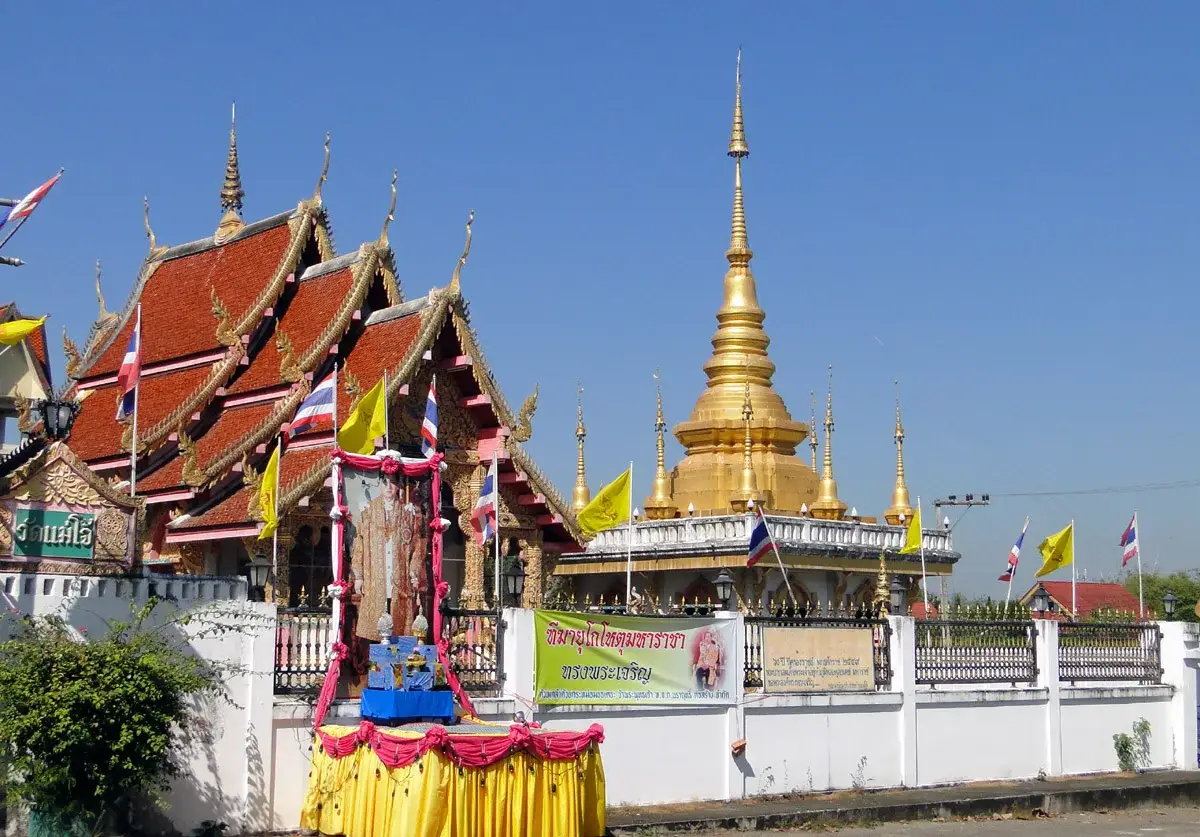
Wat Mae Jo
Open Days: Daily
Opening Hours: 08.00 – 17.00
Wat Mae Jo is a local Buddhist temple under the Maha Nikaya order, located at 1 Moo 4, Ban Mae Jo, on the Chiang Mai–Phrao road in Nong Han Subdistrict, San Sai District, Chiang Mai Province 50290. The temple was officially established in 1882 and received Wisungkham Sima on 4 November 1966. It stands in the heart of the Mae Jo community and serves as a long-standing spiritual center for local residents. Its current temple land is recorded as 4 rai, 3 ngan, and 65 square wah, with land title deed number 30572.
Wat Mae Jo is located along one of the main routes linking Chiang Mai city with San Sai and the northern communities of the province. Its location on the Chiang Mai–Phrao road makes it easy to reach and closely connected with everyday community life. Around the temple are houses, shops, schools, markets, and local roads. The temple is therefore not isolated from the community but stands within the active social landscape of Mae Jo.
Nong Han Subdistrict is an important part of San Sai District and Mae Jo Municipality. The area includes old communities, former agricultural land, Maejo University, schools, local markets, restaurants, accommodations, and several village temples. Nearby temples include Wat Thung Muen Noi, Wat Thung Pa Ket, Wat Pa Bong, Wat Mae Tao Hai, Wat Huai Kiang, and Wat Wiwek Wanaram. This pattern reflects the traditional Lanna relationship between temples, villages, farmland, and community identity.
The name Mae Jo is now widely associated with education, local economy, community life, and travel in San Sai. Wat Mae Jo gives this area a deeper religious and historical dimension. A visit to the temple helps visitors see Mae Jo not only as a university district or food area, but also as a community with Buddhist roots and a long-standing village temple.
The temple’s establishment in 1882 places it among the old community temples of Nong Han. Older temple records describe Wat Mae Jo as being located at 1 or 236 Ban Mae Jo on the San Sai–Phrao road, Moo 4, Nong Han Subdistrict, San Sai District, Chiang Mai Province. The temple has been part of the Maha Nikaya order and has had both temple land and monastic land in its historical records. These details show that Wat Mae Jo has long had a stable role as a village temple.
The present land record states that the temple land covers 4 rai, 3 ngan, and 65 square wah under land title deed number 30572. Older historical records describe land area and land documents differently, reflecting changes in record-keeping and land registration across time. For the present article, the current land information is used for the summary table, while the historical land record is treated as background reference.
The granting of Wisungkham Sima on 4 November 1966 is an important point in the temple’s history. A Wisungkham Sima boundary defines the consecrated area for formal monastic acts such as ordination. This confirms Wat Mae Jo’s complete religious status within the Thai Buddhist monastic system and its role as a full community temple.
The important structures recorded in the temple history include the ubosot or viharn, alms pavilion, monks’ residences, and bell tower. The main sacred object is a brick-and-plaster Buddha image. These elements are typical of a living Lanna community temple. The viharn and ubosot serve worship and formal rites, the alms pavilion supports merit-making, the monks’ residences support monastic life, and the bell tower preserves the rhythm of temple activity.
The brick-and-plaster Buddha image is the main sacred object associated with Wat Mae Jo. Visitors should begin their visit by paying respect in the area open for worship, taking a quiet moment, and observing the temple respectfully. In a community temple, the Buddha image is not merely an artistic object. It is the spiritual focus for merit-making, sermon listening, prayer, and village ceremonies across generations.
The alms pavilion is an important link between the temple and local residents. During Kathin, Pa Pha, funerals, ordinations, and other Buddhist ceremonies, it becomes a gathering space where devotees offer food, receive blessings, and participate in community merit-making. This shows that Wat Mae Jo is both a religious space and a social space for the community.
The bell tower contributes to the identity of the temple as a functioning village temple. Traditionally, temple bells marked time, religious activity, and community gathering. Even as local life changes, the bell tower remains a symbol of continuity between the temple and the village.
Historical records list several abbots of Wat Mae Jo, including Phra Khontha Khanthaso, Phra Inta Intachakuko, Phra Thip Inthaso, Phra Sriwichai Wichayo, Phra Kham Ai, Phra Intha Thawaro, and Phra Khru Sophonpaphakon. This succession reflects generations of monks who cared for the temple, maintained Buddhist activities, and preserved the temple’s relationship with the Mae Jo community.
Wat Mae Jo also had a role in Buddhist education. The temple history records that a Dhamma-section Phra Pariyatti school was opened in 1947. This role shows that the temple was not only a place for ceremonies but also a place of religious learning. In traditional Lanna communities, temples often served as centers for Buddhist education and moral formation.
Throughout the year, Wat Mae Jo supports Buddhist and community activities such as Kathin, Pa Pha, Buddhist holy day merit-making, important Buddhist observances, memorial ceremonies, and community religious events. Kathin is one of the major ceremonies after Buddhist Lent, bringing devotees together to offer robes and requisites to the monastic community. For a community temple, Kathin is both a religious act and a social act of unity.
Recent Kathin records show that Wat Mae Jo continues to have monks in residence and remains active in the religious life of the community. The temple is therefore not merely an old historical site. It is a living religious place where monks reside, local residents make merit, and annual Buddhist activities continue.
Wat Mae Jo serves the community in several ways. Religiously, it is a place for worship, merit-making, sermons, and ceremonies. Socially, it is a gathering place for families and local residents. Culturally, it preserves Lanna Buddhist practice and community identity. Spatially, it remains a landmark along the Chiang Mai–Phrao road in the Mae Jo area.
Important points to observe inside the temple include the viharn or ubosot, the brick-and-plaster Buddha image, alms pavilion, monks’ residences, bell tower, and the atmosphere of the temple grounds. The temple’s value lies not in grand tourist-scale architecture, but in its role as a living community temple that preserves the religious memory of Mae Jo.
Wat Mae Jo is suitable for visitors who want to experience a local temple in the Mae Jo area without rushing. It is especially meaningful for those interested in old temples, village Buddhism, and the relationship between community temples and modern urban expansion around Maejo University.
Wat Mae Jo can be combined with nearby temples in Nong Han Subdistrict, including Wat Thung Muen Noi, Wat Thung Pa Ket, Wat Pa Bong, Wat Mae Tao Hai, and Wat Huai Kiang. Visitors who want to add a green stop can continue to Tweechol Botanic Garden. This route works well as a half-day or full-day cultural trip through the Mae Jo and San Sai area.
Getting There is easiest by private car, rental car, or ride-hailing service. Set the destination as Wat Mae Jo, 1 Moo 4, Ban Mae Jo, Chiang Mai–Phrao Road, Nong Han Subdistrict, San Sai District, Chiang Mai Province. From Chiang Mai city, travel toward San Sai or Mae Jo and follow the Chiang Mai–Phrao road. Extra travel time is useful during morning and evening traffic because the Mae Jo area has schools, shops, university traffic, and regular local commuting.
Because Wat Mae Jo is an active religious place, visitors should dress modestly, keep voices low, remove shoes where required, avoid touching Buddha images or sacred objects without permission, and give space to monks and local residents during ceremonies. If visiting during Kathin, Pa Pha, or other temple activities, visitors should respect the community ritual before taking photographs.
| Name | Wat Mae Jo |
| Location | Ban Mae Jo, Moo 4, Nong Han Subdistrict, San Sai District, Chiang Mai Province |
| Address | 1 Moo 4, Ban Mae Jo, Chiang Mai–Phrao Road, Nong Han Subdistrict, San Sai District, Chiang Mai 50290, Thailand |
| Temple Type | Local Buddhist Temple |
| Buddhist Order | Maha Nikaya |
| Land Area | 4 Rai, 3 Ngan, 65 Square Wah, with four land plots under title deeds |
| Land Title Information | Land title deed number 30572, volume 306, page 72 |
| Highlights | Old community temple on the Chiang Mai–Phrao road with a history dating to 1882, including a viharn or ubosot, alms pavilion, monks’ residences, bell tower, and brick-and-plaster Buddha image |
| History | Officially established in 1882 and granted Wisungkham Sima on 4 November 1966 |
| Sacred Object | Brick-and-plaster Buddha image |
| Main Areas / Zones | Ubosot or viharn, alms pavilion, monks’ residences, bell tower, temple courtyard, and community merit-making areas |
| Community Role | Spiritual center of the Mae Jo community, supporting worship, sermons, Kathin, Pa Pha, memorial ceremonies, and local Buddhist activities |
| Local Traditions / Activities | Kathin ceremony, Pa Pha offerings, Buddhist holy day merit-making, important Buddhist observances, memorial ceremonies, and community religious activities |
| Travel Information | Accessible by private car, rental car, or ride-hailing service; set the destination as Wat Mae Jo, 1 Moo 4, Ban Mae Jo, Chiang Mai–Phrao Road, Nong Han Subdistrict, San Sai District, Chiang Mai Province |
| Current Status | Open as an active community temple with monks in residence |
| Open Days | Daily |
| Opening Hours | 08.00 – 17.00 |
| Main Contact Number | Wat Mae Jo Tel. 053-498-010 Mae Jo Municipality Tel. 053-498621 |
| Nearby Tourist Attractions | 1. Wat Thung Muen Noi, about 4 km 2. Wat Thung Pa Ket, about 5 km 3. Wat Pa Bong, about 4 km 4. Wat Mae Tao Hai, about 5 km 5. Tweechol Botanic Garden, about 10 km |
| Nearby Restaurants | 1. LOVE EAT MAEJO, about 1 km, Tel. 065-506-8299, 094-645-4549 2. NGABK COFFEE Mae Jo, about 1 km, Tel. 084-986-4190, 061-135-0589 3. Yu Ban Cafe Mae Jo, about 2 km, Tel. 087-912-2508 4. Baan Coffee Maison De Cafe, about 3 km, Tel. 089-755-1630 5. FAE CAFE Mae Jo, about 4 km, Tel. 083-717-8993 |
| Nearby Accommodations | 1. V House Mae Jo Dormitory, about 3 km, Tel. 093-626-9355 2. MyRoom Boutique Home Mae Jo, about 4 km, Tel. 061-265-4555 3. Surachai Dormitory Mae Jo, about 3 km, Tel. 080-125-7986, 098-658-1036 4. Udo House Mae Jo, about 4 km, Tel. 091-853-5561 5. The Slipper Resort Maejo, about 6 km, Tel. 063-336-9641 |
Frequently Asked Questions (FAQ)
Q: Where is Wat Mae Jo located?
A: Wat Mae Jo is located at 1 Moo 4, Ban Mae Jo, Chiang Mai–Phrao Road, Nong Han Subdistrict, San Sai District, Chiang Mai 50290, Thailand.
Q: What is historically important about Wat Mae Jo?
A: Wat Mae Jo was officially established in 1882 and granted Wisungkham Sima on 4 November 1966. It is one of the old community temples of Nong Han Subdistrict.
Q: What are the main highlights of Wat Mae Jo?
A: Highlights include its long history, location on the Chiang Mai–Phrao road, viharn or ubosot, alms pavilion, monks’ residences, bell tower, and brick-and-plaster Buddha image.
Q: What are the opening hours of Wat Mae Jo?
A: Wat Mae Jo is open daily from 08.00 to 17.00. Visitors should dress modestly and respect the quiet atmosphere of the active temple.
Q: What annual activities are associated with Wat Mae Jo?
A: Important activities include Kathin, Pa Pha offerings, Buddhist holy day merit-making, major Buddhist observances, memorial ceremonies, and local community religious events.
Q: What should visitors see inside Wat Mae Jo?
A: Visitors should see the viharn or ubosot, brick-and-plaster Buddha image, alms pavilion, monks’ residences, bell tower, and the atmosphere of the temple courtyard.
Q: What nearby places can be combined with a visit to Wat Mae Jo?
A: Nearby places include Wat Thung Muen Noi, Wat Thung Pa Ket, Wat Pa Bong, Wat Mae Tao Hai, and Tweechol Botanic Garden.
Q: What is the easiest way to reach Wat Mae Jo?
A: The easiest way is by private car, rental car, or ride-hailing service. Set the destination as Wat Mae Jo, 1 Moo 4, Ban Mae Jo, Chiang Mai–Phrao Road, Nong Han Subdistrict, San Sai District, Chiang Mai Province.
 Category: ●Places of Worship
 Group: ●Temple
Last Update : 1 WeekAgo
 Last Update : 1 WeekAgo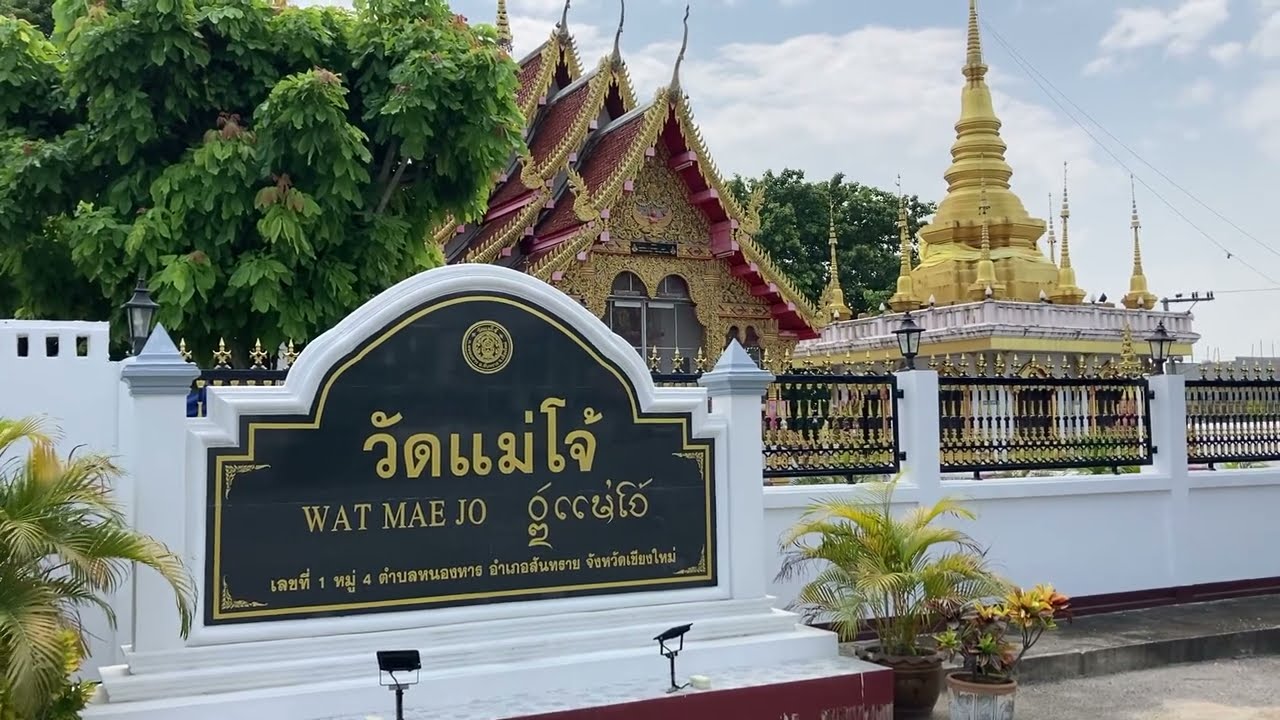
 Click to Access the Navigation Map GPS
Wat Mae Jo Map
Recommend

 Muang Chiang Mai(121)Chom Thong(47)Mae Chaem(25)Chiang Dao(33)Doi Saket(68)Mae Taeng(85)Mae Rim(69)Samoeng(29)Fang(71)Mae Ai(59)Phrao(70)San Pa Tong(103)San Kamphaeng(66)San Sai(73)Hang Dong(73)Hot(32)Doi Tao(22)Omkoi(11)Saraphi(74)Wiang Haeng(15)Chai Prakan(28)Mae Wang(32)Mae On(22)Doi Lo(33)Galyani Vadhana(1)


