
lovethailand home >North Travel Attractions >Chiang Mai Travel Attractions >San Sai >Nong Chom > Wat San Pa Sak
TL;DR: Wat San Pa Sak is located at Ban San Pa Sak, Moo 3, Nong Chom Subdistrict, San Sai District, Chiang Mai Province, open Daily, hours 08.00 – 17.00.

Wat San Pa Sak
Open Days: Daily
Opening Hours: 08.00 – 17.00
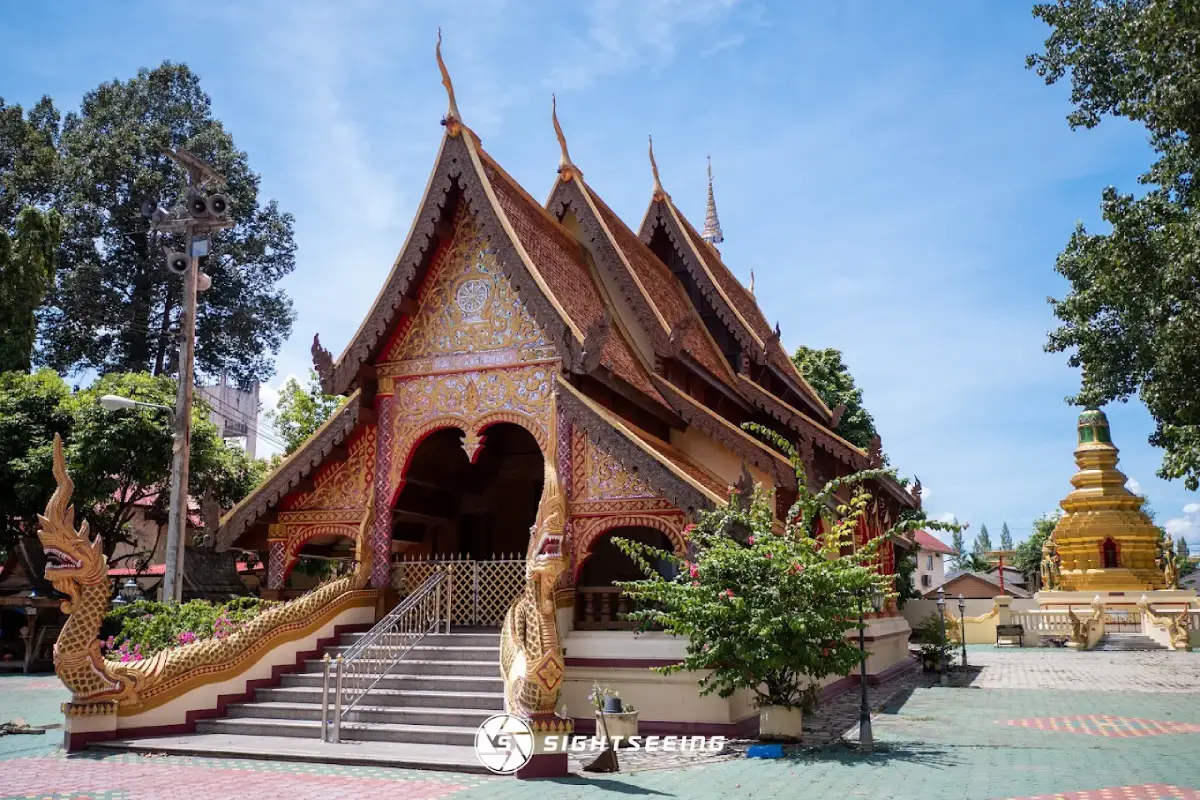
Wat San Pa Sak, also known as Wat San Pa Sak Nong Chom, is a local Buddhist temple under the Maha Nikaya order. It is located at 1 Moo 3, Ban San Pa Sak, Nong Chom Subdistrict, San Sai District, Chiang Mai Province. The temple was officially established in 1727 and received Wisungkham Sima in 1950. Wat San Pa Sak is a historic Lanna community temple with a history of nearly 300 years. Its key features include a bronze principal Buddha image, palm-leaf scripture hall, Luang Pho Than Jai, chedi, bell tower, a viharn built with teak and masonry, and the yang trees in front of the temple that preserve the memory of the temple’s early foundation.
Wat San Pa Sak stands in Nong Chom Subdistrict, an area of San Sai District where village temples remain closely tied to local identity. Nearby community temples include Wat Fa Mui, Wat Nang Liao, Wat Tha Kwian, Wat Mae Kaet Luang, Wat Si Sai Mun, Wat Nong Khrai Luang, Wat Ton Chan, and Wat San Pa Sak. These temples are not only places for Buddhist rituals. They function as spiritual centers, merit-making spaces, community meeting places, and cultural anchors for each village. Wat San Pa Sak therefore has both religious and community significance for Ban San Pa Sak Noi, Ban Pong, and the surrounding Nong Chom area.
The name San Pa Sak is directly connected with the former landscape of the community. Ban San Pa Sak developed from an area that separated from Ban Tha Kwian. In the past, the raised land or san in this area contained many teak trees, or mai sak. This is why both the village and the temple came to be called San Pa Sak. The name preserves the memory of a former landscape shaped by trees, farmland, watercourses, and village settlement before the area gradually became a more urbanized residential zone on the San Sai side of Chiang Mai.
Historically, Wat San Pa Sak was founded in 1727 by Khru Ba China. He began the temple by setting wooden posts on four sides, building a viharn, and planting four yang trees in front of the temple as a memorial to its foundation. This detail is important because it shows how the early temple was created not only as a place of worship but also as a living memory of the community. The trees in front of the temple became part of the temple’s identity and a symbol of the faith of the first generation of villagers.
After Khru Ba China passed away, Khru Ba Chao Wut became the next abbot and built a brick monks’ residence. The work took eight years to complete, showing the patience and effort required to develop a village temple in earlier times. The construction of a brick residence marked a step in the temple’s growth from a simple beginning into a more stable monastic institution capable of supporting resident monks and community religious activities.
During the time of Khru Ba Wong, the temple’s viharn, chofa, and panlom were repaired. Timber was brought from Ban Cho Lae by raft along the Ping River, landed at Ban Ton Phueng in Mae Rim, and then dragged onward to Ban San Pa Sak. Khru Ba Wong was himself a craftsman and made the chofa and panlom. The work took 12 years to complete. This history gives the viharn special meaning as a product of devotion, craftsmanship, river transport, and community effort.
The story of timber being transported from Ban Cho Lae also reflects older patterns of movement and construction in northern Thailand. Before modern roads and vehicles were common, the Ping River was a major route for transporting large materials. Moving timber from the river to the village required labor, skill, and cooperation. Wat San Pa Sak therefore preserves not only religious history but also a memory of Lanna craft, water transport, and local teamwork.
Later, during the time of Khru Ba Chan Kaew Phanthasaro, the temple built two alms pavilions in 1969. The construction was completed and celebrated in 1972. Alms pavilions are important in community temples because they support merit-making, food offerings, annual ceremonies, and gatherings of local devotees. Their construction shows how the temple continued to expand its role as a space for the village community.
Wat San Pa Sak covers about 9 rai and is recognized as a complete functioning temple. Its main structures include the viharn, pavilion, scripture hall, chedi, monks’ residences, Nam Pho area, restrooms, kitchen, and bell tower. These structures allow the temple to support monastic life, worship, community merit-making, annual rituals, and practical services for visitors and villagers. The viharn is the central worship space, while the scripture hall preserves Buddhist teachings. The kitchen and pavilions support ceremonies and village gatherings, and the bell tower marks the rhythm of temple life.
The principal Buddha image of Wat San Pa Sak is a bronze Buddha image. It is the central object of devotion for local residents who come to make merit, observe Buddhist holy days, and participate in temple ceremonies. In a community temple, the principal Buddha image is more than an artistic object. It is the spiritual focus of families, elders, monks, and villagers across many generations.
The palm-leaf scripture hall is one of the temple’s most meaningful features. Palm-leaf manuscripts were used for recording Buddhist texts, teachings, and local knowledge in Lanna society for centuries. A scripture hall therefore represents the temple’s role as a place where Buddhist learning and cultural memory are preserved. Wat San Pa Sak is not only a place for ritual worship; it is also connected with the older educational role of temples in northern Thai communities.
Luang Pho Than Jai is another important devotional point in the temple. The belief in Than Jai Buddha images is widely found in northern Thailand and is often associated with sincere prayer, firm intention, and hopes for timely fulfillment. Visitors may pay respect to Luang Pho Than Jai together with the principal Buddha image and the chedi. As this is an active temple, visitors should keep their voices low and worship respectfully.
The viharn of Wat San Pa Sak is especially important because it is described as being built with teak and masonry. Teak is closely tied to the identity of the village and the temple name itself. The presence of teak in the viharn reinforces the temple’s connection with its former landscape, local craftsmanship, and the memory of a place once associated with teak trees. The viharn is therefore both a religious building and a marker of local identity.
The chedi provides another sacred focus within the temple grounds. In Lanna Buddhist culture, a chedi is often a place for reverence, circumambulation, and reflection on the Buddha’s teachings. Wat San Pa Sak is associated with the annual water-pouring ceremony for the relic shrine during the 9 Peng period. This ceremony connects local faith with the chedi and brings the community together in an act of devotion.
The bell tower adds to the atmosphere of a living village temple. Traditionally, the sound of a temple bell marked time, religious activities, and community gatherings. Even as the surrounding area has become more urbanized, the bell tower remains a visual and cultural reminder of a slower temple rhythm that once shaped village life more strongly.
The line of abbots at Wat San Pa Sak shows the continuity of monastic care from the temple’s foundation to the present. Recorded abbots include Khru Ba China, Khru Ba Chao Wut, Khru Ba Wong, Phra Boonma, Phra Khamtan, Khru Ba Chan Kaew Phanthasaro, and Phra Khru Sophit Silakhun Supphasilo. This succession reflects generations of monks who maintained the temple, guided the community, restored structures, and preserved the temple’s role as the spiritual center of Ban San Pa Sak.
The current abbot is Phra Khru Sophit Silakhun Supphasilo. His former name is recorded as Niran Wongphalang, and his background is connected with Ban San Pa Sak in the San Sai area. In a community temple, the abbot’s role extends beyond ritual leadership. It includes caring for the monastic community, maintaining temple buildings, supporting annual traditions, and sustaining the relationship between the temple and local devotees.
The purpose of Wat San Pa Sak is to serve as a center of faith for the people. This purpose can be seen throughout its history: the first viharn built by Khru Ba China, the yang trees planted as a foundation memorial, the brick monks’ residence, the repaired viharn, the alms pavilions, and the annual community ceremonies. The temple continues to be a place for merit-making, sermon listening, cultural memory, and village solidarity.
The temple’s main annual tradition is the water-pouring ceremony for the relic shrine during the 9 Peng period. This ceremony expresses respect for Buddhism, the temple’s sacred chedi, and the shared faith of the local community. It brings villagers together to make merit, renew devotion, and pass local religious practice to younger generations. Through this annual event, Wat San Pa Sak remains a living temple rather than only a historic site.
Wat San Pa Sak is suitable for visitors who want to experience a quiet Lanna community temple. Important points to see include the bronze principal Buddha image, teak-and-masonry viharn, palm-leaf scripture hall, chedi, Luang Pho Than Jai, bell tower, pavilions, and the yang trees in front of the temple. The temple’s value lies in its history, village memory, and living relationship with the community rather than in grand scale or heavy tourist activity.
The temple is also meaningful for visitors interested in the transformation of old communities around Chiang Mai. Ban San Pa Sak was once an agricultural and market community connected with waterways and farmland. Today, much of the surrounding area has become residential and semi-urban, with housing developments, shops, schools, and local roads. Wat San Pa Sak remains an anchor of historical identity amid this change.
Wat San Pa Sak can be combined with nearby temples in Nong Chom Subdistrict, such as Wat Fa Mui, Wat Nang Liao, Wat Tha Kwian, Wat Si Sai Mun, Wat Ton Chan, Wat Nong Khrai Luang, and Wat Mae Kaet Luang. This route is ideal for travelers who want to understand the village-temple network of Nong Chom. Each temple has its own story, while together they reveal the cultural depth of the San Sai side of Chiang Mai.
Getting There is easiest by private car, rental car, or ride-hailing service. Set the destination as Wat San Pa Sak, Ban San Pa Sak, Moo 3, Nong Chom Subdistrict, San Sai District, Chiang Mai Province. From Chiang Mai city, travel toward San Sai or Mae Jo, then continue into the Nong Chom and Ban San Pa Sak area. Allow extra travel time during morning and evening traffic because San Sai and Nong Chom now have many residential communities, shops, schools, and busy local roads.
Visitors should remember that Wat San Pa Sak is an active religious place. Dress modestly, keep voices low, remove shoes where required, avoid touching Buddha images, chedis, palm-leaf manuscripts, or sacred objects without permission, and give space to monks and local residents during ceremonies. If visiting during the 9 Peng water-pouring ceremony or other temple activities, visitors should respect the community ritual before taking photographs.
| Name | Wat San Pa Sak / Wat San Pa Sak Nong Chom |
| Location | Ban San Pa Sak, Moo 3, Nong Chom Subdistrict, San Sai District, Chiang Mai Province |
| Address | 1 Moo 3, San Pa Sak, Nong Chom Subdistrict, San Sai District, Chiang Mai 50210, Thailand |
| Temple Type | Local Buddhist Temple |
| Buddhist Order | Maha Nikaya |
| Land Area | About 9 Rai |
| Highlights | Historic Lanna community temple with a bronze principal Buddha image, palm-leaf scripture hall, Luang Pho Than Jai, teak-and-masonry viharn, chedi, bell tower, and yang trees planted as a foundation memorial |
| History | Officially established in 1727 and granted Wisungkham Sima in 1950 |
| Name Origin | The name comes from a raised area that once contained many teak trees, giving rise to the name San Pa Sak for both the village and the temple |
| Principal Buddha Image | Bronze principal Buddha image |
| Sacred Objects | Bronze principal Buddha image, Luang Pho Than Jai, chedi, and palm-leaf scripture hall |
| Main Areas / Zones | Viharn, pavilion, scripture hall, chedi, monks’ residences, Nam Pho area, restrooms, kitchen, and bell tower |
| Distinctive Features | Palm-leaf scripture hall, yang trees in front of the temple, Luang Pho Than Jai, and a viharn built with teak and masonry |
| Abbot / Caretaker | Phra Khru Sophit Silakhun Supphasilo |
| Local Traditions / Activities | Water-pouring ceremony for the relic shrine during the 9 Peng period |
| Travel Information | Accessible by private car, rental car, or ride-hailing service; set the destination as Wat San Pa Sak, Ban San Pa Sak, Moo 3, Nong Chom Subdistrict, San Sai District, Chiang Mai Province |
| Current Status | Open as an active community temple and complete Buddhist temple in Nong Chom Subdistrict |
| Open Days | Daily |
| Opening Hours | 08.00 – 17.00 |
| Main Contact Number | Wat San Pa Sak Tel. 053-492-795 Nong Chom Subdistrict Municipality Tel. 053-350326, 053-350328 |
| Official Website / Official Page | Wat San Pa Sak Moo 3 information page by Nong Chom Subdistrict Municipality |
| Nearby Tourist Attractions | 1. Wat Fa Mui, about 2 km 2. Wat Si Sai Mun, about 2 km 3. Wat Nang Liao, about 2 km 4. Wat Tha Kwian, about 4 km 5. Tweechol Botanic Garden, about 10 km |
| Nearby Restaurants | 1. Banana Story, about 1 km, Tel. 088-547-5954 2. Bomb San Sai, about 2 km, Tel. 089-142-7272 3. I am Pizza' POON HOUSE Nong Chom Branch, about 2 km, Tel. 084-485-7023 4. Hom Suki Nong Chom, about 2 km, Tel. 097-958-9536 5. Krua Rim Bo Mae Jo, about 5 km, Tel. 093-339-1543 |
| Nearby Accommodations | 1. Khun Nai Apartment, about 1 km 2. Subtaweechok Apartment, about 1 km 3. Si Sai Mun Dormitory, about 3 km, Tel. 089-952-4063 4. The Loft House Sansai, about 4 km, Tel. 089-759-8666 5. Tamruethai House, about 5 km, Tel. 081-516-5535 |
Frequently Asked Questions (FAQ)
Q: Where is Wat San Pa Sak located?
A: Wat San Pa Sak is located at 1 Moo 3, Ban San Pa Sak, Nong Chom Subdistrict, San Sai District, Chiang Mai 50210, Thailand.
Q: What is historically important about Wat San Pa Sak?
A: Wat San Pa Sak was officially established in 1727 and granted Wisungkham Sima in 1950. Its early history is connected with Khru Ba China, who built the first viharn and planted four yang trees in front of the temple as a foundation memorial.
Q: What are the main highlights of Wat San Pa Sak?
A: Highlights include the bronze principal Buddha image, palm-leaf scripture hall, Luang Pho Than Jai, teak-and-masonry viharn, chedi, bell tower, and the yang trees in front of the temple.
Q: Who is the abbot of Wat San Pa Sak?
A: The current abbot is Phra Khru Sophit Silakhun Supphasilo.
Q: What are the opening hours of Wat San Pa Sak?
A: Wat San Pa Sak is open daily from 08.00 to 17.00. Visitors should dress modestly and respect the quiet atmosphere of the active temple.
Q: What annual tradition is associated with Wat San Pa Sak?
A: The temple’s important annual tradition is the water-pouring ceremony for the relic shrine during the 9 Peng period.
Q: What nearby places can be combined with a visit to Wat San Pa Sak?
A: Nearby places include Wat Fa Mui, Wat Si Sai Mun, Wat Nang Liao, Wat Tha Kwian, and Tweechol Botanic Garden.
Q: What is the easiest way to reach Wat San Pa Sak?
A: The easiest way is by private car, rental car, or ride-hailing service. Set the destination as Wat San Pa Sak, Ban San Pa Sak, Moo 3, Nong Chom Subdistrict, San Sai District, Chiang Mai Province.
 Category: ●Places of Worship
 Group: ●Temple
Last Update : 1 DayAgo
 Last Update : 1 DayAgo
 Click to Access the Navigation Map GPS
 Muang Chiang Mai(121)Chom Thong(47)Mae Chaem(25)Chiang Dao(33)Doi Saket(68)Mae Taeng(85)Mae Rim(69)Samoeng(29)Fang(71)Mae Ai(59)Phrao(70)San Pa Tong(103)San Kamphaeng(66)San Sai(73)Hang Dong(73)Hot(32)Doi Tao(22)Omkoi(11)Saraphi(74)Wiang Haeng(15)Chai Prakan(28)Mae Wang(32)Mae On(22)Doi Lo(34)Galyani Vadhana(1)


