
lovethailand home >North Travel Attractions >Chiang Mai Travel Attractions >San Sai >Nong Chom > Wat Mae Kaet Luang
TL;DR: Wat Mae Kaet Luang is located at Ban Mae Kaet Luang, Moo 5, Nong Chom Subdistrict, San Sai District, Chiang Mai Province.
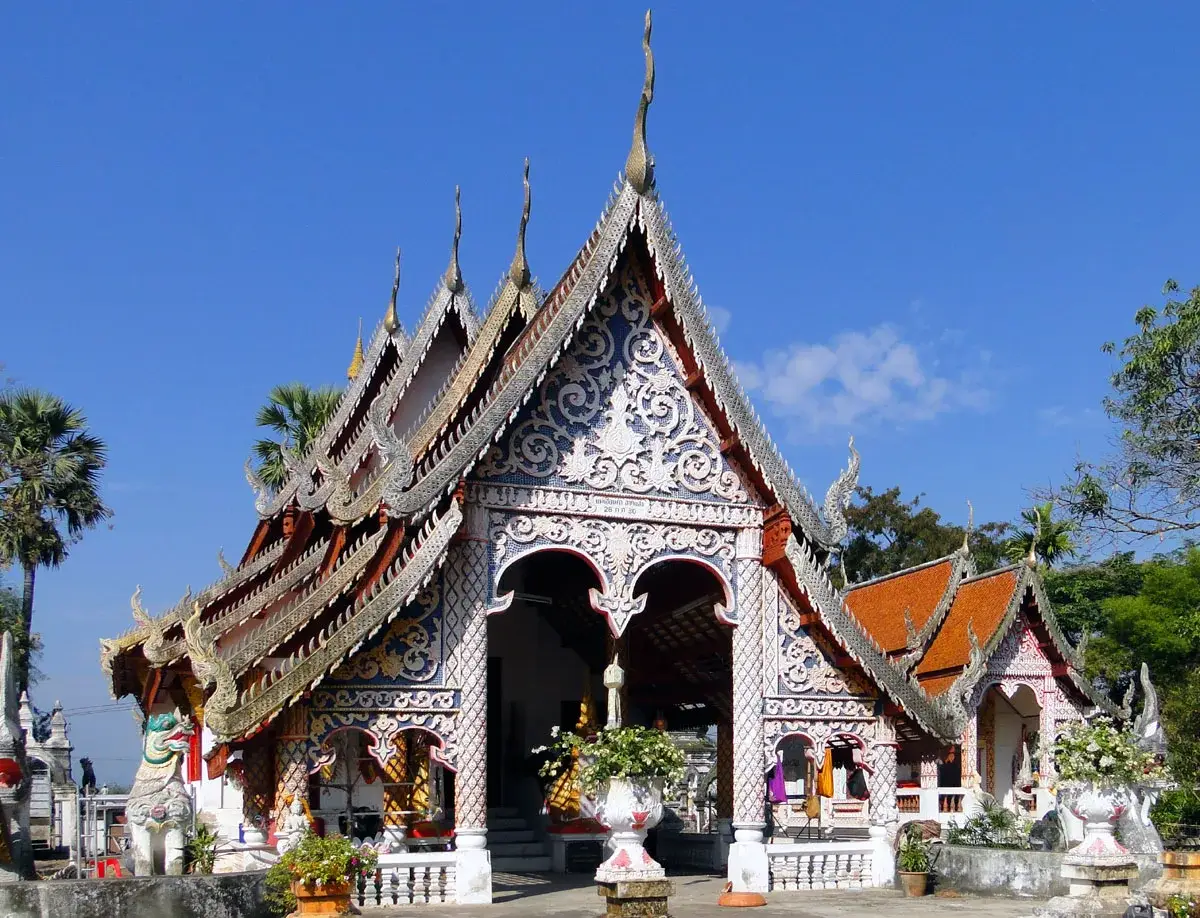
Wat Mae Kaet Luang
Operating day: Daily
Operating time: 08.00 - 17.00
Wat Mae Kaet Luang, also locally listed as Wat Kaet Luang, is a local Buddhist temple under the Maha Nikaya order. It is located at 108 Ban Mae Kaet Luang, Moo 5, Nong Chom Subdistrict, San Sai District, Chiang Mai Province. The temple was built in 1782 and received Wisungkham Sima on 4 November 1966, with a consecrated boundary measuring 12 meters wide and 24 meters long. Its main value lies in its role as the spiritual center of Ban Mae Kaet Luang, a community shaped by waterways, irrigation canals, agriculture, Lanna Buddhist traditions, and village merit-making throughout the year.
The name Mae Kaet Luang is closely connected with the Mae Kaet waterway that passes through the area. For this reason, the temple name is not only a formal religious name but also a reminder of the local landscape. The temple grew within a community where water, irrigation canals, farmland, village paths, and Buddhist faith were closely linked. Wat Mae Kaet Luang therefore functions as a sacred space, a community gathering place, and a living center of religious practice for local residents.
Ban Mae Kaet Luang is Moo 5 of Nong Chom Subdistrict in San Sai District. Nong Chom is a lowland area connected with the Mae Faek irrigation system and includes residential communities, local businesses, schools, and some agricultural areas. The subdistrict contains several village temples, including Wat Fa Mui, Wat Nang Liao, Wat San Pa Sak, Wat Tha Kwian, Wat Mae Kaet Luang, Wat Si Sai Mun, Wat Nong Khrai Luang, and Wat Ton Chan. This pattern reflects the traditional Lanna relationship between temples, villages, waterways, and community life.
Historically, Wat Mae Kaet Luang has stood for more than 200 years. Its establishment in 1782 makes it one of the long-standing community temples in the Nong Chom area. The temple’s age reflects not only the history of a religious site but also the continuity of Ban Mae Kaet Luang itself. Generations of villagers have used the temple for merit-making, almsgiving, listening to sermons, annual traditions, and the preservation of local Buddhist culture.
The temple land covers 4 rai, 3 ngan, and 1 square wah, with one additional monastic land plot of 2 rai, 3 ngan, and 40 square wah. Its boundaries reflect the old relationship between the temple and the community landscape. The northern side adjoins an irrigation canal, the southern and eastern sides adjoin local paths, and the western side also adjoins a canal. This setting shows how the temple developed within a village environment shaped by water management, local movement, and agricultural life.
The granting of Wisungkham Sima on 4 November 1966 confirmed the temple’s formal status within the Thai Buddhist monastic system. A Wisungkham Sima boundary is significant because it defines the consecrated area for formal Sangha acts. With its ubosot and consecrated boundary, Wat Mae Kaet Luang serves as a complete religious center for the community of Ban Mae Kaet Luang.
The main structures within Wat Mae Kaet Luang include the ubosot, viharn, monks’ residences, scripture hall, alms pavilion, merit-making pavilion, and kitchen. These buildings show that the temple supports both monastic duties and community activities. The ubosot is used for formal monastic rites, the viharn is the primary space for worship, the monks’ residences support the resident monastic community, and the scripture hall represents the preservation of Buddhist teachings. The alms pavilion, merit-making pavilion, and kitchen support annual ceremonies, village merit-making, and community gatherings.
Important sacred objects at the temple include brass Buddha images, a Chiang Saen-style brass Buddha image, and a chedi. The brass Buddha images reflect local devotion and Buddhist artistry, while the Chiang Saen-style image gives the temple a strong connection with northern Thai Buddhist heritage. The chedi adds a sacred focal point to the temple grounds and gives visitors a place for quiet reverence and reflection.
The chedi is an important feature of the temple landscape. In Lanna Buddhist culture, a chedi is often a focus of worship, circumambulation, and remembrance of the Buddha’s teachings. Together with the viharn, ubosot, scripture hall, and Buddha images, it gives Wat Mae Kaet Luang the essential elements of a meaningful community temple.
The scripture hall is also significant because northern Thai temples traditionally served as centers of religious learning. Temples were not only places for rituals; they were also places where Buddhist texts, local knowledge, and moral instruction were preserved and passed on. At Wat Mae Kaet Luang, the scripture hall, merit-making pavilions, and ritual spaces together show the temple’s role as both a religious and cultural institution.
Wat Mae Kaet Luang is also associated with a local museum that preserves objects connected with community life and Lanna culture. The collection includes models of a chedi and viharn, ordination-related objects, dhamma chests, woodcarvings, old pottery, basketry, lacquerware, everyday household objects, weapons, weaving tools, sugarcane presses, cotton-ginning tools, old cameras, radios, farming tools, manuscripts, khoi books, sa-paper manuscripts, and palm-leaf manuscripts. This museum dimension gives the temple value not only as a religious site but also as a place where the memory of the community is preserved.
The line of abbots at Wat Mae Kaet Luang shows the long continuity of monastic leadership at the temple. Recorded abbots include Phra Athikan Kantha, Phra Athikan Phrompanya, who served from 1782 to 1844; Phra Athikan Singkaeo Sophano, who served from 1844 to 1902; Phra Athikan Konkaeo Soratano, who served from 1902 to 1938; Phra Athikan Singkaeo Sophano, who served from 1938 to 1962; Phra Athikan Kongkham Khanthawaso, who served from 1962 to 1968; Phra Athikan Khamphan Phasukthammo, who served from 1968 to 1977; and Phra Khru Wiriyakitphisan, who has served from 1977 onward.
The current abbot is Phra Khru Wiriyakitphisan Atiwiro. In a community temple, the abbot’s role extends beyond the maintenance of buildings. It includes guiding religious activities, caring for the monastic community, maintaining relationships with local devotees, and sustaining the temple’s annual traditions. Wat Mae Kaet Luang has remained active because successive generations of monks and villagers have continued to care for the temple together.
The purpose of the temple is closely linked with the merit-making life of the village. On Buddhist holy days, elderly residents and local devotees traditionally come to the temple in the morning to offer alms, incense, candles, popped rice, flowers, and food to the monks. They also listen to sermons as a way of cultivating a calm and wholesome mind. During Buddhist Lent, residents also come to the temple in the afternoon to listen to sermons and deepen their religious practice.
Important annual activities at Wat Mae Kaet Luang include Pi Mai Mueang on 13 April, the Lanna New Year period, when villagers prepare ritual items and take part in life-prolonging ceremonies at the temple. Another important annual activity is the Kin Kuai Salak tradition, usually held around September. This merit-making tradition is connected with the belief that offerings of food and useful objects can be dedicated to departed relatives so they will not lack necessities in the next realm.
Pi Mai Mueang is not only a calendar festival. It is a time when the community returns to the temple to make merit, renew blessings, and begin the traditional Lanna year with a peaceful mind. Kin Kuai Salak, or Salak Phat in the broader northern Thai context, reflects generosity, gratitude, and the relationship between the living and the departed. These traditions give Wat Mae Kaet Luang an active role throughout the year.
A key characteristic of Wat Mae Kaet Luang is the beauty of its viharn, pavilions, and ubosot, together with its role as the village temple of Ban Mae Kaet Luang. Important points to observe include the viharn, ubosot, chedi, brass Buddha images, Chiang Saen-style brass Buddha image, scripture hall, merit-making pavilion, and local museum area. Visitors interested in culture should pay attention not only to the buildings but also to the meanings behind the objects and spaces.
The atmosphere of Wat Mae Kaet Luang is suitable for visitors who want to understand a real Lanna community temple. It is not a highly commercial tourist attraction, but it offers depth for travelers interested in village history, old temples, local Buddhist practice, Lanna merit-making, temple museums, and the relationship between temples and rural community life.
Wat Mae Kaet Luang can be combined with nearby temples and attractions in San Sai District. Nearby places include Wat Mae Kaet Noi, Wat San Pa Sak, Wat Fa Mui, Wat Nang Liao, Wat Tha Kwian, Wat Ton Chan, and Tweechol Botanic Garden. This route is suitable for travelers who want to see Chiang Mai through local temples and community life rather than only the old city, Doi Suthep, or Nimmanhaemin.
Getting There is easiest by private car, rental car, or ride-hailing service. Set the destination as Wat Mae Kaet Luang or Wat Kaet Luang, Ban Mae Kaet Luang, Moo 5, Nong Chom Subdistrict, San Sai District, Chiang Mai Province. From Chiang Mai city, travel toward San Sai or Mae Jo and continue into the Nong Chom and Ban Mae Kaet Luang area. Allow extra travel time during morning and evening traffic because San Sai has many residential areas, shops, and local roads.
For a more complete itinerary, begin at Wat Mae Kaet Luang and continue to Wat Mae Kaet Noi, Wat San Pa Sak, Wat Fa Mui, or Tweechol Botanic Garden. After visiting the temples, travelers can stop at local restaurants in the Nong Chom and Mae Jo area or stay in nearby accommodations in Nong Chom, San Sai, or Mae Jo. This route works well for a half-day or full-day cultural trip focused on temples, Lanna community life, and the quieter side of Chiang Mai.
Because Wat Mae Kaet Luang is an active religious place, visitors should dress modestly, keep voices low, remove shoes where required, avoid touching Buddha images, sacred objects, or museum items without permission, and give space to monks and local residents during ceremonies. A visit to a community temple is most meaningful when the temple is respected as the spiritual home of local people, not merely as a sightseeing stop.
| Name | Wat Mae Kaet Luang / Wat Kaet Luang |
| Location | Ban Mae Kaet Luang, Moo 5, Nong Chom Subdistrict, San Sai District, Chiang Mai Province |
| Address | 108 Ban Mae Kaet Luang, Moo 5, Nong Chom Subdistrict, San Sai District, Chiang Mai 50210, Thailand |
| Temple Type | Local Buddhist Temple |
| Buddhist Order | Maha Nikaya |
| Land Area | 4 Rai, 3 Ngan, 1 Square Wah, plus one monastic land plot of 2 Rai, 3 Ngan, and 40 Square Wah |
| Highlights | Historic community temple with brass Buddha images, Chiang Saen-style brass Buddha image, chedi, viharn, ubosot, scripture hall, and Wat Mae Kaet Luang local museum |
| History | Built in 1782 and granted Wisungkham Sima on 4 November 1966; the Sima boundary measures 12 meters wide and 24 meters long |
| Name Origin | The name Mae Kaet Luang is connected with the Mae Kaet waterway that flows through the area |
| Sacred Objects | Brass Buddha images, Chiang Saen-style brass Buddha image, and chedi |
| Main Areas / Zones | Ubosot, viharn, monks’ residences, scripture hall, alms pavilion, merit-making pavilion, kitchen, restrooms, and Wat Mae Kaet Luang museum area |
| Distinctive Features | Beautiful viharn, pavilions, and ubosot; a community temple linked with waterways, merit-making, and Lanna traditions |
| Abbot / Caretaker | Phra Khru Wiriyakitphisan Atiwiro |
| Local Traditions / Activities | Pi Mai Mueang on 13 April, life-prolonging ceremony, Buddhist holy day merit-making, Buddhist Lent sermons, and Kin Kuai Salak around September |
| Travel Information | Accessible by private car, rental car, or ride-hailing service; set the destination as Wat Mae Kaet Luang or Wat Kaet Luang, Ban Mae Kaet Luang, Moo 5, Nong Chom Subdistrict, San Sai District, Chiang Mai Province |
| Current Status | Open as an active community temple in Nong Chom Subdistrict, San Sai District, Chiang Mai Province |
| Local Authority Contact | Nong Chom Subdistrict Municipality Tel. 053-350326, 053-350328 |
| Official Website / Official Page | Wat Kaet Luang Moo 5 information page by Nong Chom Subdistrict Municipality |
| Nearby Tourist Attractions | 1. Wat Mae Kaet Noi, about 3 km 2. Wat San Pa Sak, about 4 km 3. Wat Fa Mui, about 5 km 4. Wat Tha Kwian, about 5 km 5. Tweechol Botanic Garden, about 8 km |
| Nearby Restaurants | 1. Krua Rim Bo Mae Jo, about 2 km, Tel. 093-339-1543 2. Bomb San Sai, about 5 km, Tel. 089-142-7272 3. Banana Story Nong Chom, about 5 km, Tel. 088-547-5954 4. Nawaree Cafe & Restaurant, about 6 km, Tel. 098-751-1908 5. Na Cafe Mae Jo, about 6 km, Tel. 095-453-1426 |
| Nearby Accommodations | 1. Khun Nai Apartment, about 5 km, Tel. 089-701-8283 2. Subtaweechok Apartment, about 5 km, Tel. 081-765-2748 3. The Loft House Sansai, about 6 km, Tel. 089-759-8666 4. Orawan Suites Chiangmai, about 7 km, Tel. 096-556-3914 5. Tamruethai House, about 8 km, Tel. 081-516-5535 |
Frequently Asked Questions (FAQ)
Q: Where is Wat Mae Kaet Luang located?
A: Wat Mae Kaet Luang is located at 108 Ban Mae Kaet Luang, Moo 5, Nong Chom Subdistrict, San Sai District, Chiang Mai 50210, Thailand.
Q: What is historically important about Wat Mae Kaet Luang?
A: Wat Mae Kaet Luang is a Maha Nikaya community temple built in 1782 and granted Wisungkham Sima on 4 November 1966.
Q: What are the main highlights of Wat Mae Kaet Luang?
A: The highlights include brass Buddha images, a Chiang Saen-style brass Buddha image, chedi, viharn, ubosot, scripture hall, and Wat Mae Kaet Luang local museum.
Q: Who is the abbot of Wat Mae Kaet Luang?
A: The current abbot is Phra Khru Wiriyakitphisan Atiwiro.
Q: What annual traditions are associated with Wat Mae Kaet Luang?
A: Key annual traditions include Pi Mai Mueang on 13 April, life-prolonging ceremonies, Buddhist holy day merit-making, Buddhist Lent sermons, and Kin Kuai Salak around September.
Q: What should visitors see inside Wat Mae Kaet Luang?
A: Visitors should see the viharn, ubosot, chedi, brass Buddha images, Chiang Saen-style brass Buddha image, scripture hall, merit-making pavilion, and local museum area.
Q: What nearby places can be combined with a visit to Wat Mae Kaet Luang?
A: Nearby places include Wat Mae Kaet Noi, Wat San Pa Sak, Wat Fa Mui, Wat Tha Kwian, and Tweechol Botanic Garden.
Q: What is the easiest way to reach Wat Mae Kaet Luang?
A: The easiest way is by private car, rental car, or ride-hailing service. Set the destination as Wat Mae Kaet Luang or Wat Kaet Luang, Ban Mae Kaet Luang, Moo 5, Nong Chom Subdistrict, San Sai District, Chiang Mai Province.
 Category: ●Places of Worship
 Group: ●Temple
Last Update : 4 HourAgo
 Last Update : 4 HourAgo
 Click to Access the Navigation Map GPS
 Muang Chiang Mai(121)Chom Thong(47)Mae Chaem(25)Chiang Dao(33)Doi Saket(68)Mae Taeng(85)Mae Rim(69)Samoeng(29)Fang(71)Mae Ai(59)Phrao(70)San Pa Tong(103)San Kamphaeng(66)San Sai(73)Hang Dong(74)Hot(32)Doi Tao(22)Omkoi(11)Saraphi(74)Wiang Haeng(15)Chai Prakan(28)Mae Wang(32)Mae On(22)Doi Lo(34)Galyani Vadhana(1)


