
lovethailand home >North Travel Attractions >Chiang Mai Travel Attractions >San Sai >San Pa Pao > Wat San Ton Pao
TL;DR: Wat San Ton Pao is located at Ban San Ton Pao, Mu 1, San Pa Pao Subdistrict, San Sai District, Chiang Mai Province, open Daily, hours 08.00 – 17.00.

Wat San Ton Pao
Open Days: Daily
Opening Hours: 08.00 – 17.00
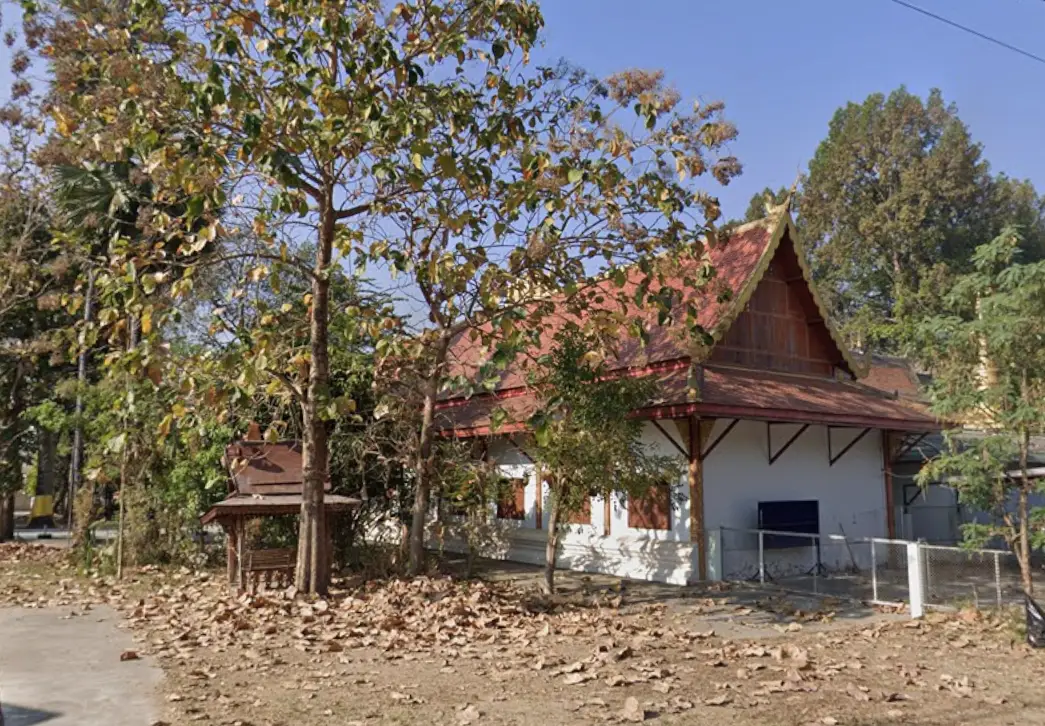
Wat San Ton Pao is a local Buddhist temple under the Mahanikaya monastic order, located at 97 Mu 1, Ban San Ton Pao, San Pa Pao Subdistrict, San Sai District, Chiang Mai Province 50210. It is one of the old community temples of San Pa Pao, with a history dating back to around 1637. The temple received its royal consecrated boundary on 5 September 1923, with a consecrated area measuring 40 meters wide and 80 meters long.
Wat San Ton Pao is important not only as a Buddhist temple but also as a cultural landmark of Ban San Ton Pao. Its identity is connected with the old ton pao tree, local palm-leaf manuscript traditions, a Phra Singh-style Buddha image, and the continuing religious life of the village. The temple is suitable for visitors who want to experience a quiet community temple and understand local Lanna Buddhist culture beyond the main tourist routes.
The name San Ton Pao is connected with the pao tree, a local tree species that once grew widely in the area. An old pao tree in front of the temple is strongly associated with the identity of the village and the subdistrict. The temple name therefore reflects not only a religious site but also a local landscape, village memory, and the natural environment that shaped the community.
The history of Wat San Ton Pao goes back to around 1637. Local accounts connect this date with a palm-leaf manuscript written in Lanna Dharma script that was more than 400 years old. The manuscript has since been lost, but its memory remains important because it suggests the presence of Buddhist learning, literacy, and religious culture in the San Ton Pao community for many generations.
The royal consecrated boundary granted on 5 September 1923 is significant in Thai Buddhist practice. A consecrated boundary defines the formal area for monastic acts, especially ordination and other Sangha ceremonies. At Wat San Ton Pao, this boundary measures 40 meters wide and 80 meters long, confirming the temple’s complete religious role within the local Buddhist community.
The temple land covers 6 rai, 3 ngan, and 13 square wah. It is located within Ban San Ton Pao, Mu 1, in San Pa Pao Subdistrict. The surrounding area includes village houses, local roads, agricultural traces, and community spaces. This setting helps visitors understand the temple as part of a living village landscape rather than a detached tourist landmark.
Important temple areas include the ordination boundary area, worship spaces, a small viharn associated with a Phra Singh-style Buddha image, the temple courtyard, and community activity spaces. Public sources do not list every structure in full architectural detail, but the temple’s role as an old community temple with a consecrated boundary confirms its importance for both monastic and lay Buddhist activities.
One important local story concerns a Phra Singh-style Buddha image enshrined in a small viharn. The story connects the image with local devotion, household memory, and the decision to offer the image to the temple. This gives Wat San Ton Pao an additional layer of devotional significance beyond its long institutional history.
The ordination area should be treated with particular respect because it is linked to the temple’s consecrated boundary and formal monastic acts. Visitors should dress modestly, speak quietly, remove shoes before entering religious buildings, and avoid entering restricted areas. The worship spaces are suitable for merit-making, chanting, and quiet reflection.
Wat San Ton Pao has long served as a spiritual center for the village. It is a place for Buddhist ceremonies, merit-making, Dharma listening, annual festivals, and community gatherings. The temple’s long history makes it part of the collective memory of Ban San Ton Pao, and local residents continue to regard it as an important anchor of community identity.
Phra Khru Panya Rotchanakhun, also known as Khru Ba Kham Ai Panyatharo, was an important former abbot associated with Wat San Ton Pao. He was respected by local residents and remembered for his contributions to Buddhism and the community. His memory adds a teacher-lineage dimension to the temple’s local religious identity.
Ban San Ton Pao also has cultural tourism potential. The community has been associated with homestay networks, local wisdom, Lanna-style activities, handicrafts, lantern making, organic farming, local food, and cultural performances. A visit to Wat San Ton Pao can therefore be combined with a broader community-based cultural route in San Pa Pao and San Sai District.
The temple is also connected with the conservation of local plant heritage. The old pao tree in front of the temple and the conservation area behind the temple reflect the relationship between local ecology and village identity. This makes the temple meaningful in religious, historical, and environmental terms.
Religious activities associated with Wat San Ton Pao include Buddhist holy day merit-making, Dharma listening, Buddhist Lent, end-of-Lent activities, Kathin, Pha Pa offerings, Lanna New Year, Songkran, and ceremonies on important Buddhist dates. These events bring villagers and supporters together to maintain the temple and preserve local Buddhist traditions.
During Lanna New Year or Songkran, temples in Chiang Mai often become centers for merit-making, water-pouring ceremonies, offerings for ancestors, and community gatherings. Wat San Ton Pao, as the village temple of Ban San Ton Pao, helps connect families, local residents, and Buddhist customs through these annual traditions.
The atmosphere of Wat San Ton Pao is calm, local, and historically grounded. It is best suited to visitors who appreciate quiet community temples, local history, old trees, Buddhist stories, and the cultural landscape of northern Thai villages. The temple is not defined by large-scale tourism but by its deep relationship with the community.
Visitors can respectfully observe the worship area, the small viharn associated with the Phra Singh-style Buddha image, the consecrated boundary area, the old pao tree, and the temple courtyard. A visit should be slow and respectful, allowing time to understand the relationship between the temple, the village, the tree, and the local community.
Visitors should dress modestly, speak quietly, remove shoes before entering religious buildings, avoid touching sacred objects inappropriately, and refrain from entering private or restricted areas without permission. If visiting during a ceremony or merit-making event, visitors should give priority to local residents participating in the ritual.
Getting There is most convenient by private car, rental car, or local transport. From Chiang Mai city, travel toward San Sai District and San Pa Pao Subdistrict, then continue to Ban San Ton Pao, Mu 1. The temple can be combined with other nearby community temples and natural attractions.
A meaningful route can begin at Wat San Ton Pao to pay respect and learn about the old pao tree. Visitors can then continue to Wat Ton Sarn, Wat Phayak Noi, Wat San Pa Khang, and Tweechol Botanic Garden. This route combines local religion, community history, plant heritage, and a peaceful suburban Chiang Mai atmosphere.
In summary, Wat San Ton Pao is an old community temple of San Pa Pao, San Sai District, Chiang Mai. With a history around 1637, a royal consecrated boundary granted in 1923, an old pao tree, a Phra Singh-style Buddha image, and strong links to local cultural tourism, the temple is a meaningful stop for travelers seeking Chiang Mai’s quieter Lanna Buddhist heritage.
| Name | Wat San Ton Pao |
| Type | Local Buddhist Temple Under The Mahanikaya Order |
| Location | Ban San Ton Pao, Mu 1, San Pa Pao Subdistrict, San Sai District, Chiang Mai Province |
| Address | 97 Mu 1, Ban San Ton Pao, San Pa Pao Subdistrict, San Sai District, Chiang Mai 50210, Thailand |
| Community Coordinates | 18.866046, 99.093821 |
| Highlights | Old community temple dating to around 1637, associated with an old pao tree, a palm-leaf manuscript tradition, a Phra Singh-style Buddha image, and Ban San Ton Pao cultural tourism |
| History | Built around 1637 and received its royal consecrated boundary on 5 September 1923 |
| Consecrated Boundary | 40 meters wide and 80 meters long |
| Name Origin | Connected with the pao tree, a local tree species once common in Ban San Ton Pao and San Pa Pao Subdistrict |
| Distinctive Features | Lanna community temple linked with village history, an old pao tree, plant conservation, rice-farming culture, and community-based tourism |
| Temple Area | 6 rai, 3 ngan, and 13 square wah |
| Sacred / Worship Points | Phra Singh-style Buddha image in a small viharn and the main worship area inside the temple |
| Main Areas / Zones | Consecrated boundary area, small viharn, worship area, temple courtyard, and community activity area |
| Important Monk Associated With The Temple | Phra Khru Panya Rotchanakhun, or Khru Ba Kham Ai Panyatharo, a respected former abbot |
| Traditions / Merit-Making Events | Buddhist holy day merit-making, Dharma listening, Buddhist Lent, end-of-Lent activities, Kathin, Pha Pa offerings, Lanna New Year, Songkran, and ceremonies on important Buddhist dates |
| Current Status | Registered as a local Mahanikaya temple in San Pa Pao Subdistrict, San Sai District, Chiang Mai, and an important religious site of Ban San Ton Pao |
| Open Days | Daily |
| Opening Hours | 08.00 – 17.00 |
| Travel Information | Best reached by private car, rental car, or local transport from Chiang Mai city toward San Sai District, San Pa Pao Subdistrict, and Ban San Ton Pao, Mu 1 |
| Nearby Tourist Attractions | 1. Wat Ton Sarn, about 1 km 2. Wat Phayak Noi, about 3 km 3. Wat San Pa Khang, about 4 km 4. Tweechol Botanic Garden, about 5 km 5. Ban San Ton Pao Community Route, about 1 km |
| Nearby Restaurants | 1. Bingsu Mobile Branch 1 San Ton Pao, about 1 km, Tel. 063-850-4105 2. JinnyLlama Coffee and Matcha San Pa Pao, about 2 km 3. Nueng Phleng Sushi Home, about 2 km, Tel. 090-320-0325, 095-048-5819 4. PunThai Coffee San Sai 3, about 2 km, Tel. 061-030-3470 5. Baan Coffee Horizon, about 5 km, Tel. 098-983-5896 |
| Nearby Accommodations | 1. Is Am O Chiangmai Resort, about 1 km, Tel. 083-885-5757 2. Horizon Village & Resort, about 5 km, Tel. 053-292-381 3. Suwanna Tara Resort & Spa, about 8 km, Tel. 053-291-937 4. Palm Villa - Modern Luxury & Exclusive Villa Resort, about 8 km, Tel. 064-597-6494 5. Fern Paradise Hotel, about 8 km, Tel. 084-687-2474 |
Frequently Asked Questions (FAQ)
Q: Where is Wat San Ton Pao located?
A: Wat San Ton Pao is located at 97 Mu 1, Ban San Ton Pao, San Pa Pao Subdistrict, San Sai District, Chiang Mai 50210, Thailand.
Q: Is Wat San Ton Pao open daily?
A: Yes. It is listed as open daily from 08.00 to 17.00.
Q: Why is Wat San Ton Pao historically important?
A: Wat San Ton Pao dates to around 1637 and received its royal consecrated boundary on 5 September 1923, with a consecrated area measuring 40 meters by 80 meters.
Q: What is the origin of the name San Ton Pao?
A: The name is connected with the pao tree, a local tree species once common in the area and closely linked with the identity of Ban San Ton Pao and San Pa Pao Subdistrict.
Q: What are the main highlights of Wat San Ton Pao?
A: The main highlights include the old pao tree, the temple’s long history, the lost palm-leaf manuscript tradition, a Phra Singh-style Buddha image, and the temple’s role in Ban San Ton Pao community life.
Q: Who is Phra Khru Panya Rotchanakhun?
A: Phra Khru Panya Rotchanakhun, also known as Khru Ba Kham Ai Panyatharo, was a respected former abbot associated with Wat San Ton Pao.
Q: What religious events are associated with Wat San Ton Pao?
A: The temple is associated with Buddhist holy day merit-making, Dharma listening, Buddhist Lent, end-of-Lent activities, Kathin, Pha Pa offerings, Lanna New Year, Songkran, and ceremonies on important Buddhist dates.
Q: What nearby places can be visited with Wat San Ton Pao?
A: Nearby places include Wat Ton Sarn, Wat Phayak Noi, Wat San Pa Khang, Tweechol Botanic Garden, and the Ban San Ton Pao community route.
 Category: ●Places of Worship
 Group: ●Temple
Last Update : 1 DayAgo
 Last Update : 1 DayAgo
 Click to Access the Navigation Map GPS
 Muang Chiang Mai(121)Chom Thong(47)Mae Chaem(25)Chiang Dao(33)Doi Saket(68)Mae Taeng(85)Mae Rim(69)Samoeng(29)Fang(71)Mae Ai(59)Phrao(70)San Pa Tong(103)San Kamphaeng(66)San Sai(73)Hang Dong(73)Hot(32)Doi Tao(22)Omkoi(11)Saraphi(74)Wiang Haeng(15)Chai Prakan(28)Mae Wang(32)Mae On(22)Doi Lo(34)Galyani Vadhana(1)


