
lovethailand home >North Travel Attractions >Chiang Mai Travel Attractions >San Sai >San Sai Luang > Wat San Sai Luang
TL;DR: Wat San Sai Luang is located at Ban San Sai Luang, Mu 4, San Sai Luang Subdistrict, San Sai District, Chiang Mai Province, open Daily, hours 08.00 – 17.00.

Wat San Sai Luang
Open Days: Daily
Opening Hours: 08.00 – 17.00
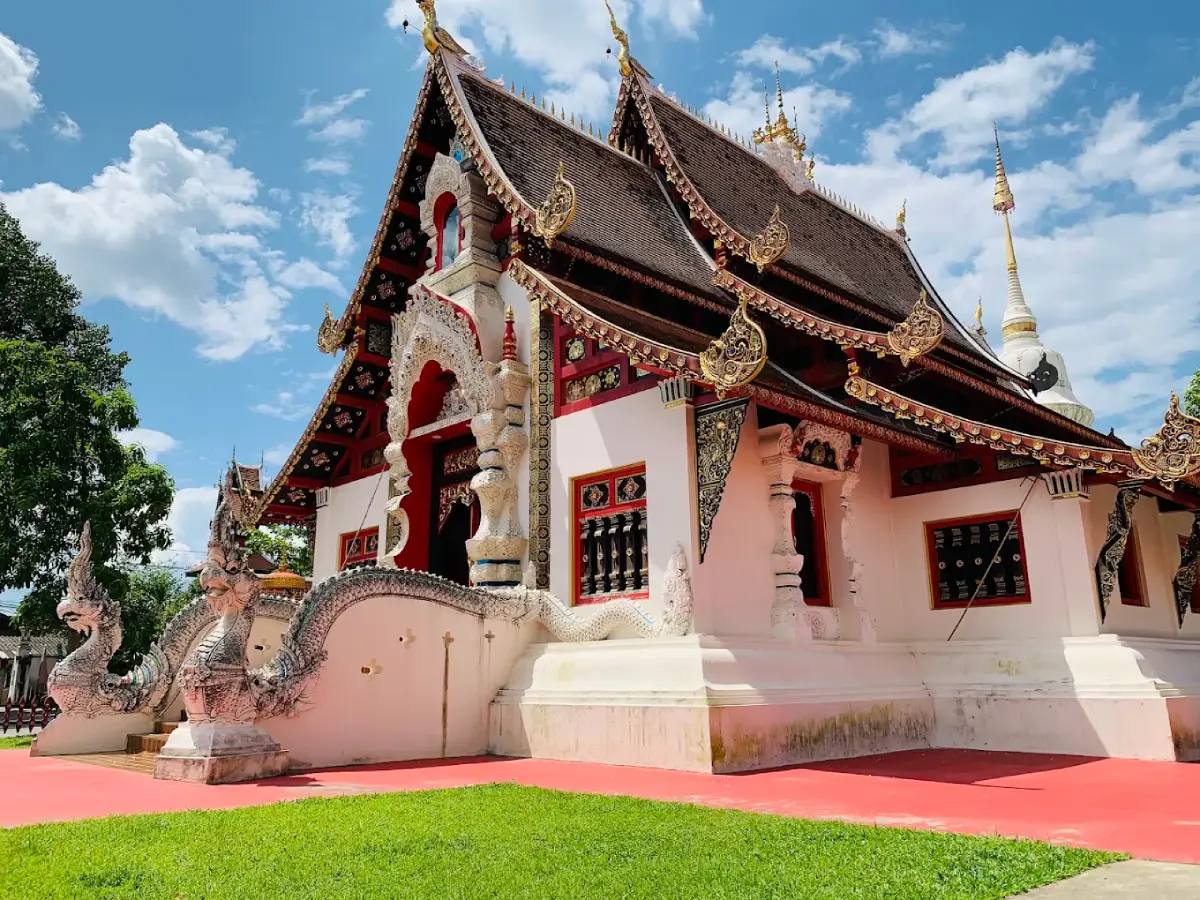
Wat San Sai Luang is a local Buddhist temple under the Mahanikaya monastic order, located at 28 Ban San Sai Luang, San Sai–Phrao Road, Mu 4, San Sai Luang Subdistrict, San Sai District, Chiang Mai Province. It is one of the historically important community temples of San Sai Luang and has long served as a spiritual center, a place for Buddhist ceremonies, and a cultural anchor for the local village community.
The temple is suitable for travelers who want to visit a quiet and authentic local temple near Chiang Mai city. Wat San Sai Luang is not a large tourist temple, but it has deep community value. Important temple structures include the ordination hall, monks’ residences, viharn, scripture hall, ritual pavilion, sermon hall, kitchen, and chedi. These elements show the complete working structure of a Lanna community temple that continues to support religious and social life.
The temple land covers 2 rai, 2 ngan, and 29 square wah under Nor Sor 3 document No. 279. The temple also has one monastic land plot covering 97 square wah under Nor Sor 3 document No. 728. Its boundaries show how closely the temple is connected with village roads and community movement: the north borders a road, the south borders a road, the east borders San Sai–Phrao Road, and the west borders a walkway. This location makes the temple easily accessible and places it at the heart of local life.
Ban San Sai Luang is part of San Sai Luang Subdistrict in San Sai District, Chiang Mai. The village lies close to the city while still preserving local community identity. The surrounding area includes houses, gardens, agricultural plots, irrigation channels, and expanding residential zones. Wat San Sai Luang therefore represents both the older rural landscape of San Sai and the present-day transformation of the area into a suburban community connected with Chiang Mai city.
The temple has a long recorded line of abbots, beginning with Phra Athikan Bandit Pannakamo from 1577 to 1616, followed by Phra Athikan Luang Sannato from 1617 to 1660, Phra Athikan Panya Panyawaro from 1707 to 1753, Phra Athikan Chai Chayanto from 1754 to 1791, Phra Athikan Kaeo Khanthawaro from 1792 to 1806, Chao Athikan Kanthawong Kunakaro from 1807 to 1845, Phra Sopha Sophano from 1846 to 1884, Phra Athikan Yana Thanangkaro from 1885 to 1933, and Chao Athikan Khamtan Tikkhapanyo from 1934 to 2001. This continuity reflects the temple’s long religious importance in San Sai Luang.
Wat San Sai Luang received its royal consecrated boundary on 7 February 1918. The consecrated boundary measures 83 meters wide and 83 meters long. In Thai Buddhist practice, this boundary is important because it marks the formal area for key monastic ceremonies, especially ordination and other Sangha acts. This status confirms the temple’s role as a fully functioning Buddhist temple for the local community.
The ordination hall is one of the temple’s most important sacred areas. It is connected with formal monastic ceremonies and should be treated with particular respect. Visitors should dress modestly, speak quietly, and avoid entering restricted areas. In a Lanna community temple, the ordination hall is more than an architectural structure. It represents the continuity of Buddhist discipline, monastic life, and village religious identity.
The viharn is the main space where local residents and visitors can worship, listen to Dharma, and join ceremonies on important Buddhist occasions. In community temples, the viharn is closely tied to everyday religious life. Villagers gather here on Buddhist holy days, during Buddhist Lent, at the end of Lent, during Lanna New Year, and during annual merit-making events. The viharn therefore remains one of the most important public religious spaces of the temple.
The scripture hall, or ho trai, is an important feature of traditional northern Thai temples. It is associated with the preservation of Buddhist scriptures, palm-leaf manuscripts, and religious learning. The presence of a scripture hall at Wat San Sai Luang reflects the temple’s role not only as a ritual space but also as a place connected with Buddhist knowledge and learning.
The sermon hall and ritual pavilion support community gatherings, Dharma listening, and merit-making activities. These spaces are essential for a living village temple because they allow the temple to host villagers during major ceremonies and regular religious activities. The monks’ residences support the daily life of the monastic community, while the kitchen plays an important role during Kathin, Pha Pa, Lanna New Year, and other events involving food preparation and community participation.
The chedi is the temple’s important sacred object. In a Lanna temple, a chedi is usually a spiritual landmark where devotees pay respect, make merit, and reflect on Buddhist teachings. Visitors should approach the chedi respectfully, avoid touching or climbing on the structure, and preserve the quiet atmosphere of the temple grounds.
Phra Khru Sangkhaborihan Thammanun Dhammaphuno is the current abbot of Wat San Sai Luang. He is recognized as an important religious leader in Ban San Sai Luang. His background includes Buddhist study, teaching, and religious communication, which helps connect the temple with community learning and contemporary Buddhist practice. Under this role, the temple continues to function as both a religious and community institution.
Wat San Sai Luang also plays an educational and cultural role in the community. Local youth projects have used the temple and the surrounding village as a learning space for Lanna identity, community wisdom, and the relationship between temple and local way of life. This gives the temple value beyond worship. It helps younger generations understand the cultural roots of San Sai Luang.
Lanna New Year, or Songkran in northern Thai tradition, is one of the important cultural periods when the temple becomes central to village life. Local people make merit, offer food for departed relatives, pour water as an act of respect, carry sand into the temple, place ceremonial flags, and join activities that bring families and the community together. These practices show how the temple connects religion, family, ancestors, and local identity.
Kathin and Pha Pa offerings are also important for a community temple such as Wat San Sai Luang. Kathin takes place after the Buddhist Lent and involves the offering of robes and necessities to monks. Pha Pa can be organized on various occasions to support temple maintenance and Buddhist activities. These events bring villagers and supporters together through merit-making, food preparation, hospitality, and shared responsibility for the temple.
The atmosphere of Wat San Sai Luang is calm, local, and grounded in community life. It is suitable for visitors who appreciate old temples, village Buddhist culture, and a less crowded religious experience near Chiang Mai city. Important points to observe include the ordination hall, viharn, scripture hall, sermon hall, ritual pavilion, monks’ residences, kitchen, chedi, and temple courtyard.
Visitors should follow appropriate temple etiquette. Dress modestly, speak softly, remove shoes before entering religious buildings, avoid disturbing monks or worshippers, and do not enter private monastic areas without permission. If visiting during a merit-making event, visitors should give priority to the local ceremony and observe respectfully before taking photographs.
Getting There is most convenient by private car, rental car, or local transport. From Chiang Mai city, travel toward San Sai District using San Sai–Phrao Road or the old Chiang Mai–Mae Jo route. Continue into Ban San Sai Luang, Mu 4. The temple is easy to combine with nearby community temples in San Sai Luang Subdistrict.
A meaningful half-day route can begin at Wat San Sai Luang, then continue to Wat Khao Thaen Luang, which is associated with the Ban Khao Thaen legend and Phra Phuttha Maha Wanno. Travelers can then visit Wat Khao Thaen Noi, known for the Nine Chedis and its connection with Khruba Siwichai. Wat Ban Tho, Wat Pa Lan, and Wat Doi Thaen Phra Pha Luang can also be added to the route for a deeper view of San Sai’s local Buddhist heritage.
In summary, Wat San Sai Luang is a historically important community temple near Chiang Mai city. With its long abbot lineage, royal consecrated boundary granted in 1918, important temple structures, chedi, and continuing role in local Buddhist traditions, it is a valuable stop for travelers who want to understand Lanna temple culture through an authentic community setting.
| Name | Wat San Sai Luang |
| Type | Local Buddhist Temple Under The Mahanikaya Order |
| Location | Ban San Sai Luang, Mu 4, San Sai Luang Subdistrict, San Sai District, Chiang Mai Province |
| Address | 28 Ban San Sai Luang, San Sai–Phrao Road, Mu 4, San Sai Luang Subdistrict, San Sai District, Chiang Mai 50210, Thailand |
| Highlights | Historic community temple with an ordination hall, viharn, scripture hall, sermon hall, ritual pavilion, monks’ residences, kitchen, and chedi |
| History | Recorded abbot lineage dates back to the late 16th century, and the temple received its royal consecrated boundary on 7 February 1918 |
| Distinctive Features | Lanna community temple connected with Ban San Sai Luang, San Sai–Phrao Road, local Buddhist traditions, and village identity |
| Temple Area | 2 rai, 2 ngan, and 29 square wah, Nor Sor 3 No. 279 |
| Monastic Land | 1 plot covering 97 square wah, Nor Sor 3 No. 728 |
| Boundaries | North: road; South: road; East: San Sai–Phrao Road; West: walkway |
| Important Structures | Ordination hall, monks’ residences, viharn, scripture hall, ritual pavilion, sermon hall, and kitchen |
| Sacred Object | Chedi |
| Main Areas / Zones | Ordination hall area, viharn, scripture hall, sermon hall, ritual pavilion, monks’ residences, kitchen, chedi area, and temple courtyard |
| Abbot | Phra Khru Sangkhaborihan Thammanun Dhammaphuno |
| Traditions / Merit-Making Events | Buddhist holy day merit-making, Kathin, Pha Pa offerings, Buddhist Lent, end-of-Lent activities, Lanna New Year, merit offerings for ancestors, carrying sand into the temple, ceremonial flags, and ceremonies on important Buddhist dates |
| Current Status | Open for worship, merit-making, and Buddhist community activities |
| Open Days | Daily |
| Opening Hours | 08.00 – 17.00 |
| Travel Information | Best reached by private car, rental car, or local transport from Chiang Mai city toward San Sai District via San Sai–Phrao Road or the old Chiang Mai–Mae Jo route |
| Nearby Tourist Attractions | 1. Wat Khao Thaen Luang, about 3 km 2. Wat Khao Thaen Noi, about 3 km 3. Wat Ban Tho, about 3 km 4. Wat Pa Lan, about 5 km 5. Wat Doi Thaen Phra Pha Luang, about 12 km |
| Nearby Restaurants | 1. Tu Kab Khao & Cherm Cafe, about 1 km, Tel. 094-145-9969, 096-360-2269, 066-119-8929 2. Krua Na Ban San Sai Luang, about 2 km, Tel. 084-472-7742 3. Five Star PTT San Sai Luang, about 2 km, Tel. 092-686-4265 4. Nai Korn Clay Pot Boat Noodles, PTT San Sai Luang Branch, about 2 km, Tel. 088-418-9962, 063-643-4926 5. Nammon Thai Food / Fruit / Mala San Sai Luang, about 3 km, Tel. 099-243-9933 |
| Nearby Accommodations | 1. Little-Teak Homestay, about 3 km, Tel. 089-559-0660 2. Fern Paradise Hotel, about 3 km, Tel. 084-687-2474 3. Itsari's Guest House, about 4 km, Tel. 081-288-6028 4. Hometown Hometale, about 5 km, Tel. 094-749-2424 5. Luy Suan Homestay, about 7 km, Tel. 087-988-9688 |
Frequently Asked Questions (FAQ)
Q: Where is Wat San Sai Luang located?
A: Wat San Sai Luang is located at 28 Ban San Sai Luang, San Sai–Phrao Road, Mu 4, San Sai Luang Subdistrict, San Sai District, Chiang Mai 50210, Thailand.
Q: Is Wat San Sai Luang open daily?
A: Yes. The temple is listed as open daily from 08.00 to 17.00.
Q: Why is Wat San Sai Luang historically important?
A: Wat San Sai Luang has a long recorded abbot lineage dating back to the late 16th century and received its royal consecrated boundary on 7 February 1918.
Q: What important structures can visitors see at Wat San Sai Luang?
A: Visitors can see the ordination hall, viharn, scripture hall, sermon hall, ritual pavilion, monks’ residences, kitchen, chedi, and temple courtyard.
Q: Who is the abbot of Wat San Sai Luang?
A: The abbot is Phra Khru Sangkhaborihan Thammanun Dhammaphuno.
Q: What type of traveler is Wat San Sai Luang suitable for?
A: It is suitable for travelers who enjoy quiet local temples, Lanna community culture, and authentic Buddhist sites near Chiang Mai city.
Q: What religious events are associated with Wat San Sai Luang?
A: The temple is associated with Buddhist holy day merit-making, Kathin, Pha Pa offerings, Buddhist Lent, end-of-Lent activities, Lanna New Year, carrying sand into the temple, ceremonial flags, and ceremonies on important Buddhist dates.
Q: What nearby temples can be visited with Wat San Sai Luang?
A: Nearby temples include Wat Khao Thaen Luang, Wat Khao Thaen Noi, Wat Ban Tho, Wat Pa Lan, and Wat Doi Thaen Phra Pha Luang.
 Category: ●Places of Worship
 Group: ●Temple
Last Update : 22 HourAgo
 Last Update : 22 HourAgo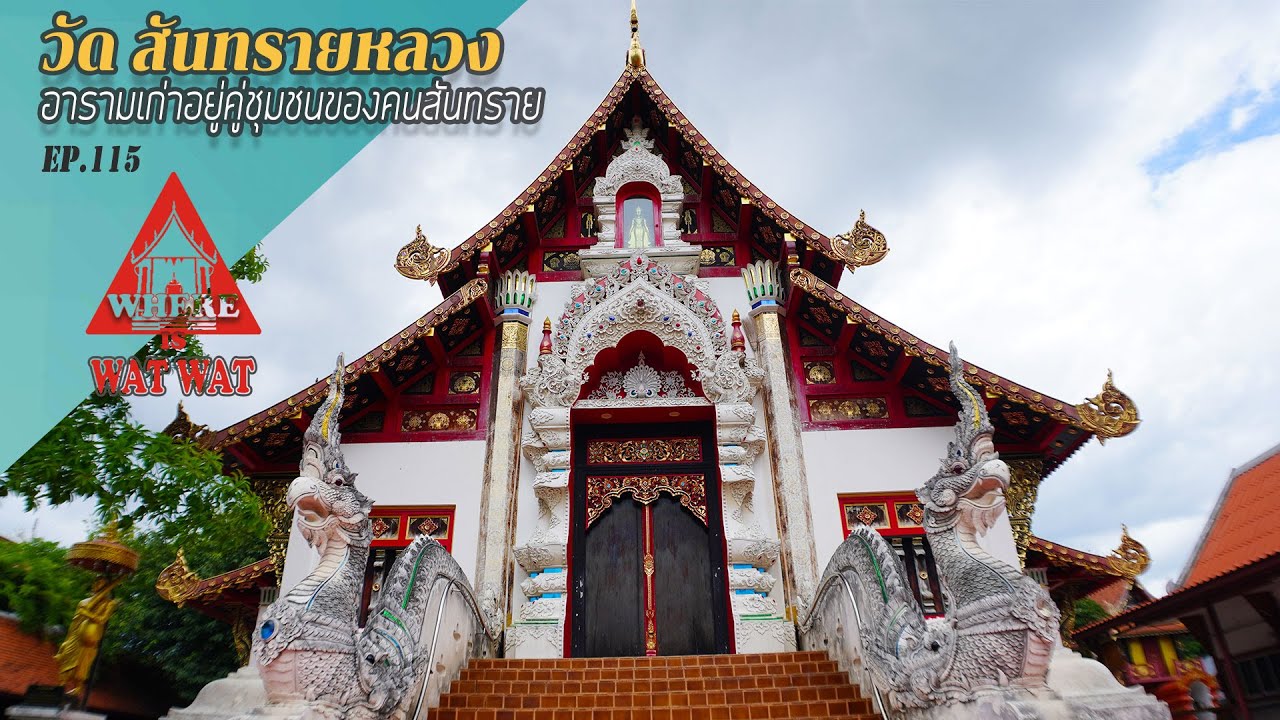
 Click to Access the Navigation Map GPS
Wat San Sai Luang Map
Recommend

 Muang Chiang Mai(121)Chom Thong(47)Mae Chaem(25)Chiang Dao(33)Doi Saket(68)Mae Taeng(85)Mae Rim(69)Samoeng(29)Fang(71)Mae Ai(59)Phrao(70)San Pa Tong(103)San Kamphaeng(66)San Sai(73)Hang Dong(73)Hot(32)Doi Tao(22)Omkoi(11)Saraphi(74)Wiang Haeng(15)Chai Prakan(28)Mae Wang(32)Mae On(22)Doi Lo(34)Galyani Vadhana(1)


