
lovethailand home >North Travel Attractions >Chiang Mai Travel Attractions >San Sai >San Sai Noi > Wat San Khayom (San Sai Noi)
TL;DR: Wat San Khayom (San Sai Noi) is located at Ban San Khayom, Moo 8, San Sai Noi Subdistrict, San Sai District, Chiang Mai Province.
Wat San Khayom (San Sai Noi)
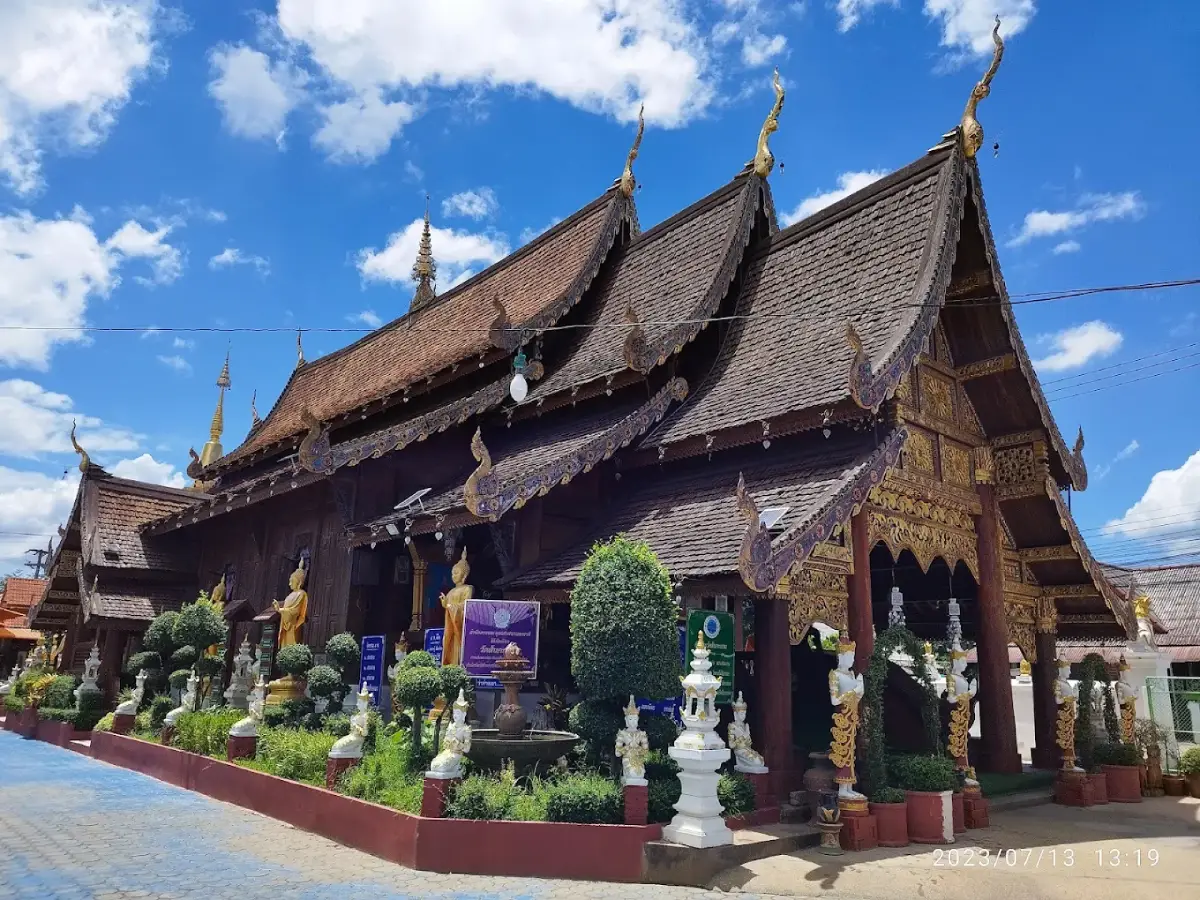
Operating day: Daily
Operating time: 08.00 - 17.00
Wat San Khayom (San Sai Noi) is a local Buddhist temple under the Mahanikaya order, located at No. 148, Moo 8, Ban San Khayom, along the San Sai–Phrao Road in San Sai Noi Subdistrict, San Sai District, Chiang Mai Province. The temple was officially permitted to be established in 1862 and received its Wisungkham Sima in 1973. Wat San Khayom is an important community temple known for its Lanna teakwood vihara, teak buildings, applied Thai-style ubosot, traditional Thai scripture hall, old Lanna-style sermon hall, Chiang Saen-style Buddha image, and its role as a community learning center.
San Sai Noi is an old community area of San Sai District, located along routes connecting Chiang Mai city, Mae Jo, and northern San Sai communities. The area includes village homes, schools, markets, irrigation canals, local roads, and community temples. Wat San Khayom therefore stands within a living cultural landscape rather than as a detached monument. It remains connected with merit-making, education, community gatherings, and the preservation of Lanna culture.
The name San Khayom is connected with the temple’s symbolic tree, the phayom tree. In Lanna temple culture, trees within temple grounds are often more than landscape elements; they become markers of memory, identity, and sacred space. The name San Khayom therefore preserves both the natural setting and the identity of the village community.
The temple has several layers of history. The formal temple information records its establishment in 1862 and Wisungkham Sima in 1973, while local community history also refers to the temple’s former name, Wat Si Don Chai. These layers show that Wat San Khayom should be understood both as a formally registered Buddhist temple and as an old community sacred site with deeper local memory.
The granting of Wisungkham Sima in 1973 was an important milestone. A Wisungkham Sima is the consecrated boundary required for important monastic rites according to Buddhist discipline. It makes the ubosot significant not only as a sacred building but also as a formal monastic space that supports key Sangha activities.
One of the temple’s strongest values is its development as a community learning center. Wat San Khayom has developed spaces for preserving Lanna art, teakwood architecture, local cultural performance, Buddhist learning, and community education. It is therefore not only a place for worship but also a place where villagers, students, youth, and visitors can learn about the cultural roots of San Sai Noi.
The temple’s main architectural highlights include a Lanna-style teakwood vihara, full teakwood buildings, an applied Thai-style ubosot, a traditional Thai scripture hall for the Tipitaka, and an old Lanna-style sermon hall. These structures show a strong intention to preserve northern Thai architecture and local craftsmanship. Teakwood is especially meaningful in northern Thailand because of its durability, beauty, and long association with sacred architecture.
The Lanna-style teakwood vihara is the heart of the temple. It is both a worship space and a work of local craftsmanship. A vihara of this kind is not merely a hall for housing Buddha images; it combines faith, architecture, woodwork, and community memory. Visitors should take time to appreciate its structure, atmosphere, and details respectfully.
The applied Thai-style ubosot supports monastic rites, while the traditional Thai scripture hall reflects the temple’s role in preserving Buddhist teaching. In Lanna temple culture, a scripture hall is more than a storage place for texts. It symbolizes the preservation of Dhamma, Buddhist learning, and moral education within the community.
The old Lanna-style sermon hall also reflects the social life of the temple. A sermon hall is used for Dhamma listening, merit-making, community meetings, and religious activities. When designed with Lanna character, it strengthens the temple’s role as a place where Buddhism, local art, and community life meet.
The most important sacred image at Wat San Khayom is Luang Pho Phra Sakyamuni Sahari Chai Mongkhon, a Chiang Saen-style Buddha image enshrined in the vihara. Chiang Saen-style Buddha images are highly valued in northern Thai Buddhist art for their calm beauty, balanced form, and strong spiritual presence. This Buddha image is the main object of devotion for villagers and visitors.
The name Luang Pho Phra Sakyamuni Sahari Chai Mongkhon carries auspicious meaning. Sakyamuni refers to the Buddha, while Chai Mongkhon suggests victory, blessing, and auspiciousness. Enshrined in the vihara, this Buddha image provides a clear spiritual focus for worship, reflection, and merit-making.
The temple also preserves other sacred and ritual objects, including various Buddha images, gilded ritual stands, and a wooden Dhamma chest. These objects show that Wat San Khayom preserves more than architecture. It also preserves ritual objects, scripture-related material culture, and devotional art that reflect the religious life of the local community.
Wat San Khayom is also connected with the preservation of Lanna performing arts, including sabad chai drumming, fingernail dance, and Lanna ritual practices. These activities make the temple a cultural learning space where younger generations and visitors can encounter living local traditions rather than only view buildings and objects.
The temple has also played a clear role in community education. The San Sai Noi subdistrict learning center once used the temple’s sermon hall as a meeting place for learners, supported by the abbot at that time. Wat San Khayom School also has a history connected with temple space, with early teaching activities using the temple’s sala bat. This gives the temple a strong educational role alongside its religious function.
Phra Khru Ophas Wihankit Asabho was an important monastic figure in the development of Wat San Khayom. Although he is now a former abbot, his work remains central to the temple’s identity, especially in relation to the teakwood vihara, scripture hall, sermon hall, community learning, and Lanna cultural preservation.
A contemporary Kathin record from 2024 lists Wat San Khayom with 5 resident monks and names Phra Khru Sathit Thurathon as abbot for that record. This confirms that the temple remains an active Buddhist temple with resident monks and continuing religious activities.
Wat San Khayom serves the community on several levels. First, it is the spiritual center of Ban San Khayom and San Sai Noi, where villagers pay respect, make merit, listen to Dhamma, and observe Buddhist holy days. Second, it is a learning space for local art, performance, education, and Lanna cultural preservation. Third, it is a social space for Kathin, robe-offering activities, ordinations, funerals, and community gatherings.
Religious activities at Wat San Khayom follow the Buddhist calendar and local Lanna practice. Important occasions include Buddhist holy days, Makha Bucha, Visakha Bucha, Asalha Bucha, Buddhist Lent, the end of Buddhist Lent, Kathin, robe-offering activities, and Ban San Khayom community merit-making events. These activities keep the relationship between temple and village active throughout the year.
Kathin is especially important for a local temple. During Kathin, villagers and supporters offer robes and donations to support monks, temple maintenance, and religious activities. It is not only a Buddhist ceremony; it is also an annual gathering that renews the bond between the temple, local residents, former residents, and supporters.
Visitors should pay attention to the Lanna-style teakwood vihara, Luang Pho Phra Sakyamuni Sahari Chai Mongkhon, applied Thai-style ubosot, traditional Thai scripture hall, old Lanna-style sermon hall, gilded ritual stands, wooden Dhamma chest, and community learning spaces. A meaningful visit should begin with paying respect in the vihara, followed by a quiet walk through the temple grounds.
Wat San Khayom is suitable for visitors interested in old community temples, Lanna teakwood architecture, Chiang Saen-style Buddha images, local performing arts, and the educational role of temples in northern Thai communities. It is best appreciated by travelers who prefer quieter cultural sites with deeper community meaning.
San Sai Noi and nearby areas can be explored as a local cultural route. Nearby places include Wat Mae Yoi, Wat San Sai Mun, Wat San Phra Net, Wat Mae Kuang, Wat Mae Jo, and the Mae Jo area. This route helps visitors understand San Sai through community temples, schools, markets, local roads, and everyday Lanna culture.
Getting There is convenient by private car or motorcycle. From Chiang Mai city, travel toward San Sai through the San Sai or Mae Jo route, then continue into San Sai Noi Subdistrict along the San Sai–Phrao Road. The temple is located in Ban San Khayom, Moo 8, and can be combined with other nearby temples, local restaurants, and accommodations in the San Sai Noi area.
Visitors should dress modestly, keep their voices low, avoid entering monks’ private areas without permission, and photograph sacred areas respectfully. Wat San Khayom remains an active community temple, so it should be treated first as a place of worship and village faith rather than a purely touristic site.
Overall, Wat San Khayom (San Sai Noi) is an old and meaningful community temple of Ban San Khayom, Moo 8, San Sai Noi Subdistrict, San Sai District, Chiang Mai. Its strongest value lies in its official establishment in 1862, Wisungkham Sima in 1973, Lanna-style teakwood vihara, teak buildings, applied Thai-style ubosot, traditional Thai scripture hall, old Lanna-style sermon hall, and Luang Pho Phra Sakyamuni Sahari Chai Mongkhon, a Chiang Saen-style Buddha image enshrined in the vihara. It is a worthwhile stop for travelers who want to understand the relationship between Buddhism, Lanna art, education, and community life in San Sai Noi.
| Name | Wat San Khayom (San Sai Noi) |
| Location | Ban San Khayom, Moo 8, San Sai Noi Subdistrict, San Sai District, Chiang Mai Province |
| Address | No. 148, Moo 8, Ban San Khayom, San Sai–Phrao Road, San Sai Noi Subdistrict, San Sai District, Chiang Mai 50210, Thailand |
| Type | Local Buddhist temple under the Mahanikaya order |
| Abbot / Contemporary Caretaker | Phra Khru Sathit Thurathon |
| Coordinates | 18.83115, 99.03413 |
| Highlights | Lanna-style teakwood vihara, full teak buildings, applied Thai-style ubosot, traditional Thai scripture hall, old Lanna-style sermon hall, and Luang Pho Phra Sakyamuni Sahari Chai Mongkhon |
| History | Officially permitted to be established as a temple in 1862, with local memory connected to the former name Wat Si Don Chai and the phayom tree as the temple symbol |
| Wisungkham Sima | Granted in 1973 |
| Former Name / Community Memory | Wat Si Don Chai, with the name San Khayom connected to the phayom tree, an important symbol of the temple |
| Main Areas / Zones | Lanna-style teakwood vihara, applied Thai-style ubosot, traditional Thai scripture hall, old Lanna-style sermon hall, teak buildings, temple courtyard, worship area, and community learning space |
| Important Structures | Lanna-style teakwood vihara, full teak buildings, applied Thai-style ubosot, traditional Thai scripture hall, and old Lanna-style sermon hall |
| Important Sacred Objects | Luang Pho Phra Sakyamuni Sahari Chai Mongkhon, a Chiang Saen-style Buddha image enshrined in the vihara, other Buddha images, gilded ritual stands, and a wooden Dhamma chest |
| Art / Learning Role | Learning space for Lanna art, teakwood architecture, sabad chai drumming, fingernail dance, and Lanna ritual traditions |
| Resident Monks | 5 monks |
| Community Role | Spiritual center of Ban San Khayom, used for merit-making, sermons, community learning, Lanna cultural preservation, and Buddhist community ceremonies |
| Traditions / Merit-Making | Buddhist holy days, major Buddhist festivals, Buddhist Lent, the end of Buddhist Lent, Kathin, robe-offering activities, and Ban San Khayom community merit-making events |
| Travel Information | From Chiang Mai city, travel toward San Sai through the San Sai or Mae Jo route, then continue into San Sai Noi Subdistrict along the San Sai–Phrao Road. The temple is located in Ban San Khayom, Moo 8. |
| Current Status | Open as a local Buddhist temple and community sacred site of Ban San Khayom, San Sai Noi Subdistrict, San Sai District, Chiang Mai |
| Facilities | Worship area, temple courtyard, sermon hall, community learning area, and religious activity space |
| Nearby Tourist Attractions | 1. Wat Mae Yoi, San Sai Noi Subdistrict, about 2–3 km 2. Wat San Sai Mun, San Sai Noi Subdistrict, about 2–3 km 3. Wat San Phra Net, San Phra Net Subdistrict, about 4–5 km 4. Wat Mae Kuang, San Na Meng Subdistrict, about 5–6 km 5. Wat Mae Jo, Nong Han Subdistrict, about 6–8 km 6. Mae Jo area and nearby community learning sites, about 6–8 km |
| Nearby Restaurants | 1. Suan San Khayom, about 0.5–1 km 2. Ban Khanom Mae Yoi Tai, about 2–3 km, Tel. 086-431-4250, 086-431-4681 3. Ran Pracham, about 2–3 km, Tel. 081-145-9899, 087-649-7445 4. Olive Coffee San Sai Noi, about 3–4 km, Tel. 081-594-1173 5. Nam Ngiao Khon Yong San Sai Noi, about 3–4 km, Tel. 065-649-7154 6. Salmonroom.mtm San Sai Branch, about 4–5 km, Tel. 092-839-7993 |
| Nearby Accommodations | 1. C.K. Resort, San Sai Noi, about 3–5 km, Tel. 085-616-2635 2. Kin Bed & Coffee, about 4–6 km, Tel. 063-675-0307 3. Luisuan Homestay, about 4–6 km, Tel. 087-988-9688 4. Hometown Hometale, about 5–7 km, Tel. 094-749-2424 5. The Y Boutique, Nong Chom–San Sai area, about 6–8 km |
Frequently Asked Questions (FAQ)
Q: Where is Wat San Khayom (San Sai Noi) located?
A: Wat San Khayom is located at No. 148, Moo 8, Ban San Khayom, San Sai–Phrao Road, San Sai Noi Subdistrict, San Sai District, Chiang Mai 50210, Thailand.
Q: What type of temple is Wat San Khayom?
A: Wat San Khayom is a local Buddhist temple under the Mahanikaya order and serves as a sacred community site for Ban San Khayom.
Q: When was Wat San Khayom established?
A: Wat San Khayom was officially permitted to be established as a temple in 1862 and is an old community temple of San Sai Noi.
Q: When did Wat San Khayom receive Wisungkham Sima?
A: Wat San Khayom received Wisungkham Sima in 1973.
Q: What is Wat San Khayom known for?
A: The temple is known for its Lanna-style teakwood vihara, teak buildings, applied Thai-style ubosot, traditional Thai scripture hall, old Lanna-style sermon hall, and Luang Pho Phra Sakyamuni Sahari Chai Mongkhon.
Q: What is Luang Pho Phra Sakyamuni Sahari Chai Mongkhon?
A: It is a Chiang Saen-style Buddha image enshrined in the temple vihara and serves as the temple’s main object of devotion.
Q: What type of traveler is Wat San Khayom suitable for?
A: It is suitable for visitors interested in old Lanna community temples, teakwood architecture, Chiang Saen-style Buddha images, local performing arts, and the educational role of temples in northern Thai communities.
Q: What nearby places can be visited on the same trip?
A: Nearby places include Wat Mae Yoi, Wat San Sai Mun, Wat San Phra Net, Wat Mae Kuang, Wat Mae Jo, and the Mae Jo area.
 Category: ●Places of Worship
 Group: ●Temple
Last Update : 7 DayAgo
 Last Update : 7 DayAgo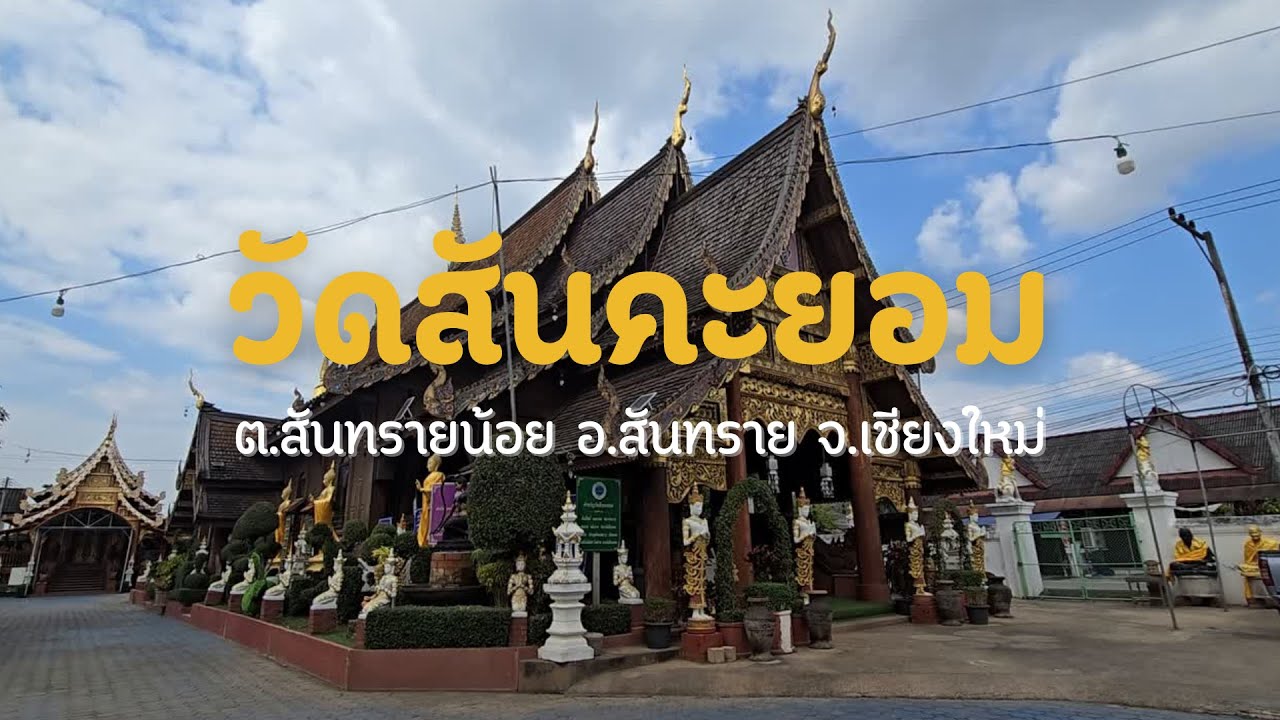
 Click to Access the Navigation Map GPS
Wat San Khayom (San Sai Noi) Map
Recommend

 Muang Chiang Mai(121)Chom Thong(47)Mae Chaem(25)Chiang Dao(33)Doi Saket(68)Mae Taeng(85)Mae Rim(69)Samoeng(29)Fang(71)Mae Ai(59)Phrao(70)San Pa Tong(103)San Kamphaeng(66)San Sai(73)Hang Dong(73)Hot(32)Doi Tao(22)Omkoi(11)Saraphi(74)Wiang Haeng(15)Chai Prakan(28)Mae Wang(32)Mae On(22)Doi Lo(33)Galyani Vadhana(1)


