
lovethailand home >North Travel Attractions >Chiang Mai Travel Attractions >San Sai >Paphai > Wat Pa Mueat
TL;DR: Wat Pa Mueat is located at Ban Pa Mueat, Moo 4, Pa Phai Subdistrict, San Sai District, Chiang Mai Province, open Daily, hours 08.00 – 17.00.

Wat Pa Mueat
Open Days: Daily
Opening Hours: 08.00 – 17.00
Wat Pa Mueat is an old local Buddhist temple under the Mahanikaya order, located in Moo 4, Ban Pa Mueat, Pa Phai Subdistrict, San Sai District, Chiang Mai Province. The temple was founded and named on May 15, 1667, making it one of the long-established village temples in northern San Sai. Its history is closely connected with a former forest area where mueat trees grew abundantly, the settlement of Ban Pa Mueat, and the gradual development of a Lanna Buddhist community temple.
The temple land covers 4 rai, 3 ngan, and 23 square wah. Wat Pa Mueat stands within Ban Pa Mueat, Moo 4, Pa Phai Subdistrict, an area linked with the agricultural and village landscape of San Sai District. The temple is not only a religious site but also a cultural landmark that preserves the story of early settlement, forest clearing, village growth, and the faith of local people who built and maintained the temple across generations.
The temple began as a very small community temple. In its early period, the surrounding area was still forested and local development was limited. Settlers cleared land, built houses, and began farming. When the community became more stable, villagers created a temple using the name of the local mueat forest. At first, only one monk, Khru Ba Mam, resided at the temple, supported by 2 novices. Only 21 households helped maintain the temple in its earliest stage, showing how strongly the villagers valued a Buddhist center even when the community was still small.
The earliest structures were monks’ residences and a sala bat, built to support monastic residence and basic religious practice. As more people settled in the area, the temple gradually expanded. A vihara, ubosot, and chedi were added as the community grew. This development shows how Wat Pa Mueat and Ban Pa Mueat evolved together: as the village became larger, the temple received more support and became increasingly complete as a local Buddhist institution.
Wat Pa Mueat received its Wisungkham Sima on July 5, 1889, and the consecrated boundary was formally bound on May 18, 1895. This was a major milestone because the consecrated boundary allowed the temple to perform key monastic rites in accordance with Buddhist discipline. The ubosot therefore became not only a temple building but also a formal space for important Sangha ceremonies.
The chedi is an important sacred structure at Wat Pa Mueat. Temple history records that the original chedi was very old and later collapsed. It was rebuilt in 1945. This restoration was more than a physical repair; it was an act of preserving the sacred center of the community. In a Lanna village temple, a chedi is a devotional focus, a symbol of Buddhist continuity, and a place where villagers can pay respect and remember the Buddha.
The vihara was built in 1946 and completed in 1949 under Phra Khru Un Ruean Aphiwangko. The vihara is a central worship space where villagers pay respect to Buddha images, listen to sermons, and join religious activities. For a community temple, the vihara often holds the strongest emotional connection with local people because families visit it across many generations.
The old ubosot became damaged and was rebuilt in 1954, with completion in 1955 under Phra Somboon Chattawaro, who was acting abbot at the time. The ubosot is essential for monastic rites such as ordination and formal Sangha acts. Its reconstruction helped restore the temple’s full religious function and strengthened Wat Pa Mueat as an active Buddhist temple.
The sala bat also reflects the daily relationship between monks and villagers. The old structure became damaged and was rebuilt in 1966, completed in 1967. Another sala bat was built in 1969 and completed in 1970 under Phra Athikan Phrommin Buddhisaro. These halls support food offerings, merit-making, and community gatherings, showing how the temple serves both religious and social functions.
The monks’ residences were later rebuilt after the old structures deteriorated. Construction began in 1981 and was completed in 1984 under Phra Khru Kawi Kantawiro. Monks’ residences are necessary for the daily life of the monastic community, including residence during the rains retreat, study, religious practice, and temple administration.
In 1972, the temple walls were also restored after deterioration. Some parts of the old wall remain as historical evidence. These remaining traces are important because they show the temple’s long continuity through damage, repair, and renewal. Wat Pa Mueat is therefore not a temple frozen in one period, but a living sacred site that has been maintained through many generations.
Phra Khru Manunya Nitithada is listed as the current abbot in recent Kathin activity information, and the temple has 6 resident monks in the 2025 Kathin listing. The presence of resident monks and ongoing Kathin activity confirms that Wat Pa Mueat remains an active religious center, not merely an old historical temple.
Wat Pa Mueat plays several roles for Ban Pa Mueat. First, it is the spiritual center where villagers pay respect, make merit, listen to sermons, and observe Buddhist holy days. Second, it is a social space for ordinations, funerals, Kathin, robe-offering activities, and village ceremonies. Third, it is a historical marker that preserves the story of forest settlement, mueat trees, early village households, and the long relationship between temple and community.
The name Pa Mueat is culturally meaningful. It comes from the former forest landscape where mueat trees grew in abundance. When the forest name became the village name and then the temple name, Wat Pa Mueat became a living record of local ecology, settlement, and community memory. The temple name therefore preserves both natural history and village identity.
Religious activities at Wat Pa Mueat follow the Buddhist calendar and local Lanna practice. Important occasions include Buddhist holy days, Makha Bucha, Visakha Bucha, Asalha Bucha, Buddhist Lent, the end of Buddhist Lent, Kathin, robe-offering activities, and Ban Pa Mueat community merit-making events. These ceremonies bring villagers back to the temple throughout the year.
Kathin is especially important for a community temple. During Kathin, villagers and supporters offer robes and donations to support the monks, temple maintenance, and religious activities. Kathin is not only a ritual; it is also an annual gathering that renews the bond between the temple, local residents, former residents, and supporters.
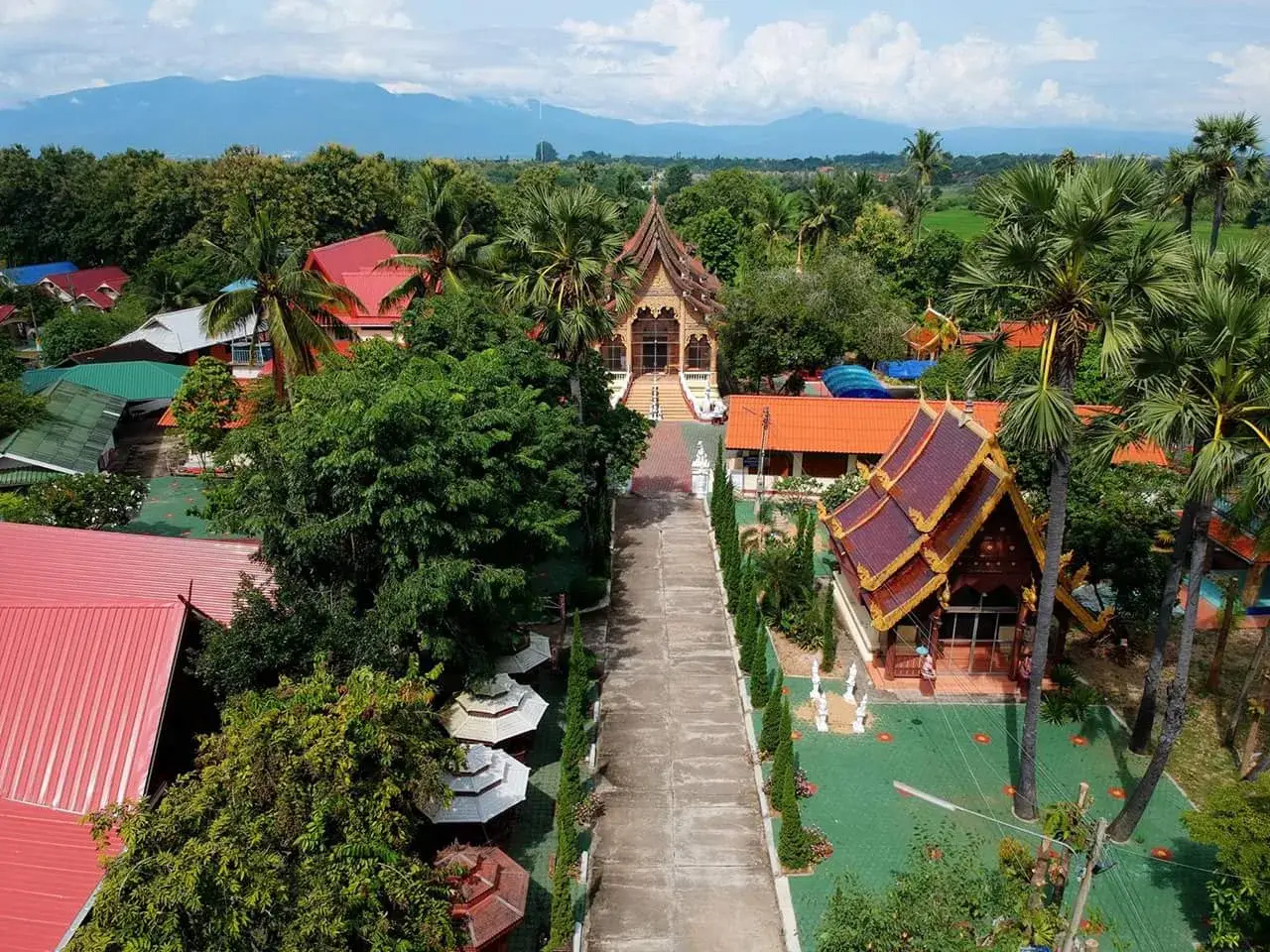
The main highlights for visitors are the temple’s old history, chedi, vihara, ubosot, sala bat, monks’ residences, courtyard, and remaining traces of older temple walls. Wat Pa Mueat is not a large tourist landmark, but it is valuable as a community temple that clearly tells the story of village formation and gradual temple development.
Visitors should begin by paying respect in the main worship area, then walk quietly around the vihara, ubosot, chedi, sala bat, monks’ residences, and old wall remains. This slow way of visiting allows travelers to understand the temple as a real village sacred space rather than a site for photography alone.
Getting There is convenient by private car or motorcycle. From Chiang Mai city, travel toward San Sai and Mae Jo, then continue into Pa Phai Subdistrict and Ban Pa Mueat, Moo 4. The temple can be included in a Pa Phai cultural route with Pa Mueat Market, Wat Pa Daet, Wat Mueang Khon, Wat Mae Kaet Noi, Wat Nong Tao Kham, and Wat Nong Ubosot.
A meaningful local route can begin at Pa Mueat Market for food and community atmosphere, continue to Wat Pa Mueat to learn the history of the village, and then proceed to nearby temples in Pa Phai Subdistrict. This type of route is suitable for visitors who prefer quiet cultural travel and local community temples rather than crowded tourist landmarks.
Visitors should dress modestly, keep their voices low, avoid entering monks’ private areas without permission, and photograph sacred areas respectfully. Wat Pa Mueat remains an active Buddhist temple used by the community, so it should be treated first as a place of worship and village faith.
Overall, Wat Pa Mueat is an old and meaningful community temple of Ban Pa Mueat, Pa Phai Subdistrict, San Sai District, Chiang Mai. Its strongest value lies in its foundation in 1667, Wisungkham Sima granted in 1889, the formal boundary binding in 1895, the restoration of its old chedi in 1945, the vihara built between 1946 and 1949, the rebuilt ubosot completed in 1955, the sala bat and monks’ residences developed across later decades, and its continuing role as the spiritual center of Ban Pa Mueat.
| Name | Wat Pa Mueat |
| Location | Ban Pa Mueat, Moo 4, Pa Phai Subdistrict, San Sai District, Chiang Mai Province |
| Address | Moo 4, Pa Phai Subdistrict, San Sai District, Chiang Mai 50210, Thailand |
| Type | Local Buddhist temple under the Mahanikaya order |
| Abbot / Caretaker | Phra Khru Manunya Nitithada |
| Highlights | Old community temple founded in 1667, with a vihara, ubosot, chedi, sala bat, monks’ residences, and historical wall remains |
| History | Founded and named on May 15, 1667 by villagers who settled in a former mueat forest area. In the earliest period, the temple was supported by only 21 households. |
| Wisungkham Sima | Granted on July 5, 1889. The consecrated boundary was formally bound on May 18, 1895. |
| Temple Land Area | 4 rai, 3 ngan, and 23 square wah |
| Name Origin | The name comes from the former forest landscape where mueat trees grew abundantly, later becoming the name of both the village and the temple |
| Main Areas / Zones | Vihara, ubosot, chedi, sala bat, monks’ residences, temple courtyard, worship area, and old wall remains |
| Important Structures | The vihara was built in 1946 and completed in 1949; the rebuilt ubosot was built in 1954 and completed in 1955; sala bat structures were developed between 1966 and 1970; monks’ residences were rebuilt between 1981 and 1984. |
| Important Sacred Object | Chedi inside the temple. The old chedi collapsed and was rebuilt in 1945. |
| Resident Monks | 6 monks |
| Community Role | Spiritual center of Ban Pa Mueat, used for merit-making, sermons, Kathin, robe-offering activities, ordinations, funerals, and local Buddhist ceremonies |
| Traditions / Merit-Making | Buddhist holy days, major Buddhist festivals, Buddhist Lent, the end of Buddhist Lent, Kathin, robe-offering activities, and Ban Pa Mueat community merit-making events |
| Travel Information | From Chiang Mai city, travel toward San Sai and Mae Jo, continue into Pa Phai Subdistrict, and proceed to Ban Pa Mueat, Moo 4. |
| Current Status | Open as a local Buddhist temple and community sacred site of Ban Pa Mueat, Pa Phai Subdistrict, San Sai District, Chiang Mai |
| Open Days | Daily |
| Opening Hours | 08.00 – 17.00 |
| Main Contact Number | 053-396-937 |
| Facilities | Worship area, temple courtyard, religious activity space, and parking area within the temple community |
| Nearby Tourist Attractions | 1. Pa Mueat Market, about 1 km 2. Wat Pa Daet, Pa Phai Subdistrict, about 2 km 3. Wat Mueang Khon, Pa Phai Subdistrict, about 3 km 4. Wat Mae Kaet Noi, Pa Phai Subdistrict, about 4 km 5. Wat Nong Tao Kham, Pa Phai Subdistrict, about 5 km 6. Wat Nong Ubosot, Pa Phai Subdistrict, about 5–6 km |
| Nearby Restaurants | 1. Witsawa Hainanese Chicken Rice Pa Mueat, about 1 km 2. Khao Man Kai Suk Jai Pa Mueat, about 1 km, Tel. 088-415-2421 3. Mama Lui Fai Pa Mueat, about 1–2 km, Tel. 091-913-7658 4. Coffee Tale Pa Mueat Market, about 1–2 km, Tel. 061-375-4335, 094-607-2020 5. Fried Pork Rice and Grilled Chicken Rice Pa Mueat 4, about 2 km, Tel. 099-446-4267 6. A Place On Earth Pa Phai, about 3–4 km, Tel. 088-251-1044 |
| Nearby Accommodations | 1. Baan View Na, about 3–5 km, Tel. 089-844-9675 2. MonMin Farmstay, about 5–7 km, Tel. 084-656-0009 3. Mj House Stay With Guest And Host, about 6–8 km 4. Maejo Resort, about 8–10 km, Tel. 081-429-9935 5. Preme Apartment @Maejo, about 10 km, Tel. 086-329-2102 6. Boonthavon Maejo Hotel, about 10 km |
Frequently Asked Questions (FAQ)
Q: Where is Wat Pa Mueat located?
A: Wat Pa Mueat is located in Ban Pa Mueat, Moo 4, Pa Phai Subdistrict, San Sai District, Chiang Mai 50210, Thailand.
Q: When is Wat Pa Mueat open?
A: Wat Pa Mueat is open daily from 08.00 to 17.00.
Q: When was Wat Pa Mueat founded?
A: Wat Pa Mueat was founded and named on May 15, 1667.
Q: What is the origin of the name Wat Pa Mueat?
A: The name comes from the former forest landscape where mueat trees grew abundantly before the area became Ban Pa Mueat.
Q: When did Wat Pa Mueat receive Wisungkham Sima?
A: Wat Pa Mueat received Wisungkham Sima on July 5, 1889, and the consecrated boundary was formally bound on May 18, 1895.
Q: What are the main structures at Wat Pa Mueat?
A: The main structures include a vihara, ubosot, chedi, sala bat, monks’ residences, temple courtyard, worship area, and old wall remains.
Q: Who is the abbot of Wat Pa Mueat?
A: The abbot of Wat Pa Mueat is Phra Khru Manunya Nitithada.
Q: What nearby places can be visited on the same trip?
A: Nearby places include Pa Mueat Market, Wat Pa Daet, Wat Mueang Khon, Wat Mae Kaet Noi, Wat Nong Tao Kham, and Wat Nong Ubosot.
 Category: ●Places of Worship
 Group: ●Temple
Last Update : 4 HourAgo
 Last Update : 4 HourAgo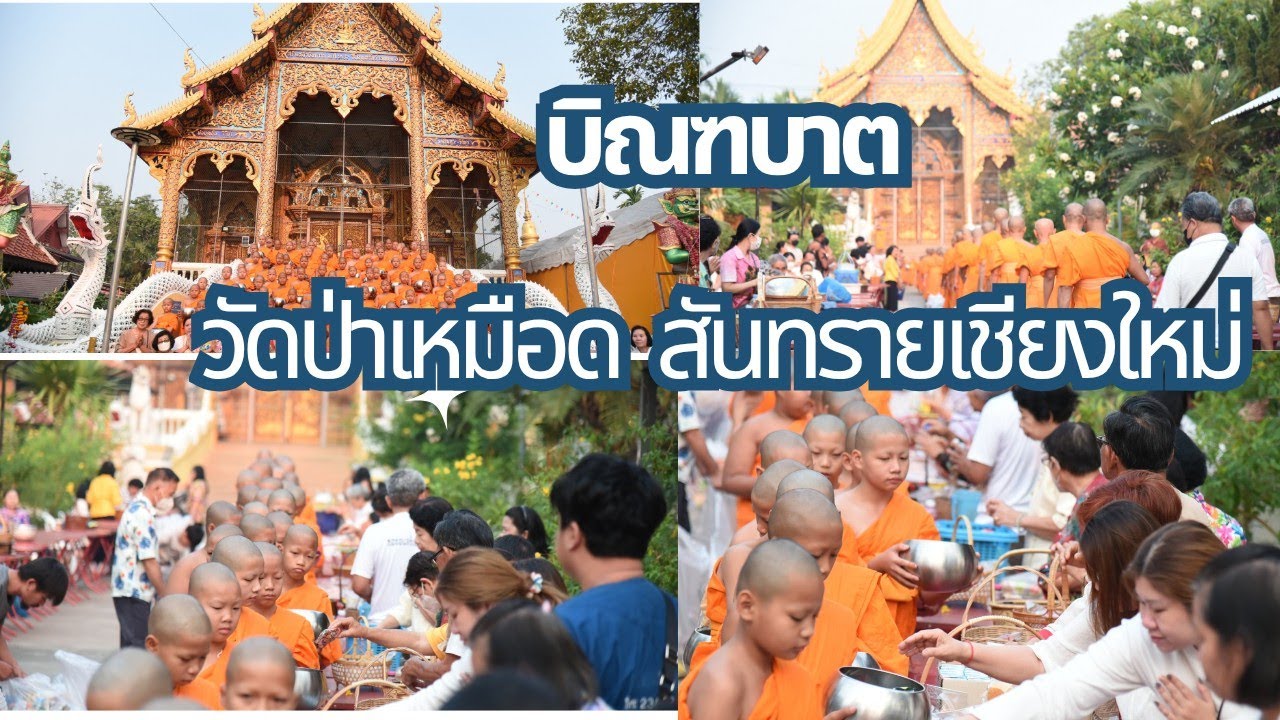
 Click to Access the Navigation Map GPS
Wat Pa Mueat Map
Recommend

 Muang Chiang Mai(121)Chom Thong(47)Mae Chaem(25)Chiang Dao(33)Doi Saket(68)Mae Taeng(85)Mae Rim(69)Samoeng(29)Fang(71)Mae Ai(59)Phrao(70)San Pa Tong(103)San Kamphaeng(66)San Sai(73)Hang Dong(74)Hot(32)Doi Tao(22)Omkoi(11)Saraphi(74)Wiang Haeng(15)Chai Prakan(28)Mae Wang(32)Mae On(22)Doi Lo(34)Galyani Vadhana(1)


