
lovethailand home >North Travel Attractions >Chiang Mai Travel Attractions >San Kamphaeng >On Tai > Wat Ban Hong (On Tai)
TL;DR: Wat Ban Hong (On Tai) is located at Moo 2, Ban Hong, On Tai Subdistrict, San Kamphaeng District, Chiang Mai Province, open Daily, hours 08.00 – 17.00.
Wat Ban Hong (On Tai)
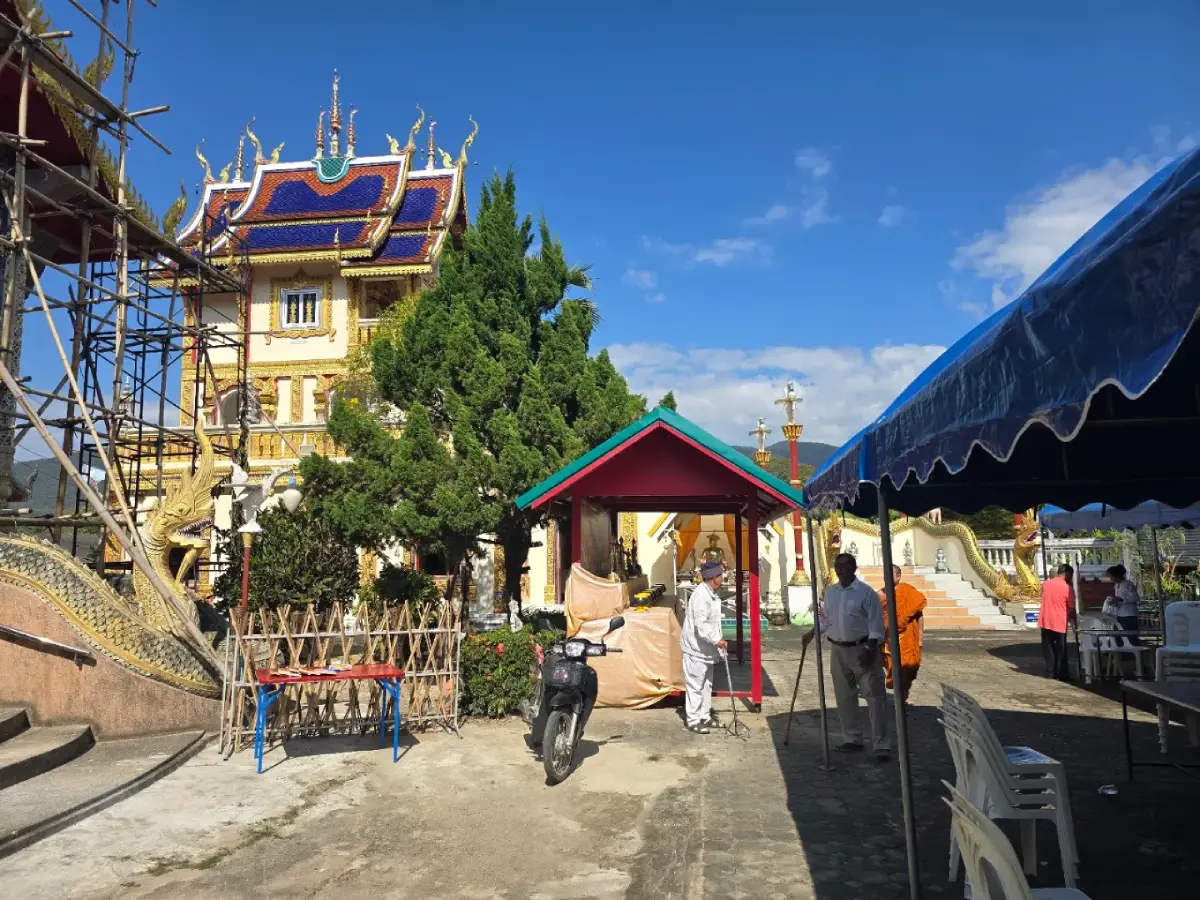
Open Days: Daily
Opening Hours: 08.00 – 17.00
Wat Ban Hong (On Tai) is located at 1 Moo 2, Ban Hong, On Tai Subdistrict, San Kamphaeng District, Chiang Mai 50130, Thailand. It is a private Buddhist temple under the Mahanikaya order. The temple was officially established in 1932 and received its royal Wisungkhamsima in 1991. Wat Ban Hong serves as a community temple for Ban Hong, supporting merit-making, Buddhist ceremonies, local faith, and the religious life of residents in On Tai.
On Tai Subdistrict is an old community area of San Kamphaeng District, known for Lanna ways of life, craft traditions, agriculture, creative community tourism, and cultural identity. Wat Ban Hong stands within this setting. It is not only a temple for religious practice, but also part of the everyday structure of the community, linking village life, Buddhist faith, local roads, schools, and communal activities.
The name “Ban Hong” is the name of the village in Moo 2, On Tai Subdistrict. The temple name comes directly from the village name, following a common Lanna pattern in which temples are closely identified with the communities that built and cared for them. In this sense, Wat Ban Hong preserves the identity and memory of Ban Hong itself.
The temple’s official establishment in 1932 shows that Ban Hong had an organized Buddhist community and local lay supporters from the early twentieth century. In Lanna village society, a temple was not only a place for ceremonies. It was a center for Dhamma listening, merit-making, family rites, village gatherings, and the transmission of local customs from one generation to the next.
The royal Wisungkhamsima granted in 1991 is an important point in the temple’s history. Wisungkhamsima is the consecrated boundary used for important monastic acts. Receiving this royal grant strengthened the temple’s formal Buddhist status and marked its development as a more complete religious institution for the local community.
Phra Athikan Kanoksak Chirawatthano is the abbot of Wat Ban Hong. The temple remains listed in recent Kathin information for San Kamphaeng District, showing that it continues to participate in Buddhist merit-making and remains an active religious site. In a village temple, the abbot plays an important role in caring for monks, maintaining the temple, supporting ceremonies, and working with local lay supporters.
Phra Khru Inthakhunaphon Inthawiro is an important senior monk connected with Wat Ban Hong and On Tai Subdistrict. His name appears in relation to Wat Ban Hong and as a former ecclesiastical head of On Tai Subdistrict. Mentioning him helps show the continuity of religious leadership associated with the temple and the wider Buddhist community in On Tai.
Wat Ban Hong is a modest community temple rather than a large mainstream tourist attraction. Its value lies in its role as a living local sacred space. Visitors can come to pay respect, make merit, observe the atmosphere of a village temple, and understand how Buddhism remains woven into everyday community life in On Tai.
The temple is also well positioned for a connected trip around On Tai. This subdistrict is known for community-based tourism, local crafts, agricultural life, and natural attractions. Nearby points of interest include Mae Pha Haen Reservoir, Doi Mon Ching, Champa Hia mineral spring, Wat Pa Tueng in On Tai, and the wider On Tai creative community tourism route.
Mae Pha Haen Reservoir is an important nearby attraction. It supports local agriculture and is connected with community traditions such as the fish procession and water-source blessing ceremony. Visiting Wat Ban Hong together with the reservoir helps show how temples, water, farming, mountains, and local beliefs are connected in On Tai.
Doi Mon Ching is another distinctive landscape in On Tai. Its mountain form has led local tourism narratives to describe it as the “Fuji of On Tai.” This gives the route around Wat Ban Hong a combined religious and natural dimension. A visitor can begin with merit-making at the temple, then continue to explore the local community landscape and nearby natural points.
Wat Pa Tueng in On Tai is another important temple in the same travel area. It has strong historical and cultural significance and is connected with older settlement patterns in the Mae On river basin. A route linking Wat Ban Hong, Wat Pa Tueng, Mae Pha Haen Reservoir, and local On Tai community activities is suitable for visitors interested in quiet cultural travel near Chiang Mai city.
The role of Wat Ban Hong can be understood on several levels. Religiously, it is a place for worship, merit-making, Dhamma listening, and Buddhist ceremonies. Socially, it is a gathering space for villagers during temple events. Culturally, it helps preserve the memory of Ban Hong and the Lanna village-temple relationship. Spatially, it is a landmark of Moo 2 and part of the On Tai cultural route.
Wat Ban Hong is connected with regular Buddhist village activities such as Kathin, robe offerings, Buddhist Lent, End of Buddhist Lent, Buddhist holy days, and annual religious festivals. These activities bring together monks, elders, families, young people, and local lay supporters, keeping the temple active as a center of faith and social connection.
The main appeal of Wat Ban Hong is its simplicity and local character. It is suitable for visitors who want to understand a village temple in its real community context rather than visit only large landmark temples. A visit here offers a quieter view of On Tai, where Buddhism, village identity, agriculture, and community tourism exist together.
Visitors should dress modestly, speak quietly, respect monks’ areas and temple spaces, avoid disturbing local residents or worshippers, and park without blocking village access. During Buddhist holy days, Kathin, robe offerings, or other religious events, visitors should follow the guidance of the temple committee and local residents.
Getting There is convenient by private car, rental car, or hired local transport from Chiang Mai city. Take the Chiang Mai–San Kamphaeng route toward San Kamphaeng District, then continue to On Tai Subdistrict and Ban Hong in Moo 2. The temple can be combined with Wat Pa Tueng, Mae Pha Haen Reservoir, Doi Mon Ching, Champa Hia mineral spring, and the On Tai community tourism route. Travelers using navigation apps should search for “Wat Ban Hong On Tai San Kamphaeng” to reach the correct temple in Chiang Mai.
Wat Ban Hong is suitable for visitors interested in Mahanikaya community temples, Lanna village life, quiet temple routes, and community-based travel in On Tai. Its value lies in its establishment in 1932, its royal Wisungkhamsima in 1991, its connection with Phra Khru Inthakhunaphon Inthawiro, and its continuing role as a spiritual center of Ban Hong. For travelers who want to understand Chiang Mai beyond major landmarks, this temple offers a grounded view of Buddhist faith in a local community setting.
| Name | Wat Ban Hong (On Tai) |
| Location | Moo 2, Ban Hong, On Tai Subdistrict, San Kamphaeng District, Chiang Mai Province |
| Address | 1 Moo 2, Ban Hong, On Tai Subdistrict, San Kamphaeng District, Chiang Mai 50130, Thailand |
| Contact Number | 053-880-420 |
| Highlights | A Mahanikaya village temple in Ban Hong, connected with local Buddhist faith, On Tai community life, and quiet cultural travel routes around San Kamphaeng |
| History | Officially established as a temple in 1932 and granted royal Wisungkhamsima in 1991 |
| Name Origin | The temple name comes from Ban Hong, the village where the temple is located |
| Distinctive Features | A community temple connected with merit-making, Lanna village life, and the On Tai cultural tourism landscape |
| Travel Information | Travel from Chiang Mai city via the Chiang Mai–San Kamphaeng route, then continue to On Tai Subdistrict and Ban Hong in Moo 2. Search for “Wat Ban Hong On Tai San Kamphaeng” in navigation apps. |
| Current Status | Active community Buddhist temple and religious activity space of Ban Hong |
| Temple Type | Private Buddhist temple under the Mahanikaya order |
| Abbot / Caretaker | Phra Athikan Kanoksak Chirawatthano |
| Important Senior Monk Connected With The Temple | Phra Khru Inthakhunaphon Inthawiro, a monk of Wat Ban Hong and former ecclesiastical head of On Tai Subdistrict |
| Open Days | Daily |
| Opening Hours | 08.00 – 17.00 |
| Main Areas / Structures | Temple grounds, merit-making areas, and community religious activity spaces of Ban Hong |
| Related Traditions / Activities | Kathin, robe offerings, Buddhist Lent, End of Buddhist Lent, Buddhist holy days, and local Buddhist festivals |
| Nearby Tourist Attractions | 1. On Tai Community, about 1 km 2. Wat Pa Tueng, On Tai, about 4 km 3. Mae Pha Haen Reservoir, about 6 km 4. Doi Mon Ching, about 7 km 5. Champa Hia Mineral Spring, about 7 km |
| Nearby Restaurants | 1. On Tai Farm, about 2 km 2. Kin Pu Du Na On Tai San Kamphaeng, about 4 km, Tel. 094-265-6094 3. Baanpong Restaurant by Baanpong Lodge, about 7 km 4. Khao Soi View Na San Kamphaeng, about 11 km, Tel. 096-686-9779 5. Southern Curry Jae Pha Old San Kamphaeng Road, about 13 km, Tel. 081-367-6261 |
| Nearby Accommodations | 1. Baanpong Lodge, about 7 km, Tel. 083-969-6555 2. LaMoon Cottage SanKampang, about 12 km, Tel. 094-723-5395 3. 102 Residence, about 13 km 4. San Kamphaeng Lake View Resort, about 15 km, Tel. 053-381-039 5. The Vet Boutique Hotel, about 16 km, Tel. 052-011-179, 091-852-5507 |
Frequently Asked Questions (FAQ)
Q: Where is Wat Ban Hong (On Tai) located?
A: Wat Ban Hong is located at 1 Moo 2, Ban Hong, On Tai Subdistrict, San Kamphaeng District, Chiang Mai 50130, Thailand.
Q: What are the open days and opening hours of Wat Ban Hong?
A: Wat Ban Hong is open daily from 08.00 to 17.00.
Q: What is the history of Wat Ban Hong?
A: Wat Ban Hong was officially established as a temple in 1932 and received royal Wisungkhamsima in 1991. It is a community temple of Ban Hong in On Tai Subdistrict.
Q: Who is the abbot of Wat Ban Hong?
A: The abbot is Phra Athikan Kanoksak Chirawatthano.
Q: How is Phra Khru Inthakhunaphon Inthawiro connected with Wat Ban Hong?
A: Phra Khru Inthakhunaphon Inthawiro is an important senior monk connected with Wat Ban Hong and On Tai Subdistrict, and is associated with the temple and the former ecclesiastical administration of On Tai.
Q: Is Wat Ban Hong suitable for cultural travelers?
A: Yes. It is suitable for visitors interested in quiet community temples, Lanna village life, and cultural routes around On Tai and San Kamphaeng.
Q: What nearby places can visitors combine with Wat Ban Hong?
A: Visitors can combine the trip with On Tai Community, Wat Pa Tueng, Mae Pha Haen Reservoir, Doi Mon Ching, and Champa Hia mineral spring.
Q: Is there an entrance fee for Wat Ban Hong?
A: There is no confirmed entrance-fee information for Wat Ban Hong. Visitors may make merit or donate as appropriate.
 Category: ●Places of Worship
 Group: ●Temple
Last Update : 1 WeekAgo
 Last Update : 1 WeekAgo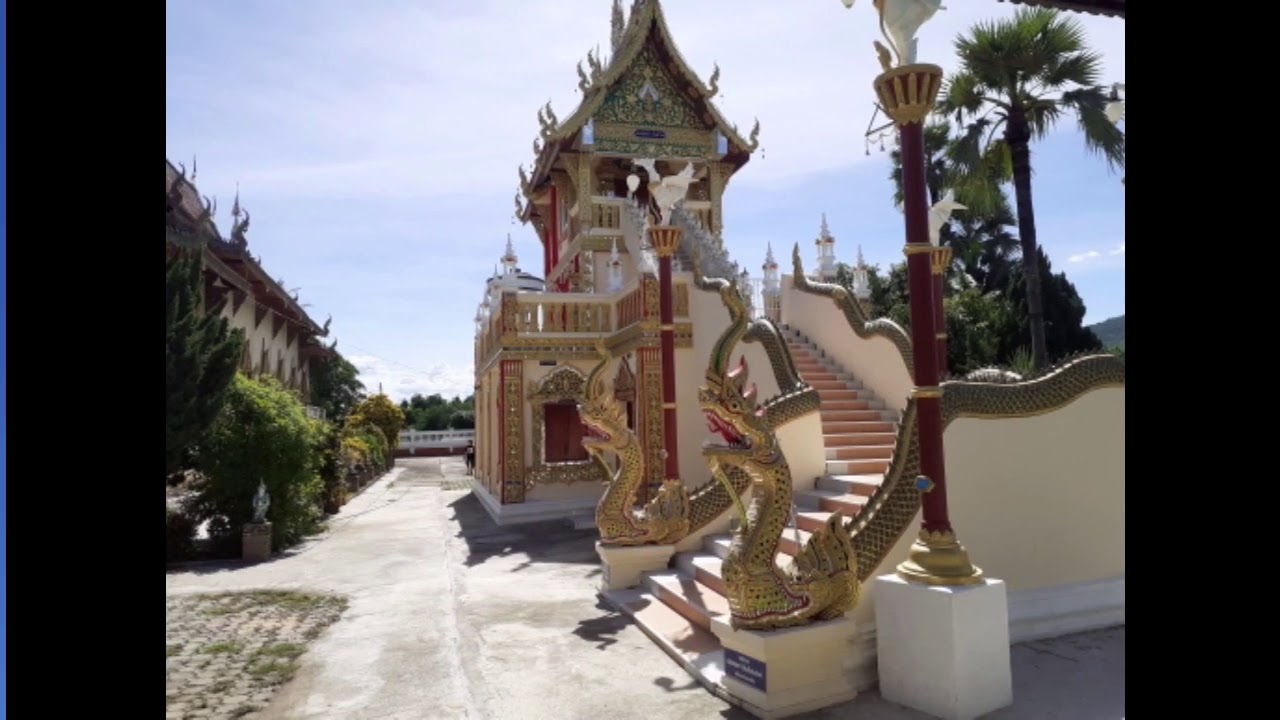
 Click to Access the Navigation Map GPS
Wat Ban Hong (On Tai) Map
Recommend

 Muang Chiang Mai(121)Chom Thong(47)Mae Chaem(25)Chiang Dao(33)Doi Saket(68)Mae Taeng(85)Mae Rim(69)Samoeng(29)Fang(71)Mae Ai(59)Phrao(70)San Pa Tong(103)San Kamphaeng(66)San Sai(73)Hang Dong(73)Hot(32)Doi Tao(22)Omkoi(11)Saraphi(74)Wiang Haeng(15)Chai Prakan(28)Mae Wang(32)Mae On(22)Doi Lo(33)Galyani Vadhana(1)


