
lovethailand home >North Travel Attractions >Chiang Mai Travel Attractions >San Kamphaeng >San Kamphaeng > Wat Pa Daeng (San Kamphaeng)
TL;DR: Wat Pa Daeng (San Kamphaeng) is located at Moo 13, Ban Pa Sak Khwang, San Kamphaeng Subdistrict, San Kamphaeng District, Chiang Mai Province, open Daily, hours 08.00 – 17.00.
Wat Pa Daeng (San Kamphaeng)
Open Days: Daily
Opening Hours: 08.00 – 17.00
Wat Pa Daeng (San Kamphaeng) is located in Moo 13, Ban Pa Sak Khwang, San Kamphaeng Subdistrict, San Kamphaeng District, Chiang Mai Province. It is a private Buddhist temple under the Mahanikaya order and one of the old community temples of San Kamphaeng. The temple is surrounded by longan orchards and rice fields, giving it a rural atmosphere that is different from temples in central Chiang Mai. Wat Pa Daeng was officially established as a temple in 1784 and received its royal Wisungkhamsima in 2003. Phra Athikan Suraphon Aphiwatthano is listed as the abbot of the temple.
The history of Wat Pa Daeng is closely connected with old sacred ruins and local memory. The temple is believed to have been founded about 200 years ago. According to local elders, the site was once an abandoned temple with an old ruined chedi and remains of ancient religious structures around it. These traces suggest that the area had once been an active sacred site before falling into disrepair. Later, the local Buddhist community restored the temple by building a new chedi over the old one and renovating the surrounding religious remains.
The name “Wat Pa Daeng” comes from the natural setting of the temple. In the past, redwood trees grew around the area, and the place became known as Pa Daeng, meaning a redwood forest or redwood area. The name is therefore more than a simple place name. It preserves a memory of the old landscape, local vegetation, and the relationship between the temple and the natural environment around Ban Pa Sak Khwang.
Wat Pa Daeng is important as a community temple of Ban Pa Sak Khwang in Moo 13. San Kamphaeng Subdistrict has many village temples, including Wat Kham Sao, Wat Ban Noi, Wat San Kamphaeng, Wat Si Bun Rueang, Wat Pa Hew, Wat Don Mun, and Wat Pa Daeng. This pattern reflects Lanna village life, where each community has a temple as its religious and social center. Temples are places for merit-making, Dhamma listening, ceremonies, community gatherings, and the preservation of local identity.
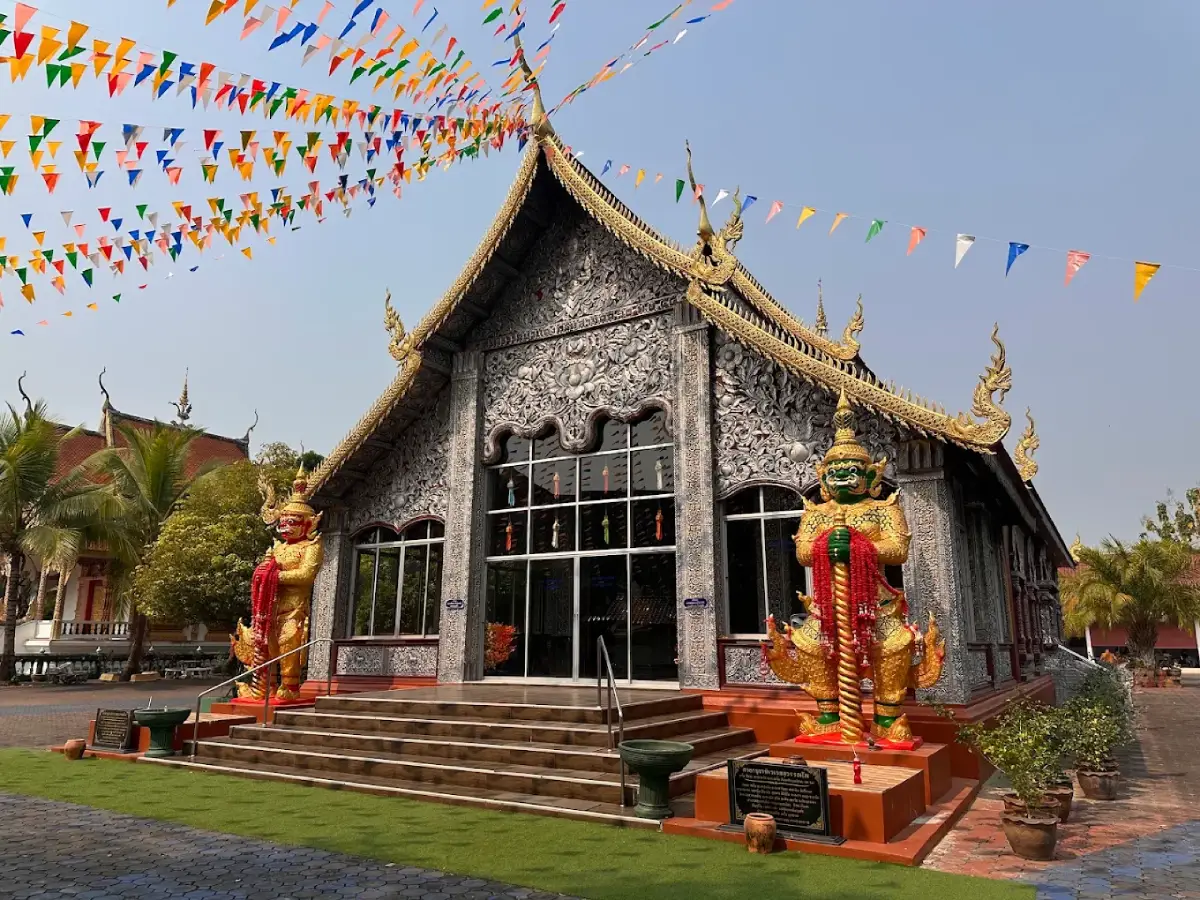
The atmosphere of Wat Pa Daeng is open and simple. Much of the temple ground is paved with interlocking bricks, with small trees scattered around the area. During the middle of the day, the open space can feel hot under strong sunlight, but this layout also allows visitors to clearly see the temple buildings, the chedi, the viharn, the pavilion, and the temple courtyard. The temple is suitable for visitors who want to observe a quiet Lanna community temple rather than a crowded tourist landmark.
One of the most important devotional points at Wat Pa Daeng is the preserved body of Khru Ba Un, a respected former monk and teacher revered by many Buddhists in Chiang Mai. Khru Ba Un passed away on 23 December 2011 at the age of 79, after 55 rains retreats as a monk. His body is enshrined in a glass coffin inside a four-gabled pavilion. This makes Wat Pa Daeng a meaningful destination for devotees who want to pay respect to a respected Lanna monk and reflect on his spiritual legacy.
The four-gabled pavilion that houses Khru Ba Un’s glass coffin is a concrete building in Lanna architectural style. Its pediment is decorated with stucco floral patterns, the mythical Hatsadiling bird, and celestial figures. These decorative elements give the pavilion both artistic and symbolic value. The Hatsadiling bird is associated with northern Thai belief and ceremonial imagery, while the floral patterns and celestial figures create a sacred atmosphere around the pavilion.
Inside the pavilion, visitors can also see unusual mural paintings. Instead of focusing only on traditional Buddhist narratives, the murals include important places in Thailand and abroad, natural landscapes, and wildlife. This makes the pavilion visually distinctive and more contemporary than many conventional temple murals. Visitors who take time to observe the murals will see how the temple combines Buddhist devotion, local art, and a wider view of the modern world.
Another important structure at Wat Pa Daeng is the Lanna-style viharn. The viharn is especially notable for its metalwork on the pediment, created through techniques such as cutting, embossing, and shaping. The designs include floral patterns, celestial figures, and lotus motifs. This metal pediment decoration is one of the temple’s distinctive features. The lotus represents purity and Buddhist devotion, while the celestial figures and floral forms enhance the sacred character of the building.
The temple chedi is also central to the history of Wat Pa Daeng. The new chedi was built over the older ruined chedi, preserving the memory of the former sacred site while giving it renewed religious function. The old chedi represents the temple’s past, while the new chedi reflects the faith and restoration work of later generations. This layering of old and new makes the chedi an important symbol of continuity at Wat Pa Daeng.
Wat Pa Daeng continues to function as an active community temple. It has resident monks, participates in Kathin activities, and serves as a venue for local community events. Like many village temples in northern Thailand, it is both a spiritual center and a public space. Residents can come to make merit, listen to Dhamma, join ceremonies, and participate in community activities. The temple also serves as an important reference point for Moo 13, Ban Pa Sak Khwang.
The temple is connected with local Buddhist activities such as Kathin, robe offerings, Buddhist Lent, End of Buddhist Lent, Buddhist holy days, and community merit-making. These activities keep the temple active in local life. Elderly residents preserve traditions, families make merit together, children learn temple etiquette, and local supporters help maintain Buddhism at the village level. Wat Pa Daeng therefore remains a living religious center rather than only a historical site.
Wat Pa Daeng is suitable for travelers interested in old temples, Lanna art, rural community temples, and the story of Khru Ba Un. Its value does not come from grand scale or mass tourism. It comes from its layered history, the restored chedi, the old sacred remains, the four-gabled pavilion containing Khru Ba Un’s body, and the distinctive Lanna viharn with metal pediment decoration. Visitors can pay respect, make merit, and learn about a quieter side of San Kamphaeng temple culture.
Visitors should observe proper temple etiquette. Dress modestly, speak quietly, avoid disturbing monks or local residents, and remove shoes where required. When paying respect to Khru Ba Un inside the pavilion, visitors should behave calmly and respectfully. They should not touch the glass coffin or sacred objects without permission. Photography should be done with consideration for the sacred atmosphere and the faith of local people.
Getting There is convenient by private car, rental car, or hired local transport from Chiang Mai city. Take the Chiang Mai–San Kamphaeng route toward San Kamphaeng Subdistrict, then continue to Ban Pa Sak Khwang in Moo 13. The temple is about 100 meters from the main road and is surrounded by orchards and fields. Travelers using navigation apps should search for “Wat Pa Daeng San Kamphaeng” to avoid confusion with other temples named Wat Pa Daeng in northern Thailand.
Wat Pa Daeng can be included in a connected cultural route around San Kamphaeng. Nearby places include Wat Kham Sao, Wat Ban Noi, San Kamphaeng Walking Street, Wat San Kamphaeng, Wat Don Mun, and Bo Sang Umbrella Village. This route is suitable for a half-day or full-day trip that combines local temples, community markets, northern Thai food, and San Kamphaeng handicrafts.
Wat Pa Daeng (San Kamphaeng) is a meaningful temple for visitors who want to understand local Buddhist culture beyond the best-known temples of Chiang Mai. Its strengths are the restored chedi, the memory of an earlier abandoned temple, the redwood origin of its name, the devotional connection with Khru Ba Un, and the Lanna-style viharn with distinctive metal decoration. For travelers interested in faith, history, and local culture, Wat Pa Daeng is a worthwhile stop in San Kamphaeng.
| Name | Wat Pa Daeng (San Kamphaeng) |
| Location | Moo 13, Ban Pa Sak Khwang, San Kamphaeng Subdistrict, San Kamphaeng District, Chiang Mai Province |
| Address | Moo 13, San Kamphaeng Subdistrict, San Kamphaeng District, Chiang Mai 50130, Thailand |
| Highlights | An old temple surrounded by longan orchards and rice fields, with a new chedi built over an old chedi, a four-gabled pavilion containing Khru Ba Un’s body, and a Lanna-style viharn with distinctive metal pediment work |
| History | Officially established as a temple in 1784, granted royal Wisungkhamsima in 2003, and remembered as a former abandoned temple with an old ruined chedi and surrounding ancient remains |
| Name Origin | The name comes from redwood trees that once grew around the temple area |
| Distinctive Features | A Lanna community temple connected with an old chedi, restored ancient remains, Khru Ba Un devotion, and the rural landscape of Ban Pa Sak Khwang |
| Travel Information | Travel from Chiang Mai city via the Chiang Mai–San Kamphaeng route, then continue to Ban Pa Sak Khwang in Moo 13. Search for “Wat Pa Daeng San Kamphaeng” in navigation apps. |
| Current Status | Active community Buddhist temple and local religious activity space in Ban Pa Sak Khwang, San Kamphaeng Subdistrict |
| Temple Type | Private Buddhist temple under the Mahanikaya order |
| Abbot / Caretaker | Phra Athikan Suraphon Aphiwatthano |
| Resident Monks | 5 monks |
| Open Days | Daily |
| Opening Hours | 08.00 – 17.00 |
| Main Areas / Structures | Chedi built over the old chedi, four-gabled pavilion, glass coffin containing Khru Ba Un’s body, Lanna-style viharn, temple courtyard, and community religious activity areas |
| Important Devotional Points | Khru Ba Un’s body inside the four-gabled pavilion and the temple chedi |
| Related Traditions / Activities | Kathin, robe offerings, Buddhist Lent, End of Buddhist Lent, Buddhist holy days, and community moral activities |
| Nearby Tourist Attractions | 1. Wat Kham Sao, about 3 km 2. Wat Ban Noi, about 4 km 3. San Kamphaeng Walking Street, about 5 km 4. Wat San Kamphaeng, about 5 km 5. Bo Sang Umbrella Village, about 8 km |
| Nearby Restaurants | 1. San Kamphaeng Restaurant, about 5 km, Tel. 053-332-935, 053-395-389 2. San Kamphaeng Beef Noodle, about 5 km, Tel. 082-685-2863 3. Minimum Station Kad Pa Hew, about 5 km, Tel. 095-874-7988 4. Huen Jai Yong, about 8 km, Tel. 086-671-8710 5. Satesinlp Restaurant, about 9 km, Tel. 053-338-388, 081-881-4121, 089-992-3434 |
| Nearby Accommodations | 1. 102 Residence, about 5 km, Tel. 098-967-0527 2. San Kamphaeng Lake View Resort, about 7 km, Tel. 053-381-039 3. Boon Homestay & Cafe, about 9 km, Tel. 093-494-8000 4. The Vet Boutique Hotel, about 10 km, Tel. 052-011-179, 091-852-5507 5. Boon Home Stay Arts and Crafts, about 10 km |
Frequently Asked Questions (FAQ)
Q: Where is Wat Pa Daeng (San Kamphaeng) located?
A: Wat Pa Daeng is located in Moo 13, Ban Pa Sak Khwang, San Kamphaeng Subdistrict, San Kamphaeng District, Chiang Mai 50130, Thailand.
Q: What are the open days and opening hours of Wat Pa Daeng?
A: Wat Pa Daeng is open daily from 08.00 to 17.00.
Q: What is the history of Wat Pa Daeng?
A: Wat Pa Daeng was officially established as a temple in 1784 and received royal Wisungkhamsima in 2003. The site is remembered as a former abandoned temple with an old ruined chedi and surrounding ancient remains.
Q: Why is it called Wat Pa Daeng?
A: The name comes from redwood trees that once grew around the temple area.
Q: What is the main devotional point at Wat Pa Daeng?
A: The main devotional point is the preserved body of Khru Ba Un inside a glass coffin in the four-gabled pavilion, along with the temple chedi.
Q: What are the important structures at Wat Pa Daeng?
A: Important structures include the chedi, four-gabled pavilion, Lanna-style viharn, temple courtyard, and community religious activity areas.
Q: Who is the abbot of Wat Pa Daeng?
A: The abbot is Phra Athikan Suraphon Aphiwatthano.
Q: What nearby places can visitors combine with Wat Pa Daeng?
A: Visitors can combine the trip with Wat Kham Sao, Wat Ban Noi, San Kamphaeng Walking Street, Wat San Kamphaeng, and Bo Sang Umbrella Village.
 Category: ●Places of Worship
 Group: ●Temple
Last Update : 22 HourAgo
 Last Update : 22 HourAgo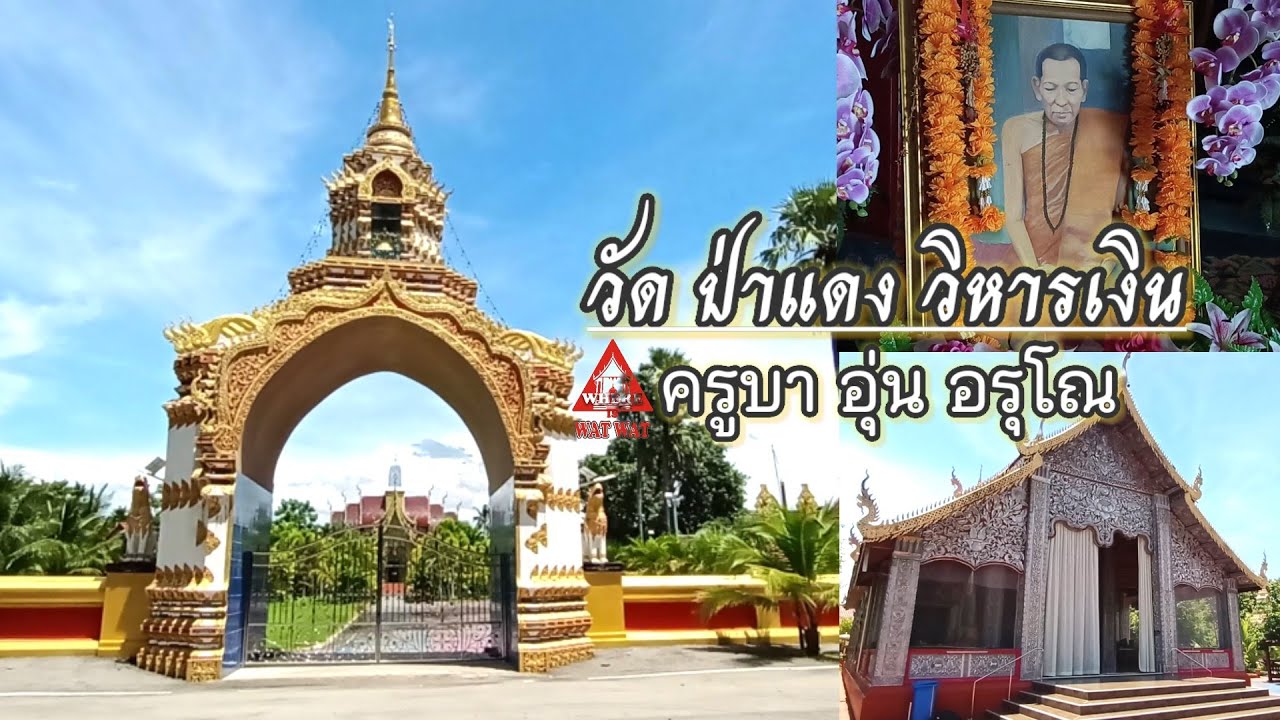
 Click to Access the Navigation Map GPS
Wat Pa Daeng (San Kamphaeng) Map
Recommend

 Muang Chiang Mai(121)Chom Thong(47)Mae Chaem(25)Chiang Dao(33)Doi Saket(68)Mae Taeng(85)Mae Rim(69)Samoeng(29)Fang(71)Mae Ai(59)Phrao(70)San Pa Tong(103)San Kamphaeng(66)San Sai(73)Hang Dong(74)Hot(32)Doi Tao(22)Omkoi(11)Saraphi(74)Wiang Haeng(15)Chai Prakan(28)Mae Wang(32)Mae On(22)Doi Lo(34)Galyani Vadhana(1)


